Ukraine

Portrait of the week: Record-breaking heat, a summer of strikes and a warning for snake-owners

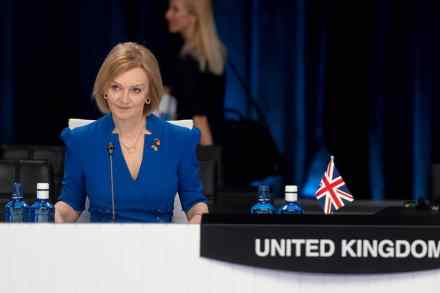
Home In the contest for the leadership of the Conservative party, Jeremy Hunt and Nadhim Zahawi were the first of the eight contenders to be eliminated, followed by Suella Braverman, Tom Tugendhat and Kemi Badenoch. After two televised debates, Rishi Sunak and Liz Truss, the frontrunners, refused to take part in a third, which was cancelled. The debates were bitter and accompanied by negative briefings. Lord Frost said he had ‘grave reservations’ about Penny Mordaunt, and had ‘had to ask the PM to move her on’ when she was his junior during Brexit negotiations. After parliament rose for the summer two names were to be put before party members in a postal ballot.

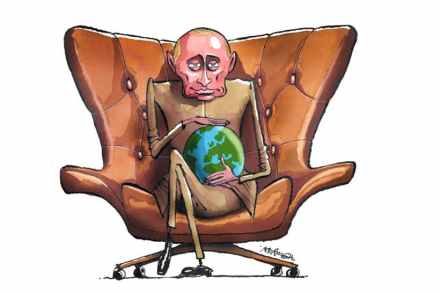
Why Putin still might shut off Europe’s gas

From our US edition

There was a time in the not-so-distant past when Europe and Russia had a mutually beneficial relationship with each other — at least in the energy field. Europe, a major oil consumer, received reliable supplies of crude and natural gas from Moscow, while the Russians received tens of billions of dollars in return. The European Union imported 155 billion cubic meters of natural gas from Russia last year, equivalent to about 45 percent of its total gas imports. There was an ingrained assumption in European capitals that, even if relations with the Russians were thorny, fossil fuels would continue to head west. War, however, can change things in a flash. European and Russian officials now talk past each other, and sometimes they leave the room when the other is speaking.

sanctions putin russia davos oligarch

Portrait of the week: Mo Farah’s secret, hot weather warnings and hot competition for the Tory leadership

Home The Conservatives began the process of finding a new leader, which involves balloting MPs and then sending two names for party members to choose between. Eight candidates initially qualified for the process set out by the 1922 Committee, by gaining nominations from 20 MPs: Kemi Badenoch, Suella Braverman, Jeremy Hunt, Penny Mordaunt, Rishi Sunak, Liz Truss, Tom Tugendhat and Nadhim Zahawi. Grant Shapps, Rehman Chishti and Sajid Javid withdrew before the off. Ben Wallace, the Defence Secretary, a fancied contender, had decided not to stand, as had Steve Baker, who was not widely fancied. Michael Gove (whom Downing Street had denounced a week earlier as a ‘snake’ when the Prime Minister, attempting to hold on to power, sacked him) did not stand, and nor did Priti Patel.

How Justin Trudeau caved to Putin

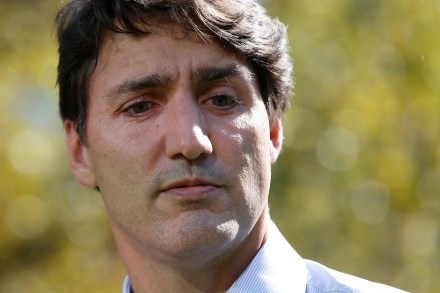
When Russia invaded Ukraine, the West was certain that its sanctions were worth the pain. But there always was a question as to whether this resolve would last once the domestic difficulties actually started. This week, western countries moved closer to admitting it might be too much to bear. At the time of the invasion in February, a massive Russian turbine was being repaired in Montreal. It was one of many turbines used to send gas through the Nord Stream 1 pipeline from Russia to Germany. When the Russians moved into Ukraine, it was kept in Canada as punishment. Over the next few weeks and months Russia replied, cutting off gas supplies to the continent.

Why it matters that Brittney Griner was ‘wrongfully detained’

From our US edition

The State Department estimates that more than 3,000 Americans are imprisoned abroad, on grounds ranging from small amounts of marijuana to multiple murders. For all but a handful, the government explicitly states they cannot get you out of jail, tell a foreign court or government you're innocent, provide legal advice or represent you in court. The president certainly is not in the habit of making calls to the Russians telling them to please let you go, you didn't mean to have that vape cartridge of hash oil in your suitcase at Customs. The key to getting the full force of the United States government working for your release is to be "wrongfully detained," a qualification that applies to fewer than 40 out of those 3,000-some Americans locked up.

Ukrainians are in mourning for Boris

Boris Johnson’s support for Ukraine looked like a gimmick for many in Britain. Whenever the PM was in trouble, he called president Zelensky. When things got too much in Westminster, Boris popped up in Kyiv. But for Ukrainians, Boris’s backing of Ukraine is no joke: he is a national hero. He is the most popular foreign politician: his approval ratings are 90 per cent, only 3 per cent behind Zelensky. He recently became an honorary citizen of Odessa. Four streets are named after him, and one cafe in the capital even makes a ‘Boris Johnson’ croissant (with vanilla ice cream on top, which is supposed to look like his hair).

Portrait of the week: Boris on the brink, petrol price protests and a £3,000 swear word

Home Rishi Sunak resigned as Chancellor of the Exchequer and Sajid Javid as Health Secretary. (Nadhim Zahawi accepted the post of Chancellor and Steve Barclay, the PM’s chief of staff, Health Secretary.) The resignations came five days after Chris Pincher, aged 52, the MP for Tamworth, resigned as deputy chief whip the morning after he ‘drank far too much’ at the Carlton Club where he was alleged to have groped two men. Then began questions of what Boris Johnson, the Prime Minister, knew and when. Mr Pincher had the whip removed as a member of the parliamentary Conservative party, and said: ‘I will benefit from professional medical support.

An existential war: even wealthy émigrés are prepared to fight for Russia

If you’re wondering where all those urbane, clever, westernised Russian travellers have gone since the onset of the Ukrainian war – a war which has largely barred them from the West – I can tell you that at least two of them will be found in the tiny Armenian hamlet of Gnishik, high in the summery peaks of the Caucasus. I know this because I met them there last week. And what they told me – about Russia, the war, their lives since the war – was illuminating. This meeting wasn’t planned.

Turkey’s grain diplomacy

Recep Tayyip Erdogan is once again using Turkey's geopolitical position for his own ends, this time dictating grain shipments from Ukraine through the Black Sea. Turkish customs authorities detained a Russian cargo ship carrying Ukrainian wheat on Sunday, following a request of Kyiv. The Russian cargo ship Zhibek Zholy left the south-eastern port of Berdyansk over the weekend carrying 7,000 tons of grain, worth about £1.75 million. The Russian-appointed head of the occupied region had hailed it as the first commercial ship to leave a Ukrainian port after months of war. He said this would take desperately-needed supplies to friendly countries, according to Politico. The reality is, of course, that the shipment is a provocative move from Russia given it isn't Moscow's grain.

The forgotten history of Poland and Ukraine

Since the outbreak of war in February there has been an overwhelming focus on the historical links between Russia and Ukraine, partly to counter Putin’s grand assertions that Kyiv belongs to Moscow. But this spotlight on Russia has meant the important history of Poland and Ukraine has been fatally overlooked. Ukraine was part of the Polish state for longer than it was inside Russia – and this is key to understanding why Ukrainians are different from Russians. In other words, it is impossible to comprehend Ukraine’s history without examining the impact of both Poland and Russia. A thousand years ago the people who now call themselves ‘Ukrainian’ had not yet adopted this term.

Russia’s referendum weapon

Preparations for a ‘referendum’ have begun in Kherson Oblast, the Russian-occupied region north of Crimea, according to Kirill Stremousov, deputy head of the Kherson regional administration and one of Moscow’s puppet governors. ‘Kherson Oblast will never return to an environment of Nazism, debauchery, and cynicism,’ he said. A date for the referendum has not yet been announced, but Stremousov previously mentioned that it could take place in the autumn.
 The residents of Kherson are currently forced to have Russian passports or their salaries and pensions will be cut off Russian troops went into the region at the beginning of March. Since then, the Kherson city has been under occupation.

The recapturing of Snake Island shows what Ukraine can do

After days of missile strikes, Ukrainian forces have forced Russia off Snake Island in the Black Sea. ‘The enemy hastily evacuated the remnants of the garrison in two speedboats and left the island’, according to the Ukrainian Operational South Command. Russia's defence ministry appeared to concede defeat, saying that ‘Russian forces have completed the assigned tasks and withdrew as a step of goodwill’. The retreat is huge news in Ukraine, as Snake Island is not only important strategic territory, but has acquired a cult status as a representation of Ukraine’s resistance. Snake Island became world famous on the first day of the war when Ukrainian troops broadcast a message saying: ‘‘Russian warship, go fuck yourself’.

Cold war: Putin’s plan to hold Germany to ransom

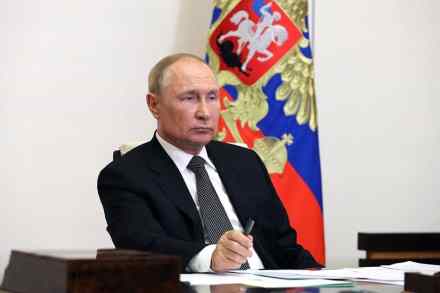
Russia has a long history of using the cold to defeat Europe. The winter of 1812 arrested Napoleon’s special military operation. Hitler’s troops hit the deep-freeze outside the gates of Moscow in December 1941. Now Vladimir Putin has the option to turn off the gas sent to Europe – a strategy against which Germany appears to have no defence. Gazprom, the monopoly supplier of piped Russian gas, has been giving Germany a taste of what life might be like, should Moscow play nasty. It recently halved the amount of gas sent through the Nord Stream 1 pipeline, using bogus technical excuses. Germany, which still relies on Russia for more than a third of its gas, is now realising it may have to cope with a total gas embargo – and a cold winter.

Boris gaffes, Russia laughs

From our US edition

Cockburn woke up this morning to a good laugh over his coffee when he saw that British prime minister Boris Johnson had attributed Putin’s invasion of Ukraine to “toxic masculinity.” Johnson, the Conservative PM of the UK, told German broadcaster ZDF, “If Putin was a woman, which he obviously isn't, but if he were, I really don't think he would've embarked on a crazy, macho war of invasion and violence in the way that he has." He proceeded to say that the war is a “perfect example of toxic masculinity,” urging more countries to have “more women in positions of power.” While Putin’s bare chest on horseback may be the source of endless memes, Cockburn believes Johnson is focusing on the wrong things here.

Nato is no longer ‘brain dead’

Finland and Sweden will be formally invited to join Nato today. Them joining the alliance will bolster Nato's presence in the Baltic and make it easier to defend Latvia, Lithuania and Estonia. The alliance now has a clear, strategic purpose again Turkey had objected to the two countries joining, regarding them as too soft on Kurdish separatists, whom President Recep Tayyip Erdogan sees as 'terrorists' threatening his country. But having received some concessions on that front, Erdogan has dropped his objections. There’s also speculation that the US will sell F-16 fighter aircraft to Turkey in exchange for its cooperation on this matter.

Is Russian Orthodoxy dying in Ukraine?

Ivano-Frankivsk has just become the first city in Ukraine to have no Russian Orthodox Church, amid a mass defection of churches away from the Moscow patriarchate and towards the breakaway Orthodox Church of Ukraine.  At the start of the invasion in February, almost two-thirds of Orthodox churches were still formally aligned with the Russian Orthodox Church whose leader – Patriarch Kirill – is a close ally of Putin. Until recently, the Russian Orthodox Church claimed dominion over Ukraine for centuries. The 2014 invasion of Crimea dampened its appeal. In 2019 a new Orthodox Church of Ukraine was recognised by Patriarch Bartholomew – the archbishop of Constantinople and the de facto leader of Orthodoxy.

Defending Ukraine should be a European project

From our US edition

NATO gatherings at the head-of-state level are ordinarily placid, even boring affairs. But this week’s three-day NATO summit in Madrid will be quite different. For the first time in twenty-three years, the alliance is meeting as a war churns on European soil. Russian President Vladimir Putin’s invasion of Ukraine has been an electric shock to the continent’s defense establishment, at least if their rhetoric is any indication. European officials have finally come around to noticing that Europe isn’t an exceptional zone of peace and tranquility, but a region no more immune to armed conflict than any other. NATO, which was straying out of theater in a desperate attempt to stay relevant, is now back to performing the defensive mission it was meant to do.

What happens to US fighters captured in Ukraine?

From our US edition

Alex Drueke and Andy Huynh are two former American military members now in Russian custody, captured by the Russians in Ukraine, where they were fighting for the Ukrainian government. What is going to happen to them? The most likely thing is that both men will eventually be traded to the US in return for captured Russians. Prisoners are very valuable and rarely wasted in executions unless those carry much more value than the prisoners held by the other side. The deal may be public or secret, and the US can expect to pay a premium. Israel usually releases ten or more Palestinian prisoners in exchange for one of its captured troops.

Zelensky’s peculiar Glastonbury appearance

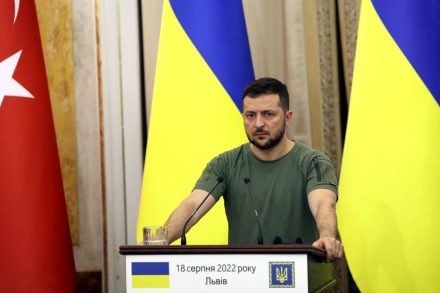
Volodymyr Zelensky didn’t quite make it onto the Glastonbury line-up posters. Perhaps Michael Eavis, the owner of ever-so Worthy Farm, had last-minute difficulties with the Ukrainian President’s booking agent. No matter. An eight-foot-high image of President Zelensky’s face graced the Pyramid Stage on Friday, right before ageing indie rockers The Libertines belted out their two-decades-old bangers. ‘Time for Heroes’, but not before festival-goers had enjoyed a brief set by Europe’s very own hero. You’d be forgiven for thinking the shtick’s getting a bit tired – but at least Pete Doherty can just about hold a tune. ‘Glastonbury is the greatest concentration of freedom these days,’ Zelensky told the festival.

Can the Big Mac save Russia?

From our US edition

Cockburn has rarely seen eye to eye with de-celebrated New York Times columnist Thomas Friedman. He's particularly irked over Friedman's habit of quoting conversations he's had with cab drivers, given that Cockburn never remembers his taxi rides the next morning. Yet today he can't help but think there's something to Friedman's pro-globalism parachute journalism after all. During the 1990s, Friedman became famous for touting what he called the Golden Arches Theory of Conflict Prevention. This held that "no two countries that both have a McDonald’s have ever fought a war against each other." The thinking behind this idea was simple: as American corporations expanded globally, as nations consolidated and opened up their markets, war became bad for business.