Ukraine

Inside Russia’s military collapse in Ukraine

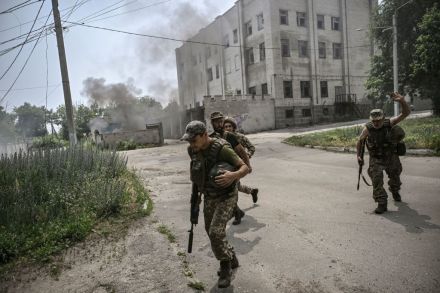
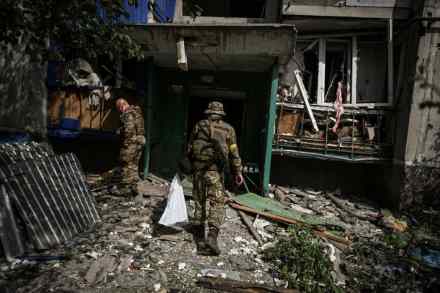
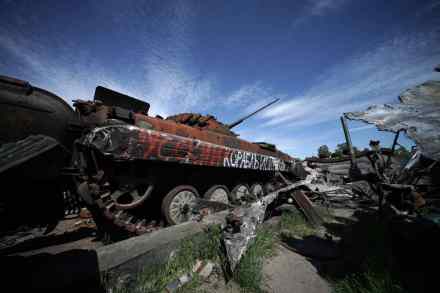
The Russian military has performed far worse in Ukraine than anyone could ever have predicted. After failing to take Kyiv, Russian troops have now been forced to focus on the Donbas region. Despite this greater concentration of forces, they are still struggling to make any major gains beyond the final capture of Mariupol, which had been under siege since the first days of the invasion without resupply or relief. For Vladimir Putin this represents a grand humiliation. But for the West, Russia’s struggling campaign offers an unrivalled opportunity to understand Russia’s capacity to pose a future military threat.

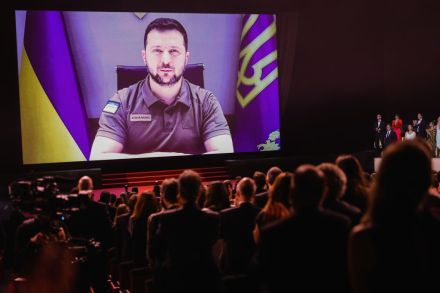
Zelensky is the star of the Cannes Festival

From our US edition

The Cannes Film Festival remains the most glamorous and famous gathering of the movie industry in the world. High-profile, black-tie premieres attended by some of the best-known actors jostle alongside the more disreputable commercial market. Films on sale this year include My Neighbor Adolf, about the unlikely friendship that is struck up between a Holocaust survivor and a mysterious man who may or may not be Adolf Hitler. But back in the main festival, everything is going entirely to plan. Apparently. There has not been a “normal” Cannes Film Festival since 2019. The 2020 edition was canceled, and the 2021 event took place in reduced and rather glum circumstances in July. But now Cannes is back, back, back, bébé!

What we learnt from Eurovision

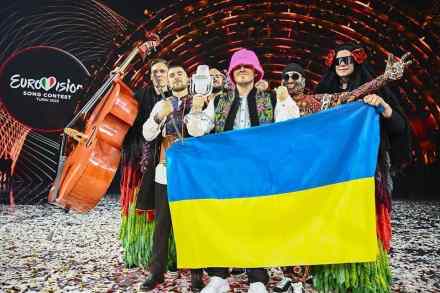
Twice during the Eurovision Song Contest our television lost the signal and the set went blank – once, mercifully, during the performance of a hirsute, gurning, cod-operatic bellend from that patently European country Azerbaijan. ‘Putin’, my wife and I both reckoned, seeing as Russian hacker groups favourably disposed towards their country’s leader had promised that they would do what they could to disrupt the broadcast and indeed the voting. If this really is the third world war, then I suppose it is a suitably banal and modernist take on universal annihilation – this yearly celebration of joyous gayness and very bad music suddenly part of the same war as the bloodshed, carnage and misery of Mariupol.

How not to level up parliament

Justified relief that soldiers are now coming out of the Azovstal steelworks alive is accompanied by anxiety about what might happen next. The day before the news broke, I was talking on WhatsApp to Daniel Detcom, a Ukrainian territorial reservist (in normal life, a disc jockey), currently on active service in Mykolaiv. He told me that the Azovstal issue was producing disagreement among Ukrainians. Those fighting in the steel plant were mostly more nationalist than President Zelensky. Some people suspected him of not striving hard enough to help them, because they might be better for him as ‘dead heroes’ than as active participants in a future Ukraine.

Lviv diary: ballet, bomb shelters – and everyone loves Boris

It is a glorious spring evening in Lviv and what could be better than a ballet gala at one of Europe’s grandest opera houses? The performance starts with an unusual announcement. In the event of an air raid siren, all spectators must go to the bomb shelter. The red-velvet seats are less than a third full – not for fear of going to a ballet in a war in which Russians have bombed a theatre, but because they can sell only 300 tickets since that is the bunker’s capacity. There is an emotional rendering of the national anthem for which the audience stand, hand on heart, and it is hard not to shed a tear, then the lights dim and the curtains open.

When did footballers’ wives become ‘WAGs’?

Wagtime Footballers’ wives Rebekah Vardy and Coleen Rooney are locked in a libel trial dubbed ‘Wagatha Christie’. The term WAGs, as it happens, was first unleashed on the public 20 years ago this week while the England football team and their families were spending a five-day bonding session in Dubai, prior to the 23 players flying out to South Korea for the 2002 World Cup. The term WAGs, reported the Sunday Telegraph, had been used for ‘wives and girlfriends’ by staff at Jumeirah Beach Club, where they were staying and enjoying the facilities, which included two swimming pools with underwater music and belly-dancing workshops.

The EU is hopelessly muddled on Ukraine

A couple of weeks ago Ursula von der Leyen portentously announced a further package of EU sanctions against Russia – the sixth, in case you had lost count. No doubt an underling immediately told Vladimir Putin. Most likely, that adviser will have been waved away; Vladimir has more important matters to think about. Much of the announcement was small beer. Putin won’t be shaking in his shoes at the thought that a few more of his top brass are being sanctioned, the odd bank removed from Swift, three broadcasters silenced in the EU, and a bar on the EU supply of corporate services like accountancy to Russian companies.

Stop calling Putin! Macron appears to be scolded by the Estonian PM

For a man who likes to present himself as a Jupiter-like statesman, gliding across the world stage, Emmanuel Macron’s efforts at diplomacy have fallen remarkably flat in recent months. While Britain spent the weeks before the Russian invasion of Ukraine shifting weapons to Kyiv – to demonstrable effect now – Macron instead responded to the troop build-up by going on a doomed diplomatic mission to Moscow. Unsurprisingly, his face to face with Putin, across an absurdly long table in the Kremlin, did not work out. Undeterred, Macron has spent the weeks following the invasion keeping up a close relationship with Putin, and has spoken a number of times to the bloated authoritarian on the phone.

Does Putin have blood cancer?

Suddenly, we are all diagnosticians. Clips of a puffy Putin slurring his words, his hands twitching or clutching a table for grim death, have led to all kinds of speculation about his health. It does seem probable that he is suffering from some ailments, to be sure. However, we need to be careful we do not get carried away with the speculation. Putin is notoriously private and his health is considered well off-limits. For a man who built much of his personal brand on his judo-fighting, ice hockey-playing, bare-chested horseback-riding persona, illness and ageing are obviously sensitive topics. Nonetheless, it has long been known that he suffers from recurring back problems, and appears to have undergone surgery more than once.

Why are Putin’s propagandists so bad at their jobs?

From our US edition

During the Cold War, the Soviets would place defectors from the West under house arrest as soon as they arrived in Russia. The assumption was that, as soon as they realized what a dump the USSR was, they would try to sneak back home. And they were probably right. Still, it’s a credit to the Soviet propaganda machine that they showed up in the first place. Back then, Russia did a great job of marketing itself. They paid top dollar to seduce high-ranking scientists and intelligence officials, while young radicals lined up to do the Kremlin’s bidding. Their disinformation was second to none. And today? Well, put it this way. Last week, Russian foreign minister Sergei Lavrov said that Ukraine’s Jewish president, Volodymyr Zelenskyy, is a Nazi.

Ukraine vote shows Republicans still don’t get it

From our US edition

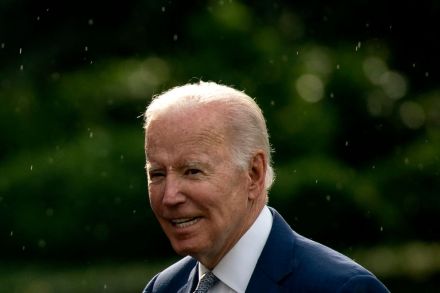
"I am 'Ultra MAGA'," House Republican Conference Chair Elise Stefanik defiantly told a reporter Wednesday, "and I'm proud of it." Republicans should be embracing the badass nickname Biden bestowed upon them, just like Trump should accept being crowned the "great MAGA king." The only problem is that Stefanik is not "Ultra MAGA." Far from it. Just one day before Stefanik declared herself part of the cool kids' lunch table, she voted with 149 other tone-deaf Republicans to send an additional $40 billion in aid to Ukraine. Congress had already approved $13.6 billion in emergency spending after the Russian invasion back in March.

Portrait of the week: The Queen’s Speech, Sinn Fein surge and an £184m lottery win

Home The Prince of Wales delivered the Queen’s Speech at the State Opening of Parliament sitting on a throne next to the crown put on a table by Lord Cholmondeley. Prince Charles acted with the Duke of Cambridge as counsellors of state under the Regency Act 1937, since the Queen cannot walk easily; the other two counsellors, the Duke of York and Duke of Sussex, are not seen as fit to act in the role. The Speech mentioned 38 laws to level up, regenerate, bring safety online, secure ‘Brexit freedoms’ in the amending of legislation, regulate railways and ferries, promote heat pumps, prohibit protestors glueing themselves to buildings, deter puppy smuggling and enforce school registers, but nothing to stop the import of fur or foie gras.

Putin’s emperor complex

Did Vladimir Putin ever use his infamous ‘historical’ account of Russia-Ukraine relations to consider how Ukrainians might react to his decision to attack them? Clearly not. The Roman historian Tacitus (d. c. ad 120) knew better what history was for. Tacitus acknowledged that Rome under the tyranny of the emperors had become corrupted. As a result, it had lost that moral compass evident in its early history. Discussing the tribes of Germany, for example, he commented on the laudable strictness of their marriage laws (one man, one wife) and a life free of vice: ‘No one thinks vice funny, no one calls corrupting or being corrupted “modern life”.’ The implied contrast with imperial Rome was obvious.

Merkel is turning into Blair

Angela Merkel left the German chancellery at the end of last year with a bunch of flowers, a standing ovation in the Bundestag, a fist bump from her successor Olaf Scholz, and an approval rating of 68 per cent. Rarely for a national leader, she left office on her own terms, remaining Germany’s most popular politician until the week she stepped down, set to become the country’s elder stateswoman. Less than three months later, Russia invaded Ukraine – immediately throwing her legacy into doubt. The 21st-century Germany she built is extraordinarily dependent on Russian energy thanks to years of dovish engagement with Vladimir Putin’s regime, placing German business interests firmly above concerns from eastern EU allies.

Germany’s wilful ignorance is hurting Ukraine

Berlin, Germany Germans have a complex relationship with their Erinnerungskultur, or ‘culture of memory’. Whenever the word appears, it almost invariably refers to how the country thinks about its difficult past. Determined never to forget the horrors of the Nazis, Germans have spent decades reflecting on the evil that their forbears unleashed upon the world. And yet this process isn’t helping us understand our present. As a German-Canadian whose grandparents spent their childhoods in bomb shelters, I’ve long respected German memory culture. But events in Berlin on VE Day this past Sunday have shaken my faith. Today, Ukraine is revealing how little we actually understand about our history in Germany.

Putin’s Victory Day speech shows he’s not backing down

From our US edition

“Victory Day” is one of the most solemn events on the Russian calendar. Every year on May 9, the country gets together to celebrate the defeat of Nazi Germany in what Russians call “the Great Patriotic War,” in which as many as 26 million Soviet troops and civilians perished. It’s a time for reflection, for an appreciation of history, and, yes, for pomp and circumstance, with Russian troops decorated in dazzling uniforms marching in unison throughout Moscow's Red Square. This year’s Victory Day celebrations, however, had much of the world on edge. In next-door Ukraine, Russian forces were taking a beating, with smaller but nimbler and more determined Ukrainian units continuing to mount stiff resistance against a Russian military offensive in the Donbas.

Putin’s cult of war

This idolisation of the Soviet military is Russia’s modern tragedy. Not least because it is crucial to Putin’s way of controlling the country. Russians are prodded to believe in a golden thread linking the achievements of an unsullied Red Army with what their soldiers are perpetrating in Ukraine today. This is why it was entirely to be expected that at today’s Victory Day parade Putin again couched his so-called ‘special military operation’ in terms of a fight against ‘Nazis’. It’s also why the Russian foreign minister, Sergei Lavrov, has compared Ukraine’s Jewish president to Hitler.

Read: Vladimir Putin’s victory day speech in full

The following is The Spectator’s translation of Putin’s speech for victory day 2022. Most respected citizens of Russia, dear veterans, comrade soldiers and sailors, sergeants and petty officers, midshipmen and ensigns, comrade officers, generals and admirals: I wish you all a happy great victory day! The defense of our homeland – when its fate hung in the balance – has always been sacred. With such feelings of genuine patriotism, Minin and Pozharsky’s People’s Militia rose up for the motherland, advanced to attack on the field of Borodin, fought the enemy on the outskirts of Moscow and Leningrad, Kyiv and Minsk, Stalingrad and Kursk, Sebastopol and Kharkov.

Is Putin preparing for total war on 9 May?

Ahead of Russia’s annual Victory Day celebration on 9 May – which marks the date the Soviet Union defeated Nazi Germany – the world is once again playing a will he, won’t he game with Vladimir Putin. It is inconceivable that Putin will be able to declare any kind of victory in the Donbas on 9 May as he originally intended. The question now is whether he will use the anniversary to declare all-out war on Ukraine instead and fully mobilise Russian society. It is a terrifying decision for Putin to face. The conquering army he sent into Ukraine has been shown to be deeply flawed, too small to conquer large amounts of territory, and inadequately led.