Ukraine

Ukraine is the first streaming service war

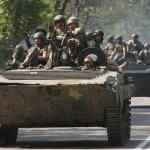
Russia has invaded Ukraine, and the images are all over the news. CNN has gone to round-the-clock coverage of bombs falling near Kyiv, refugees pouring into Hungary, Putin’s war machine rolling down a misty highway. We’re outraged by this, roused to action, as we righteously hang a blue-and-yellow Ukrainian flag off the porch and learn to spell the names of places like Kherson and Mariupol. The West, listless and fractured, seems suddenly united again as opposition to Russian imperialism grows and... ...and it’s summer. The weather is warm and a gentle breeze is tinkling through the chimes. The kids are off from school, horsing around the kitchen, and the lawn isn’t going to mow itself.

war

The strange morality of sponsoring weapons

From our UK edition

Forget fund-raising concerts donating spare clothes and offering your spare room to a refugee family. There’s a better way of showing your sympathy for Ukrainians: you can now sponsor weapons, and arm it with your very own message. For up to £2,500, Brits can send a personalised message to the crowdfunding site Sign My Rocket, who will then write it on a missile destined for the Russian army. Sending hostile messages to the enemy, of course, is not new, and may be as old as war itself. Dropping black propaganda leaflets from planes for the benefit of the enemy beneath has long been standard practice. Nor was it unusual for those on the production line at armaments factories or even those loading the ammunition to add their own special something.

How Ukraine is sabotaging Russia’s army

From our UK edition

Ukrainian Special Operations Forces (SOF) or possibly partisan fighters have conducted successfully attacks on three significant targets in occupied Crimea since 10 August. An initial attack on the Saki airbase caused a fire that quickly spread to stored ammunition and fuel, resulting in multiple huge secondary explosions. These destroyed at least nine Russian fast jets and inflicted extensive damage to the base’s facilities and surrounding buildings. On 16 August further attacks were carried out on a large ammunition and equipment depot at the strategic railroad junction town of Dzhankoiskyi and another Russian airbase at Gvardeyskoye causing further fires and secondary explosions.

ukraine

Is the Ukraine conflict a civil war?

The strategic Ukrainian port city of Mykoliav, that has been under constant Russian bombardment since the onset of war, was locked down for an entire weekend in early August as troops searched for Russian collaborators that had been calling in locations of Ukrainian troops and ammunition. The government arrested scores of traitors during their house-to-house search. Meanwhile in the capital Kyiv, President Volodymyr Zelensky has also been sounding the alarm over Russian collaborators after firing both his prosecutor-general and head of the intelligence agency for treason. The former spy chief was a close childhood friend of the president. There are allegations that the entire intelligence agency is riddled with spies, with many defecting to Russia in the early days of the invasion.

Can Zelensky afford to freeze Ukraine’s gas prices?

From our UK edition

This morning, Volodymyr Zelensky signed a moratorium on energy prices – so while gas bills are rising all over Europe, Ukraine will remain unaffected. This honours a pledge he made on his election. Freezing energy bills is a standard populist policy in Ukrainian politics (in a country where temperatures can reach -25ºC and the elderly can’t afford to buy medicine, it’s hard to win without making such promises). But there are now serious worries about whether it could bankrupt a government that needs all the money it can get to fight a war. Energy prices will be frozen until six months after martial law ends in Ukraine: the pledge is good for as long as the war lasts.

Ukraine is convinced that time is on its side. So is Russia

As the war in Ukraine approaches its six-month anniversary this coming Wednesday, the fighting shows no sign of stopping. Peace talks are a figment of the imagination, as Russian president Vladimir Putin and Ukrainian president Volodymyr Zelensky remain just as committed to achieving their objectives today as they were when the war first broke out. The Russians continue to pound residential areas with artillery in the Donbas, hoping to slowly capture more territory after months of slow, high-cost maneuvering in the Donetsk region. The Ukrainians, meanwhile, are settling on a new strategy in the south, harassing Russian supply lines deep into Russian-occupied territory.

ukraine

Nothing is certain in Russia, where the past is constantly rewritten

From our UK edition

Enforced brevity focuses the mind wonderfully. And when the minds in question are two of the West’s most interesting historians of Russia, the result is a distillation of insight that’s vitally timely. Sir Rodric Braithwaite was Britain’s ambassador to Moscow from 1988-92 during the collapse of the USSR (where he was the boss of Christopher Steele, of Trump dossier fame), then chaired the UK’s Joint Intelligence Committee. He went on to write the brilliant Afgantsy, a history of the USSR’s disastrous Afghan war and its impact on the Soviet Union’s collapse, and Moscow 1941, a people’s history of the heroic Soviet fight against Nazism.

The five stages of Mar-a-Lago grief

Another week, another silver bullet misses Donald Trump. Once more we suffered through the same endless roll of waves of crimes, accusations, near-indictments and just bad words to which we'd become accustomed during the Trump presidency. We went from "Trump has classified material under lock and key at Mar-a-Lago" to a group of people paying $1,800 to fly a banner reading "ha ha ha ha" over the resort to mock a Trump staying 3,000 miles away in New York. On cue, the regulars on MSNBC and CNN brought out their running-dog former CIA and FBI officers to tell us tick-tock, the walls are closing in, this time it will stick, Trump is going down, he'll be in jail before he runs again for office. If we can't stop him with the electoral system, we'll use the judicial system. This. Is. The.

Celebrities embark on a Ukraine safari

The saying goes that there is nothing that celebrities can’t make about themselves. As it turns out, that includes a war in Ukraine caused by an invasion of Russia that's already seen thousands of casualties. It's almost as though there are two wars happening at once: one on social media, where guerrilla clips from the front lines show bodies, shelling, and damage to homes, and one playing out in the pages of Vogue magazine. This week, it was revealed that Oscar-winning actress Jessica Chastain had visited with Ukrainian president Volodymyr Zelensky. The photo was posted to his official Telegram account and was taken from his presidential palace. There were also several shots of Chastain seated at a table with Zelensky having a discussion of some sort.

Ukrainians aren’t surprised by Amnesty’s victim-blaming

From our UK edition

Is Amnesty International victim-blaming? The Ukrainian military has been endangering civilians, it said, by establishing military bases and putting weapons systems in residential areas. Agnès Callamard, the organisation's secretary-general, remarked that ‘being in a defensive position does not exempt the Ukrainian military from respecting international humanitarian law’. It was a bizarre statement. Russian forces are attacking villages and large cities with dense populations. The Ukrainian armed forces can’t sit in a field, or put their weapons on a boat and sail away from coastal cities. As well as the morality of shifting the blame on to the aggressor, Amnesty’s statement doesn’t recognise the realities of the war situation.

The myth that Hiroshima was necessary

If you think the falsehoods spilling out of Ukraine about casualties and atrocities are shocking, meet the greatest lie of modern history. August 6 marks the seventy-seventh anniversary of the nuclear destruction of Hiroshima and death of some 140,000 non-combatants. Yet the only nation in history to employ a weapon of mass destruction on an epic scale, against an undefended civilian population, shrugs off the significance of an act of immorality. Beyond the destruction lies the myth of the atomic bombings, the post-war creation of a mass memory of things that did not happen. This myth has become the underpinning of American policy ever since, and carries forward the horrors of Hiroshima as generations pass.

What foreign policy would look like under a PM Truss

From our UK edition

When Tom Tugendhat announced he was backing Liz Truss for prime minister, his former supporters were dismayed. He was the candidate for the ‘One Nation’ caucus of moderate MPs, who defined themselves against the Tory right. ‘Anyone but Truss’ was their mantra – and they lined up behind Rishi Sunak. Yet here was their former poster boy supporting their nemesis. What could Truss and Tugendhat possibly have in common? The answer can be summed up in a word: China. For better or worse, Truss is an instinctive politician. On foreign affairs, she was held back by Boris Johnson, who was more cautious on China. If she becomes prime minister, which looks likely, she would spend more on defence and take a more muscular stance against aggressors.

Sanctions are working – whatever Putin says

From our UK edition

Don’t believe Vladimir Putin’s hype. The Russian economy is not OK. With western sanctions jeopardising up to 40 per cent of the country’s GDP, Putin’s assurances of an economic pivot to the East are a sham. And his weaponising of gas supplies to Europe is the financial equivalent of strapping on a suicide vest. That, roughly, is the message of a major new study published last week by the Yale School of Management about the impact of sanctions on Russia. Yale, working with a team of international economists, has looked past a wall of Russian obfuscation and used real-world data from retailers, energy traders and investors to reveal a picture very different from the rosy image presented by Putin at the St Petersburg Economic Forum in June.

Portrait of the week: Hosepipe bans, England’s women win the Euros and a strike over dragons

From our UK edition

Home BP reported quarterly profits of £6.9 billion, its biggest for 14 years, after oil and gas prices rose steeply. Typical domestic energy bills were forecast by the consultancy Cornwall Insight to go above £3,600 a year in the coming winter. Under the family scheme for visas, 31,300 Ukrainians had arrived in the United Kingdom, and 72,700 under the sponsorship scheme. British Airways suspended new ticket sales for short-haul flights from Heathrow until at least 15 August, to meet the airport’s limit on the number of passengers departing each day of 100,000. On 1 August, 696 migrants crossed the Channel in small boats; in July the total was 3,683, and more than 17,000 so far in 2022.

Pelosi is right to put China on notice

House speaker Nancy Pelosi has always had a flair for the dramatic. During the Trump presidency, for example, she ostentatiously tore up his State of the Union speech. But for sheer spectacle, it will be hard for Pelosi to top her “will she, won’t she” visit to Taiwan this week. In spite of the suspense, there was never really any doubt about it. For weeks China has issued dire warnings about the perils of her visit. So, as it happens, have several commentators, including The Spectator’s Freddy Gray, whom I debated on the Americano podcast, and who seems to have a bad case of the collywobbles about the Pelosi trip.

Ukraine in black and white

Displays of wanton brutality and heroic resistance in the Russo-Ukrainian War of 2022 have prompted some in the West to proclaim a moment of “moral clarity.” Some caution might be wise here, since moral clarity in world affairs is not always as clear or as moral as its claimants think. It was Soviet ideology, succeeding czarist imperialism, that for so long smothered Ukraine, along with the other captive nations consigned to Stalin at Yalta. As Ukraine may now be slipping captivity at last, the West rejoices. But how clear is the clarity? History’s players sometimes switch roles even from one act to the next. It has not, for example, always been brutal Russians that heroic Ukrainians went up against. Eighty-one years ago, it was brutal Germans.

North Star

Iran and Russia: the new Axis of Evil?

Russian President Vladimir Putin’s visit to Tehran last week brought attention to a growing partnership between Russia and Iran. The Russian shook hands with Iranian Supreme Leader Ali Khamenei, a rare gesture since both men are notorious coronaphobes. The old cleric expressed support for the Russian invasion of Ukraine, while the old KGB man offered Iran supplies of grain. US intelligence even claims Iran will open its drone arsenals to Russia. This strange friendship has its limits, but its growth could spell trouble. History does not suggest this is a natural partnership. The list of grievances between Iran and Russia is long. Great powers are often rough with middle-power neighbors.

The Zelenskys’ Vogue publicity misfire

The legendary nineteenth-century showman P.T. Barnum is credited with first uttering the words, “all publicity is good publicity.” Barnum had the good sense to die a century before he had the chance to see the Zelenskys’ Vogue photo shoot. https://twitter.com/MayraFlores2022/status/1552267933501489152 Ukrainian president Volodymyr Zelensky and his wife posed for renowned photographer Annie Leibovitz. In one shot Olena stands near Ukrainian female soldiers at the Antanov airport. In another she holds hands with her husband in the presidential office compound in Kyiv as the pair stare pensively at the camera.

zelensky vogue

The Ukraine war enters its sixth month

On February 24, Volodymyr Zelensky, the comedic actor-turned-president of Ukraine, addressed his countrymen at the same hour Russian missiles were landing in multiple Ukrainian cities simultaneously. Clad in olive garb and sporting a light stubble on his face, Zelensky promised his citizens victory for Ukraine and defeat for the Russians — and he implored the Russian people to protest the actions of their government in Moscow and St. Petersburg. As the war entered its sixth month this Sunday, Zelensky — this time dressed in a camouflage army uniform with a full beard — is just as defiant and sure of victory today as he was on that depressing February night. "Even the occupiers admit that we will win,” Zelensky boasted during his daily speech to the nation.

Ukraine and Russia sign grain deal – what next?

From our UK edition

This afternoon Kyiv and Moscow signed a UN-backed agreement to free up at least 20 million tons of grain from blocked ports. Ukraine said it would not sign a deal with Russia directly, only with Turkey and the UN. As Wolfgang Münchau noted this morning, it marks the first successful mediation between the two sides since the start of the war. This deal will complicate Vladimir Putin’s efforts to strangle the Ukrainian economy. But the Russian leader needs to show countries that are neutral – or more inclined towards Russia (in Africa and Asia) – that he saved them from hunger and rising food prices. Otherwise, Algeria could increase gas supplies to Europe and Egypt could supply Ukraine with hundreds of units of Soviet weapons and military equipment.