Ukraine

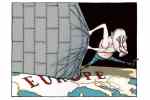
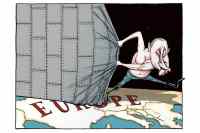
Putin’s invasion has exposed the frailty of Europe’s armies

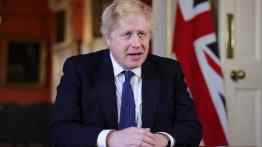
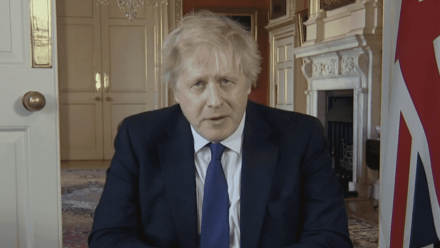
Putin’s forces are currently steamrolling Ukraine’s defences, with Russian troops circling the capital and invading from the south and east of the country. Meanwhile European leaders, neutered by their military weakness, have been unable to do little more than offer pointless sanctions and statements of solidarity. As Russian troops streamed across the border, European Commission President Ursula von der Leyen condemned the ‘unprecedented military aggression.’ When the Kremlin moved to recognise the Donetsk and Luhansk oblasts as independent states, the response in Brussels was to pass a fresh package of sanctions. This was repeated in London, with Boris Johnson telling our ‘Ukrainian friends’ that ‘we are with you and we
Are Russians turning against Putin?

One of the reasons why I judged — wrongly — that Vladimir Putin would not order an all-out invasion of Ukraine was the likelihood of a protracted war. But another was the possibility of popular protest in Russia, which could have potentially destabilising effects on the Kremlin. After sporadic protests in the hours immediately after the invasion, all of them ending in arrests or dispersal by police — citing Covid restrictions — Thursday evening sprang a surprise. Young people came out in their hundreds with homemade placards saying ‘nyet voine’, no to war, not just in Moscow and St Petersburg, where political engagement tends to be higher, but in nearly 50 towns

To hurt Putin, go for oil and gas – not Swift

Both the British and the Americans have been explicit that it is the Europeans who are blocking Russia being cut from Swift. Removing Russia would be a sound step, but it is far less important than a western agreement not to buy Russian oil and gas would be. Sadly, though, there is little chance of this happening — too many countries are dependent on Russian gas — which means $700 million a day will continue to flow into Moscow, strengthening the Kremlin’s belief that it can ride out whatever sanctions are imposed on it. Depressing as this may be, there are things the UK can do using domestic law that would inflict pain

Is Britain prepared for the cost of sanctions?

Sanctions hit both sides: this is a point that Joe Biden has made to Americans and Olaf Scholz is making to Germans. But Boris Johnson is not (so far) talking about the economic implications of this war. They will be — and in fact, already are — profound.  When Russian tanks moved into Ukraine, the price of gas for next-day delivery in the UK shot up 40 per cent. A study by Investec yesterday suggested this means typical household energy bills — already expected to approach £2,000 in April — could end up closer to £3,000. Quite a hit for a country already facing a cost-of-living crisis. And this is just

Will the West shut Russia out of Swift?

You may never have heard of the Society for Worldwide Interbank Financial Telecommunications — or at least not by its full name. Even if you had you may have mistaken it for a fairly inconsequential trade body that holds rather dull conferences in hotel function rooms in places like Frankfurt.  Yet it finds itself at the centre of the West’s response against Vladimir Putin. Swift, as it is otherwise known, is the system by which banks communicate in order to undertake cross-border financial transactions. This morning the Ukrainian foreign minister pleaded with the West to cut off Russia from the system. Britain would like to do just that, as would some

Harry and Meghan speak out on Ukraine

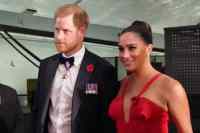
Amid all the gloom, a sliver of light has emerged from the rubble of Ukraine. As Sun-Tzu said: ‘In the midst of chaos, there is also opportunity’ – and some have certainly taken the opportunity to heap ridicule on themselves. Steerpike has cast his eye over the most ridiculous, self-involved and outlandish takes on Russia’s invasion as celebrities and politicians trip over themselves to proclaim their thoughts to the world. Harry and Meghan No crisis would be complete without the right royal duo involving themselves. The pair released an online statement claiming that they ‘stand with the people of Ukraine’ – not literally of course, given that they live in an £11million mansion in

Boris Johnson needs even tougher sanctions to deter Putin

Boris Johnson has just outlined a series of further sanctions on Russia. They are considerably more substantial than the ones he announced earlier this week. They exclude Russian banks from the UK financial system, bar Russian firms from raising capital in London and will see the UK join the US’s technology sanctions on Russia. However, Russia will not be cut off from the Swift payments system — it is clear that the UK has, sadly, lost the argument on that for now. This does raise the question of what, if not the unprovoked invasion of a sovereign country, would be enough to lead to Russia being cut off from Swift. In answers

The Ukraine invasion is good news for Wall Street

Don’t be fooled by the pictures that will shortly start to emerge of traders apparently tearing their hair out against of backdrop of red screens. A proper crisis is exactly what Wall Street traders want — to provoke yet another stimulus package, as well as the cancellation of interest rate rises. In the Alice in Wonderland world of bubblenomics, bad news is good, and good news is bad. If we have good economic figures, there is a danger that the Fed, the Bank of England and other central banks will take away the punch bowl. On the other hand, all we need is a sudden crisis that gives the impression,

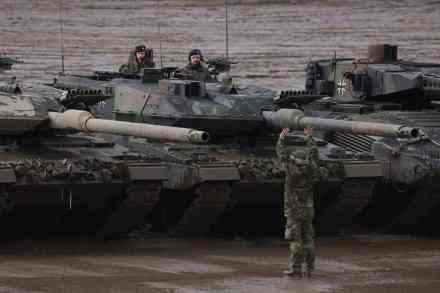
Head of Germany’s army admits: we’re not ready for war

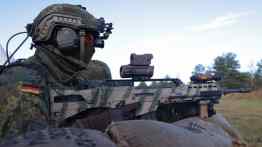
You wake up in the morning and realise: there is war in Europe. Yesterday the army held a ‘Day of Values’. The core question was ‘what do we serve for?’ It has never been easier to explain this to the generation that did not live through the Cold War. In my 41st year of peacetime service I would not have believed that I would have to experience another war. And the Bundeswehr, the army that I am privileged to lead, is more or less empty handed. The policy options we can offer in support of the alliance are extremely limited. We all saw it coming and we were not able

Read: The Prime Minister's address to the nation as Russia invades Ukraine

Shortly after 4 o’clock this morning I spoke to President Zelensky of Ukraine to offer the continued support of the UK, because our worst fears have now come true and all our warnings have proved tragically accurate President Putin of Russia has unleashed war in our European continent. He has attacked a friendly country without any provocation and without any credible excuse. Innumerable missiles and bombs have been raining down on an entirely innocent population. A vast invasion is underway — by land, by sea, and by air. And this is not, in the infamous phrase, some faraway country of which we know little. We have Ukrainian friends in this country; neighbours, co-workers. Ukraine is

What is the point of the UN?

When all this is over, we will have to hold a grown-up and perhaps very difficult conversation about the United Nations. No institution is perfect, or has supernatural powers to stop war or despotism, and perhaps nothing could have dissuaded Vladimir Putin from invading Ukraine. But the UN’s failure to prevent one fifth of its permanent security council from overrunning another member state should give us pause. There are the hard realities of realpolitik, of course, but there is also the question of endemic institutional failure. It may be that we will either have to change how we think about the UN or change the UN itself. In a session

Europe is painfully reliant on Putin

Vladimir Putin declared war on Ukraine in the early hours of this morning, starting with a massive air attack from the north, south and east, targeting military and civilian infrastructure. This is the worst-case scenario. Putin’s speech on Monday set the ideological groundwork. This morning he spoke again, calling Ukraine ‘our historic lands’. He said he was launching what he called a ‘special military operation’ with the goal, not of occupying the country, but of ‘demilitarising and de-Nazifying’ Ukraine. And Putin spoke too to us here in the West: To anyone who would consider interfering from the outside: if you do, you will face consequences greater than any of you

Two reasons Putin thinks he can weather sanctions

The nature of the Russian attack on Ukraine, striking across the country and not just concentrating on the territory claimed by the so-called breakaway republics, shows Vladimir Putin’s confidence that he can weather whatever sanctions the West imposes. This is not an assault designed to sit in any kind of grey area, but an unambiguous invasion — which the West has always made clear would bring forth the maximum set of sanctions. This is not an assault designed to sit in any kind of grey area Putin’s confidence is driven by two things. First, as I say in the magazine this week, Russia has been preparing to face expanded sanctions since

Vlad the Invader: Putin is looking to rebuild Russia's empire

‘War’, in Prussian military theorist Carl von Clausewitz’s most famous dictum, ‘is nothing but a continuation of politics with the admixture of other means.’ A generation of Democrats — the American variety, but also European Christian and Social Democrats — have sought to ignore that truth. Appalled by the violence of war, they have vainly searched for alternatives to waging it. When Vladimir Putin ordered the annexation of Crimea in 2014, Barack Obama responded with economic sanctions. When Putin intervened in the Syrian civil war, they tried indignant speeches. When it became clear that Putin intended a further and larger military incursion into Ukraine, Joe Biden and his national security

Sanctions on Putin will hit Britain’s cost of living. Are we ready?

No British soldiers will go to fight in Ukraine. The UK’s military involvement will be limited to weapons shipments and more forces to Nato’s eastern flank to try to deter further Russian revanchism. Despite this, domestic opinion in Britain — and other western countries — will be hugely significant in this conflict. The West is trying to use sanctions to influence Vladimir Putin’s behaviour. However, there are clear limits to deterrence through economic measures, as Niall Ferguson writes in his article. The threat of sanctions was not enough to stop Putin unilaterally recognising the two breakaway republics in the Donbas, Donetsk and Luhansk, and agreeing to send troops there. At

The West missed its chance to help Ukraine

Yet another east European tragedy is unfolding before our eyes. We have watched this movie for more than 80 years. In 1938, Czechoslovakia was abandoned to its fate by Neville Chamberlain at ‘Munich’. In 1945, at the Yalta conference, it was Poland’s turn — and the eastern half of our continent lost to Soviet domination. Then the Soviet invasions of Hungary in 1956 and Czechoslovakia in 1968, followed in 1981 by a ‘state of war’ in Poland. ‘Goodbye to all that’ we naively thought after the end of the Cold War, but in 2008, Vladimir Putin’s Russia seized chunks of Georgia. Then came 2014: the Russian dictator annexed Crimea from

How Starmer is using the crisis in Ukraine to his advantage

Boris Johnson and Keir Starmer had one thing in common at PMQs: they were both keen to talk about the escalating situation in Ukraine. While the Prime Minister wants to use the crisis to show there are more important issues than parties, the Labour leader views it as an opportunity to put some clear blue water between himself and his predecessor, Jeremy Corbyn.  Starmer is using the Ukraine situation this week to emphasise Labour’s return to the centre His call at Prime Minister’s Questions to ban Russia Today has already received some criticism from figures on the left and right of the party who believe it would be self-defeating. Whether or

PMQs: Boris Johnson faces pressure to be tougher on Russia

Boris Johnson came under sustained pressure at PMQs today to introduce tougher sanctions against Russia. Both Sir Keir Starmer and Ian Blackford pressed the Prime Minister on the matter, with the Labour leader opening his questions by arguing that given a sovereign country had been invaded, ‘if not now, when’ would the government unleash a full package of sanctions. Starmer repeatedly said the Labour party was supportive of what had been announced so far but that it wanted much more from the government. This included cracking down on the Russian state-backed broadcaster RT, which he said should be prevented from spreading Vladimir Putin’s propaganda around the world. Johnson argued that