Ukraine

Zelensky’s peace summit flop

From our UK edition

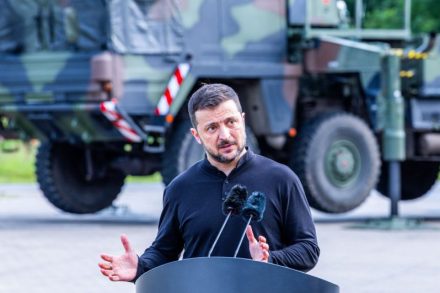
Volodymyr Zelensky’s Global Peace Summit in Switzerland was meant to demonstrate the world’s support for Kyiv and underscore Russia’s isolation. It did the opposite. Russia wasn’t invited. China didn’t send a delegation. Other major countries that might influence the Kremlin – including Brazil, India, Saudi Arabia, South Africa and the UAE – refused to sign the watered-down final communiqué. According to a former senior member of Zelensky’s administration, Ukraine’s leader had ‘hoped the conference would mark a new benchmark of international support… [but] it just showed how badly we have lost the support in the Global South’. Take Brazil’s President, Lula da Silva.

Ukraine’s greatest, yet least publicised success

From our UK edition

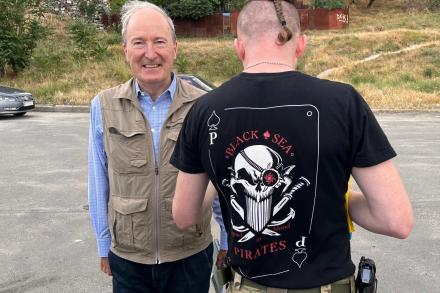
Odessa Our conference here is about Black Sea security, where I am the guest of UK Friends of Ukraine. Its subject reflects one of Ukraine’s greatest, yet least publicised successes. Almost a third of the Russian fleet has been destroyed, mostly by sea drones. The rest is trapped in ports much further east. As a result, almost normal amounts of grain and other goods flow to the wider world. It says something not good about third-world politics that all 11 recipients of WFP relief in the form of Ukrainian grain, including Nigeria, Yemen, the Democratic Republic of Congo and Gaza, support Russia in international forums. Tony Abbott, the former prime minister of Australia, gives us a rousing keynote speech, praising Ukraine for ‘defeating the Russian fleet without a navy’.

Antony Blinken embodies decades of failure

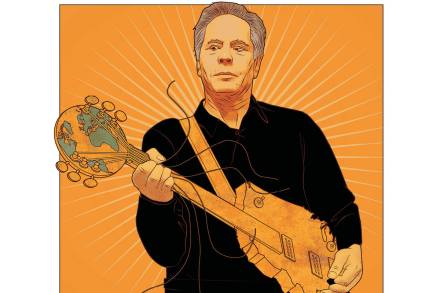
There is no sign marking the entrance to Barman Dictat. The bar under 44 Khreshchatyk Street in Kyiv boasts the largest mezcal collection in Eastern Europe. On a typical night you can find it by noting the crowd of people wafting cigarette smoke into the evening air. Inside, you’ll find shelves of more than 400 glowing bottles perched above a steel bar stretching more than thirty feet. You’ll find bespoke cocktails — Kraken, Smoky Voice and Tickle Balls. And, on one particular May evening, you’ll find the seventy-first secretary of state of the United States of America at center stage. Clad in black and wielding a scarlet electric guitar, Antony Blinken seemed less enthused about the moment than his staff had perhaps anticipated.

Blinken
war

What is war good for in the twenty-first century?

What exactly is war good for in the twenty-first century? The US should have asked itself this before embarking on decades of aimless occupation in Iraq and Afghanistan. Israel and Russia — very different countries, morally and otherwise — should be asking themselves today. The wars in Ukraine and Gaza both began with changes in an uncomfortable but previously stable status quo. Sometimes Westerners who try to imagine a peace deal for Ukraine invoke Finland’s strategic neutrality during the Cold War. But Ukraine was Finlandized for nearly twenty years after the fall of the Soviet Union, precariously balanced between Russia and the West but fully committed to neither. No one was entirely happy with that — yet there was peace from 1991 until 2014.

‘Trumpists and Communists’ on Ukrainian NGO list fight back

A US government-affiliated Ukrainian NGO, texty.org.ua, published a list last week of all the Americans “impeding aid to Ukraine.” There are 388 individuals and seventy-six organizations on the list, including members of the conservative media Alex Jones, Tucker Carlson, members of Congress and a few Spectator writers. The piece is titled “Rollercoaster: From Trumpists to Communists. The forces in the US impeding aid to Ukraine and how they do it.” “The title of this article oversells the product: it is a substantively thin piece, largely an excuse to smear a large group of Americans who have been skeptical of aid to Ukraine in one form or another,” Senator J.D. Vance and Representative Matt Gaetz wrote in a letter to secretary of state Antony Blinken on Tuesday.

ukraine ngo

Portrait of the Week: Farage returns, Abbott reselected and Trump guilty 

From our UK edition

Home Nigel Farage took over leadership of the Reform party from Richard Tice and is standing for parliament in Clacton. This came as news on Monday to Tice, and to Reform’s candidate for Clacton, Tony Mack. Outside the Wetherspoons pub where he launched his campaign, Farage had a McDonald’s banana milkshake thrown over him. Farage proposed net-zero immigration. The Conservatives then said they would ask the independent Migration Advisory Committee for a recommended level for an annual cap on visas, and put that to a parliamentary vote. Invasive Asian hornets, which can eat 50 bees a day, were found to have survived a British winter and might stay permanently.

Joe Biden’s TIME interview: the good the bad and the ugly

President Joe Biden sat down for an interview with TIME magazine in the White House last week. The questions centered around foreign affairs, with interviewers Massimo Calabresi and Sam Jacobs asking about D-Day, Ukraine, Israel and Hamas, nuclear power, China, inflation, tariffs and immigration. Back in March Americans generally agreed that the economy and foreign affairs were weak points in Biden’s administration. The TIME interview is unlikely to change anyone’s mind. Cockburn identified a few overarching themes: Biden accused TIME of misreporting and leaving his accomplishments unreported. The first accusation: “The Russian military has been decimated. You don’t write about that. It’s been freaking decimated.” Another theme: senility.

joe biden time magazine

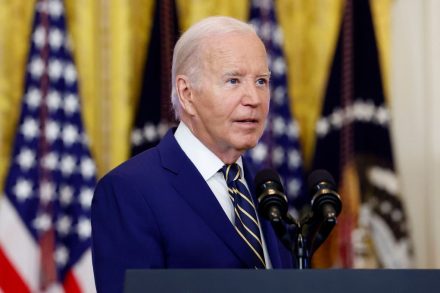
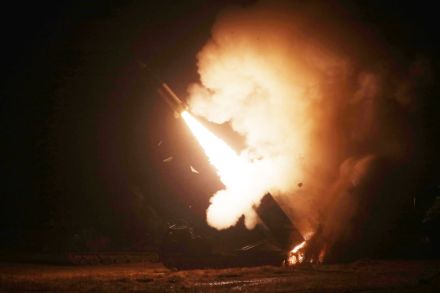
Biden partially lifts ban on strikes within Russia

From our UK edition

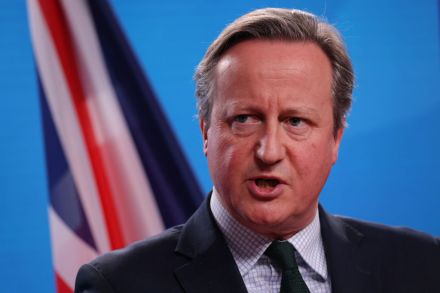
David Cameron publicly said it was up to Ukraine to decide whether to use British weapons to strike targets on Russian territory earlier this month. But nothing has happened since then: no Storm Shadow missiles have flown over the Ukraine-Russia border. Last night, Volodymyr Zelensky explained why: the UK had not given ‘100 per cent permission’ to do so. ‘We raised this issue twice. We did not get confirmation from him [Cameron].’ In reality, Downing Street is waiting on the Americans, he said.The calls for the US and other allies to allow Ukraine to strike Russian territory with western arms have grown louder after Russia launched a second offensive in the Kharkiv region.

John Mearsheimer on Ukraine, Gaza & escalation dominance

From our UK edition

48 min listen

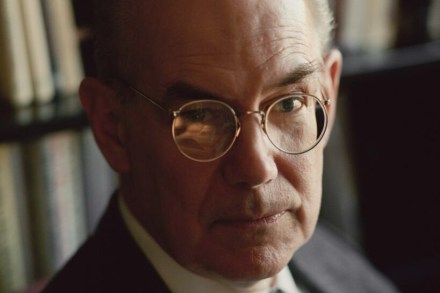
Professor John Mearsheimer joins Freddy Gray to talk about the powder keg situation in Eastern Europe, why Putin is possibly the least hawkish of possible Russian leaders and why Israel has lost escalation dominance. This was originally broadcast on SpectatorTV.

My summer of love with God’s gift

From our UK edition

When the author and podcaster Viv Groskop first visited Ukraine, she travelled there from Moscow, on a long train that ran eventually beside a field of sunflowers. They were, she recalls in her lovely and modestly scaled memoir, like a ‘blast of sunshine screaming: “Welcome to Ukraine! You are no longer in Russia!”’ The year was 1994, and Groskop had been in the former USSR for a little under a year. A modern languages undergraduate at Cambridge, she had decided to take her year abroad in St Petersburg. Until she got there, she had barely thought of Ukraine. It was one of a bunch of newly independent states; it hadn’t come up on her course.

The shadow fleet helping Russia to evade sanctions

From our UK edition

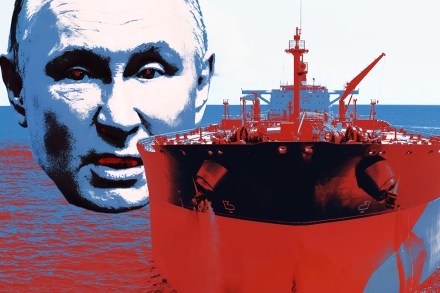
Economic sanctions were meant to be the West’s secret weapon against Russia, a way of crippling Vladimir Putin’s war machine and bringing his invasion of Ukraine to a halt without Nato firing a shot. Instead, Russia’s economy and military remain in rude health. After recent heavy attacks north of Kharkiv, Putin’s troops have seized more than 38 square miles of territory and stretched Kyiv’s already thinly deployed defences as they grind forward in Donbas. Putin has demoted his long-serving defence minister Sergei Shoigu, replacing him with the little-known economist Andrei Belousov. Appointing a finance specialist as military chief was a reminder that armies march on money. In Russia’s case, oil money.

In Kharkiv, culture is a form of defence

From our UK edition

Kharkiv It was a strange feeling to walk alone through eerie corridors in the basement of the Kharkiv Opera Theatre and suddenly hear a burst of music and applause. As Kharkiv faced the Russian advance, a Kyiv-based drama group had come to the city to hold an Art Fortress concert to raise the spirits of local residents. For the audience, mainly middle-aged women, this underground event was a welcome distraction from the encroaching reality. Many waved in time to the music, delighted by the performance, and chanted ‘Slava Ukraini’ as the closing remarks were made. As another missile is heard, first responders in helmets and body armour rush down to the metro This support is vital as the city braces for what lies ahead.

Letters: the admirable strength of Ukrainians

From our UK edition

The bravery of Ukraine Sir: Few articles could resonate as strongly as that of Svitlana Morenets (‘Scrambled logic’, 20 April). She brings the agony of her brave countrymen and women home to us, and the effect of dithering and equivocation by the West. As a volunteer with a refugee charity, I weekly admire the character of our Ukrainian clients, mainly older ladies who spend their time bringing us delicious homemade cakes, volunteering in charity shops and signing up to English classes at the local college.

The cost of European peace

From our UK edition

After six months of delay, the US Senate has finally passed a $60 billion foreign-aid package which will send urgently needed ammunition and military equipment to Ukrainian soldiers. It may well be the last such cheque to be signed in Washington. Donald Trump is favourite to be the next president of the United States and the senators closest to his brand of ‘America First’ politics, J.D. Vance of Ohio and Josh Hawley of Missouri, led the opposition to the Ukraine package. Their argument, crudely put, is that Europe should bankroll its own defence. The American money confirmed this week gives Europe about a year to adjust to this new reality and prepare for it. A generation had grown up believing that peace and democracy were the natural order of things.

Lessons from the foreign aid votes

The past week has presented a fascinating object lesson in the continued tension over the direction of foreign policy and national security in the MAGA era, on what matters and what doesn’t, and who matters and who doesn’t, when it comes to finding a true forward-looking Trump-Reagan fusion. I wrote about this in the context of reviewing the new book by Matt Kroenig and Dan Negrea, who wrote a Ukraine-focused piece for Foreign Policy last week. But that’s just writing, not voting — and this week brought votes that include more useful indicators of what’s going on.

foreign aid

Why does the West protect Israel but not Ukraine?

From our UK edition

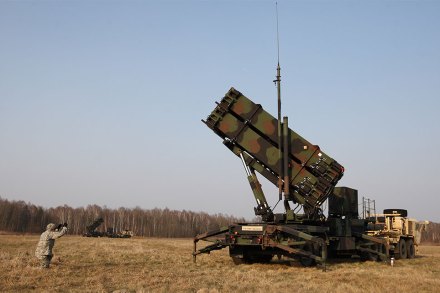
When Israel and its allies shot down hundreds of Iranian drones and missiles, they demonstrated what an effective air defence looks like. The slow-moving Shahed-136 suicide drones were not hard for the Israeli, Jordanian, British, American and (probably) Saudi air forces to find and eliminate. Even Iran’s cruise missiles were thwarted. It was an overwhelming victory for Israel and a humiliation for Iran. In Ukraine, all this was watched with desperation and even anger. While Israel boasts robust air defence systems and, with its allies, can deploy hundreds of combat aircraft to repel Iran’s attack, Ukraine must ration its defence munitions. Kyiv is forced to choose which cities to protect.

Macron vs Putin: this summer’s Olympic battle

From our UK edition

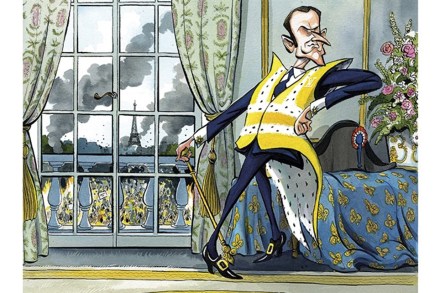
Dixmont, Yonne Last summer, Emmanuel Macron lashed out at France’s constitution because it prevents him from running for a third consecutive term in office. It is, he told his entourage, a ‘disastrous stupidity’. The majority of the French people would disagree. Macron’s approval ratings are dire, and a poll at the start of this month revealed that the youngest president in the history of the Fifth Republic has the support of only 7 per cent of the under-35s. Should anyone be surprised? Immigration is out of control, farmers have marched on Paris and teachers are at the end of their tether because of classroom intimidation. Anti-Semitic acts have surged since Hamas attacked Israel in October and drug cartels are extending their reach into towns and cities.

Will Biden support Ukraine’s attacks on Russia?

From our UK edition

This time last year, Volodymyr Zelensky was touring western capitals, calling for weapons and money to launch a decisive summer offensive. Nato eventually provided Leopard and Challenger tanks, Bradley infantry fighting vehicles, M777 howitzers, Himars rocket artillery and Patriot air defences – but too little, too late. The much-vaunted offensive went nowhere, despite a mutiny by the Wagner Group and widespread disarray in the Russian army. Instead, Soledar, Bakhmut and Avdiivka were seized. Today, Russian missile assaults are intensifying, not receding. In March, Russia hit Ukraine with 264 missiles and 515 drones. A relentless bombardment of Kharkiv is making Ukraine’s second city uninhabitable.

Can David Cameron charm the Americans?

From our UK edition

David Cameron is stateside today as the Foreign Secretary tries to muster up support for the US to send aid to Ukraine. While Cameron plans to discuss other urgent issues on the trip, such as the situation in the Middle East, the priority is to make the argument for the US to step up funding to Ukraine; senior Republicans are accused of blocking a £49 billion package for Kyiv. The push comes after Ukrainian President Volodymyr Zelenskyy warned on Sunday that his side would lose to Putin if American aid was withheld and Ukrainian air cover is not improved. Will the charm offensive work?

David Cameron meets Trump at Mar-a-Lago

Lord Cameron, the UK foreign secretary, is stopping off at Mar-a-Lago tonight before once again making the rounds in Washington, DC to tub-thump for Ukraine aid. Cameron, who served as Britain's prime minister from 2010 to 2016, is meeting with Republican presidential candidate Donald Trump, who has been skeptical about Ukraine’s prospects of beating back the Russian invaders. A spokesperson for the UK Foreign Office downplayed the significance of Cameron meeting Trump as "standard practice." “The foreign secretary is on his way to Washington DC, where he will hold discussions with US secretary of state Blinken, other Biden administration figures and members of Congress," the spokesperson said.

david cameron