Ukraine

Celebrities embark on a Ukraine safari

The saying goes that there is nothing that celebrities can’t make about themselves. As it turns out, that includes a war in Ukraine caused by an invasion of Russia that's already seen thousands of casualties. It's almost as though there are two wars happening at once: one on social media, where guerrilla clips from the front lines show bodies, shelling, and damage to homes, and one playing out in the pages of Vogue magazine. This week, it was revealed that Oscar-winning actress Jessica Chastain had visited with Ukrainian president Volodymyr Zelensky. The photo was posted to his official Telegram account and was taken from his presidential palace. There were also several shots of Chastain seated at a table with Zelensky having a discussion of some sort.

The myth that Hiroshima was necessary

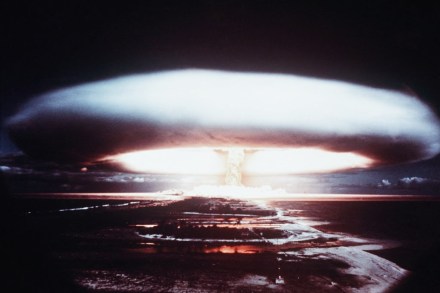
If you think the falsehoods spilling out of Ukraine about casualties and atrocities are shocking, meet the greatest lie of modern history. August 6 marks the seventy-seventh anniversary of the nuclear destruction of Hiroshima and death of some 140,000 non-combatants. Yet the only nation in history to employ a weapon of mass destruction on an epic scale, against an undefended civilian population, shrugs off the significance of an act of immorality. Beyond the destruction lies the myth of the atomic bombings, the post-war creation of a mass memory of things that did not happen. This myth has become the underpinning of American policy ever since, and carries forward the horrors of Hiroshima as generations pass.

Pelosi is right to put China on notice

House speaker Nancy Pelosi has always had a flair for the dramatic. During the Trump presidency, for example, she ostentatiously tore up his State of the Union speech. But for sheer spectacle, it will be hard for Pelosi to top her “will she, won’t she” visit to Taiwan this week. In spite of the suspense, there was never really any doubt about it. For weeks China has issued dire warnings about the perils of her visit. So, as it happens, have several commentators, including The Spectator’s Freddy Gray, whom I debated on the Americano podcast, and who seems to have a bad case of the collywobbles about the Pelosi trip.

Ukraine in black and white

Displays of wanton brutality and heroic resistance in the Russo-Ukrainian War of 2022 have prompted some in the West to proclaim a moment of “moral clarity.” Some caution might be wise here, since moral clarity in world affairs is not always as clear or as moral as its claimants think. It was Soviet ideology, succeeding czarist imperialism, that for so long smothered Ukraine, along with the other captive nations consigned to Stalin at Yalta. As Ukraine may now be slipping captivity at last, the West rejoices. But how clear is the clarity? History’s players sometimes switch roles even from one act to the next. It has not, for example, always been brutal Russians that heroic Ukrainians went up against. Eighty-one years ago, it was brutal Germans.

North Star

Iran and Russia: the new Axis of Evil?

Russian President Vladimir Putin’s visit to Tehran last week brought attention to a growing partnership between Russia and Iran. The Russian shook hands with Iranian Supreme Leader Ali Khamenei, a rare gesture since both men are notorious coronaphobes. The old cleric expressed support for the Russian invasion of Ukraine, while the old KGB man offered Iran supplies of grain. US intelligence even claims Iran will open its drone arsenals to Russia. This strange friendship has its limits, but its growth could spell trouble. History does not suggest this is a natural partnership. The list of grievances between Iran and Russia is long. Great powers are often rough with middle-power neighbors.

The Zelenskys’ Vogue publicity misfire

The legendary nineteenth-century showman P.T. Barnum is credited with first uttering the words, “all publicity is good publicity.” Barnum had the good sense to die a century before he had the chance to see the Zelenskys’ Vogue photo shoot. https://twitter.com/MayraFlores2022/status/1552267933501489152 Ukrainian president Volodymyr Zelensky and his wife posed for renowned photographer Annie Leibovitz. In one shot Olena stands near Ukrainian female soldiers at the Antanov airport. In another she holds hands with her husband in the presidential office compound in Kyiv as the pair stare pensively at the camera.

zelensky vogue

The Ukraine war enters its sixth month

On February 24, Volodymyr Zelensky, the comedic actor-turned-president of Ukraine, addressed his countrymen at the same hour Russian missiles were landing in multiple Ukrainian cities simultaneously. Clad in olive garb and sporting a light stubble on his face, Zelensky promised his citizens victory for Ukraine and defeat for the Russians — and he implored the Russian people to protest the actions of their government in Moscow and St. Petersburg. As the war entered its sixth month this Sunday, Zelensky — this time dressed in a camouflage army uniform with a full beard — is just as defiant and sure of victory today as he was on that depressing February night. "Even the occupiers admit that we will win,” Zelensky boasted during his daily speech to the nation.

Why Putin still might shut off Europe’s gas

There was a time in the not-so-distant past when Europe and Russia had a mutually beneficial relationship with each other — at least in the energy field. Europe, a major oil consumer, received reliable supplies of crude and natural gas from Moscow, while the Russians received tens of billions of dollars in return. The European Union imported 155 billion cubic meters of natural gas from Russia last year, equivalent to about 45 percent of its total gas imports. There was an ingrained assumption in European capitals that, even if relations with the Russians were thorny, fossil fuels would continue to head west. War, however, can change things in a flash. European and Russian officials now talk past each other, and sometimes they leave the room when the other is speaking.

sanctions putin russia davos oligarch

Why it matters that Brittney Griner was ‘wrongfully detained’

The State Department estimates that more than 3,000 Americans are imprisoned abroad, on grounds ranging from small amounts of marijuana to multiple murders. For all but a handful, the government explicitly states they cannot get you out of jail, tell a foreign court or government you're innocent, provide legal advice or represent you in court. The president certainly is not in the habit of making calls to the Russians telling them to please let you go, you didn't mean to have that vape cartridge of hash oil in your suitcase at Customs. The key to getting the full force of the United States government working for your release is to be "wrongfully detained," a qualification that applies to fewer than 40 out of those 3,000-some Americans locked up.

Boris gaffes, Russia laughs

Cockburn woke up this morning to a good laugh over his coffee when he saw that British prime minister Boris Johnson had attributed Putin’s invasion of Ukraine to “toxic masculinity.” Johnson, the Conservative PM of the UK, told German broadcaster ZDF, “If Putin was a woman, which he obviously isn't, but if he were, I really don't think he would've embarked on a crazy, macho war of invasion and violence in the way that he has." He proceeded to say that the war is a “perfect example of toxic masculinity,” urging more countries to have “more women in positions of power.” While Putin’s bare chest on horseback may be the source of endless memes, Cockburn believes Johnson is focusing on the wrong things here.

Defending Ukraine should be a European project

NATO gatherings at the head-of-state level are ordinarily placid, even boring affairs. But this week’s three-day NATO summit in Madrid will be quite different. For the first time in twenty-three years, the alliance is meeting as a war churns on European soil. Russian President Vladimir Putin’s invasion of Ukraine has been an electric shock to the continent’s defense establishment, at least if their rhetoric is any indication. European officials have finally come around to noticing that Europe isn’t an exceptional zone of peace and tranquility, but a region no more immune to armed conflict than any other. NATO, which was straying out of theater in a desperate attempt to stay relevant, is now back to performing the defensive mission it was meant to do.

What happens to US fighters captured in Ukraine?

Alex Drueke and Andy Huynh are two former American military members now in Russian custody, captured by the Russians in Ukraine, where they were fighting for the Ukrainian government. What is going to happen to them? The most likely thing is that both men will eventually be traded to the US in return for captured Russians. Prisoners are very valuable and rarely wasted in executions unless those carry much more value than the prisoners held by the other side. The deal may be public or secret, and the US can expect to pay a premium. Israel usually releases ten or more Palestinian prisoners in exchange for one of its captured troops.

Can the Big Mac save Russia?

Cockburn has rarely seen eye to eye with de-celebrated New York Times columnist Thomas Friedman. He's particularly irked over Friedman's habit of quoting conversations he's had with cab drivers, given that Cockburn never remembers his taxi rides the next morning. Yet today he can't help but think there's something to Friedman's pro-globalism parachute journalism after all. During the 1990s, Friedman became famous for touting what he called the Golden Arches Theory of Conflict Prevention. This held that "no two countries that both have a McDonald’s have ever fought a war against each other." The thinking behind this idea was simple: as American corporations expanded globally, as nations consolidated and opened up their markets, war became bad for business.

Biden dumps weapons into Ukraine

Over the last four months, the Biden administration has assured us that it is only sending “defensive weapons” to Ukraine. It's a claim that's become more difficult to believe as more sophisticated systems are announced seemingly every week that do not require further congressional approval. Take the most recent example. The White House announced a fresh $1 billion last week for 18 more Howitzers, more long-range missiles for the HIMARS rocket systems announced earlier this month, and a new weapon, Harpoon anti-ship missiles. These are systems that can strike at the more than 20 Russian naval vessels accused of blockading Ukraine’s eastern ports.

Russia slogs through the Donbas

A brutal artillery battle: that’s what the latest phase of Russia’s war on Ukraine has become. Vladimir Putin failed in his original goal of seizing the entire country swiftly, beginning with the capital of Kyiv, and installing a puppet government. When Ukrainian resistance prevented that, Putin shifted to a smaller, more achievable objective: establishing complete control over two eastern provinces, Luhansk and Donetsk, which border Russia and are jointly known as the Donbas region. That’s where the war is being fought now, with an uncertain outcome. Victory will depend on who wins the artillery battle. Russia has more blunt firepower; Ukraine has more precise, longer-range weapons — or at least it will have them when more NATO supplies reach the frontlines.

artillery

Biden of Arabia

When news broke that President Biden was planning a trip to Saudi Arabia to visit the crown prince Mohammed bin Salman (known as MbS), members of his party were horrified. Representative Adam Schiff, the chairman of the House Intelligence Committee, was especially disturbed and recommended the White House cancel it outright. "I wouldn't go. I wouldn't shake his hand,” Schiff told CBS on June 5. "This is someone who butchered an American resident, cut him up into pieces in the most terrible and pre-meditated way.” That resident was Jamal Khashoggi, a former Saudi royal family insider who used his perch as a columnist at the Washington Post to raise awareness about the crown prince’s ruthless ways.

arabia

The age of American unexceptionalism

Our administration would have us believe that Joe Biden is the leader of the free world. But he isn’t — and our relative inaction on Ukraine should firmly put to rest the idea of “American exceptionalism.” While Ukrainians were heartened by British prime minister Boris Johnson’s April trip to Kyiv, our commander-in-chief has adopted a different strategy for this active war zone: send in the women. Security concerns are ostensibly to blame for Biden being MIA, but sending in three of the country’s most important ladies — Speaker of the House Nancy Pelosi to Kyiv, First Lady Jill Biden and Vice President Kamala Harris to neighboring countries in Eastern Europe — seems an odd way to demonstrate that the administration is worried about security.

unexceptionalism
Ukrainian

Walking around the Ukrainian Village

When I heard that long lines had begun forming to get into Veselka after Russia invaded Ukraine, I almost rolled my eyes. I’ve been patronizing the restaurant, in the heart of New York City’s Ukrainian Village, for years, and there’s often a queue — at the height of brunch, the line can stretch for a block. But there’s no denying it’s seen an uptick in traffic as New Yorkers aware of the brutal images from Bucha and Mariupol want to feel they’re doing something to help. “Eat borscht, stand with Ukraine” reads a sign; the restaurant is donating all proceeds from sales of its hearty beet soup to Razom for Ukraine, a nonprofit. The Ukrainian Village, or Little Ukraine, is an enclave of Manhattan’s East Village.

Zelensky is the star of the Cannes Festival

The Cannes Film Festival remains the most glamorous and famous gathering of the movie industry in the world. High-profile, black-tie premieres attended by some of the best-known actors jostle alongside the more disreputable commercial market. Films on sale this year include My Neighbor Adolf, about the unlikely friendship that is struck up between a Holocaust survivor and a mysterious man who may or may not be Adolf Hitler. But back in the main festival, everything is going entirely to plan. Apparently. There has not been a “normal” Cannes Film Festival since 2019. The 2020 edition was canceled, and the 2021 event took place in reduced and rather glum circumstances in July. But now Cannes is back, back, back, bébé!

Why are Putin’s propagandists so bad at their jobs?

During the Cold War, the Soviets would place defectors from the West under house arrest as soon as they arrived in Russia. The assumption was that, as soon as they realized what a dump the USSR was, they would try to sneak back home. And they were probably right. Still, it’s a credit to the Soviet propaganda machine that they showed up in the first place. Back then, Russia did a great job of marketing itself. They paid top dollar to seduce high-ranking scientists and intelligence officials, while young radicals lined up to do the Kremlin’s bidding. Their disinformation was second to none. And today? Well, put it this way. Last week, Russian foreign minister Sergei Lavrov said that Ukraine’s Jewish president, Volodymyr Zelenskyy, is a Nazi.