Uk politics

The futility of the no-deal Brexit bluff

We desperately need clear and honest thinking about our choices - not just for the weeks but for the years, indeed decades, ahead. Our political debate is bedevilled by what, at the time I resigned, I termed “muddled thinking”, and by fantasies and delusions as to what our options really are in the world as it is - as opposed to several different worlds people on different sides of the debate would prefer to inhabit. These fantasies, which one would have hoped would be dissipating by now in the face of reality, are being propagated on all sides. Denialism is pretty universal. But if we are to take good decisions about our future, it is now genuinely urgent that we get beyond the myth-making. I am not going to speculate pointlessly about the votes next week.

Labour MP’s academies double standards

From an outside view, one could be forgiven for thinking now is a good time for academies in the UK. Figures show more than half of England’s children are now educated in academies – state schools run by independent charitable trusts but funded and overseen by central government – while one such academy Brampton Manor, in east London, recently made headlines thanks to 41 of its students winning offers from Oxbridge. However, not everyone agrees. Under Jeremy Corbyn, the Labour party is dead set against academies – its official policy is to halt the creation of any new academies or free schools should the party takes power.

Isn’t James Dyson supposed to be a Brexiteer?

History will remember Sir James Dyson as the pioneer of the bagless vacuum-cleaner. Thanks to his genius, we are now able to interrupt our chores and stare in amazement at mini-tornados of dust and filth swirling around in a transparent cylinder. This void of rubbish has been exported all over the world – not unlike our parliamentary system. But its knighted creator made an error this week when he announced that Singapore is to be the new home of his world HQ. This looks like an endorsement of the EU which has just struck a trade-deal with Singapore. The Bagless Wonder is supposed be a Brexiteer. Tory backbencher James Gray leapt to his defence. The suavely-dressed and sad-voiced MP reminded the house that Sir James has splurged cash all over the place.

Michel Barnier confirms Brexiteer fears

When Eurosceptic MPs voted down Theresa May's Brexit deal last week, the hope was that this would send a strong signal both to the Prime Minister and Brussels that strong changes were needed if it were to have any hope of passing. The problem is that the scale of the defeat – by 230 votes – means that the changes Leave MPs want to see are not the changes that the EU has in mind. In an interview with the Luxembourg Times, chief negotiator Michel Barnier says that he does not believe the troubled backstop is 'the central issue'.

Brexit is making Tories unforgivably careless about the union

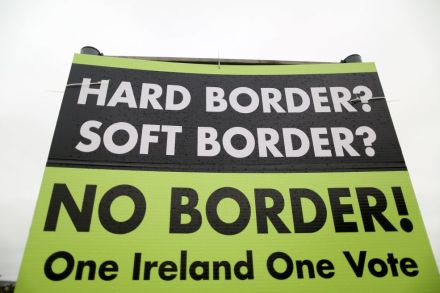
On Saturday, a car bomb went off in the UK. In Londonderry, Northern Ireland, to be exact. It was the latest in a long, long list of terrorist-related incidents in Northern Ireland, many of them carried out by men who wish to unite the island of Ireland in one state. Today, the European Commission stated, more bluntly than it ever has before, that Britain leaving the EU without a deal will mean a hard border between the EU (Ireland) and the UK (Northern Ireland). That means checkpoints and men in uniform policing the physical division of the island of Ireland. Let us, if such a thing is possible, set aside questions of whether that hard border is truly inevitable in a no-deal exit. Let us also set aside any questions of blame for the prospect of that hard border.

Jeremy Hunt proposes a plan to make the backstop time-limited

Cabinet today was not as dramatic as some had expected. No one argued for ministers being allowed a free vote on the Cooper / Boles amendment. Indeed, I’m told the Chief Whip’s plea for ministers to stick to collective responsibility went unchallenged. Perhaps, the two most interesting contributions came from Jeremy Hunt and David Gauke. Gauke questioned the government’s new approach. He said he was worried that even if the government did get something on the backstop, there still wouldn’t be enough Tory MPs backing the deal for it to pass. While Hunt argued that the best thing for the government to do was to get parliamentary support for a plan on time-limiting the backstop.

In defence of Diane Abbott

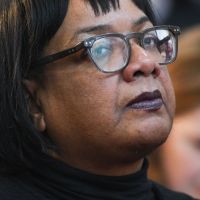
The question I had hoped to pose this week was this: “Do people dislike Diane Abbott because she is black and a woman, or because she is useless?” But then I worried that we would come to a fairly definitive conclusion a long time before my allotted 1,000 words had been used up. “The latter, I think,” is the response I have heard time and time again, both from Labour supporters and Tories. For the entire day before Abbott’s appearance on Question Time, in which she thinks she was treated badly on account of the colour of her skin and her gender, my wife had been bouncing around the house in a state of enormous excitement, looking forward to the car crash which would inevitably occur that evening on the TV. It always does with Diane.

Watch: David Blunkett despairs at Chris Williamson’s Brexit stance

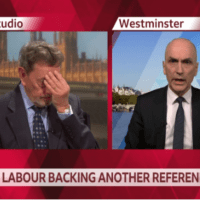
David Blunkett once ruled the roost in the Labour party but under Jeremy Corbyn, Blair's old acolytes are mostly ignored within their old party. So it's no surprise that there was little for Blunkett to do other than hold his head in his hands as Corbynista favourite Chris Williamson spelled out his views on Brexit today. Appearing on the BBC's Politics Live, Williamson said he wasn't that bothered by a no deal Brexit because the 'key thing' for a future government to focus on is 'redistributing income and wealth'. Williamson admitted that economic growth might not be quite as fast if Britain did leave the EU without a deal, but that it would be worth it to lift more people out of poverty. Unfortunately, Blunkett did not agree. He described Williamson's position as 'risible'.

Stuart Rose is being vindicated for his Brexit wages warning

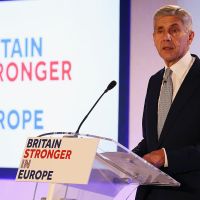
It was one of the more memorable moments of the referendum campaign. In the midst of a fevered debate between Remainers and Leavers – and with the Treasury and its allies rolling out ever more lurid predictions by the day – Stuart Rose, the former Marks & Spencer chairman who was in charge of the Remain campaign, made the point that leaving the EU might lead to higher wages. And that would, of course, be a very bad thing, at least from the perspective of a multi-millionaire businessman who had made his career as an employer of mainly relatively low-paid retail workers. The Remain campaign wasn’t the best run organisation in the world but even it could sense that observation was, to put it mildly, slightly out-of-touch with the ordinary working man.

A message for the people… from Davos

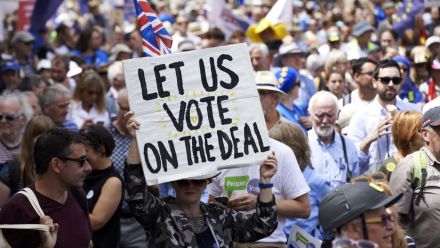
Oh dear. Davos isn't what it used to be if this year's guest list is anything to go by. The annual gathering of the global elite in Switzerland is getting underway yet a number of world leaders – including Donald Trump – have decided to give it a miss. Still, at least the People are being represented. Mr S was amused to hear an interview on Radio 4's Today programme this morning. As the campaign for a second referendum – or so-called People's Vote – steps up,  People’s Vote chairman Roland Rudd – brother of Amber Rudd – appeared on the airwaves to give an interview on the issue.

Did Corbyn really just move closer to backing a second referendum?

After Theresa May appeared before the Commons to reveal that her Brexit Plan B looks an awful lot like her Brexit Plan A, MPs now have a chance to try and force the Prime Minister to change path. Next week, MPs will vote on May's Brexit motion – along with a series of amendments submitted by MPs. A range of amendments have so far been submitted, with Labour's Yvette Cooper attempting to take No Deal off the table (meaning Article 50 would be extended until a deal had been agreed upon) and Hilary Benn calling for indicative votes on four Brexit options. However, the amendment that has caused the most excitement this evening has been tabled by Labour.

The Prime Minister’s Brexit plans are all the same: run the clock down to 29 March

The Prime Minister’s plans B, C , D and E are all the same: run the clock as close as possible to 29 March, Brexit Day, so that enough of the critics to her Brexit plan blink at the risk of either crashing out with no deal or seeing Brexit cancelled such that it passes at the last. In two words, the Brexit strategy is 'Tick Tock'. Yesterday’s conference-call cabinet meeting was a masterclass in Theresa May as bulldozer and ministers 'sitting back', according to one of them.

The problem with backing out of Brexit

Are we suffering a national humiliation? There has been a lot of commentary – not least from elements of the Remain-supporting press – about how the UK has become an international laughing stock. Papers in other countries have joined in the chuckling. Recent events have not been good for our reputation for stability and sanity. However, the one thing that the UK could do to destroy what international credibility it has left, is to change its mind on Brexit, and go back to the EU asking whether we can stay after all. Our national humiliation would be complete. We would be the employee who stormed out publicly, insisting to everyone that they could make it on their own, only to beg their employer to take them back.

The message behind Labour’s latest party broadcast

When Labour released the party political broadcast Our Town, it was enough to worry aides in No.10. The slick video saw the party zone in on voters in towns that had voted heavily to Leave. Filmed in areas including Mansfield, the video sent a clear message: Jeremy Corbyn is on a mission to appeal to the Brexit voters on whom the Tories now rely. Last week, the party released the next video in that series, Our Country. Although Corbyn's confidence vote against the government stole the limelight at the time of release, the video does shed some light on how Labour plans to fight the next election (ideally this year): https://twitter.

May goes back to the backstop

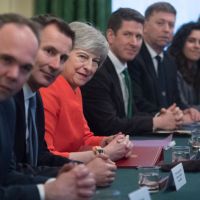
Today’s Cabinet conference call was more illuminating in terms of direction of travel than the details of what Theresa May is actually going to do. It is now clear that May’s approach is to try and put the Tory DUP alliance back together by getting something on the backstop rather than trying to find some cross party consensus. One of the reasons for this is that the Labour leadership’s reluctance to play ball makes it very hard to get the numbers for any compromise deal. I am told that David Lidington, who had been leading the cross party talks, reluctantly acknowledged this point. As one Cabinet Minister put it to me, ‘This kills the system’s desire for a customs-union style solution.

Are Tory Brexiteers slowly coming round to May’s Brexit deal?

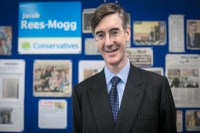
After Theresa May's Brexit deal was defeated by 230 votes in the Commons last week, there was speculation that May would lean towards a softer Brexit in order to get a deal through. Despite holding a series of cross-party talks in this vein, that now looks unlikely. As James reports on Coffee House, May is expected to announce that she will continue to seek backstop concessions in a bid to win back Tory and DUP support. Given the level of Brexiteer opposition to May's deal, that may seem like a long shot. But it's worth noting that in recent days, leading Leave MPs appear to have softened their opposition to the government's plan. Jacob Rees-Mogg used an outing in the Mail on Sunday to suggest that he could back May's deal – if he couldn't get a preferable no deal outcome.

Why a customs union is looking less likely

Immediately after the government’s crushing defeat on Tuesday night, a slew of Cabinet Ministers thought that it was inevitable that Theresa May would have to make some kind of concession on the customs union to get a deal through parliament. But, as I say in The Sun this morning, this option has run into two obstacles. First, Corbyn and McDonnell aren’t playing ball. Without their blessing, there is no way you could get 116 Labour MPs to vote with a Tory PM. Secondly, it has become clear that agreeing to a customs union would not only split the Tory party, lead to at least one Cabinet resignation, but would also—according to one senior Cabinet Minister—lose the support of 40 MPs who voted for the deal on Tuesday night.