Uk politics

Sunday shows round-up: UK ‘will still be a very safe country’ after no deal, Javid says

From our UK edition

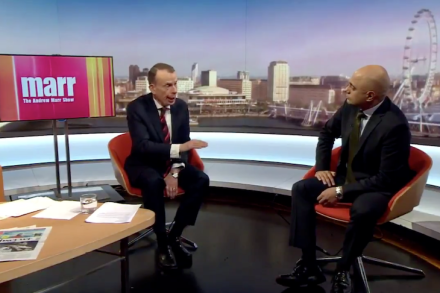
Sajid Javid: No-deal UK ‘will still be a very safe country’ This morning Andrew Marr was joined by the Home Secretary Sajid Javid. With the possibility of a no-deal Brexit on the horizon, the interview turned to the implications that could have for the UK’s national security. When Marr asked if security could be diminished, Javid avoided a direct answer, repeatedly telling Marr that ‘we will still be a very safe country’: https://twitter.com/BBCPolitics/status/1092016349818236929 SJ: There will be a change in capability, and there are capabilities that I’d want to keep... but they require cooperation with the EU, and I have to proceed on the basis that in a ‘no-deal scenario’ the EU will no longer allow us access to those capabilities...

This week’s FGM prosecution raises deep questions which cannot go unaddressed

From our UK edition

The first successful prosecution in the UK for the crime of female genital mutilation (FGM) has been widely covered. Not least because the laws that made this barbaric practice a crime have been on the books since 1985 without a single successful prosecution until this week. So the fact that a 37-year old mother from east London was convicted of the crime at the Old Bailey this week is significant. But there is something about this case that still needs to be noted. Campaigners against FGM are rightly saying that they hope that this prosecution will lead to more people coming forward to report the crime.

Don’t expect much on Brexit before Valentine’s Day

From our UK edition

Don’t expect much movement on Brexit this side of Valentine’s Day, I say in The Sun this morning. There are two reasons for this. First, EU leaders are irritated with Theresa May. She signed off on a deal with them, assured them it could get through the Commons and then lost by a record margin. They are now sceptical when the British indicate that this or that change could get the deal through parliament. Despite the Brady amendment passing, the EU are still doubtful about what would get a deal over the line. But there is another reason beyond their irritation why the EU are holding off from engaging with Mrs May. They want to see what happens when the Commons next votes on Brexit on the 14th of February.

Watch: Whitto’s awkward turn on Channel 4

From our UK edition

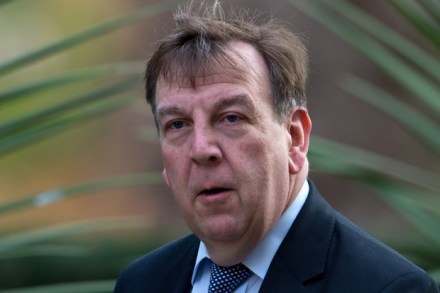
Oh dear. It's been a rollercoaster for the European Research Group of late. Once heralded as the Machiavellis of Brexit, the group of backbench Eurosceptics have lately become the subject of some mockery thanks to their botched attempts to oust Theresa May as Prime Minister. However, things appeared to turn in their favour again this week when the group – led by Jacob Rees-Mogg – managed to get May to change her Brexit strategy – and confirm that she wished to reopen the Withdrawal Agreement. Alas Mr S suspects the turn of John Whittingdale on Channel 4 news in the aftermath will have done little to cement an image of professionalism.

MPs have their holidays cancelled – but will they have anything to do?

From our UK edition

After much speculation, Andrea Leadsom has confirmed that the February recess will be cancelled. This means that – in theory – MPs will be deprived of any ski holidays scheduled for the week of 18 February. It's still up in the air what Commons business – if any – will take place that week given that Parliament is in a state of deadlock. However, the view was that regardless of Brexit progress, it would be an incredibly bad look for MPs to trot off on holiday at the time of an approaching constitutional crisis. So, will they have anything to do?

Eurosceptic fears grow over a potential customs union pivot

From our UK edition

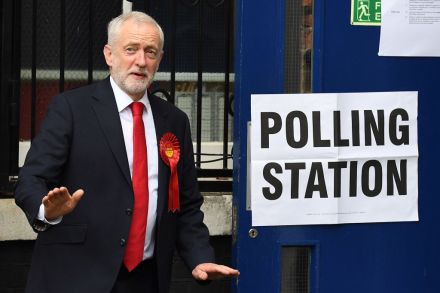
After refusing to meet with Theresa May until she ruled out a no deal Brexit, Jeremy Corbyn finally held talks with the Prime Minister this afternoon. Accompanied by members of his inner circle – Seumas Milne and Karie Murphy – the Labour leader used the meeting to put May under pressure on the customs union. Corbyn discussed with May the best way to secure a Brexit deal which can command a majority in the Commons – arguing that this was by moving to support a permanent customs union between the UK and EU. However, depending on who you speak to, there are varying reports of how that suggestion was received. A spokesman for Corbyn insists that May showed a 'serious engagement in the detail' of Corbyn’s proposal for a customs union with the EU.

This is Brexit’s La La Land moment

From our UK edition

From Venezuela to Zimbabwe, the noise that defines failing states is the wail. It’s not our fault, their leaders cry. We are the victims of a foreign conspiracy, fifth columnists and saboteurs. The most obvious and least discussed consequence of last night’s capitulation by the British Prime Minister to the right of her party is that the Tories are building a conspiracy theory of their own, as they prepare to whine and blame everyone but themselves for the crisis they have brought on Britain. If it is teaching us nothing else, Brexit has at least shown us that 'taking back control' never means taking on responsibility.

The three problems with changing the Brexit backstop

From our UK edition

The EU only functions as a collection of 28 nations – minus one on 29 March – because of its streamlined, centralised processes. And that efficient bureaucratic process was magnificently on display in two years of negotiation between the Article 50 taskforce of the European Commission, led by Michel Barnier, and the UK government. It culminated in the legally binding Withdrawal Agreement that was signed off at the end of last year by all EU government heads, including Theresa May.

Theresa May’s biggest Brexit battle is still to come

From our UK edition

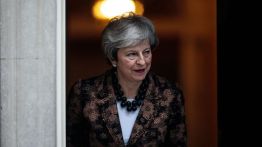
The morning after the night before finds the Tory party still in good spirits. There is a sense of relief that the party managed to find something that all but 18 of them could vote for. It was no small achievement to get nearly every Tory MP into the same lobby on Europe with Brexit only 59 days away. But the harder part is still to come. First, Theresa May has to get something from Brussels and then she has to get it through the Commons. But May’s victory last night has brought her time. She’ll hope that she can get something from the EU and that the longer both no deal and a lengthy extension to Article 50 remain possible outcomes, the more MPs will come round to her agreement as the least worst option. May has no guarantee of success.

Theresa May’s Brexit deal has come back from the dead

From our UK edition

At long last, something changed in the House of Commons tonight; at long last Theresa May had something that could, with only a little squinting or wishful thinking, be considered something close to a good day. Her deal, the withdrawal agreement backed by her Government and agreed with the EU, that seemed moribund less than two weeks ago, has new life. It may not be entirely healthy but it has, remarkably, enjoyed some kind of resurrection.  The choices available to parliament, and by extension the country, are becoming clearer. Now that MPs have rejected the Cooper-Boles amendment that would have placed some obstacles in the path of the default No Deal scenario, we are left with what was always most likely all along: the deal or no deal at all.

Jeremy Corbyn’s petty Brexit speech undermined the Labour leader’s claim to be serious

From our UK edition

Jeremy Corbyn scolded a Tory MP during his opening speech in the Commons debate on Theresa May's Brexit Plan B, telling the backbencher that his intervention hadn't added anything to the seriousness of the occasion. How odd, then, that the way the Labour leader conducted himself throughout his speech also ended up fitting that criticism perfectly. The Labour leader's response was dominated not by a careful critique of the Prime Minister's strategy for getting a new Brexit deal agreed with European leaders and then accepted by the Commons, but by his petty refusal to take an intervention from a backbencher on his own side. Angela Smith, who has long been openly hostile to Corbyn, repeatedly stood up to ask him to give way. Corbyn repeatedly ignored her.

Theresa May entertains the idea of backing the Malthouse Compromise

From our UK edition

Is the Conservative party finally uniting around a Brexit plan? This afternoon, the Prime Minister had a surprisingly good turn at the despatch box. Opening the debate for tonight's amendment votes, May explained why she was supporting the Brady amendment calling for an alternative to the backstop – and why she rejected all other amendments. She said it was clear what MPs did not want – including her existing deal in that, but said what mattered was MPs now sending an 'emphatic message about what we do want'. Within a minute of talking, Labour MPs were interrupting to try and embarrass her over her change of tune on the merits of her deal – given that May previously said it couldn't be improved. However, what will have boosted morale in No.

Ex-Labour MP Fiona Onasanya jailed for speeding ticket lie

From our UK edition

Shamed former Labour MP Fiona Onasanya has been jailed for lying to police over a speeding ticket. Onasanya compared herself to Jesus after being found guilty of perverting the course of justice last year. But her explanation that she was 'in good biblical company, along with Joseph, Moses, Daniel and his three Hebrew friends, who were each found guilty by the courts of their day' didn't convince a judge at the Old Bailey who this afternoon sentenced Onasanya to three months in prison. When she was first elected as MP for Peterborough in 2017, Onasanya had said: 'I would like one day in the future to become the first black, female Prime Minister of this country' Instead, Onasanya becomes the first female MP ever to be sent to prison.

What Labour’s support for Cooper’s Brexit amendment means

From our UK edition

Labour is now backing the Cooper amendment. It will whip its MPs to vote for this amendment which would require the Government to request an extension to Article 50 if no agreement can be reached with the EU. The aim of the amendment is to prevent a ‘no deal’ Brexit on March 29th. However, in a sign of the divisions within Labour over the issue, the party will then seek to amend Cooper to reduce the length of the extension from nine months to three. (Ironically, nearly everyone in Whitehall expects Article 50 to be extended for a few months even if a deal gets through in the next couple of weeks because of the amount of time it’ll take to put the withdrawal agreement into domestic law). With Labour’s backing, Cooper is highly likely to pass.

Can the Malthouse Compromise break the Brexit deadlock?

From our UK edition

After the European Research Group announced on Monday night that they would not get behind the Brady amendment to replace the backstop with alternative arrangements, it looked as though the grand plan to salvage Theresa May's deal was on the rocks. Now there is a new proposal doing the rounds which has the backing of both senior ERG members – including Steve Baker – and the support of Remain-leaning Tories including Nicky Morgan. Dubbed the Malthouse Compromise (in honour of housing minister Kit Malthouse who helped broker the proposal) it lays out an alternative to the backstop. The proposal is comprised of two parts. Plan A is to reopen the Withdrawal Agreement and renegotiate the backstop.

Brexit would have been Flashman’s finest hour

From our UK edition

With the 50th anniversary of the publication of George MacDonald Fraser's first Flashman novel, how would Thomas Hughes’ school bully have handled British politics today — and who’s most like our favourite literary cad? Given recent allegations of sexism and bullying in the Commons, Flash would have found himself at home. If Westminster is a boarding school, Flash would be among the prefects, pushing around the sneaks, sots and brown-nosers, and paying court to those further up the greasy pole. ‘Kiss up, Kick down,’ as they say. Flash is always at his best in a total fiasco, so Brexit would have been his finest hour.

May urges Tory MPs to give her something to battle for

From our UK edition

Theresa May has met Tory MPs tonight in a last-ditch effort to try and persuade them to vote for the Brady amendment tomorrow. She said that she would go back to Brussels and push for ‘fundamental changes’ to the backstop. But to do that, she needed to be able to show the EU that parliament was behind her—and so, MPs had to vote for the Brady amendment. May said that the government would whip in favour of Brady, essentially making it government policy. (Some in the room, though, say that May suggested in one answer that this would be subject to Cabinet agreement). Getting the Brady amendment through will be an uphill task. As Katy reported earlier, the ERG is currently not planning to vote for it.

May’s deal on rocks as ERG reject backstop plan

From our UK edition

When Sir Graham Brady tabled his Brexit amendment asserting that Theresa May's deal would be palatable if the backstop is replaced with an alternative arrangement, the hope was that enough Conservative MPs would align behind it to show Brussels that – so long as they were prepared to compromise – a deal could pass the Commons. That plan has hit a fairly large stumbling block this evening. Members of the European Research Group – made up of backbench Tory Eurosceptics – gathered in Portcullis House to come up with a formal position ahead of tomorrow night's vote. The consensus was that they would not back the Brady amendment – nor any other, including the Murrison amendment which attempts to put a time limit on the backstop.