Uk politics

Brexit would have been Flashman’s finest hour

From our UK edition

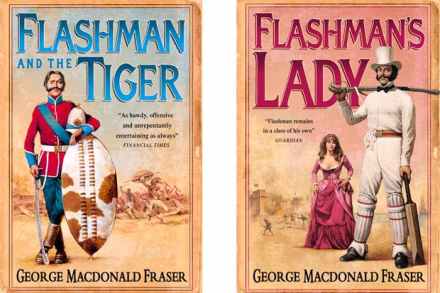
With the 50th anniversary of the publication of George MacDonald Fraser's first Flashman novel, how would Thomas Hughes’ school bully have handled British politics today — and who’s most like our favourite literary cad? Given recent allegations of sexism and bullying in the Commons, Flash would have found himself at home. If Westminster is a boarding school, Flash would be among the prefects, pushing around the sneaks, sots and brown-nosers, and paying court to those further up the greasy pole. ‘Kiss up, Kick down,’ as they say. Flash is always at his best in a total fiasco, so Brexit would have been his finest hour.

May urges Tory MPs to give her something to battle for

From our UK edition

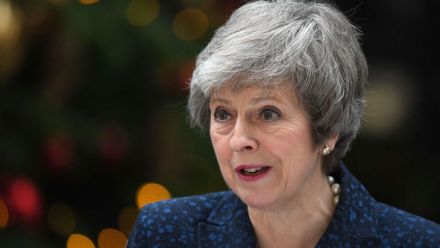
Theresa May has met Tory MPs tonight in a last-ditch effort to try and persuade them to vote for the Brady amendment tomorrow. She said that she would go back to Brussels and push for ‘fundamental changes’ to the backstop. But to do that, she needed to be able to show the EU that parliament was behind her—and so, MPs had to vote for the Brady amendment. May said that the government would whip in favour of Brady, essentially making it government policy. (Some in the room, though, say that May suggested in one answer that this would be subject to Cabinet agreement). Getting the Brady amendment through will be an uphill task. As Katy reported earlier, the ERG is currently not planning to vote for it.

May’s deal on rocks as ERG reject backstop plan

From our UK edition

When Sir Graham Brady tabled his Brexit amendment asserting that Theresa May's deal would be palatable if the backstop is replaced with an alternative arrangement, the hope was that enough Conservative MPs would align behind it to show Brussels that – so long as they were prepared to compromise – a deal could pass the Commons. That plan has hit a fairly large stumbling block this evening. Members of the European Research Group – made up of backbench Tory Eurosceptics – gathered in Portcullis House to come up with a formal position ahead of tomorrow night's vote. The consensus was that they would not back the Brady amendment – nor any other, including the Murrison amendment which attempts to put a time limit on the backstop.

It’s no wonder young people are falling out of love with Corbyn

From our UK edition

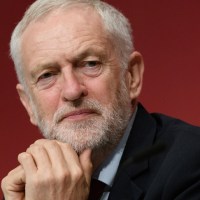
One of the ironies of contemporary British politics is that many younger voters – some of whom are so opposed to eurosceptic baby boomers that they accuse them of ‘stealing their future’ – are also enamoured with Jeremy Corbyn. The Labour leader is, after all, a eurosceptic baby boomer who some still speculate might have secretly voted Leave at the referendum. But a poll out today suggests that the Corbyn coalition is finally beginning to creak under the weight of this contradiction. According to an Opinium survey, commissioned by For our Future’s Sake (FFS), the student wing of the People’s Vote campaign, just 23 per cent of 18- to 34-year-olds approve of Corbyn’s handling of Brexit; 37 per cent are opposed.

Theresa May could soon face her biggest humiliation yet

From our UK edition

The Brexiters in and around the Tory European Research Group are now telling me they are minded to vote against the Murrison/Brady amendment – which would mandate the PM to replace the backstop with some other unspecified arrangement to avert a hard border on the island of Ireland. Why? Well one of them told me it is because they fear it is a 'bait and switch' – namely a deft con to sucker them into ultimately voting for a Brexit plan they can’t stomach. So that seems the end of that. And proves quite how little mutual trust there is between the PM and much of her own party.

Watch: Jeremy Corbyn’s miserable Monday morning

From our UK edition

Did Jeremy Corbyn get out of the wrong side of bed this morning? Mr S. only asks because the Labour leader was somewhat short of words when he was asked whether his party would or wouldn't be backing Yvette Cooper's key Brexit amendment in the Commons tomorrow. Here's how he greeted a BBC journalist who asked him that as he left his house  arlier today: https://twitter.com/BBCNormanS/status/1089837990757703680?ref_src=twsrc%5Etfw Oh dear...

Why this week could end in more Brexit deadlock

From our UK edition

On paper, this week ought to be a decisive one for the government's Brexit position. After Theresa May's Brexit deal was voted down by 230 votes, MPs now have the chance to vote on their own amendments to that deal. The majority are non-binding – but they do carry political weight - while a handful would lead to legislation and therefore force the government's hand. The two amendments currently being talked up as the most likely to pass are the Yvette Cooper amendment to stop no deal and the Graham Brady amendment to ditch the backstop. The Brady amendment seeks to make clear that MPs will back May's deal if the backstop is replaced with alternative arrangements.

The liberal case for Brexit

From our UK edition

Anyone for Whexit? I voted Remain. The theoretical arguments seemed finely balanced, so boring old pragmatism decided it. On the one hand I feel vindicated by the current shambles. But on the other hand, oddly enough, I have become more conscious of the case for leaving. And if we really are leaving it seems worthwhile to accentuate this. But ‘Brexit’ feels tarnished by crude jingoism, and I’m a liberal. I propose that we affirm our exit on old-fashioned liberal grounds: Whig Brexit: Whexit. The assumption is that the EU is a great promoter and defender of liberal values. But ultimately it’s an unhealthy assumption. Liberal values are only fully real when the nation state upholds them, puts them into law.

Corbynistas intervene on Venezuela

From our UK edition

Once upon a time Venezuela was talked up by British socialists – from John McDonnell to Richard Burgon – as an example of a better way. As Jeremy Corbyn put it back in 2013: 'Chavez showed us that there is a different and better way of doing things. It’s called socialism, it’s called social justice and it’s something that Venezuela has made a big step towards.’ Only ever since there were mass food shortages and toilet paper rations – with 82pc of households living in poverty – the majority of Corbynistas have gone a little quiet on the subject.

Momentum’s job search fails

From our UK edition

If there's one thing that really gets under the skin of Momentum, the campaign group for Labour's Jeremy Corbyn, it's that the economy has steadily improved under this Conservative government. While the group constantly tries to suggest that only Corbyn can rescue the country from economic peril, statistics that show, for example, that unemployment is falling across the country throw an awkward spanner in the works. The group has therefore recently alighted on a new response to counter suggestions that more people are in work, by pointing out that official employment statistics include people who only work one hour every week: https://twitter.

Macron’s fight with Europe’s populists is backfiring

From our UK edition

In France, discontent has been brewing for years. Emmanuel Macron managed to set it alight by embarking on a series of reforms that sparked the gilet jaunes movement. In Europe it has been brewing too, and now Macron seems to be repeating the trick. Here the antipathy is from populist governments opposed to his ideas, not only on a future Europe but also his lesson-giving in how those countries should govern themselves. International politics are following a similar pattern to national politics. Macron sweeps onto the international stage with new ideas for reforming Europe, he accompanies that with acerbic throw-away quips on the competence and morality of particular leaders, they riposte and, gradually, individual protests coalesce into an axis of angry opposition to the French president.

Can Theresa May get any Brexit plan through the Commons?

From our UK edition

Tuesday is the last chance for those MPs who want to secure as meaningful a Brexit as possible, I write in The Sun this morning. That evening, MPs will vote on a series of Brexit amendments designed to show the EU what kind of withdrawal agreement the Commons would accept. If one of them passes, then Theresa May can go back to Brussels and say: look, this is what will get the deal through my parliament. It would give her a decent chance of getting the EU to engage. But if none of these amendments can muster a majority, then the EU will simply sit tight. It knows that this parliament is fiercely opposed to no deal, and so isn’t concerned that the UK will actually go down that route. So far, there are a variety of amendments down.

Eight problems with a no deal Brexit

From our UK edition

I’ve got sympathy with those tempted to tell the Brussels elite to stuff their Brexit deal. Quite a few of my relatives and friends feel a two-fingered salute is the appropriate response to demands for £39 billion and what they see as the naked instrumentalisation of the Irish border. They listen to Emmanuel Macron and European leaders drip disdain on the British electorate for exercising a right to leave the Union afforded to all member states in EU law, watch Jean-Claude Juncker’s weird hair-fluffing antics, and read about top German MEP Elmar Brok’s dodgy scheme to profit from European Parliament tours. They think Theresa May has made a pig’s ear of the negotiations, and watch her struggle to explain her own flagship policy.

The Tory coup that could bring down Theresa May

From our UK edition

I learned two things yesterday that will give extra frisson to those votes on Tuesday, when MPs attempt to wrest control of Brexit from the PM. First is that the six Tory MPs on the executive of the 1922 committee that comprises all Tory MPs, and who are led by Sir Graham Brady, hope and expect the Prime Minister to give official backing to the amendment to her motion that they have all signed. It “requires the Northern Ireland backstop to be replaced with alternative arrangements to avoid a hard border; supports leaving the European Union with a deal and would therefore support the Withdrawal Agreement subject to this change”.

Why doesn’t Emmanuel Macron like Britain?

From our UK edition

Why is Emmanuel Macron raging against Britain? The French president has returned to the subject of the British once again in the course of his Great National Debate. To be honest, thus far this has been something of a great Macron soliloquy, as he finds it difficult to stop talking. It was inevitable that during one of his lengthy televised discourses (there have now been three) he would turn once again to his new favourite subject, and so he did.

Apply now: The Spectator’s political mischief internship (no CVs please)

From our UK edition

Every summer, The Spectator runs a paid internship scheme, which we arrange by categories: research, editing, data/tech, social media. Last year we added a new category: the political mischief internship. The quality of applicants was so extraordinary that we hired one of the applicants, John Connolly, who now works for The Spectator full time as assistant digital editor. So we're bringing it back for the new year - and out of season. Given the year-round demand for news, politics and an explanation to it all, we are looking for interns to help assist with Coffee House as soon as possible. We’re looking for someone who knows their Ben Bradshaws from Ben Bradleys. Someone digitally literate – who can file an FOI, navigate Photoshop and set up a Companies House alert.

Tory grandees table backstop amendment

From our UK edition

One of the most dramatic examples of how Theresa May’s withdrawal agreement had lost the support of her backbenches came when Graham Brady—the elected chairman of the 1922 Committee of Tory MPs—walked into the no lobby. Brady has now put down an amendment ahead of Tuesday’s vote which makes clear in what circumstances he would back the agreement. It says the House would support the withdrawal agreement if the government and the EU ‘replace the backstop with alternative arrangements to avoid a hard border’.

Compare and contrast: Labour and Russia respond to Venezuela’s crisis

From our UK edition

Venezuela is a country in crisis. Tens of thousands of people have taken to the streets calling for socialist leader Nicolas Maduro to go. Britain, the United States, Canada and seven south American countries agree, saying that Juan Guaidó should take his place as interim leader. But not everyone agrees that Maduro – who has brought his country to its knees – must go. Labour frontbenchers – including Diane Abbott, who said in 2012 that Venezuela ‘shows another way is possible’ – have been noticeably quiet on the subject of Venezuela today. So, too, has the party's leader Jeremy Corbyn, who back in 2013 praised the legacy of the country’s former leader Hugo Chavez.