Uk politics

Sleeping beauties

We can't really let today go by without mentioning Nicholas Cecil's extraordinary scoop in the Standard.  Here's a snippet: "MPs are sleeping secretly in the Commons after being stripped of their second home allowance. A handful of parliamentarians are bedding down at Westminster during the week because they are now banned from claiming on the taxpayer for a hotel, a rented flat, or a mortgage on a second home. But they want to stay anonymous for fear they will be evicted on health and safety grounds. “I'm not complaining. I'm just getting on with it,” said a Tory who asked not to be named. “I'm desperately trying to do the best for my constituents, which is to be here.

Miliband stamps out an English battleground

Well, CoffeeHousers, I've read David Miliband's article for the latest New Statesman so that you don't have to.  And let me tell you: it's classic Miliband the Elder.  Sure, the central theme - how Labour can reconnect in the English heartlands - is perceptive enough, and it runs through a few home truths which Miliband's opponents have avoided thus far.  But what could have been a passionate rallying cry ends up reading a little cool and dreary. I mean, "Labour needs a revived politics of Englishness rooted in a radical and democratic account of nationhood"?  Maybe so, but only the wonkiest of wonks will be nodding along enthusiastically. Nevertheless, one passage did jump out at me.

What happened to the Tory manifesto?

During the love-in at the start of the coalition, no one really asked which Tory pledges bit the dust. It becomes relevant now: the Tory pledge to reduce immigration to the "tens of thousands," for example, was in their manifesto but not in the coalition agreement. Although verbally restated later, it is still seen as being a flexible pledge due to its absence in that document. There is no record of what was dropped, so we at CoffeeHouse have provided one below. I won't say it's a rip-roaring read. But for those who think manifestos mean something, it's good to have on the record. UPDATE: I agree with Mycroft, below, that the first headline on this post – '190 Tory sacrifices' – was misleading. Writers never do their own headlines, but that's no excuse.

A new foreign policy?

An inventive article from Ben Brogan this morning, arguing that a new vigorously Tory foreign policy is emerging. I can be a little slow sometimes, but I haven’t noticed anything new or Tory about Britain’s foreign policy. Brogan records that the Prime Minister has let it be known that British troops will withdraw from Afghanistan by 2015. Cameron said nothing of the sort; he said he wanted British troops out of Afghanistan by 2015, something quite different. Contrary to expectations, relations with Europe are flourishing under the coalition, as pragmatic government has superseded bellicose opposition. William Hague hopes to influence the EU closely.

PS don’t forget the PPS

In this exchange from the “Yes, Minister” TV series Sir Humphrey welcomes the newly-appointed James Hacker to his department. 'James Hacker: Who else is in this department? Sir Humphrey Appleby: Well briefly, Sir, I am the Permanent Under Secretary of State, known as the Permanent Secretary. Woolley here is your Principal Private Secretary, I too have a Principal Private Secretary and he is the Principal Private Secretary to the Permanent Secretary. Directly responsible to me are ten Deputy Secretaries, 87 Under Secretaries and 219 Assistant Secretaries.

Harman in need of a peace-pod

Hattie came to PMQs in one of her ‘visible-from-space’ frocks. Today’s fashion statement from the acting Labour leader introduced honourable members to a shade of electric turquoise which may well be new to Newtonian physics. It was best enjoyed through sunglasses to prevent retinal scarring. Ms Harman had just one political weapon today – the leaked report that the budget would cost 1.3m public sector jobs – and she deployed it with little guile and maximum predictability. Cameron dodged the question altogether and shifted attention to an OBR prediction that 2.5m more private sector jobs will be created. Hattie tried slicing the cake different ways. Did the leak originate from  the Treasury? How much would be lost in tax receipts?

Are you serious Mr Miliband?

Just before the voting on the Budget started, all Tory and Lib Dem MPs received a letter from David Miliband calling on them to vote against it. Attached to the letter were more than 1500 other signatories who Miliband had got to sign on to his letter online. It was a gimmick, but not a bad one.

The case against cutting prison numbers

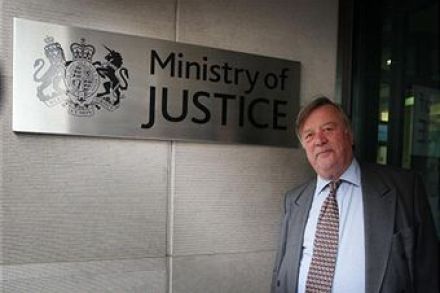
With all the hoo-haa about Ken Clarke's plan to reduce prison numbers, it's worth disinterring the Spectator's leader column on the subject from a couple of weeks ago.  Here it is, for the benefit of CoffeeHousers: One of the many ludicrous Liberal Democrat policies which Tories enjoyed rubbishing during the general election was their plan to send far fewer criminals to prison. But, alas, it seems that some bad ideas are infectious. Last week Ken Clarke, the new Justice Secretary, suggested that we can no longer afford to keep so many prisoners — so we should sentence fewer, and for shorter periods. Why, he asked, is the prison population twice what it was when he was at the Home Office in 1993? Isn’t it time to cut costs?

About those job losses…

Much ado about the Guardian's scoop this evening: a leaked Treasury document which forecasts that up to 1.3 million jobs could be lost as a result of the spending cuts in the Budget.  Or, to put it in the words of the document itself: "100-120,000 public sector jobs and 120-140,000 private sector jobs assumed to be lost per annum for five years through cuts." You can expect Labour to get stuck into these numbers, and the fact that they were previously hidden from public view, with no uncertain relish.  Ed Balls has already described them as "chilling".  But it's worth making a couple of points, by way of context: i) There's job creation too. The Guardian goes onto report that "The Treasury is assuming that growth in the private sector will create 2.

The case for elected police commissioners

This afternoon I had the privilege to speak in a panel discussion at the National Policing Conference in Manchester, held jointly by ACPO (Association of Chief Police Officers) and the APA (Association of Police Authorities).  The subject was the future of policing - a particularly important one given the potential 25 per cent cut in budgets the service is expecting.   To the credit of the Police, they're already pioneering examples of the kind of changes that can save a lot of money while seeing services improve. Surrey, for example, has greatly increased the proportion of civilian staff in its force, acknowledging that they can do many jobs better and cheaper than uniformed officers.

If you were William Hague’s speechwriter what would you want him to say?

“The Foreign and Commonwealth Office requests the honour of your company at a major address by the Secretary of State for Foreign and Commonwealth Affairs, The Rt Hon William Hague MP,'Britain's Foreign Policy in a networked world'.” Thus reads the invitation from the Foreign Office. If emails could be gold-embossed, this one probably would be. The speech on Thursday is the Foreign Secretary’s first major speech in London. Colleagues like Liam Fox and Andrew Mitchell have already kept their speech-writers busy, but until now the Foreign Secretary has only done the odd interview, and one address (in Sarajevo).

Waiting on AV

Every conversation I have about the durability of the Coalition comes back to the AV referendum. The conventional wisdom is that if AV is defeated then it will be very hard for Clegg to keep his party in. For this reason, people pay extremely close attention to the Tory leadership’s attitude to AV. We are waiting to see if there is even a hint that Cameron is prepared to soften his position on the issue to strengthen the Coalition.   So Danny Finkelstein’s blog this morning suggesting that ‘AV might provide the answer to the otherwise impossible question - if the parties stay together, how can they fight the election apart?’ has caused quite a stir.

A mandarin for the moment

Most people probably greeted Liam Fox sacking of Sir Bill Jeffrey, alongside that of the Chief of Defence Staff in that Sunday Times interview with one word - who? The department’s Permanent Under-Secretary –- or PUS -- is a pretty unassuming figure especially sat next to the be-medalled soldiers he works with. Few people outside of Whitehall knew who he was before his defenestration; few will remember his name even today. But there is more at work here than one man's professional demeanor. Britons, despite being reared on the power of officials by TV shows like "Yes Minister", do not know and do not care about anonymous power-brokers such as Sir Bill. Only when a scandal grows out of all proportion do they become known.

The rookie gambler turns pro

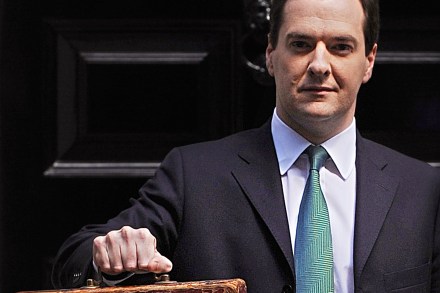
George Osborne is an enigma. For many, his politics and personality are defined by a photograph of him sneering in the Bullingdon’s clashing colours. The determined face that presented the Budget contradicted that stereotype; it suggested that Osborne was coming of age.    Paul Goodman was part of Osborne’s Shadow Treasury team and one of the 'Gang of Four' who prepared IDS and Michael Howard for PMQs, along with Boris, Cameron and Osborne. He has written an extensive appraisal of Osborne the man and politician. Read the piece: it’s enthralling, a detailed account of Osborne’s political adolescence through the years of defeat and a candid analysis of his tactical expertise. Two of Goodman’s observations stand out.

Hugh Orde’s rhetoric is encouraging for Osborne

Whatever happened to Sir Hugh Orde?  A few months ago, he was threatening to resign over the Tories' plans for elected police commissioners.  But later, in a speech to the Association of Chief Police Officers, he seems to have come over considerably more cooperative.  On spending cuts, he stresses that police numbers will likely be reduced, but adds that "we fully understand that all will have to share the pain."  And on elected police commissioners, the worst he can bring himself to say is that "the test is reconciling it with operational independence for policing ... we have an absolute right to clarity on how this system will work.

Harman the hawk

Harriet Harman’s response to David Cameron’s statement on the G8 and G20 was noticeable for her attacking the Prime Minister for talking about bringing British troops home from Afghanistan within five years. Her criticism was that talking about withdrawal undermined the troops in the field, she sounded more like John McCain than I ever expected Harriet Harman to. She chose to reinforce her point by using quotes from Liam Fox about the effect that timelines have on military morale. Her use of the Fox quotes suggests that Labour see the Cameron Fox relationship as a weak point in the government.

Different Miliband, similar deceit

First, David Miliband was telling Brownies about the public finances.  Now, his brother's at it too.  Here's what he told the Daily Politics earlier: "Over thirteen years, Labour did increase spending on public services … In the coming five years, the Conservative coalition wants to undo all of that increase in spending.  So they want to return to a time before 1997.

Sign of the times | 28 June 2010

This week’s New Yorker has a little piece about Cherie Blair’s efforts to get an International Widows’ day recognised. Most of it is about Blair doing the diplomatic rounds, she compares the process to the one for trying to win the Olympics for London. But there is an interesting anecdote about what happened when the Blairs were both looking for chambers to join: “When Tony and I were looking for jobs, they said they had a boy and a girl and they couldn’t possibly take another girl, so I went to another chambers, and Tony was taken on.” It is easy sometimes to forget just how much things have changed in the past thirty odd years.