Uk politics

The ’22 bares its teeth

Tim Montgomerie reports that the 1922 Committee is to launch its own inquiry into the Tories’ election campaign. This, as I understand it, is in addition to the party’s official inquiry, and therefore suggests that the backbenches want to assert their independence by criticising Steve Hilton and George Osborne’s strategy. After May’s ruptures between Cameron and the backbenches there is a chance that this story could snowball. There is a sense that some of the ’22 haven’t yet buried the hatchet. And the feeling’s mutual. Some Cameroons and modernisers are disdainful – ‘self-indulgent farts’ was how one put it. But the ’22 must assert itself and I welcome this review.

Cable’s aspirations

"Aspiration" tends to be a convenient word for politicians, in the sense that any policy that they can't implement now can be glossed over as something they want to do in future. But, if Vince Cable's interview with the Times is anything to go by, it could become a troublesome word for the coalition. Speaking about the Lib Dem's election promise to scrap university tuition fees, Cable says that: “It is an aspiration, but we’re highly constrained financially and we have got to try to work out ways of doing it. I’m not Father Christmas.” But nowhere does the coalition agreement say that scrapping tuition fees is an "aspiration".

Coalition is the making of Cameron

It’s all going swimmingly. David Cameron is almost as popular as Gordon Brown was in August 2007. A worrying omen perhaps, but for the moment the government’s honeymoon is in full swing. It’s quite a bash, and many of the coalition’s initial detractors admit to being pleasantly surprised by Cameron and Clegg. Iain Martin is positive, though he maintains a learned scepticism. Fraser Nelson can see a possible re-alignment of British party politics, and today Martin Kettle gushes about Cameron the ‘man of grace’. I'm not sure what a 'man of grace' is, but Cameron’s languid charm and opportunism are effective. Kettle writes: ‘[Cameron] recognises that he is delivering a deal, not a sell-out.

Osborne must make the workings of the OBR even more transparent

Forget the hubbub about Gove's schools list, the most damaging story for the government this week could well be on the cover of today's FT.  Alex Barker does a great job of summarising it here. But the central point is that the Office for Budget Responsibility changed its forecasting methods just before the Budget, with the effect of reducing how many public sector jobs would be lost due to the government's measures. This isn't damning on its own: statisticians constantly tweak their forecasting methods. But when you consider that the OBR's new methods incorporated policies which haven't even been announced yet (including one which pre-empts the findings of John Hutton's pensions commission), then it starts to look more dubious.

David Miliband’s monetary advantage

If cash was the one and only determining factor in elections, then David Miliband would have the Labour leadership contest sewn up.  As figures released today show, he's raked in a hefty £185,000 in donations to his campaign.  That's over 6 times more than Ed Balls has managed, and 12 times his brother's total. Miliband's monetary advantage is eyecatching in itself. But it also lets him trigger one of his electoral ploys. Smartly, if cynically, he has pledged to contribute one-third of his donations to a "fighting fund to help Labour win seats back at the next election". So the more cash he has in the coffers, the more he can hand over to Labour.

Gary McKinnon should convert to radical Islam

The European Court of Human Rights is an essential check on executive excess, but today it has perverted justice. It has halted Abu Hamza’s extradition to the US, where he was to be tried for colluding with al Qaeda. Its view was that Hamza would likely be subject to inhumane and degrading incarceration. In other words, the ECHR has decided that the US prison system is not compatible with the standards agreed by signatories to the European Convention on Human Rights. Fine. Except, of course, it has not. There is a pernicious double standard at work here. Gary McKinnon, the aspergers sufferer who hacked into the Pentagon’s computer systems, is to be deported to the US.

Burnham cries for help

At last! There’s a bit of British spunk about the Labour leadership contest. Andy Burnham has accused his rivals of smearing him. The finger of suspicion points at Ed Balls - given past form and his natural proclivities. Burnham and Balls are fighting for a similar constituency – both are running broadly ‘traditional’ tickets. Both are struggling. Balls has 5 Constituency Labour Party nominations to Burnham’s 8: the Milibands have 80 between them. Balls’ team, staffed by the saintly Tom Watson and Charlie Whelan, probably is briefing against Burnham; and it was probably Balls who introduced the rumour that the Milibands were smearing one another.

Bring on people power – but Cameron will still need to get his hands dirty

You've got to hand it to him: David Cameron knows when to dish out the charm. Just days on from news about cuts to their pay-offs, he is today giving a speech to civil servants in which he purrs that they "the envy of the world". Not that he withholds the stick, though. The meat of the speech is a series of measures designed to make the operations of Whitehall more transparent and its actors more accountable. Which, lest it need saying, is something I'm all in favour of. But it's worth noting that much of this "post-bureaucratic" agenda will still require strong central control to work properly. Take Cameron's proposal to make departments publish "structural reform plans," setting out their objectives and progress towards meeting them.

Cameron’s intervention causes uproar

Iain Dale has news of fresh ruptures in the Tories’ controversial European grouping. Here are the details: This is an intriguing development. Perhaps the combination of being in government, the balance of the coalition and Cameron’s markedly improved relations with Merkel and Sarkozy (whose parties are aligned with the EPP) brings the need for fresh European alliances? Most of the controversy surrounding the CRG is unfounded but it certainly damaged Cameron at home and abroad. I’m told that the Tories have no intention of shifting allegiance, and that the original plan was for Kirkhope and Kaminski to share the chairmanship if possible.

Concentration not capitulation

There is a difference between a withdrawal and a retreat. Through no fault of its own, the British army was defeated in Basra and retreated. British troops will withdraw from Sangin in October to be re-deployed to bolster Britain’s main presence in central Afghanistan. Any attempt to present this decision as politically motivated, heralding the start of a British retreat from Afghanistan, should be rejected. British forces have not ‘lost’ in Sangin, or been deemed too ‘soft’ for the task. This is a military decision, inaugurating the surge’s next phase. The logic is flawless. Troops in Helmand have been spread to thin; the Americans and British are concentrating their forces under their own leadership.

Just pointing out…

There is a great letter in The Times this morning from Saul Gresham of West Glamorgan. He writes: 'Surely we should have several options from which to choose in the referendum? It seems incongruous to be voting by first past the post on such a matter.' Touché.

Labour holds its breath for the Dark Lord’s memoir

Peter Mandelson’s memoirs are out in just over a week. Despite being one of the last off the stage, Mandelson has beaten his colleagues to the first full account of the Blair Brown era. Tony Blair’s ‘The Journey’ is not out until September. Indeed, some Blair allies think that Mandelson should have had the good manners to let the former Prime Minister publish first. There’ll be some people who dismiss any Mandelson book as old news. But from what I’m hearing these memoirs could be more interesting than people are expecting. Apparently, many of Mandelson’s political friends have not heard from him recently and fear they could be painfully frank. The media will be looking to see what Mandelson says about Blair and Brown.

That’ll learn ‘em

At last, some will cry, teachers are to be given increased disciplinary powers to moderate unruly children’s behaviour. Rather than tear up the statute book, the measures aim to change perceptions and practices and redress the balance of rights in favour of the teacher. Force can be used to restrain pupils at present, but teachers rarely resort to force for fear of prosecution. The government will lessen what it terms ‘vilification’ by protecting teachers’ anonymity against complaints unless a criminal prosecution is brought. Search and confiscation powers will be extended and summary penalties imposed on transgressors. Currently, schools have to write to parents and give 24 hours notice to detain a pupil.

Is efficiency a luxury?

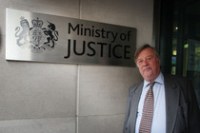
The Ministry of Justice is owed £1.3bn in fines, confiscations and compensation orders, according to the National Audit Office. That is more than a tenth of its £10.1bn primary budget, and the department faces cuts probably in excess of 25 percent. The NAO’s report is damning - the MoJ is hopelessly disorganised. To summarise, there is no consistent approach to how the department manages its regional diversity and finances. The MoJ’s rushed creation meant that its remit was never properly defined. Therefore, it is has not integrated its financial systems and processes - hence the missing £1.3bn. Naturally, the cost of enforcement may exceed the dividends.

Clegg believes

There's an snappy little anecdote in Steve Richard's column today, which bears repeating in these parts: "Clegg is in a similar position in relation to his party as Tony Blair was over Iraq. Blair used to go around telling his colleagues: 'It's worse than you think. I believe in the policy.' Clegg is known to have told friends after George Osborne's Budget: 'The good news is I'm not a patsy. The bad news is I believe in the Budget.'" Nothing I've seen or heard over recent weeks has dented my opinion from before the election: that Clegg is, in relative terms, a fiscal hawk with a strong reformist bent.  Indeed, one of the under-remarked features of his leadership is how far he took the Lib Dems up this path even before a hung parliament came into view.

The lawyers are salivating

Francis Maude and Mark Serwotka (the Public Commercial Service Union’s General Secretary) are in the opening steps of a soon to be furious jive. Maude hopes to slash ‘untenable’ civil service redundancy packages and will legislate to introduce caps at one year's pay for compulsory redundancies and 15 months salary for voluntary redundancies. Maude’s logic is unanswerable: the public sector must contribute to redressing the deficit. The public sector doesn’t agree and has the common law behind it. On 22nd June, the High Court found in favour of the PCS on this very issue: the government can only change the redundancy scheme with the agreement of the union, which is unforthcoming at present.

The briefest of stints

Well, that was quick: after only three months in the role, Alan Budd is to step down as the head of the Office for Budget Responsibility.  A shame, too.  In a quiet sort of way, he had become one of the defining figures in these early days of coalition government – helping to establish the OBR as one of the most significant actors on the political landscape.  It is certainly, now, a more effective body than I previously thought it would be. Although Budd's contract was for three months, there was some idle Westminster speculation that he'd stick around – so the rumour mill is puffing away at his departure today.