Uk politics

Talking about Brexit won’t be enough for the next Tory leader

From our UK edition

The Tory leadership contest has been dominated by Brexit so far. To a large extent, this is inevitable: Brexit is the biggest issue facing the country and the Tory party. But dealing with Brexit is a necessary but not sufficient condition for a Tory recovery. If the Tories are to win a fourth term in office, they are going to have a compelling domestic agenda as well. So far, the ideas put forward in this contest haven’t been particularly imaginative—doubling defence spending and a penny off the basic rate are standard Tory fare. The biggest question, to my mind, for the Tories is how to revive the ownership society. The Tories cannot expect people who don’t have any hope of obtaining capital, to be capitalists.

Matt Hancock has missed the point about Boris’s business jibe

From our UK edition

If it was in a playground in one of the rougher parts of town, which increasingly it resembles, this could easily escalate. One candidate remarks that he thinks the party should ‘f**k business’ so another one wades in to argue ‘f**k 'f**k business'’. And perhaps by lunchtime some other candidate you have never really heard off will be tweeting that instead the party should ‘f**k, 'f**k, f**k business'’. Before long, the Tory party leadership contest will start to look like the bits that were edited out of a Malcolm Tucker rant in The Thick of It for being too sweary. And yet the row spectacularly misses the point. Of course the Conservative party should be pro-business. But that is not quite the same thing as being pro-Big Business and its lobbyists.

Graham Brady meets with an old hand at campaigns

From our UK edition

With twelve candidates so far declared for the Tory leadership contest, more MPs are expected to announce in the coming days. Those rumoured to be planning on throwing their hat into the ring include Mark Harper, Steve Baker and 1922 chairman Graham Brady. On Friday, Brady recused himself from a Conservative Party statement on the leadership timetable – on the grounds that he might himself run. So, Mr S was intrigued to learn of a meeting Brady attended on Tuesday at the MC Saatchi office in London. Steerpike's advertising man-in-the-know reports that Brady was spotted meeting Tory peer – and former chairman – Maurice Saatchi.

Boris Johnson’s court appearance is nothing to celebrate

From our UK edition

I have often wondered what would happen if politicians were bound by the same rules as advertisers, or if manifestos were brought within the scope of the trading standards laws. What if we could take legal action against a government for failing to provide the extra NHS beds or school places they had promised? Given the propensity for governments to excuse themselves from their own legislation when it suits them – Blair’s government simply passed a clause excluding political parties when Labour’s women-only shortlists fell foul of sex discrimination legislation – it is hard to imagine such a law being passed by Parliament. But on 14th May, Westminster Magistrates heard an attempt to create one through political precedent.

What I’ve learned from talking to Americans about Brexit

From our UK edition

I’m an Oxbridge graduate in my twenties and a native speaker of a Romance language. I’m a citizen of nowhere rather than somewhere, and two years ago I moved to the United States. I could be the illustrated dictionary’s definition of a Remoaner. And I am. So why is it that, whenever I have a proper conversation with a liberal, knowledgeable American who criticises the idiocy of leaving the EU, I find myself leaping to the defence of Camp Brexit? For a few minutes, mid-conversation, I’m manning the barricades of Thanet with Nigel Farage, throwing real ale at the Provençal set. Except that, being British, I don’t dare voice my objections. I nod and smile while the repute of my country is crushed like a bulldog sat on by a bison.

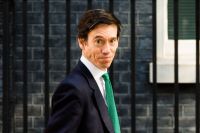
How Rory Stewart can save the Tories

From our UK edition

What does Rory Stewart’s time at the helm as prisons minister tell us about his fitness to lead the Conservative party and our country? In January last year, I wrote an open letter to his boss, Justice Secretary David Gauke with some thoughts on how to deal with Britain’s shameful prisons crisis. In it, I referred to Gauke’s new prisons minister, who, ‘given his diplomatic experience in conflict zones, will know a bullshitter when he sees one, which can only be good news when he meets the people who are running the wreckage of our probation system.’ I was right about Stewart’s low tolerance for bureaucratic abstractions and managerial verbiage.

The equality watchdog’s probe leaves Labour with a painful choice

From our UK edition

Today’s confirmation that the Equality and Human Rights Commission (EHRC) is launching a formal investigation of the Labour party has huge personal significance for me. I was the chief operating officer for the Commission between 2012 and 2015, responsible for redesigning the approach to statutory enquiries and investigations. I also had a role in making the Commission a warmer house for Jews. The EHRC I joined was not an organisation beloved of the state. Unfortunately this was not a function of its fearless independence, more that it wasn’t taken terribly seriously with a poor reputation amongst ministers. Budget cuts and obsessive introspection by some staff who regarded the body as a pressure group for leftist causes had seriously imperilled its very existence.

Ministers take advantage of power vacuum left by May resignation

From our UK edition

Parliament is in recess at the moment, though the difference between a House of Commons Chamber that is sitting and one that isn't is scarcely noticeable at present, given how few votes MPs are being required to attend. There is a similarly thin distinction between a government led by Theresa May as she insists she's not going anywhere, and one led by the Theresa May who, last week, finally conceded that she was going. Not much is happening, as per usual. In fact, there will be even less happening as a result of May's resignation announcement. Today at the Number 10 lobby briefing, the Prime Minister's official spokesman was asked whether the Withdrawal Agreement Bill was really going to return to the Commons next week as planned.

Tory leadership candidates avoid the C-word

From our UK edition

Kit Malthouse's entry into the Conservative leadership contest has created quite a problem for the other candidates, not so much because he appears to offer a serious threat to the more established campaigns, but because he is the architect of the 'Malthouse Compromise', which once promised to solve all of Theresa May's Brexit problems. The trouble with the Malthouse Compromise is that its name includes a now highly-toxic C-word. Theresa May used 'compromise' so much in the weeks before she finally gave up and announced she was resigning that no leadership candidate worth their salt wants to drop it into conversation now. Even those who think that the best way through the Brexit deadlock really will involve a lot of compromise know they can't use that word.

Watch: Rory Stewart called out over made-up Brexit ‘fact’

From our UK edition

Rory Stewart is emerging as something of a dark horse in the Tory leadership contest. But while the international development secretary is an impressive candidate he is not immune to making a mishap. Richard Madeley reminded him this morning of a particular low point for Stewart: his made-up 'fact' about Brexit –that 80 per cent of people backed Theresa May's deal – during a radio interview last year: RM: Why did you say that? RS: It was a weird thing to say. It was straight after it was announced, and I wanted to say that I felt the vast majority of the country were in the centre ground and I couldn't have been more wrong. Actually as soon as I said it, I apologised 15 seconds later.

What Hunt’s no deal warning reveals about the Tory leadership contest

From our UK edition

The Conservative leadership contest doesn't officially commence until June but that hasn't stopped the various contenders parading their credentials. With ten candidates now declared, the expectation is that this number will rise to at least fifteen before the nomination period starts. Jeremy Hunt is seen as one of the favourites and has today set the news agenda with an article for the Telegraph in which he suggests pursuing a no deal Brexit amounts to 'political suicide' – as it would mean going into a general election before Brexit had been delivered (as – he says – Parliament would block it): 'Attacked by the Brexit Party on the Right and the Liberal Democrats on the Left, we will face extinction.

Why Eurosceptics still won’t be able to crash the EU Parliament

From our UK edition

The results from the European parliamentary elections shows how EU politics is increasingly polarised. It also demonstrates how old party allegiances are fading in favour of loyalties for parties with more specific ideological and policy platforms. Against the backdrop of Brexit and divisions convulsing global politics, these elections – which have been marked by issues such as immigration and climate change becoming inextricably linked to the role of the EU – saw the highest participation in 20 years. Fragmentation that is shaking up politics domestically has been transferred to the European level. So what do these elections mean for the health of the EU project?

Jesse Norman keeps his fans waiting

From our UK edition

Is Jesse Norman standing for the Tory leadership? The Conservative MP has just taken to Twitter to provide an answer. But unfortunately 33 tweets later we are no closer to finding out. Norman wrote: ‘In recent days I’ve been asked a lot if I would stand for Leader of the Conservative Party. It’s already a crowded field, and my reply has been that the views of my constituents, party members and colleagues should shape that decision, and I will carefully consult among them’ So is it a ‘yes’ or ‘no’? Norman followed that tweet up with thoughts on the nature of ‘true conservatism’, Burke, Disraeli and Baldwin.

Boris Johnson is the big winner from the Tories’ election drubbing

From our UK edition

I never thought I would live to see the Conservative and Unionist Party, dominator of British politics for centuries, falling to a vote share of nine per cent in a national election. Hindsight is mind-bending, which means I now find it impossible to believe that David Cameron could ever have conceived that holding an EU referendum would bring peace, stability and strength to the divided Tories. And as for Theresa May she will be seen by many as guilty of a strategic error to rival any in the history of this democracy, with her failure to establish what kind of withdrawal from – and future relationship with – the European Union would command a majority in the Commons before negotiating her deal with the EU.

Listen: Lib Dem MEP on Brexit Party: ‘They are not a real party’

From our UK edition

The Brexit Party has convincingly won the European elections, picking up nearly a third of the vote. But it seems that their success still isn't enough for some. One Lib Dem MEP – Barbara Gibson – dismissed Nigel Farage's outfit, saying it is 'not a real party'. Gibson, who was elected in the East of England alongside three Brexit Party MEPs, said she didn't recognise the legitimacy of the Brexit Party – despite the group getting nearly twice as many votes as the Lib Dems in the region in which she won her seat. Here's what she had to say: 'They are not a real party. They have not even published a manifesto. They could not do this in a general election.' Interviewer: 'Do you not recognise the validity and legitimacy of those three MEPs?' 'I don't, no.

The Labour meltdown means Corbyn must choose sides on Brexit

From our UK edition

These results are dire for both main parties: the Tories finished fifth and Labour third. Theresa May’s resignation has taken some of the sting out of the Tory humiliation, but Jeremy Corbyn finds his leadership under more pressure than it has been since the 2017 general election result. Most worryingly for him, the membership is not behind him on Brexit. The results for Labour are awful. Look at Scotland and Wales, former Labour strongholds. In Scotland, the Brexit Party came second and Labour finished fifth with just 9 per cent of the votes, down from 26 per cent last time. In Wales, the Brexit Party won in 19 of the 22 council areas. For the first time ever, Labour has finished behind Plaid Cymru.

Nigel Farage: the Brexit party is no1 in Europe. Next stop: Westminster

From our UK edition

The Brexit party has emerged as the big winner of the European elections. Nigel Farage's party, formed just six weeks ago, surged to victory – winning 32pc of the votes and getting 29 of its candidates elected as MEPs. Only Merkel's CDU has as many MEPs: they're joint first. Unsurprisingly, Farage has been on a victory tour since the result came in. In his victory speech in Southampton, Farage said his new party's success ought to be a 'big wake up call to Westminster' – and reiterated his demand for his MEPs to be including in the government's Brexit negotiating team: 'We voted to leave in a referendum and we voted to do so on March 29th and we haven’t.

Brexit party tops EU poll – as Labour and Tories punished by voters

From our UK edition

The EU election results are in and it's bad news for both of the main parties. Labour and the Tories have lost support while the pro-EU Liberal Democrats and Green Party have made significant gains. However, the big winner is the Brexit Party. Ahead of the vote, Nigel Farage's new outfit was predicted to win the largest vote share and they have managed to do just that. The Brexit party has come first and the Lib Dems second. The Brexit Party won 28 MEPs with 32% of the vote share. The party had an impressive showing in the Midlands as well as East of England where they have had three MEPs elected – including Farage allies Richard Tice and Michael Heaver. In Scotland, the Brexit party came in second after the SNP.