Uk politics

How I could get a better Brexit deal

From our UK edition

There are things that we can do which will change the way in which we leave the European Union. I think that, critically, one of the issues that caused me particular concern has been the backstop. And it's caused me concern for two reasons. One: as a unionist I didn't like the idea of any part of our United Kingdom being treated differently. And secondly, as someone who wants all the benefits of a full Canada-style free trade agreement I don't want to have some of the customs restrictions that are implicit in the backstop. At the last meeting at Strasbourg, the EU committed to working alternative arrangements that could obviate the need ever to go into the backstop or could ensure that we actually replace it.

How Boris and Corbyn could both be undone by Brexit

From our UK edition

When the influential Tory ERG Brexiter Steve Baker refused last night on my programme to deny Boris Johnson is closer to his position on how to leave the EU than Dominic Raab, and he would be backing Johnson, I concluded that Johnson is now unstoppable. Barring some self-inflicted cataclysm (which cannot be ruled out) – the former foreign secretary will be Tory leader and new PM in July. Because where Baker goes, a significant number of other Brexiter Tory MPs will venture too; Baker denies he is their shepherd, but the ERG MPs habitually choose the sometimes illusory safety of travelling as a herd.

How will Raab’s prorogue comments play out with Tory MPs?

From our UK edition

To prorogue or not to prorogue? That’s the question dividing the Brexiteer candidates today following the One Nation conservative hustings. After Boris Johnson, Andrea Leadsom and Sajid Javid on Tuesday all ruled out proroguing Parliament in order to achieve a no deal Brexit in the event that MPs tried to block one, Dominic Raab used his appearance on Wednesday night to tell a group of MPs that he would not rule out suspending Parliament to bring about the UK's exit from the EU – with or without a deal. Proroguing Parliament is what happens at the end of every parliamentary session.

The probe into Labour’s anti-Semitism gives hope to Britain’s Jews

From our UK edition

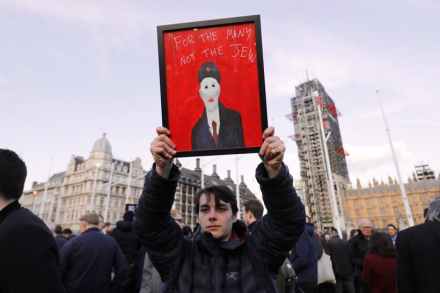
The Equality and Human Rights Commission’s announcement last week that it is to formally investigate Labour over anti-Jewish racism is an hour of great shame for the party. It is also, finally, a moment of hope for British Jews. The public body set up, with chilling irony by the party it is now to probe, has seen evidence of the institutional anti-Semitism that Jews have been making complaints about for four long years and decided that it is credible enough to investigate. Its decision makes Labour only the second political party in British history to face a formal racism inquiry. The first? The British National Party.  Finally Britain's Jews are feeling as though their fears are being listened to.

Why Tories should think carefully before backing Boris

From our UK edition

In my old job as an investment banker, there were two schools of thought about how to get the best return. Long-term funds – where money was invested over a number of years; and short-term ones – which sought quick returns wherever it could be found. The Conservative party now finds itself facing a similar dilemma: wondering whether to make the short term bet – aping the Brexit Party’s push for no deal in the hope of an immediate recovery from its dire position. Or whether to take the long view: make for the centre ground while still delivering Brexit. The latter is a strategy that is riskier in the medium term but could represent better long-term success. So what should the Tories do?

Gove pitches himself as the liberal candidate in the Tory leadership race

From our UK edition

Michael Gove’s positioning in the Tory leadership race became clearer last night. In conversation with Fraser Nelson at a Spectator event, Gove made clear that he would be prepared to extend the Brexit deadline beyond 31 October if there were negotiations going on that would lead to a better deal. He argued that Sinn Fein’s poor recent election results meant that there was more chance of getting the devolved institutions up and running in Northern Ireland if Stormont had a far greater role in the administration of the backstop, which would allay some of the DUP’s concerns: ‘I think that there are ways in which we can work with the Irish government in order to ensure that we either need never go in.

Tory leadership candidates start frenzied final push for support

From our UK edition

With just a few days to go until nominations close in the Tory leadership contest, candidates are busy trying to shore up support in the parliamentary party. There are five - Sam Gyimah, Andrea Leadsom, Rory Stewart, Mark Harper and Esther McVey - who currently don't have sufficient nominations to make it onto the ballot paper. Harper tried to get some attention by asking a question about the Peterborough by-election at today's Prime Minister's Questions, while Gyimah has been doing the rounds in Portcullis House as MPs have trundled through. Meanwhile I understand that Rory Stewart has cancelled all his media appearances in order to hold as many meetings as possible with MPs. Stewart's predicament is an interesting one.

The lessons from the rise and fall of Change UK

From our UK edition

Leaving your party is brave because it is a costly and painful thing to do. You risk the loss of relationships, your sense of belonging and identity, your status and your income. The eleven MPs who formed the Independent Group took those risks knowingly. They saw Conservative and Labour parties transformed by blinkered nationalism and dogmatic socialism, each of them over-run by zealots whose commitment to their ideology is exceeded only by their unkindness towards those who do not share the faith. I remember seeing the relief on the faces of those eleven MPs back in February when they made the break. All of them seemed happier without the burden of being in a party that had ceased to feel like home. They were free to be themselves, to speak their minds, to vote with their consciences.

What do Peterborough voters think about Thursday’s by-election?

From our UK edition

There’s only one day to go until the Peterborough by-election, which decides who will replace the former Labour MP Fiona Onasanya, and yet it’s still all to play for in this marginal seat. Under normal circumstances, with the last Labour MP found guilty of perverting the course of justice and thrown out by her constituents, you would expect the Conservatives (who only lost by around 600 votes in the 2017 general election) to be favourites to win. But the recent rise of the Brexit party in the local and European elections means that conventional wisdom no longer applies. The Brexit party are currently frontrunners in the race and some bookies have stopped taking bets on their candidate, Mike Greene, becoming the party’s first Westminster MP.

Inside the One Nation Tory leadership hustings

From our UK edition

What is a one nation Tory? On Tuesday evening, various leadership contenders descended to the committee room corridor to try and convince MPs that they could be described as one. Earlier this year, the One Nation Tory caucus was launched – led by Amber Rudd and Nicky Morgan – and was reported to be aimed at keeping the Tories in the centre rather than lurching to the right in a leadership contest.The party has since declared a list of its core values – which range from protecting the union to the environment and free enterprise. The view that they have garnered the most attention for, however, is their opposition to a no deal Brexit.

Will Boris Johnson save or sink the Tory party?

From our UK edition

Now that the Tory party has confirmed we'll know the identity of its new leader and therefore in theory our new prime minister in the week beginning 22 July, it is also possible to capture the single issue that will dominate both the coming two weeks of voting by MPs – who will choose the shortlist of two – and then the definitive choice by party members. It is this deceptively simple question: will Boris Johnson save or sink the Tory Party? Right now the former foreign secretary and Churchill biographer is streets ahead of the pack, both in respect of the declared support of Tory MPs and popularity among party officials and the membership.

Tory party changes rules to stop candidate chaos

From our UK edition

The Tory leadership contest rules are to change in order to whittle down the number of candidates, the party board confirmed this evening. After it became clear that the contest was going to be rather chaotic with more than a dozen candidates, the party agreed to raise the threshold for nominations to make it harder for contenders to get onto the ballot paper. Each would-be leader must have eight nominations to get onto the ballot, and then win the support of at least 17 MPs in the first round. Then at the second ballot, any candidate receiving 32 votes or fewer will be eliminated, with rounds continuing until only two remain. The first round will take place on 13 June, and further ballots are scheduled for 18 June, 19 June and 20 June.

The biggest mistake Change UK made was to become Change UK

From our UK edition

Why did Change UK end up splitting? Well, there were the personality clashes. And then there was the failure to attract more MPs who were supposed to break off from their existing parties to join the quest to change politics. But the biggest reason the party ended up in this mess was that simply it became a party. When it started off as the Independent Group, its members seemed keen to cast their new caucus as something loose and exploratory, rather than a formal political party. In fact, I understand that three of the MPs - Gavin Shuker, Angela Smith and Luciana Berger - who announced they were leaving today were very resistant to the idea that the group should register as a political party. But in the end they were overruled, particularly by Chris Leslie.

Mike Gapes: Change UK is like an acorn

From our UK edition

If it wasn't already, Change UK is now surely on its last legs. Six of the party's MPs – including leader Heidi Allen – have quit. But those left behind still remain defiant. In a Sky News interview, Mike Gapes – who defected from Labour earlier this year – said the party was alive and kicking. He then compared Change UK to an 'acorn' that could grow into a 'big tree': Kay Burley: Mike, you've lost your party, you're going to lose your seat at the next election. You knew you would, which is why you didn't go for a by-election...Now, half of the party that you set up has left you. It's all over. Mike Gapes: Politics is a long haul. The fact is, polls come up and go down. British politics needs a change, and those of (us)...

Change UK splits after disastrous European elections

From our UK edition

Just a few months after becoming a political party, Change UK has announced it is splitting. Six of its MPs, including its leader Heidi Allen, have quit, with Anna Soubry now taking the crown. The party confirmed the split with a press release typical of its odd behaviour throughout its existence, focusing on Soubry's election before casually mentioning that more than half the party had left. Allen has left, along with Chuka Umunna, Sarah Wollaston, Gavin Shuker, Luciana Berger and Sarah Wollaston. They are returning to working as an 'independent grouping' and leave behind Soubry, Chris Leslie, Joan Ryan, Mike Gapes and Ann Coffey.

Trump provides another masterclass in comic statesmanship

From our UK edition

Donald Trump adds to the jollity of nations, and his press conferences are hugely entertaining. He drops massive news bombs, laughs, and whisks himself away. I defy anyone not to be entertained. In terms of epic oddness, his encounter with May today one was a notch or two down from last year’s at Chequers, the Prime Minister’s country residence. Still, he provided another masterclass in comic statesmanship. Trump bends the world to his idea of reality, and it’s hilarious. He was able to repeat – once again – his conviction that he arrived in Turnberry, his golf course in Scotland, the day before the EU referendum. He didn’t. I was there. It was the day after.

Trump on Gove: ‘I don’t know Michael’

From our UK edition

Over the weekend, Donald Trump endorsed Boris Johnson's leadership campaign. Boris 'would do a very good job', Trump said. At today's press conference, Jeremy Hunt was also backed by Trump. But one person who didn't quite make it was Michael Gove. When asked about the Tory leadership contest, Trump had this to say: 'So I know Boris. I like him - I've liked him for a very long time. I think he would do a very good job. I know Jeremy - I think he would do a very good job. I don't know Michael. Would he do a good job, Jeremy? Tell me.' https://www.youtube.com/watch?v=CeA1DS2C_UA&feature=youtu.be Michael Gove would be forgiven for feeling a little hurt given that he has met the president more than once.

Donald Trump: Why I snubbed Jeremy Corbyn

From our UK edition

Jeremy Corbyn has made much of snubbing Donald Trump by refusing to attend a state dinner in his honour, but was it really Trump who got the cold shoulder? At a press conference this afternoon, Trump has just claimed that Corbyn wanted to meet Trump, but that it was he who turned down the Labour leader. Here is what Trump said: 'I don't know Jeremy Corbyn, never met him, never spoke to him. He wanted to meet today or tomorrow and I decided I would not do that. I think that he is, from where I come from, something of a negative force...so I've decided not to meet'. Mr S. thinks that this will not go down well with Corbynistas... Update: Labour has confirmed that Corbyn did seek a meeting.