Uk politics

Unemployment rises

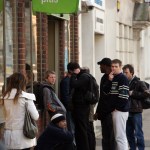
It was the snow wot done it. The new unemployment figures have been published and the headline figures are that unemployment increased by 44,000 to 2.49 million between December 2010 and January 2011; the claimant count also went up by 2,400 to reach 1.46 million. It’s disappointing news, especially as figures from Germany are markedly different. Miliband may exploit the news at PMQs. But there are reasons to be positive. The government’s mouthpiece on these issues, Chris Grayling, who is less attack dog more beast of burden these days, argued that Q4’s negative growth figures will have had some effect on employment (and it’s likely to continue to do so into this month and the next, if the economy did indeed contract in the last quarter).

Pickles on the offensive

The normally chummy Eric Pickles was in a black mood on the Today programme. Despite councils’ brazen politicking, Pickles has been deferential in recent months, a stance bemoaned by his allies in local government. But he cut loose this morning. Ostensibly, he was on the programme to defend his policy that councillors vote, in open session, on pay deals worth over £100,000. He believes this will strengthen local authorities by empowering ‘backbench councillors’, provided that they honour the privilege they have been awarded: council meetings are not renowned for being edifying. (There is clear case for extending the policy to the Civil Service, and no doubt many will call for remuneration in majority publicly owned banks to receive the same scrutiny.

Why AV will cost £250 million

Today the NO to AV campaign has published research showing that the change to AV will cost the UK an additional £250 million, and – judging by the Yes campaign’s panicky reaction – this charge has hit home. Our estimate represents the additional cost of AV. The government stated the referendum would cost over £90 million – less, admittedly, than if it were not combined with council elections – and the remainder comes from vote counting machines (£130 million) and voter awareness (£26 million). This is, if anything, a conservative estimate. For voter education, we have only set aside 42 pence per person, and we haven’t included the costs of additional polling stations, election staff or training.

What Andy did next…

Westminster has bent its collective knee in cooing supplication to Larry, Downing Street's new cat. The slinky feline is already three times more famous than Mrs Bercow - no crude double-entendres please. Meanwhile, Politics Home has been sent a photograph of a van in Smith Square.

More trouble for the government over the military covenant

The news that serving soldiers have been given notice by email has been met fury from ministers. Liam Fox has answered questions in the House about this story and why 100 RAF pilots discovered they were redundant in yesterday’s newspapers. Fox was both livid and contrite, decrying the ‘completely unacceptable’ practices and reiterating the MoD’s ‘unreserved apologies’. He announced that an internal inquiry has been called, which Patrick Mercer believes will expose negligence among those officers who manage personnel. Fox also conceded that the sacked pilots, many of whom were ‘hours from obtaining qualification’, cannot be retained in some form of volunteer reserve, such is the squeeze on the MoD.

The Sun shines on Miliband

When Ed Miliband won the Labour leadership, there was much speculation that he’d be ‘Kinnocked’ by The Sun. His brother David had been the favoured News International candidate and ‘Red Ed’, as The Sun dubbed him, offered a fair few targets. But the paper has been giving the Labour leader a hearing in recent weeks. Ed Miliband has been to The Sun for dinner and today’s he written for the paper, attacking Cameron for breaking his promises on crime — classic Sun territory. Partly this rapprochement is a product of the fact that Labour are ahead in the polls. No paper can take the risk of writing Miliband off as a loser in the way that Hague and IDS were.

Amending the AV bill

Yesterday, the coalition said it would try and overturn all four of the Lords’ amendments to the AV bill. But today it announced that it would accept the one saying that the Isle of Wight should not be combined with anywhere on the mainland. But—and this is where the controversy comes—the Isle of Wight will now be divided into two seats. This is leading to complaints that the Tories are creating an extra seat for themselves as the Isle of Wight is fairly solid Tory territory.

Inflation up again

CPI inflation running at four percent, twice the bank’s target level is a problem for the Bank of England's Monetary Policy Committee which remains set against a rate increase. I suspect we’ll hear much about how this rise is partly prompted by the one off effects of the VAT rise and the role of global commodity prices in driving inflation. But it is hard to get away from the fact that inflation has been above the two percent target rate for 14 months now. (Personally, I’d favour the scrapping of inflation targeting). The most immediate political consequence of this inflation is that it is hitting living standards.

Big society inaction

What a pleasure it was. Last night, I spent forty minutes in Westminster Great Hall – one of London’s few remaining Romanesque buildings, the largest single vaulted wooden ceiling in the world and the judicial setting for the trial of Charles I. Why was I there? Another failure of the big society, of course. I had booked to attend a debate between the think tanks, Res Publica and Progress. Phillip Blond and Francis Maude were talking up the merits of the Big Society or big society (it wasn’t clear which); whilst Tessa Jowell and Stephen Twigg were speaking for the Good Society. I wanted to hear the debate, intrigued to see if any of the speakers could define its terms. Trouble was that I wasn’t alone.

Defining the BS

Of all the broadcast hours devoted to the Big Society, only one discussion has made me think that the whole thing is not completely doomed. Channel4’s 10 O’Clock Live show, staged last Thursday. It’s up on YouTube now (34 mins in). The comedian David Mitchell kicked off. “The clearest thing anyone can say about Big Society is that it’s the opposite of Big Government,” he said. Now, I haven’t heard anyone not paid by the Conservative Party say anything as clear (or as positive) about the BS. But, then again, neither Phillip Blond (who has built a think tank from the success of his Red Tory theme) nor Shaun Bailey (the unsuccessful Tory candidate in Hammersmith) is paid by the Tories.

Aid to India to be replaced with pro-growth help

How to manage Britain's aid to India? The fast-rising country has a space programme, costing nearly the same as Britain gives in annual aid. To many people, that is reason enough to cut all aid. Yet, at the same time, India is one of the world's poorest countries. 456 million people live on less than $1.25 per day. Annual income per person is only $1,180, compared to $3,650 in China and $41,370 in the UK. That means there are 20 percent more poor people in India than in sub-Saharan Africa. But India receives only $1.50 in aid per person, compared to $28 for Sub-Saharan Africa. A good example of India's plight is Bihar province, which has population the size of Germany’s.

DD’s having a shindig

The FT’s Alex Barker has a sweet little scoop. David Davis is having a knees-up for all 234 of his comrades in the prisoner voting debate. Here’s the invitation: It's been a while since newspapers and the public commended parliament, so why not throw a ‘little party’. True, normal service will be resumed if Mark Reckless and friends fall into old habits; but last Thursday was a great moment for parliament, they've a right to some latitude. Of course, as Paul Goodman has conceded, it was a greater day still for Davis.

Is Cameron’s counter-offensive headed in the wrong direction?

As James has noted, Downing Street has turned its energies to the big society. Op-eds are being written, airtime used and speeches made. This morning saw the centrepiece: a former Labour donor, Sir Ronald Cohen, has joined the campaign and Cameron devoted a speech to what he described as his "political mission". Cameron was fluent and passionate, determined in shirt-sleeve order. He was not exactly clear, but I don’t think that’s a problem. There is no concrete definition of what the big society is. As I argued yesterday, Cameron has changed tactics and is now using it as a descriptive term of the sort of voluntary and philanthropic instincts his government will support. Cameron needs a barrage of examples of these practices in action, something that he lacks currently.

China eclipses the Japanese economic miracle

Official figures suggest that China has replaced Japan as the world’s second largest economy, after an estimated 10 percent growth rate left China with an economy worth close to $5.8trillion at the end of quarter four 2010. Japanese growth hovered around the 3 percent mark in 2010 with a total GDP value of $5.47 trillion. Analysts have told the BBC that it is ‘realistic’ that China will overhaul the US’ economy in about a decade, which, as Pete has demonstrated, does not look too outrageous a suggestion.  All of this puts me in mind of the European Union. The CIA World Factbook records that the EU leads the globe in GDP (purchasing power parity): with an estimated value of $14,890,000,000,000, against the US’ $14,720,000,000,000.

Developments in the Middle East are beginning to affect Europe

After yesterday’s spontaneous clean-up operation on the streets of Cairo, protestors gathered at Freedom Square today to maintain the revolution’s momentum. There have been minor developments, with the army and its interim civilian administration dissolving President Mubarak’s gerrymandered parliament, preparing the way for an election in the future. The timetable for that election remains a mystery – something about which the international community, led by President Obama and assorted European leaders, is questioning without yet expressing concern.

Why work experience matters more than ever

In my recent BBC2 documentary, Posh & Posher, I explained how networking and contacts played a crucial role in giving those with the right connections an early leg up in their careers. Internships and work experience are proving increasingly crucial to opening doors and opportunities in later life. Many have expressed the view that the best intern and work experience opportunities in fields like politics, finance and the media are going disproportionately to those who are already privileged and well-connected. From what I've seen myself in recent years I suspect that to be true. The Mail on Sunday gives a classic example (and a potentially embarrassing one for the Tories) of how it can work.

Cameron downgrades the Big Society

It’s written in print: the Big Society has become the “big society”. David Cameron has responded to criticism of his flagship agenda by downgrading it from a proper noun to a compound adjective. He makes no attempt to define "big society"; rather, Cameron suggests that the term is descriptive of the impulses he hopes to encourage. He writes in today's Observer: ‘Take a trip with me to Balsall Heath in Birmingham and I'll show you a place once depressingly known as a sink estate but now a genuinely desirable place to live. Why the transformation? Because even in a tough neighbourhood, the seeds of a stronger society were there and residents boldly decided they'd had enough and drove out the crime.

Britain’s coming crunch with Europe

It did not take David Cameron long to realise that there were three parties in his coalition. A few months into government, the Prime Minister worked out that only half of the policies he was enacting came from the shared agenda drawn up when the Tories and LibDems got together. The other half comes from the EU. Or, more specifically, the Civil Service machine, which is busy implementing various EU Directives, often passed many years ago. Cameron is trying to put the brakes on this process. As I say in my News of the World column, this has led to much frustration in Whitehall. And dismay: the Civil Service remembers how easily Labour waved through EU regulation and the piles of fat that Whitehall likes to pile on top of the EU regulation.