Uk politics

Rory Stewart is reassuringly bonkers

From our UK edition

Brexit is both the cause of the Tory leadership contest – it was too much for Theresa May – and is the toxin that threatens to destroy the contest to replace her and her party. The reason is that even if the new prime minister were to take the UK out of the EU – which can by no means be taken for granted – there is unlikely to be a Brexit dividend for him or her or the Conservative Party. Because for most Tories or their potential supporters, Brexit is no more and no less than the duty that voters set the government in that 2016 referendum. So far the defining characteristic of this government is its failure to fulfil that duty.

Boris Johnson’s opponents have been too easy on him

From our UK edition

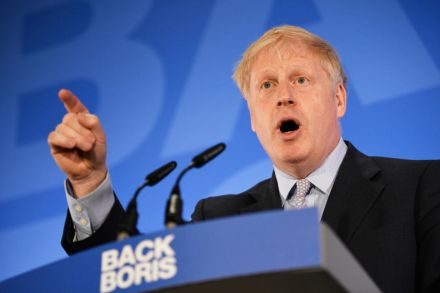
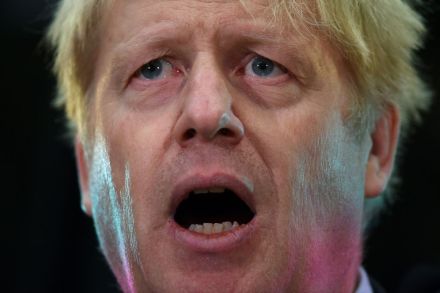
Boris Johnson is currently the quiet man of the Tory leadership contest, lurking in the shadows rather than courting media attention as he usually does. His campaign team has deliberately held him back from touring the studios to avoid gaffes or rows. They're even nervous about the limited exposure he has, joking that he is 'always one Monday column away from disaster'. Of course, it's easier to do this when your candidate has as high a profile as Johnson: he doesn't really need any more attention than he's already got. It is, though, not the greatest of compliments from those members of his campaign team that they seem to feel Johnson cannot be trusted not to cause a career-damaging row when the stakes are so high.

Scrapping free TV licences for the over-75s will cost the BBC dearly

From our UK edition

Well, that was surprising. The BBC has announced that from 2020 it will do away with free TV licences for the over-75s. In future, free licences will only be available to households which have at least one member receiving pension credit.   Everyone else will have to pay the full whack of £154.50 a year. In defence of its decision, the BBC cites the results of a consultation, 52 per cent of the 190,000 respondents to which it says were approving of its decision to end blanket TV licences for the over-75s. Let’s skate over other recent democratic exercise where 52 per cent of the population were in favour of something but which the BBC often seems less than enthusiastic about accepting. But of course the consultation came up with that result.

Jeremy Hunt reveals Brexiteer backing at campaign launch

From our UK edition

After receiving a boost over his Cabinet rivals at the weekend with the endorsement of Amber Rudd, Jeremy Hunt has today used his official launch to unveil support from a senior Brexiteer. Penny Mordaunt has come out in support of the Foreign Secretary. Speaking at the launch in Westminster, the Defence Secretary said she trusted Hunt to deliver Brexit. Her endorsement is a coup for the Hunt campaign as it shows that he has support from a senior Brexiteer. Mordaunt's endorsement is more significant in many respects than Rudd's. This is because what Hunt's campaign has been lacking is support from Brexiteers – his support is largely from MPs who voted Remain in the EU referendum.

Dominic Raab’s brazen Brexit pitch

From our UK edition

Dominic Raab's launch was just downstairs from the event that Matt Hancock held, and rather more serious, too. He was able to underline his parliamentary support, filling the front row of his audience with MPs who cheered loudly at appropriate moments. He was introduced by Maria Miller, who joked that she hoped to persuade him to become a feminist and claimed that both had come from relatively humble backgrounds. Raab's campaign team had clearly decided that it was best to be brazen about something that is considered by some as a weakness. The candidate's pitch was as someone who is sufficiently brazen to achieve the kind of Brexit he and the Conservative party want, and then make Britain fairer for ordinary people.

The problem with Jeremy Hunt’s abortion stance

From our UK edition

So it turns out that there may have been a quid pro quo behind Amber Rudd’s backing for Jeremy Hunt, her former political mentor, beyond the usual conversations about Cabinet jobs. Amber – who is for some reason that escapes me is considered a kingmaker – was interviewed this morning about one possible impediment to a shared world view between the two of them: Jeremy Hunt’s take on abortion, something that Amber says “is very important to me”. Of Hunt's view, expressed on Sky's Sophy Ridge on Sunday, that the legal limit for abortion should be reduced from 24 weeks to 12, she said it was his "personal, private view".  "That has always been his view," she said.

Can Matt Hancock be trusted on Brexit?

From our UK edition

What does Matt Hancock offer the Conservative party? He’s a former Remainer who has stayed loyal in Theresa May’s Cabinet and so has a bit of a tricky pitch to make to a party furious about the outgoing Prime Minister’s failure to deliver Brexit. He also hasn’t got an eye-catching drugs story to get attention, for better or worse.  His solution this morning was to offer a slightly trippy leadership launch at which he went entirely overboard on the optimism, energy and bizarre motivational aphorisms. He told a slightly bewildered and haggard-looking press pack that “you are the future of Britain!”, gesticulated at the view behind him and declared “I look at the world around me and I think wow!

Hunt gains momentum over Gove ahead of crunch week

From our UK edition

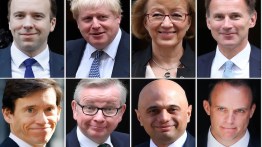
Which two candidates will make the final two of the Tory leadership contest? At the moment, the race is Boris Johnson's to lose with the former foreign secretary on course to make it to the membership ballot. However, the contest for the other place is tight.  The make up of the Parliamentary party means there will be likely be only one no-deal Brexiteer candidate in the final two – with the other spot going to a Cabinet candidate. As of Friday, Michael Gove and Jeremy Hunt were the two candidates with the most nominations after Johnson – with Sajid Javid trailing behind. This weekend, however, has seen several developments which could mix things up in the coming days – before MPs vote on Thursday in the first round of the contest.

How the Parliamentary stage of the Tory leadership contest works

From our UK edition

This week, the Conservative leadership content enters the Parliamentary stage. The various contenders – at the time of writing there are eleven – will be whittled down to two. The remaining pair will then tour the country for membership hustings ahead of a members' ballot. So, how exactly will it play out? All candidates must receive at least eight MPs' backing in order to enter the contest formally. Only the principal and seconder need be named – the remaining six MPs are able to stay anonymous. The deadline for this is 5pm on Monday.  The threshold was raised from two MPs to eight in a bid to reduce the number of leadership hopefuls. At present, the candidates who could be in trouble include Andrea Leadsom, Sam Gymiah and Rory Stewart.

Michael Gove’s cocaine blues

From our UK edition

The Tory leadership race has taken on a new turn this weekend with the Daily Mail splashing on Michael Gove's cocaine confession. The Environment Secretary tells the paper that he took the 'drugs on several occasions at social events more than 20 years ago'. At the time, Gove was working as a journalist. Of the experience, he says: 'It was a mistake. I look back and I think, I wish I hadn’t done that.' Gove goes on to say that he doesn't think this should rule him out of the leadership race: 'I don’t believe that past mistakes disqualify you.' The admission comes ahead of the publication of a book about Gove by Owen Bennett – Michael Gove: A Man in a Hurry. So, how did it come to pass?

Could the Tory leadership race end early?

From our UK edition

The Tory leadership is fast becoming Boris Johnson’s to lose, I say in The Sun this morning. He has more MPs backing him than any other candidate, and his campaign receives a further boost this morning with the former Defence Secretary Sir Michael Fallon endorsing him. In the words of one of those knows the Tory parliamentary party best, ‘the wind is blowing in one direction’. There is increasing talk among senior figures in the party that if the former Foreign Secretary comes out on top in the parliamentary rounds, it would be best to skip the members part of the contest and make him Prime Minister straight away. The argument goes that the polling shows that Johnson is the members’ choice, and so they wouldn’t mind him being coronated.

What Channel 4’s Jon Snow can learn from the Brexit Party

From our UK edition

Since being elected a Brexit Party MEP, I have gone from gamekeeper to poacher as far as the broadcast media is concerned. Until six weeks ago, I had the privilege of being a commentator who could sit on couches endlessly pontificating. Now as a politician, I’m the target of my fellow commentators. They either discuss me in my absence or ask a series of staccato questions with little room for context or nuance.  Maybe I’m fair game. After all, I have spent two decades as a Radio 4 Moral Maze panelist interrogating witnesses. This, perhaps, is my comeuppance.

Boris Johnson’s court victory is good news for remainers and leavers

From our UK edition

In the end common sense has prevailed – and swiftly. When District Judge Margot Coleman decided last week to issue a summons against Boris Johnson for misconduct in public office it looked as if the case would drag on for weeks or months. But exceptionally the High Court today intervened in the criminal case to stop it now, recognising that it would have inevitably failed had it made it to the Crown Court. The arguments in court today centred around the nature of the crime that Boris Johnson was alleged to have committed. Misconduct in public office is an offence aimed at public officials who misuse their public position to such an extent that it constitutes a gross breach of trust.

Will Brexit destroy – or save – the Tory party?

From our UK edition

Pretty much the whole intellectual gap (if we can dignify it as such) between the candidates in the Tories' leadership contest is summed up in two tweets this morning that react to the Conservative humiliation in the Peterborough by-election. One tweet was by the Foreign Secretary Jeremy Hunt, the other by his predecessor Boris Johnson. And I will come on to the dispute between them after weighing the catastrophe that Peterborough was for their party. In what for years was a relatively safe Tory seat, the Conservatives slumped from second place to third, suffering a fall of 25 percentage points in their share of the vote, compared to the result in the 2017 general election.

Labour’s victory in Peterborough should terrify the Tories

From our UK edition

Politics may seem to be deeply confusing at present, but in fact there is one very stark conclusion to come out of the Peterborough by-election – that while Labour and the Conservatives are both deeply unpopular, the Labour vote remains more tribal than that of the Conservatives and will hold up better in a general election. Hard though it might be to see the bright side when your party’s share of the vote has plunged from 48 per cent to 31 per cent, Peterborough is something of a quiet triumph for Jeremy Corbyn. The Labour result is truly miserable until you realise that the Conservatives’ share fell from 46 per cent to 21 per cent.

Watch: Peterborough’s new Labour MP quizzed on anti-Semitism

From our UK edition

Peterborough's new Labour MP has only just been elected but already she is finding herself embroiled in controversy. Lisa Forbes was taken to task in the early hours of this morning over a revelation that she once liked a Facebook post saying that Theresa May had a 'Zionist Slave Master's agenda'. Here is what she had to say in response: 'I don't have an anti-Semitic bone in my body.... It was engaging in posts in error and for that I'm deeply sorry.' Forbes also once signed a letter calling on Labour not to adopt the full IHRC definition of anti-Semitism. It now seems she has changed her tune: 'At the time there was a lot of concern about that definition.

Rory Stewart campaign point to new polling in bid to win backing of MPs

From our UK edition

Will Rory Stewart still be in the Tory leadership race come Tuesday? The International Development Secretary is seen as the wildcard of the contest. Regarding at first as having little to no chance of becoming leader owing to his pro-deal position, the undeterred Tory MP has ran a rather creative campaign going on various walks and meet and greets with members of the public in a bid to convince members of Parliament to get behind his leadership bid. His efforts have garnered a lot of attention and endorsements from unlikely places. The problem is very few of those endorsements are coming from the Conservative parliamentary party that decides who makes it through the rounds – before the membership selecting from the final two.

Could a Tory-Brexit Party alliance actually work?

From our UK edition

In 2013, I started promoting a tactical voting alliance between Conservative and Ukip voters. It wasn’t just about avoiding the calamity of a Labour victory at the 2015 General Election – which looked likely then – it was also about trying to secure a parliamentary majority for an EU referendum. I called the campaign ‘Country Before Party’. Given that a potential alliance between the Tories and the Brexit Party is something that almost half of Conservative Party members are in favour of, I thought it might be worth recounting my experience. Having once been a tub-thumper for this type of arrangement, I’m now less enthusiastic. It’s happened before, of course.