Uk politics

How Boris Johnson intends to approach the next stage of the Tory leadership contest

From our UK edition

There was a huge cheer in Boris Johnson’s office when it was announced that Jeremy Hunt had 77 votes, sending him into the final two and eliminating Michael Gove. The Johnson campaign were dreading a run- off against Michael Gove, which would have been far more testing for their candidate. The Johnson campaign are keen to say that there’s no complacency, but there is an understandable confidence that they will beat Hunt. Indeed, their planning for government, which I wrote about in this week’s magazine, is about to be significantly stepped up. Boris Johnson will have no time to waste once he enters Downing Street: there’ll only be 99 days to October 31st. The first hustings on Saturday will give us an idea of how Hunt intends to campaign.

Sajid Javid could still be headed for Downing Street. 11 Downing Street

From our UK edition

Sajid Javid has been knocked out of the Tory leadership contest – coming in fourth place overall. Ahead of the contest, there were high hopes amongst Javid supporters that he could make it all the way to the final two – and potentially No. 10. However, he had a difficult campaign start and the result today will now be seen as an achievement – and a cause of relief – by many of his supporters. There were points when it seemed Javid would struggle to get this far in the contest. The Home Secretary's leadership bid got off to a bad start with a lacklustre video launch from which he struggled to recover momentum. With so many candidates in the race at the beginning, in the first week Javid's bid had little cut through with rivals dominating the conversation.

George Osborne’s change of heart

From our UK edition

For a long time George Osborne was more likely to be found taking snipes at his one-time political rival Boris Johnson than supporting his political efforts. In 2016, the former chancellor mocked Johnson by saying that were he to go for the party leadership he would not 'fumble the ball' – a thinly-veiled attack on Johnson's botched leadership campaign in the 2016 contest. Only just like 2019 Johnson, 2019 Osborne is a rather different figure. Now editor of the Evening Standard, Osborne has used the paper's leading article today to endorse Boris Johnson.

The new PM’s Rory Stewart problem

From our UK edition

In this contest, Rory Stewart has established himself as the new champion of the Tory left. He has become a significant figure in the party. The interests of party unity mean that any new prime minister would want to have him inside the tent rather than on the backbenches where he would be the natural leader of any rebellion. But Rory Stewart has already said that he wouldn’t serve in Boris Johnson’s Cabinet. Indeed, he seems unlikely to serve in any new Tory leader’s government. This poses a problem for the incoming PM. Stewart’s absence will make it that much harder to bring the Tory party back together. Stewart is also now the natural leader of any Tory effort to force the government to seek another extension, or to block no deal.

Full list: Tory leadership contenders and MPs backing them

From our UK edition

The race for the Tory leadership race is on. More than a dozen candidates put themselves forward but to make it to the final two those seeking to replace Theresa May must persuade fellow Tory MPs to back them. Here are the latest tallies of who is left in the contest – and who is supporting each candidate: Through to the final two: Boris Johnson, 146 MPs publicly backing, 160 votes in the last round The clear favourite with party members and the bookies' favourite to take the Tory crown, former foreign secretary Boris Johnson is seen by many in his party as the candidate most able to take on Nigel Farage's insurgent Brexit party. YouGov found Johnson would be the first choice of 39 per cent of Tory members in a leadership race, far ahead of any other candidate.

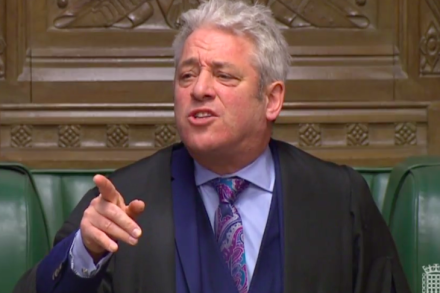
John Bercow’s authority has now collapsed

From our UK edition

The title ‘Father of the House’ tends to give the bearer a chronic problem with wind. The present holder, Ken Clarke, stood up at PMQs and asked a question of Gibbonian magnitude and complexity. Among the gusts of prose was a useful point about spending. ‘It would be extremely unwise for the outgoing government to make reckless commitments,’ he said. He was ignored. Member after member tried to cadge money from Mrs May before she quits the Downing Street cash-pile. The Conservative MP Marcus Jones wanted a handout for shops in Nuneaton, while Paul Scully made the case for SEN children. Tim Loughton, whose constituency abuts the sea, proposed a whole new arm of government, the Coastal Schools Challenge Fund, to help kids living near a beach to swot harder.

PMQs showed the damage the leadership debate is causing to the Tory party

From our UK edition

Last night's Tory leadership debate was an illustration of where the wider party has ended up: fractious, confused, and without a clear plan for what to do next. Today's Prime Minister's Questions showed the damage that these blue-on-blue attacks are doing to the Conservative party. A number of the candidates have criticised the policies of their own government particularly when it comes to spending. It was inevitable that this was going to get picked up by the Opposition as an attack line. Labour's Paul Williams pointed out that Sajid Javid had pledged to reverse Theresa May's police cuts, while other MPs either made bids for the spending review or warned the Prime Minister not to make commitments which would bind the hands of the next leader.

Who will face Boris in the final stage of the Tory leadership contest?

From our UK edition

This is my scenario for how the last two days of the MPs’ stage of the Tory leadership ballot will play out - which of course by definition means none of it will happen (and the clever money probably bets against me). Most of the 30 votes won by the defeated Brexiteer Dominic Raab will transfer to Johnson - with perhaps just a few going to Sajid Javid, following his loud commitment to take the UK out of the EU by 31 October, no ifs or buts. So it will be touch and go who is knocked out today, Javid or Rory Stewart - because Stewart’s decision to cast himself in the BBC debate last night as the only 'honest' candidate, against four putative con artists, will have reinforced some Tories’ fears that he is too divisive a character.

Will there be a ‘Stop Rory’ campaign in the third ballot?

From our UK edition

With five candidates surviving Tuesday's ballot, the surprise result was Rory Stewart. The wildcard entry won 37 votes – with Sajid Javid behind on 33 votes. It follows that when it comes to who is most likely to be knocked out in this afternoon's ballot, it's the Home Secretary who ought to be the most vulnerable. However, Stewart is not home and dry. Although the DfID Secretary has been building momentum of late, he had a challenging appearance in the BBC debate – admitting after that it wasn't his preferred format. His Cabinet candidate rivals also turned on him at points – with both Michael Gove and Sajid Javid directly challenging him. Multiple messages from the Stewart camp to MPs soon after the second ballot have added to a sense of unease about his campaign.

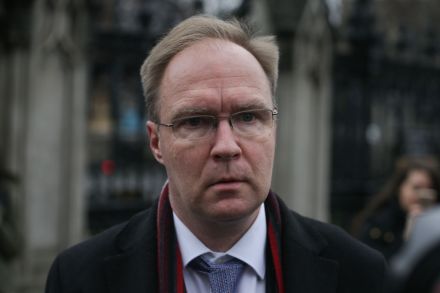
Ivan Rogers: no deal is now the most likely Brexit outcome

From our UK edition

We all know this is a great country. Sadly, it’s one currently very poorly led by a political elite, some masquerading as non-elite, which has great difficulties discerning and telling the truth. I am discouraged by just how badly Brexit has been handled to date, and currently pessimistic that this is going to get any better any time soon. I am worried that the longer the sheer lack of seriousness and honesty, the delusion mongering goes on, the more we imperil our long-term prospects. It is not patriotism to keep on failing to confront realities and to make serious choices from the options which exist, rather than carrying on conjuring up ones which don’t.

Raab’s departure is good news for Boris

From our UK edition

The results of the second ballot are in and it's Dominic Raab who has been knocked out of the race. Boris Johnson cemented his lead going from 114 votes to 126. Brexiteer Raab meanwhile failed to win the 33 votes required – only mustering 30. As for the Cabinet candidates, there is still little difference in support between the top candidates. Rory Stewart managed the largest increase going from 19 votes in the first round to 37: Michal Gove: 41 Jeremy Hunt: 46 Sajid Javid: 33 Boris Johnson: 126 Dominic Raab: 30 Rory Stewart: 37 So, what does the result mean for the overall contest? Johnson continues to look unassailable.

We expect our MPs to be dysfunctional, and then complain when they are

From our UK edition

Stella Creasy’s complaint that as an MP she will be unable to take maternity leave is just the latest piece of evidence of Parliament’s dysfunctional nature. The Labour MP has tried - in vain - to get extra funding from the Independent Parliamentary Standards Authority so she can appoint someone to cover her work while she is off. The pay and expenses regulator says MPs do not officially take maternity leave, and there is no formal system for covering for them when they are off with their baby. This might be excused as a bizarre anachronism from the times when there were no women in parliament were it not for the fact that Ipsa was only established a decade ago after the expenses scandal.

What would be a good result for Boris in the second ballot?

From our UK edition

What counts as a good result for Boris Johnson in the second ballot? The former foreign secretary has already hit the magic number (105 MPs) that ought to guarantee a candidate a place in the final two – winning 114 votes in the first round. It follows that the pressure is on in some quarters for Johnson to build on this momentum when MPs vote for a second time this afternoon. In terms of stamping his authority, there are Johnson supporters who would like to see him win the support of half of the Parliamentary party – thereby providing him with a strong mandate going forward. The Johnson campaign is keen to play down expectations - with some suggesting they could even lose votes. This is because there is talk of lending votes to rival candidates to get them to the next round.

The problem with Theresa May’s desire for a legacy

From our UK edition

In less than a month, Theresa May’s premiership will be history. If she is remembered at all, it will mainly be for Brexit. She took on a near-impossible task, made it harder (her misjudged ‘red lines’ from autumn 2016 will always haunt her), and finally failed at it. That had many consequences, not least the neglect of domestic policy. The burning injustices she so memorably listed on the Downing Street step are still blazing away. Poor social mobility, health inequality, racial bias in the justice system, a dysfunctional housing market and poor provision for mental health problems – all remain unresolved.

Sajid Javid turns on the Old Etonians

From our UK edition

So far in the Tory leadership contests, the candidates have spent a lot of time bashing the frontrunner Boris Johnson. However, with Johnson a sure thing for the final two, the real contest is currently between the other five leadership contenders, hoping to win second place to get on the members' ballot. Hearing that battle cry, Sajid Javid used today's lobby hustings to go on the offensive against his rival Rory Stewart. With Stewart building momentum over the past couple of days, Javid took the opportunity to warn MPs against selecting two Old Etonians to go to the members, while helpfully drawing attention to his own more humble beginnings.

Matt Hancock’s Boris endorsement irks One Nation Tories

From our UK edition

Is Boris Johnson’s route to No. 10 now unstoppable? The former foreign secretary has more MPs backing him than any other candidate and over the weekend bagged the support of two leadership dropouts - Esther McVey and Matt Hancock. Hancock’s support for Johnson is the most surprising - just a week or so ago the Health Secretary used an interview with the Financial Times to take a swipe at Johnson by declaring ‘f—- “f—- business”’ in response to his infamous ‘f—- business’ comment. It follows that many are reading Hancock’s endorsement as a sign that even Johnson’s critics have come around to the former mayor of London. However, not everyone in the Tory party agrees.

Leadership hopefuls turn on one another in Channel 4 debate

From our UK edition

The first televised Tory leadership debate drew as much attention for who wasn't there as who was. After Boris Johnson decided to avoid the Channel 4 leadership debate on the grounds that voters had had enough blue-on-blue action (and perhaps also that as the Tory leadership frontrunner he has little to gain and much to lose from such an event), the broadcaster decided to effectively empty-chair him – putting up a lectern where he would have been. It then fell to Johnson's leadership rivals Jeremy Hunt, Sajid Javid, Dominic Raab, Rory Stewart and Michael Gove to provide the substance of the 90-minute programme. It kicked off with enough blue-on-blue attacks for the Johnson campaign to have some cover over their decision to give it a miss.

How Rory Stewart derailed his Cabinet colleagues’ campaigns

From our UK edition

When Rory Stewart first announced his intention to enter the race to be the UK's next prime minister, he was seen by colleagues as having little to no chance of making it far in the leadership contest. Yet as the Parliamentary contest goes into its second week, Stewart is one of six contenders left standing and has today won a ministerial endorsement in the form of Tobias Ellwood. The Defence Minister had been backing Matt Hancock but after the Health Secretary bowed out on Friday, he will now back Stewart – praising the DfID Secretary's enthusiasm. This could become a recurring theme – Michael Gove, Sajid Javid and Jeremy Hunt had all hoped to pick up many of Hancock's supporters to help them in the next round yet a chunk are now considering backing Stewart instead.