Uk politics

Boris Johnson must remember: In victory, magnanimity

From our UK edition

With the ballot papers out, the next few days will be crucial in the Tory leadership election. As I say in The Sun this morning, it is reckoned that 60 percent of party members will have voted by Thursday. The Boris campaign are bullish. One very senior figure in the campaign is privately predicting that they will win by a more than twenty-point margin. The Hunt campaign is adamant that this isn’t right and that the contest is tightening every day. But interestingly, even several of his Cabinet supporters aren’t trying to claim that the race is close. One tells me, ‘Let’s face it, there isn’t must doubt about what the result is going to be.’ If Boris does win, he must remember Churchill’s dictum: In victory, magnanimity.
Does this EU small print mean Brexit has already happened?

From our UK edition

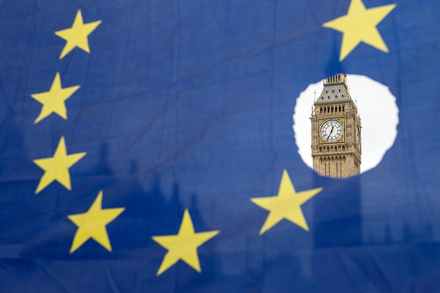
The heady drama when Britain and the EU agreed on a series of Brexit extensions earlier this year is hard to forget. But amidst the chaos, it's worth asking: did Britain accidentally leave the EU on 1 June? A badly-drafted EU law – which also challenges the idea of EU competence – seems to suggest so. So how did this apparent blunder happen? And why has no one noticed? When Article 50 timed out on 29 March 2019, the UK and the EU agreed to extend to 12 April. When an extension is made it has to be done in both EU law and UK law. On that occasion, it was: both sides managed to pass proper laws. The EU one is here. As we know, another extension was then sought, and that's where the trouble begins. The UK again drafted our extension properly.

Boris vs Hunt: a voter’s guide

From our UK edition

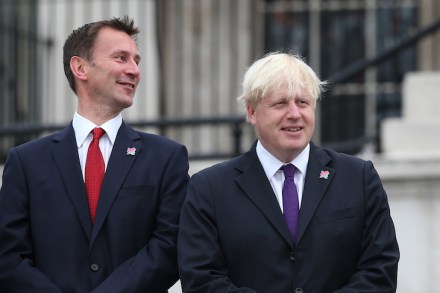
Voting is finally underway in the Tory leadership contest. So should Britain's next prime minister be Boris Johnson or Jeremy Hunt? Boris is the clear frontrunner but could Jeremy Hunt's impressive campaign mean that another political upset is on the cards? In some areas, the pair are in complete agreement: they both oppose a second referendum on Scottish Independence, want to reduce Britain’s greenhouse gas emissions to net zero by 2050 and have pledged to tackle the North-South divide. But what of the policy differences? Here’s a round up of where each candidate stands: Brexit Boris Johnson: Boris has pledged that Britain will leave the EU by 31 October ‘come what may, do or die’, and has not ruled out proroguing Parliament in order to achieve this.

What is it about Boris Johnson that makes his critics so angry?

From our UK edition

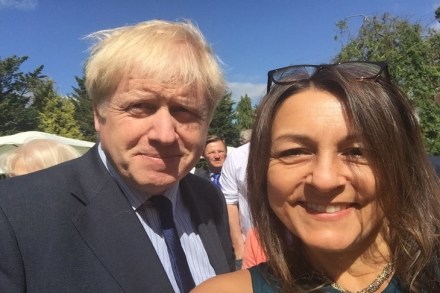
When I posted on Facebook a picture of me standing next to Boris Johnson, I expected a few likes and probably a few more harsh comments. What I didn’t anticipate were the hundreds of words of ranting vitriol posted by friends, some of whom I had known since school. My picture was harmless enough: a selfie, quickly snapped when Boris visited my hometown of Sevenoaks on Monday. It wasn't a ringing endorsement, or even an approval of him. And it offered no comment on what he stands for. It was simply a picture of us squinting at the camera with the caption: “kicked off the week with this guy, our next PM to be?” The first few comments were along the lines of “Well, let’s hope your week improves!” and “Oh no, not you as well?

Jeremy Hunt has shot himself in the foot with his fox-hunting pledge

From our UK edition

I moaned here last week about the lack of attention the two Tory leadership contenders were paying to rural communities in their pitches to the party membership. Funnily enough, as Jeremy Hunt and Boris Johnson have travelled around the country to various party hustings, their tone has now changed. Finally, they are speaking up for people outside towns and cities. Both of them have promised to speed up the delivery of full-fibre broadband to the countryside. They have also vowed to get the UK out of the Common Agricultural Policy, giving us control over our own agriculture policies.

Hunt’s fox-hunting comments add to the idea that he is continuity May

From our UK edition

Is Jeremy Hunt continuity Theresa May? It's an allegation that is repeatedly thrown around by supporters of his leadership rival Boris Johnson. MPs have nicknamed the Foreign Secretary 'Theresa in trousers' owing to the idea that he isn't all that different from the current prime minister. The Hunt campaign have been at pains to fight this idea – in an interview with The Spectator, he told me: 'Don’t confuse continuity for loyalty. I have served two prime ministers completely loyally over the last nine years, but I would be quite different to both.’ The problem is Hunt has made a series of comments which have prompted Tory MPs to worry that he would be a similar type of leader.

I appeared in Boris’s campaign video. But I’m now voting for Jeremy Hunt

From our UK edition

It’s hard to remember a Conservative leadership election where so much has been at stake. The next few months will determine what happens with Brexit – and the future of the party for the next generation. History will judge Tory party members for the choice we make now. This is why – even though I appeared in one of Boris Johnson's campaign videos – the choice is clear: Jeremy Hunt must be our next prime minister. In the early days of this leadership race, that wasn't my view. Boris is someone who needs no introduction. He was a leading figure in the Brexit campaign and remains one of Britain's most recognisable politicians, here and around the world. I assumed that beneath the fizzing exterior, there was a detailed plan that would be equal to the task ahead.

In defence of the Evening Standard’s leprechaun cartoon

From our UK edition

My colleague at the Evening Standard, the excellent cartoonist, Christian Adams, has been having a bruising time of it since his cartoon in yesterday’s paper was published. It features two leprechauns, Jeremy Hunt and Boris Johnson, capering around a pot of gold at the end of a rainbow – the pot bearing the legend: “no backstop”. It is quite plainly a jab at the illusory, fantastical and delusional notion – his view – that the Irish backstop can simply be magicked away, as both candidates intimated when they visited Northern Ireland yesterday. Plainly, the people being caricatured were Boris and Jeremy, not the Irish, nor indeed leprechauns. It was an Irish trope used against English politicians and visually striking.

Why are civil servants so hostile to Brexit?

From our UK edition

The Cabinet Secretary, Sir Mark Sedwill, is offering to meet Jeremy Corbyn about the Times story last week which reported that senior civil servants were worried Mr Corbyn was ‘too frail and is losing his memory’. As usual with such stories, one cannot know their exact truth, but there is a general trend in the civil service to be looser-tongued. A recent column by Rachel Sylvester, also in the Times, contained a long string of insults of Boris Johnson from unnamed officials. Sir Mark did not offer to meet Mr Johnson about that. Before and after the Brexit referendum, government officials, especially at the Treasury, repeatedly briefed views hostile to Brexit. A Remainer, Olly Robbins, took charge of the Brexit negotiations.

Why MPs’ mental health matters

From our UK edition

Given the level of threats that they face, and the bizarre life they often lead, it's no surprise that MPs have a higher preponderance of mental health problems than the general public. A study published this week in the British Medical Journal found that 34 per cent of parliamentarians had the symptoms of a common mental disorder, with the rate in the general public at a lower 26 per cent. What's more striking about the research, which surveyed nearly a quarter of MPs, is that so many of them – 77 per cent – had any idea that there was a dedicated mental health service in Parliament. The Parliamentary Health and Wellbeing Service is one of a few really positive changes in Westminster over the past few years.

Why France is frustrated – and baffled – by Brexit

From our UK edition

Silence has befallen French pronouncements on Brexit. Le Monde’s vitriolic editorial (12 June 2019) on Boris Johnson apart, the scene is remarkably calm. But this isn't good news. In fact, such silence is often a sign of French anxiety and a presage to trouble, particularly when Britain is concerned. As rationalists, the French are frequently frustrated by the ‘wait and see’ of the empirical British. ‘What is not clear is not French’, said the 18th century French philosopher Antoine de Rivarol.

The Tories have hit peak bonkers over Brexit

From our UK edition

Is it the country that has gone mad? Or just a majority of members of the Conservative party? They are the questions that rattle around my brain as the self-styled “sensible” candidate in the Tory leadership campaign, Jeremy Hunt, speaks to me for an ITV interview. He tells me it would serve democracy and save his party from possible extinction for the UK to leave the EU without a deal, even though he agrees with the Bank of England that the rupture from the EU could be almost as big a blow to our prosperity as the 2008 banking crisis. And he agrees with the Chancellor that the shock could increase the national debt by £90bn. And he agrees with the former Tory leader William Hague that it could lead to Northern Ireland and Scotland breaking away from the UK.

Why does no-one know what British wild flowers look like? And why it matters

From our UK edition

About this time of year, two sorts of pictures end up doing the rounds on social media. The first is roughly along the lines of this one, which is being shared from the BBC website: https://twitter.com/BBCNews/status/1145862398357778438 This sounds like a lovely, positive story of a council doing its bit for nature by sowing wild flowers on its verges. More on that shortly. The second involves someone heartbroken that their beautiful roadside verge has been mown by their local council: https://twitter.com/BirdGuides/status/1118178485632163840 Most people might think that the former is a good solution to the latter: one involves a switched-on council, and the second involves a stupid one, surely?

Why the EU is struggling to pick Juncker’s replacement

From our UK edition

Who will replace Jean-Claude Juncker? That's the question being decided at the European Council summit. But so far, things are not going to plan. From Sunday afternoon, leaders – along with Theresa May, who promised to be “constructive” in the debate – have been discussing who should take over the most senior EU jobs, including the successor to Juncker as European Commission president. Now, the meeting has been suspended until tomorrow without any decision made. Whoever takes over will do so at a key time in the Brexit process.

The EU was never capable of dealing with Brexit

From our UK edition

We are now meandering towards a real Brexit deadline. In typical British fashion, we’ve let the other two times that they bumped into us with their trolley in the supermarket go. In similarly typical fashion, the third time is about to be “not on”. But as we head towards the inevitable, it is worth understanding the simplest of truths: the EU was never capable of dealing with Brexit. And an even bigger truth must be whispered very quietly: they can’t conclude Free Trade Agreements. We turned insular immediately after the vote. We blamed ourselves and began a long internal debate which almost never mentioned the EU – just a lot of class warfare and Godwin’s law. But a Withdrawal Agreement (WA) is – and was – a distraction.

Theresa May’s last-minute legacy panic

From our UK edition

Theresa May has just a handful of days left as Prime Minister, but is still trying to secure a domestic legacy for herself. She is doing this in a last-minute manner that makes David Cameron's famous essay crises look incredibly well-organised. Last week, she called for better design rules to prevent 'tiny homes' being built, which sounded odd given as Prime Minister she could feasibly have introduced some rules herself. May would say that her beef is with local government, not her own failure, when it comes to the lack of quality in newly-built homes. Localism is very convenient when it allows you to blame someone else for not doing something.

The Tory leadership contest is entering its most important week

From our UK edition

Although there's three weeks until the next Tory leader is announced, the contest is entering what is the most important week of the membership stage. On Saturday (6 July), postal ballots will begin to be sent to the Tory membership. The expectation is that the majority of members will vote quickly rather than wait to see how the contest plays out over the remaining weeks. It follows that each campaign sees this week as pivotal for getting its message out there. In that vein, Jeremy Hunt hardened his Brexit position over the weekend. The Foreign Secretary used an appearance on the Andrew Marr Show to try and beef up his no-deal credentials.

Why GATT won’t break the Brexit deadlock

From our UK edition

There has been a lot of talk about how Article XXIV of GATT can provide an alternative to the Withdrawal Agreement. But here’s the deal with Article XXIV of GATT: it is a solution to a problem which is not the problem. Let me try to illustrate this with a story. Imagine a couple – let’s call them Joe and Angela – who are going through a divorce. After a long-drawn process, and hundreds of billable hours, their lawyers have at last produced a draft divorce settlement. The successful business that Joe and Angela have built will continue, but Joe will need to make a series of maintenance payments to Angela and the family home will be sold. Joe finds this difficult to accept but he is also desperate to move on with his life.

Can the Brexit party keep its right and left-wing supporters happy?

From our UK edition

This weekend, the most popular political party in Britain will hold a rally in Birmingham to plan its march to Westminster. The Brexit party came first in the European elections but to its supporters, this was just the warm-up. If today’s polls became tomorrow’s election result, then the Tories would be left with just 87 MPs, barely a quarter of their current strength. Nigel Farage would lead an army of 193 MPs, and doing such damage that Jeremy Corbyn would still hang on to a party of 234. It is scenario that is terrifying the Tories – and delighting the Farigistas. In Birmingham tomorrow, the party aims to unveil the first 100 of their would-be MPs, part of Farage’s plan to fight every single seat in the next general election.