Uk politics

The parties take their positions as the phone hacking story deepens

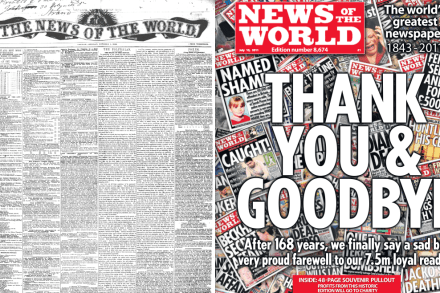
The political plates on phone hacking are shifting rapidly. The story has now ‘gone mainstream’ following the accusations about how the phones of Milly Dowler and the parents of the Soham victims may have been hacked.  Politicians are racing to catch up. Ed Miliband is rapidly moving into a more robust position. The Labour leadership doesn’t want to appear vindictive, to turn this into Labour v. Murdoch.

Rebekah Brooks statement on phone hacking

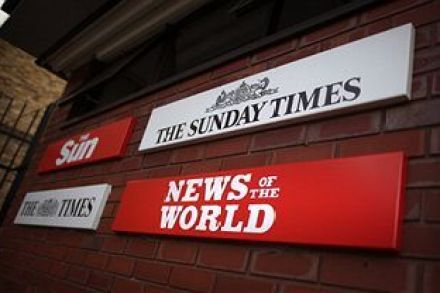
Released in the last hour or so: Dear All, When I wrote to you last week updating you on a number of business issues I did not anticipate having to do so again so soon. However, I wanted to address the company as a matter of urgency in light of the new claims against the News of the World. We were all appalled and shocked when we heard about these allegations yesterday. I have to tell you that I am sickened that these events are alleged to have happened. Not just because I was editor of the News of the World at the time, but if the accusations are true, the devastating effect on Milly Dowler's family is unforgivable.

Regulators on the rack over phone hacking

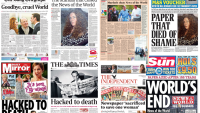
The latest, hideous developments in the phone hacking scandal are emblazoned across all this morning's papers — all, that is, expect the tabloids. And our political leadership is putting voice to its concerns, too. Only this morning, David Cameron said of the allegations surrounding the News of the World that, "If they are true, this is a truly dreadful act and a truly dreadful situation." And Ed Miliband has since given an atypically firm and assertive interview, calling on Rebekah Brooks to "consider her conscience and consider her position." Perhaps he was stung by Tom Watson's criticism, last night, that all three party leaders have "let the Dowler family down" by not calling for a public inquiry.

Politics needs to respond to the changed phone hacking terrain

The politics of the phone hacking saga have changed dramatically in the last 24 hours. Up to now, it has been a scandal that has been of huge interest in political and media circles but hasn’t cut through to the public. But that could all be about to change with the allegation that Milly Dowler’s phone was hacked after she was abducted and voice mails deleted (it should, obviously, be noted that nothing has been proven in a court of law on this point yet). If this allegation is true, it shows just how out of control and unrestrained the culture of phone hacking was.

The Afghan conflict creates other conflicts for Cameron

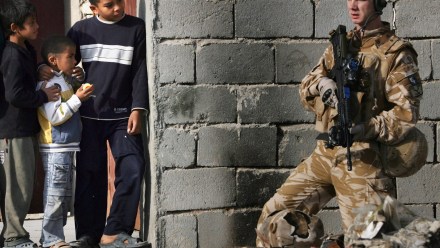
Another day, yesterday, to remind us of the precariousness of everything in Afghanistan. With David Cameron in the country, it was announced, first, that a British soldier had gone missing from his base; and, then, that the same soldier had been found dead with gunshot wounds. "His exact cause of death is still to be established," said a spokesman, "and the circumstances surrounding his disappearance and death are currently under investigation." His is the 375th British military death in the country since operations began. And, of course, the politics quiver on in the background.

Barroso’s EU confidence trick

Say what you like about Jose Manuel Barroso, he's a wily old card. The European Commission president makes public demands for Britain to surrender its rebate in European Union membership fees. The government refuses. Then, hey presto! Headlines suggesting that Brussels has been seen off. "Brussels bribe to buy off UK rebate," says the Daily Mail. "Britain's rebate is fully justified and we are not going to give way on it," a Treasury spokesman tells the media. The quotation is true, Barroso did indeed offer £23 billion to tweak the UK funding formula, and a short-termist like Gordon Brown might have accepted. But the battle for Britain's EU spending was lost under Blair. In 2001-02, Britain was a net beneficiary of EU to the tune of £900 million.

Personality and politics

One of the things about the press that politicians frequently complain about is that papers concentrate more on personalities than policies. But reading the latest extracts from Alastair Campbell’s diaries you see just how much personality matters. Indeed, according to Campbell, Tony Blair excluded Gordon Brown from a discussion about what to do after 9/11 not because of any difference about how to respond but because he had become fed up with how difficult Brown was to deal with on a personal level. Now, there are nowhere near the personal tensions at the top of this government that there were in the last one. But because politicians are humans and not purely rational actors, the individual relationships in the government matter.

To see whether the coalition will last, watch how the Lib Dems respond to Dilnot

The approach that the Liberal Democrats take to social care over the next few weeks and months will be the best guide we have to how they now view the future of the coalition. If, in the coming all party talks, they effectively ally with Labour and try to score points off the Tories by suggesting that their coalition partners are ‘too mean’ to fund a solution to the problem then it will be apparent that they have moved fully into distancing mode and are preparing to position themselves as the party who restrained the Tories. This would imply a Lib Dem exit from the coalition sometime well before the 2015 election.

The trouble with today’s social care report

Uncertainty reigns. Or at least when it comes to today's Dilnot Report into social care it does. We largely know what measures will be contained within its pages: a higher threshhold for council-funded care, but a cap (of around £35,000) on how much individuals ought to be liable for. What's less clear is how the government will respond. Far from welcoming the report wholeheartedly - as has been the recent form with these things - there are signs that the government is set to resist some of its recommendations. Andrew Lansley spoke cagily of it yesterday, hinting that the cap was proving particularly difficult in Coalition Land. George Osborne is said to have concerns at the £2 billion cost of the cap, and at how that money will be raised.

Coffee House Interview: Andrew Mitchell

The government has stuck to its guns on overseas aid, promising to donate 0.7 per cent of our national income to other countries. In the Chancellor’s words, the government will not balance the books on backs of the world’s poorest people. In fact, as the criticism of the policy was at its highest the Prime Minster hosted a development summit in London and pledged £814m to help vaccinate children around the world against preventable diseases like pneumonia. On this issue, David Cameron does not seem for turning — however many letters he receives from the Defence Secretary.   But Liam Fox is not alone. A slew of recent polls show that Britons have mixed feelings about the utility of overseas aid.

Osborne’s voteless recovery?

This is a strange old recovery. The News of the World has an interesting ICM poll today, showing that 66 per cent think the economy is getting worse. It’s not: GDP is growing and we have the second-highest job creation in the G7. Rather than losing jobs to China, we’re flogging Coventry-made Jaguars to Beijing billionaires (one of the random gems uncovered by our new Twitter feed @LocalInterest). So why is everyone so glum? And why do 52 per cent think that David Cameron and George Osborne are doing “a bad job” with the economy?   In theory, Osborne’s recovery is coming on well. His "cuts" agenda is simply a souped-up version of Alistair Darling’s, but Osborne cuts about 1 per cent a year faster.

Cooper takes on the coalition from the right

What an intriguing interview Yvette Cooper gave to Sky's Dermot Murnaghan show this morning — and not just because she was standing, ruffled and incongruous, in a field somewhere. I was live-tweeting proceedings here, and there was much to anticipate even before she appeared. On top of today's stories about housing benefit, social care and immigration, the shadow home secretary would also have to deal with the comments made by Lord Goldsmith during the show's newspaper review. "It's not clear what Ed Miliband stands for," said Goldsmith, to cheers from the Tory press team. "I don't think the rifts in the party have been healed.

Europe, the times they are a-changin’

Before writing my column for The Spectator this week I asked one of the most clued-up Eurosceptics on the centre right what opt-outs Britain should push for in any negotiation over an EU treaty change. His answer, to my surprise, was "forget that, we should just leave". This answer took me aback because this person had been the embodiment of the view that the European Union could be reformed from within. But people are dropping this view at a rapid rate for reasons that Matthew Parris explained with his typical eloquence in The Times (£) yesterday. I wrote in The Spectator this week that two Cabinet ministers now favour leaving the EU only to learn soon afterwards that the real number is three. Iain Martin writes that half of all Tory MPs now favour leaving.

Boris comes out against high-speed rail

The news, via a leaked letter, that Boris Johnson now opposes high-speed rail will come as little surprise to the government. Boris has been moving to this position for quite some time and the Department for Transport resigned itself to the mayor coming out against the scheme earlier this week. Recently, one of Boris’ senior aides visited the Department for Transport and said that the mayor would only support the scheme if there was an additional tube line from Euston as part of it. But when the Department for Transport pushed for details of where this line would go to, and how it would be engineered it became apparent that this was more of a rhetorical point than a negotiating position. Oddly, the politics of Boris’ position could work out for both sides.

No paramilitary link to last night’s riots in East Belfast

The PSNI is clear that last night’s riots on Castlereagh Street, East Belfast, were not linked to sectarian paramilitary activity. Rather, this was a ‘spontaneous demonstration’ against the police. As I wrote last week, gangs on both sides of the Ulster divide have been targeting the police in recent months; and they rely on exploiting current economic hardship and ancient sectarian divisions to further their criminal ends. The continued violence is a test of Stormont’s ability to govern without the close supervision from Westminster.

In for a penny, in for a trillion

The news that the EU seeks a budget of £1 trillion between 2013 and 2020 inspired disbelief rather than ire. President Barroso’s almost childlike insistence that the proposal was ‘relatively small’ was amusing, certainly not alarming. It’s a classic EU trick: pitch for 5 per cent and a string of crazy financial measures (including a ‘Tobin tax’ on financial transactions) in the hope obtaining more modest gains of say 2 per cent. Barroso will also throw the odd concession into the bargain: the announcement of a £5.4bn saving on the Commission’s staffing costs represents a concession. But, Barroso has his work cut out to secure even a 1 per cent rise on this occasion.

An American view of tuition fees

When I visited the US recently, I got talking to some American teenagers about university. They (like me) had just left school and were trying to decide where to go next. I explained that in the UK, the Government's plan to raise tuition fees to £9,000 a year had led to riots. Their jaws dropped. They couldn't understand what the fuss was about. In the US, fees can reach $40 000 a year for the private Ivy League colleges. The reaction in the UK seemed ridiculous to them. They felt we should be grateful that we didn't have to pay $40,000. [Although, to be fair, some state universities only charge around $5000].

IDS’ great expectations

There is no rest for IDS. Yesterday he was in Madrid talking about youth unemployment and immigration and today he turns his attention to child poverty. Of all life's accidents, the accident of birth is the most decisive. It is said that a child’s prospects are determined by the age of five, and numerous other statistics and factoids lead to a similar conclusion. IDS rehearses some in a piece in today’s Guardian. IDS and Labour MP Graham Allen have conducted a report into these matters, and have concluded that early intervention in a child from a deprived or broken family is vital if the poverty gap is to be closed, and for opportunity and prosperity to be extended.