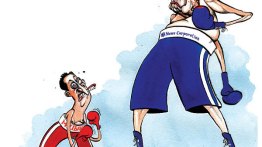
Uk politics

Brown speaks out

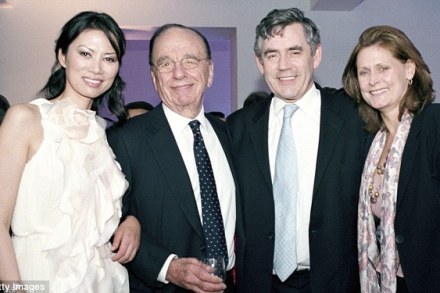
We'll try to post the video of Gordon Brown's interview with the Beeb soon. But, for now, here's the transcript of his remarks about News International and his son's medical records: Gordon Brown: [The Sun] told me they had this story about Fraser's medical condition, and that they  were going to run this story. Interviewer: How did that affect you, as a father? GB: In tears. Your son is now going to be broadcast across the media. Sarah and I are incredibly upset about it. We're thinking about his long-term future. We're thinking about our family. But there's nothing that you can do about it. You're in public life, and this story appears. You don't know how it's appeared. I've not questioned how it appeared.

Livingstone’s double standard over Murdoch

As soon as the recent phone hacking scandals broke, Ken Livingstone lost no time in castigating Boris Johnson’s ‘dire judgement’ in dismissing the original claims as ‘codswallop cooked up by Labour’. Livingstone also said that Boris ‘had at least two meals with Rebekah Brooks, one dinner and one lunch with James Murdoch, and one dinner with Rupert Murdoch [when he was] trying to keep the lid on this story.’ Livingstone was at it again on the Today programme this morning, saying the ‘scandal goes right to the heart of the establishment’. Certainly, it was rash to describe the claims as ‘codswallop’, but is dinner such a crime?

What didn’t make it into today’s reform paper?

"It's like Blair and Brown — but without the acrimony." So sayeth one Cabinet Office source, describing the prolonged build-up to today's public services White Paper to me a couple of months ago. His point was that, although the yellow and blue halves of the Downing Street operation are genuinely chummy with one another, their differences can still put a block on reform. In his story, the Tories are like Blair, striving to go further, faster, stronger. Whereas the Lib Dems can occasionally stand in the way. So what has been blocked from the White Paper? Listening to David Cameron today, you wouldn't guess that anything has been. "Let me assure you of this," he said in his speech this afternoon, "we are as committed to modernising our public services as we have ever been.

Where we are on phone hacking

David Cameron’s speech on public service reform is being crowded out today by all the other news about hacking. First, there was there were the emails News International has allegedly passed to the police, which apparently contain information about payments to Royal protection officers. This was followed by an angry statement from Scotland Yard claiming that there is a ‘deliberate campaign to undermine the investigation into the alleged payments by corrupt journalists to corrupt police officers and divert attention from elsewhere.

A victory for common sense

For years, teachers have been increasingly reluctant to restrain unruly pupils — for fear of being slapped with a lawsuit. But now, it seems, the government is trying to ease those concerns. Its guidance today may not change any laws, but it does encourage schools to change their approach. Among the directions is that "schools should not have a 'no touch' policy": teachers can use reasonable force to restrain pupils, remove disruptive children from the classroom or prevent them from leaving the classroom when they shouldn't.

Yet more questions for News International to answer

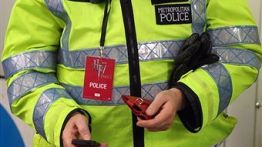
The phone hacking controversy first began to come to public attention because of a story in The News of the World about Prince William’s knee in 2005. Now, the Royal angle has revived because of a report from Robert Peston that the newspaper allegedly paid a Royal protection officer for contact details of senior members of the Royal family. Peston reports that:   ‘According to a source, the e-mails include requests by a reporter for sums of around £1000 to pay police officers in the royal protection branch for the information. The phone details could have been used to hack phones of the royal family. "There was clear evidence from the e-mails that the security of the royal family was being put at risk", the source said.

Clegg puts the boot into Murdoch’s BSkyB bid

What Jeremy Hunt's letter this morning started, Nick Clegg has just finished. Thanks to the Deputy Prime Minister, it is now even clearer that the coalition is reluctant for Rupert Murdoch's BSkyB deal to go ahead. "Look how people feel about this, look how the country has reacted with revulsion to the revelations," he exhorted in interview with the Beeb, "so do the decent and sensible thing and reconsider, think again about your bid for BSkyB." The question now is what's meant by that "reconsider" — whether it means the government is pushing for a delay, or for Murdoch to drop the bid altogether. But, either way, it's several degrees firmer than anything they've said previously.

The wheels come off the BSkyB deal

The BBC reports that Jeremy Hunt has written to Ofcom and the Office of Fair Trading about Rupert Murdoch’s proposed takeover of BskyB. Hunt asks the regulators if they now have any ‘additional concerns in respect of plurality over and above those raised in your initial report to me on this matter received on 31 December 2010.’ Hunt concentrates on Murdoch’s provisions about maintaining the independence of Sky News. His concern with plurality is ironic given that the British media has become much more plural following the demise of the News of the World. This favours Murdoch’s takeover bid, on the face of it at least. Hunt also touches on the ‘fit and proper persons tests’ with regard to the deal.

The latest phone hacking revelations

The latest report from Robert Peston about how William Lewis has been cleaning house at News International makes for dramatic reading. Peston alleges that emails News International has been aware of since 2007 ‘appear to show Andy Coulson, editor of the News of the World from 2003-2007, authorising payments to the police for help with stories. They also appear to show that phone hacking went wider than the activities of a single rogue reporter, which was the News of the World's claim at the time.’ Obviously, The Spectator must stress that nothing has been proved on either of these fronts. But if Peston’s report is accurate, it would also suggest that there must have been a determined cover-up at the company.

Huhne pooh-poohs rising energy bills as ‘nonsense’

Chris Huhne was on the Andrew Marr show this morning. As you might expect on a day when the Sunday Telegraph broke the news that fuel bills will boom by 30 per cent as a result of green taxes, the Energy Secretary was asked to ruminate at length on all matters Murdoch. Eventually, though, Huhne had to answer searching questions pertaining to his brief. Confronted with the Sunday Telegraph’s story, Huhne described it as ‘nonsense’ because it did not take potential savings into account. Huhne also pledged to introduce more competition to shatter the grip that the ‘Big Six’ utility companies have on 90 per cent of the UK's energy market. Greater competition should, theoretically, lower bills.

Major proposals on the future of Scotland

There have long been suspicions in Westminster that David Cameron uses John Major as an out rider, the last Tory Prime Minister advances an idea that allows the current one to gauge opinion on it. Certainly, Major and Cameron are close. Remember how Major was used by Cameron in the days following the indecisive general election result. So there’ll be suspicions that Major is out riding for Cameron with his speech, covered in the Sunday Telegraph, arguing that the Scottish Parliament and Executive should be handed powers over everything apart from foreign, defence and economic policy. In exchange for this, the Scots would accept a reduction in the number of Scottish seats at Westminster.

Miliband primes his weapon of choice

There's a lot to sift through in the papers this morning, even apart from history's final edition of the News of the World. I mean, a report that Rebekah Brooks is to face police questioning over the phone hacking scandal; an interview with the assistant commissioner of the Met, who apologises and flusters over the original police investigation; and claims from Paddy Ashdown that he warned No.10 "within days of the election" about the Coulson-shaped trouble that was heading their way. But more politically significant is the news that Ed Miliband could push for a Commons vote, on Wednesday, to block News Corp's takeover of Sky. The Labour leader outlined his plan on Andrew Marr's show just now, saying that, "I don't think [David Cameron] can carry on with business as usual.

End of the World

The last edition of the News of the World is now out, saying "Thank You & Goodbye". The first-ever issue of the newspaper (above) is on my wall at home and I'm struck by the consistency. Its mission statement says it aims "to give to the poorer classes of society a paper that would suit their means, and to the middle — as well as the rich — a journal from which due to its immense circulation would demand their attention." And so it was to prove. The News of the World is, even now, the best-selling Sunday newspaper on the planet. Only those who don't read it regard it as a scandal sheet.

Brooks stands firm

More fuel for the firestorm: this time, a letter by Rebekah Brooks, answering questions put to her by the Home Affairs select committee. It truth, it doesn't say much that wasn't either spelt out or suggested in Brooks' earlier statement this week. But its three main assertions are still worth noting: Brooks had "no knowledge" about the hacking of Milly Dowler's phone, she claims; likewise for "any other cases during [her] tenure"; and "the practice of phone hacking is not continuing at the News of the World." In the meantime, Labour are keeping up the political pressure — asking, now, for a judge-led inquiry to convene sooner, sooner, sooner, in view of concerns that evidence may disappear along with the News of the World tomorrow.

Roadblocked to death?

You may doubt that Downing Street is doing much politics beyond the phone hacking saga at the moment — but it is. The coming week will see the launch of the long-awaited, much-delayed public services White Paper, which is intended to set the framework for more or less every service we receive from the state. You may remember that Cameron heralded it with an article for the Telegraph back in February. Then, he suggested that private and charitable providers would be as privileged as state ones, writing both that, "we will create a new presumption that public services should be open to a range of providers competing to offer a better service," and that, "the state will have to justify why it should ever operate a monopoly.

The story sticks to No.10

Big and bold, the contraction "No.10" appears on most of this morning's front pages. Or, failing that, the words "former Cameron aide". After the arrest of Andy Coulson yesterday, it was ever going to be thus. But it's still a sign of how closely Downing Street is being bound into the phone hacking scandal. Cameron's call, yesterday, for a judge-led inquiry into the whole, stinking affair — which was, you suspect, intended to deflect some of the heat away from his prime ministerial pulpit — is treated almost as a footnote. It's all Cameron, Coulson, Cameron, Brooks. There's more emphasis on Downing Street inside the papers, too.

Who knows where this will all end for politics, the press and the police

Rarely has that old adage that week is a long time in politics seemed more appropriate. Seven days ago, few of us would have predicted that we would be in the middle of a crisis that could dramatically effect how politics is run, the press are regulated and the standing of the police.  This morning is probably one of those days when, to borrow his joke from yesterday, David Cameron wants to shut down all the newspapers. The Mail and The Telegraph lay into him for his call to end self-regulation of the press. Indeed, their editorials on the matter speak to a broader anger in both papers that despite them having supported the Tories through the thin years of opposition, it is—or was—News International who gets the red carpet treatment from the Tory leadership.

Ofcom to rule on Murdoch’s purchase of BSkyB

If News Corporation was not trying to buy the whole of BSkyB, there’s a good chance that phone hacking would not still be in the news today: that decision was one of the things that led to a revival of interest in the story. As has been said many times during the past few days, securing full ownership of BSkyB is regarded as crucial by the Murdochs and that is one of the reasons they were prepared to take the dramatic step of shutting down The News of the World. But the letter from Ofcom about the takeover and the possibility of Labour forcing a vote in the House of Commons on the matter on Wednesday, means that the bid is in real jeopardy. As Robert Peston points out, BSkyB shares have fallen as the City computes the obstacles now standing in the way of the take-over.