Uk politics

Should evictions from social housing be broadened?

I understand that the government’s view is that social housing tenants whose children live with them and are convicted of looting should be evicted from their homes. The law already allows for this, although only if the criminal act occurred within the borough in which the family lives, and the Department for Communities and Local Government is encouraging councils and housing associations to use these powers. Although, the final decision on any eviction would be for the courts. Personally, I think there might be a case for broadening this out. The problem with the current approach is that it lets off those dead-beat dads who take no interest at all in the upbringing and disciplining of their children.

Cameron sets out his stall

David Cameron’s statement to the House of Commons was clear about the circumstances that led to these riots. ‘This is not about poverty, it’s about culture. A culture that glorifies violence, shows disrespect to authority, and says everything about rights but nothing about responsibilities.’ Later in the session, he said ‘you don’t hit moral failure with a wall of money.’ On this, Cameron is surely right. In a respectful atmosphere in the House of Commons, Cameron set out the government’s proposed response to the riots. The major legislative action he set out was a change to the law to allow the police to force people who they suspect of being involved in criminal activity to remove face coverings.

Cameron has the opportunity to lead the nation

The recall of parliament today offers David Cameron the chance to take command of the current situation. The police might have horribly mishandled the situation on the first few nights of the riots and Cameron’s government might have been caught flat-footed by them. But he now has the opportunity to build on the successful policing of the last two nights and his strong statement yesterday and lead the national response to this crisis. The mechanics of a parliamentary statement allow Cameron to set the terms of debate. He also has the huge advantage of simply being the Prime Minister. The nature of his office affords him the opportunity to speak for the country.

The public wants firmer action

Judging by today's YouGov polls, the riots have pushed crime sharply up the national agenda: it now ranks second, behind only the economy. In all, almost half of Brits think crime is one of the top three issues facing the country, more than double the number who said so a fortnight ago. The effect has, unsurprisingly, been strongest in London, where around two-in-three now see crime as a major concern: As for the causes of the riots, the majority blame "criminal behaviour" and "gang culture". Contrary to what Harriet Harman may insinuate, just eight per cent blame the government's cuts, and this is largely the 16 per cent of Labour voters who put the blame at the Coalition's door.

Gove versus Harman

The Guardian's Nick Watt already has a detailed and insightful post on last night's Newsnight bout between Michael Gove and Harriet Harman.

Cameron gets forceful

So far as words matter, David Cameron has just delivered one of the most forceful statements of his political career. It contained all the anger of his address yesterday, but went much further in its diagnosis. "There are pockets of our society that are not only broken, but frankly sick," he said, adding that, "the one word I would use to sum it up is irresponsibility." His most memorable line was that, "It is as much a moral problem as it is a political problem." This was the campaigning Cameron that we have glimpsed only briefly, most notably during his conference speech in 2009. Tim Montgomerie is saying that Cameron has found his mission — but I'd disagree.

The politics of police cuts

Wow, that was a howitzer of a performance from Boris Johnson on the Today Progamme earlier. And all his shells were aimed at Downing St. Not only did the Mayor of London slander Cameron’s Broken Society thesis, not only did he support Diane Abbott against the jibes of Tory HQ, but he also committed the gravest act of all, given the current climate. He lined up with Labour in attacking the coalition's police cuts. "This is not a time to think about making substantial cuts in police numbers," said BoJo. "I think it would be a good thing if the government had another look," he added, for emphasis.  There's little doubt that Boris has hit upon a potent attack here.

London slept as violence spread across England

The presence of 16,000 police officers in London deterred looting, but violence spread in provincial towns across England, with tragic consequences. Riots in Birmingham left three men dead after a car ran them over; police are treating the incident as a murder. There was also disorder in Salford, Manchester, Gloucester, West Bromwich and Nottingham. Each separate incident was characterised by the same pattern of events: looting, muggings, arson and confrontation with the police. Once again, the Molotov Cocktail was a favoured weapon, and one assumes that the deprived rioters stole the expensive fuel required to make them.

When the underbelly roars

When the first riots hit Brixton, I was 12 years old. My mates and I came from south London council estates and, while we were no angels, we certainly couldn't be described as bad kids. I can't pretend that I had any real grasp on why people were rioting but I knew it was against the same police who would stop and bug us constantly — even though none of us had either the balls or inclination to commit crime. It may sound like a tired cliche but the police didn’t feel like our protectors. They felt like more like an occupying force. And why? There were countless incidents to explain it, but one that sticks in my mind was in 1981 — the same year as the first Brixton riots.

Cameron announces that Parliament will be recalled

So far as its tone went, David Cameron's statement just now was firm and unyielding. He did express his sympathy for the victims of the riots; the emergency services, the shopkeepers, the fearful. But the major emphasis was on bringing the culprits to book. His "clear message" for the perpetrators of this destruction was that "you will feel the full force of the law". He preceded that by describing their actions as "criminality, pure and simple — and it has to be confronted and defeated". There were no excuses nor prevarications, and rightly so. As for the content, it seems that the government is eager to keep this a police matter, but to ramp it up nonetheless. "We need more," said Cameron, which included "more police on the streets" and "more arrests".

Last night in Peckham

This was what Peckham High Street looked like at about 6.45 last night. I had heard that a bus was petrol-bombed although I neither saw nor heard evidence of that. There was no confrontation between police and the public and I didn't see any arrests. Mostly it was just a case of people standing around wondering what, if anything, to do next.

The Met is struggling to cope — it needs support

It's a gloomy sort of morning ritual, posting on the riots of the previous night. I'm sure CoffeeHousers have seen and heard the specifics already: further burning and looting in parts of London such as Ealing, Croydon and Hackney, as well as bursts of violence in Birmingham, Liverpool and elsewhere. Businesses and livelihoods have been obliterated, areas set back years. Among the few mercies is that no-one, so far as we know, has yet been killed as a result. One thing that's becoming clearer through the smoke is that the Met Police are overrun, unable to properly deal with criminality at hand. The arrest figures tell a story by themselves.

Cameron to return to London as the riots spread

There we have it: David Cameron is to return to London tonight, and chair a meeting of Cobra in the morning. There was an inevitability to the decision even earlier today, with the news that both Theresa May and Boris Johnson had curtailed their own holidays. But the fact that the riots have spread — starting in Hackney this evening, and erupting even in Birmingham — served to underline the point. It is the right decision, in any case. Cameron's ability to control the situation may be limited, but his continued absence might only have inflamed things further. There are a lot of people scrabbling around for a grievance to bare and exploit tonight. The Prime Minister's holiday can no longer be one.

Syria and Libya overshadowed by London riots as Boris comes home

President Assad’s tanks are still doing murder on the streets of Syrian, but the dictator’s isolation grows. After weeks of prevarication, several Gulf States have closed ranks against the Syrian regime. Saudi Arabia, Bahrain, Jordan and Kuwait have all recalled their ambassadors from Damascus, and King Abdullah of Riyadh has led the Arab League’s condemnation of Assad’s ‘death machine’. Better late than never, the international consensus says. Compassion for the oppressed is not a familiar trait among Arabian princelings, but their reticence on this occasion was particularly surprising given that Assad’s Syria is no friend of the Arab League, preferring to side with Iran in most things.

Osborne’s debt dilemma

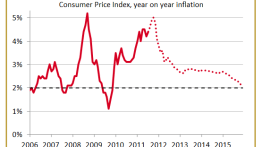
If there's one sentiment that defines George Osborne's article for the Telegraph today, it’s that there is no need for us Brits to panic. The economic convulsions of the past few days, contends the Chancellor, serve to prove that the coalition was right to approach deficit reduction as it has. "The alternative of more spending and yet more borrowing is now frankly ludicrous," he says, "and places those who advocate it on the outer fringes of the international debate." He has a point. As I blogged on Saturday, there are reasons to believe that we'd be hurtling towards a credit downgrade and higher borrowing costs were it not for the fact that our debt-GDP ratio is set to decline by 2015.

The politics of our discontent

Even by the normal standards of Monday mornings, this one reeks. Just sniff around you. That burning smell, it's either coming from the global stock markets as they strain against the US downgrade, or from those places in London where the rioting spread last night. Although the destruction in Brixton, Enfield, Walthamstow and Waltham Forest didn't match up to that on Saturday in Tottenham, it still involved fires, missiles and clashes between rioters and the police. Reading the reports and watching the footage online, looting appears to have been one of the most popular sports of the evening. In terms of the short-term politics — as opposed to the slightly more medium-term politics of what can be done to properly fix these problems — two issues stand out.

Voters back the death penalty in polls — but will they petition for it?

Really, I expected a tidal rush of new opinion polls on the death penalty after Guido launched his campaign for its restoration last week — but, strangely, that hasn't happened yet. There is one poll today, though, by Survation for the Mail on Sunday. It suggests that 53 per cent of people support the death penalty being reintroduced for "certain crimes", against 34 per cent who don't. So far as the supplementary findings go, the death penalty is more popular among older people and among Tory and UKIP voters. Almost half of all respondents believe that serious crimes would decline were the penalty reintroduced. And the three crimes deemed most deserving of the rope (or alternatives) are: mass murder, murder of a child, and serious terrorism offences.