Uk politics

Tottenham smoulders

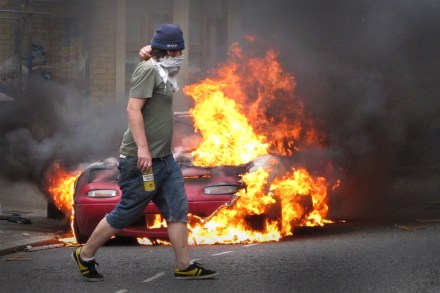
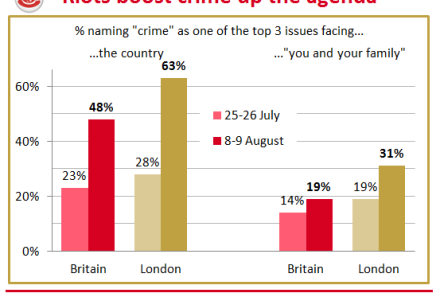
London has become used to protest recently, but there was still something terrible and unexpected in the images emerging from Tottenham last night. Here we had firebombs, missiles, riot police, burning vehicles, smashed-in shops, looting and other criminality — and it has left eight policemen injured, as well as others in hospital. The cause of the rioting was, apparently, the fatal shooting of Mark Duggan by police on Thursday. The effect was scenes reminiscent of Brixton or Broadwater Farm in the 1980s. There will be fresh attention paid to Tottenham — one of the poorest areas of one of London's poorest boroughs — by politicians now, and rightly so.

Would the Darling Plan have satisfied the credit rating agencies?

Why have we retained our AAA credit rating despite, by S&P's figures, suffering a larger debt-GDP ratio than America? The Taxpayers' Alliance's Matthew Sinclair answers the question in some detail here, but one passage from S&P's own analysis stands out. They explain that: "When comparing the U.S. to sovereigns with ‘AAA’ long-term ratings that we view as relevant peers–Canada, France, Germany, and the U.K.–we also observe, based on our base case scenarios for each, that the trajectory of the U.S.’s net public debt is diverging from the others. Including the U.S., we estimate that these five sovereigns will have net general government debt to GDP ratios this year ranging from 34% (Canada) to 80% (the U.K.), with the U.S.

America continues to unravel

The humbling of America — the cover theme of this week’s Spectator — continues with S&P stripping Uncle Sam of his AAA credit rating. The debt downgrade, it says, “reflects our opinion that the fiscal consolidation plan that Congress and the administration recently agreed to falls short of what, in our view, would be necessary to stabilize the government’s medium-term debt dynamics.” In other words: Obama’s still addicted to debt, and it’s time to stop pretending that his government’s IOU notes rank among the safest investments on earth. Its analysis seems to be pretty much that made by Christopher Caldwell in his brilliant cover story.

Brown still hovers over the 50p tax debate

A number of papers report today that George Osborne is minded to replace the 50p tax with Gordon Brown's original proposal: a 45p tax. How the ex-PM will be laughing. As he knows, even the 45p tax will lose money — that's why Labour didn't raise the top rate until the final four weeks of its 13 years. But the Tories haven't worked that out yet, and the Treasury is still working on the false assumptions he programmed into it. In short, the amount of money that either tax rate will raise depends on what's called the "taxable income elasticity," or TIE — a figure suggesting how responsive various taxpayers are to rate changes. It varies for income groups. The lower-paid are less able to move their labour or money around than the rich.

Fasten your seatbelts…

It has, to paraphrase Margo Channing, already been a bumpy night — and it's only going to get bumpier today. The latest news is how the Asian markets have trembled at what's happening in the West. Japan's main stock index is down 3.7 per cent. Australia's is down 4.2 per cent. Hong Kong's 5.3 per cent. And even oil futures joined in with the collective nosedive, which is continuing as the European exchanges open this morning. All of which adds to the catalogue of horror that was written yesterday. CoffeeHousers will read plenty of grim comparisons in the papers today, not least that yesterday's plunge in the Dow Jones was the worst since 2008.

An American context for UK defence cuts

Yesterday’s defence select committee report provoked stern critiques of the government’s defence policy from Alex Massie and Matt Cavanagh. It is hard to dissent from Matt’s view that Cameron, Fox and Osborne will be defined to some extent by how they handle the defence brief, which, as Alex points out, also proved to be Gordon Brown's undoing.  It is also clear, as both Matt and Alex say, that the SDSR suggests that Britain is entering a period of ‘strategic shrinkage’, in terms of the size of the defence establishment at any rate. A political squall has erupted over this, but it’s worth pointing out that western countries are narrowing their military horizons.

Cable accentuates the coalition’s differences, but not without risk

The Liberal Democrats are in something of a purple patch at the moment, dominating aspects of government policy in the media. Last weekend, Danny Alexander broke his usually modest mould to stand square behind the 50p rate, in contrast to Boris Johnson and George Osborne. The debate encapsulates the current vogue for the coalition partners to accentuate their differences. Today, enter Vince Cable pursued by a mansion tax. In an interview with the Telegraph, the Business Secretary concedes that the 50p rate is not a permanent fiscal instrument, but its removal (after 2015 when the income tax threshold has been raised to £10,000) will require a concession from the Conservatives.

Capital punishment to be debated in parliament?

Sir George Young has graced the pages of the Daily Mail this morning, arguing that MPs cannot ignore the clamour for a debate on the death penalty, as examined in depth by Pete last weekend. The Leader of the House’s intervention is the greatest indication yet that parliament will discuss the issue for the first time since the passage of the Human Rights Act in 1998. This has not come as a bolt from the blue. A string of e-petitions will mature soon and capital punishment is expected to be near the top of the list, as it always is when the public is asked for its opinion.

Government split over policing the internet

Business Secretary Vince Cable was on strident form this morning, pledging to drop controversial web-blocking from the government’s plan to tackle internet piracy. But his Conservative colleagues at the Department for Culture, Media and Sport (DCMS), Ed Vaizey and Jeremy Hunt, disagree. Ed Vaizey, the minister responsible for the creative industries, is to chair a meeting on 20th September with internet service providers, copyright holders and other stakeholders, and web-blocking is on the agenda. Originally, the government proposed blocking broadband access at addresses (both real and virtual) where illegal downloads took place.

Moving slowly towards the future

Yesterday’s leak of Vince Cable’s response to the Hargreaves report into the Digital Economy Act (DEA) set tongues wagging. The headline was as expected: ‘web-blocking’, the practice whereby copyright infringers are barred from internet access, will be dropped because it is unworkable. In line with Hargreaves’ recommendations, Cable also plans to remove restrictions on using copyright material to create parodies, which is excellent news for Downfall enthusiasts. And he will rationalise copyright law to legalise supposedly forbidden practices like copying CDs onto an i-Pod. Finally, Cable has permitted an exception from copyright for data mining for research purposes.

Decisions that may come to determine the Coalition’s stewardship of defence

The House of Commons Defence Committee moves at a stately pace. Two weeks back, it gave us its considered view on the British military campaign in southern Afghanistan – a report which might have been quite useful a couple of years ago. Today it has published its verdict on October’s National Security Strategy and Strategic Defence and Security Review – nine months after their launch, with many of the decisions now irreversible, and with MPs and much of the media on holiday. The headline findings are not surprising, but make for bracing reading nonetheless.

An open letter to Will Straw about deficit reduction…

…or why the US cuts are actually faster than, and just as deep as, ours. Dear Will, We hope you don't mind us writing a letter-form response to your latest post on Left Foot Forward, which argues that the "coalition government's cuts are deeper and faster than the Tea Party's". But, as we see it, there are several problems with your figures which are easier to explain in a conversational format. Here they are, as best as we can express them: i) The first obvious problem comes when you say that Obama set out $83 billion of deficit reduction for 2012 in his March Budget. Actually, he didn't.

The IMF manages to please everyone

A bet-hedging sort of report into the UK's economy from the IMF today, which largely supports George Osborne's deficit reduction plan, but will also give some encouragement to his detractors. By way of a summary, here are the parts that might satisfy Osborne himself, as well as Vince Cable, Ed Balls and Mervyn King: The passage that the Chancellor will flash around Westminster comes on the very second page of the IMF document. "Strong fiscal consolidation is under way," it reads, "and remains essential to achieve a more sustainable budgetary position, thus reducing fiscal risks.

Which department could be replaced with a mathematical equation?

I answer the question in an article for the Times (£) today, in response to Francis Maude’s announcement yesterday. But for those CoffeeHousers who can't vault the paywall, here's the relevant passage: "I have been told of an internal report that makes the argument sublimely well. Before last year’s spending review, the Treasury asked a group of outside experts whether plans for a 40 per cent headcount reduction at the Department for Communities and Local Government were too ambitious. Their response? It wasn’t nearly ambitious enough. The staff cut ought to be at least 90 per cent. Responsibilities for fire prevention could be transferred to the Home Office; responsibilities for troubled families to the Education Department; responsibilities for .

Pickles lands a small blow for growth

Eric Pickles’ decentralisation revolution continues, with the announcement that Whitehall is relinquishing control over car parking restrictions in town centres. From now on, town halls will decide how much space will be devoted to parking and at what price. It is hoped that this will stimulate commerce in the localities by improving the experience of high street shoppers.      This, I concede, is not the most thrilling news ever to have graced these pages. But it is quite significant nonetheless. It was understood that Pickles was unlikely to achieve this objective, due to Whitehall’s intransigence.

Petrol woes set to continue

Despite small falls in petrol prices last month, the consequence of a supermarket price war according to the AA, motoring becomes ever more expensive. Political campaigns have opened as pressure builds at the pumps; and these campaigns have been co-opted by influential organs such as the Sun. The government has reacted: taking part in the International Energy Agency’s decision to release reserves onto the market to counter those members of OPEC that connive to sustain high oil prices. The government has also relaxed some of its windfall taxes on companies operating in the North Sea.

Bitter Turkish delights

Turkish accession to the EU is apparently no more than a dream of those who desire it at present, but it remains a point of contention across Europe. The British government, for instance, are in favour of enlargement, believing Turkey’s economy to be essential to Europe’s continued economic strength. Accession would also hamper the goal of political integration in the EU, which is expedient to Britain. Not everyone in Britain shares the government’s unqualified enthusiasm for Turkey. The Home Affairs Committee has issued a report this morning, criticising aspects of the government’s policy and insisting on careful management of accession.

Alexander rallies behind the 50p rate

Danny Alexander is usually the very model of collective responsibility: sober, unfussy and diligent, he sets about the coalition's work without ever causing a scene. Which is what makes his televised comments about the 50p tax rate earlier all the more striking. When pressed on the subject by interviewer Sophie Rayworth, the Chief Secretary to the Treasury was forceful in response. The government doesn't necessarily want to cut the rate, he suggested, and those who thought it would are inhabitants of "cloud cuckoo land". He went on: "We set out in the Coalition agreement, and it's something that we as Liberal Democrats pushed very hard for, that the Government's first priority in tax reductions would be tax cuts for people on low and middle incomes.

Some context for the death penalty debate

Something quite remarkable has happened over the past couple of the days. It started with the launch of the government's new e-petition site, which promises that any petition which secures 100,000 signatures will be "eligible for debate in the House of Commons". And it continued with Guido Fawkes submitting a petition to reinstate the death penalty for "the murder of children and police officers when killed in the line of duty." Now national newspapers and MPs alike are adding their voice to Guido's campaign. And an issue that has huge public resonance, but which is rarely discussed in Westminster, is suddenly getting an airing. Even if — like me — you don't agree with the death penalty, there is still something encouragingly open and democratic about it all.