Uk politics

The truth about Spreadsheet Phil’s bid to block no deal

From our UK edition

Philip Hammond's former top advisor has confirmed what many in Westminster have known for some time. Writing in the Guardian, ex-special advisor Poppy Trowbridge came out all guns blazing, calling Boris Johnson 'reckless' and accusing him of 'mistaken posturing and trash talk'. In the article, entitled 'Boris Johnson talks tough but still hasn’t said what he’s doing to get a Brexit deal', she laments the failures of May's withdrawal agreement and writes in support of spreadsheet Phil's bid to stave off no deal. But the Chancellor's former SpAd also admitted the extent of Hammond-era resistance to Brexit.

Eight contenders for the top job in a national unity government 

From our UK edition

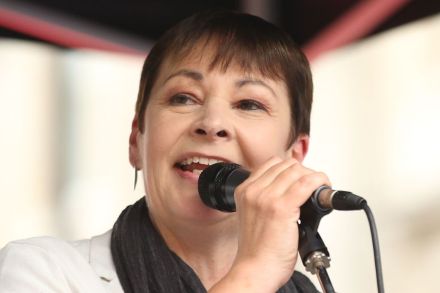
'Only a government of national unity can deliver us from no deal,' according to Guardian columnist Polly Toynbee. But who should lead it? In these turbulent times, Mr S considers eight challengers who might fancy their chances for the top job as national unity leader: Caroline Lucas Caroline Lucas faced embarrassment yesterday after floating the idea of a national unity government headed by an all-woman cabinet. Her proposal was quickly shot down by critics for not being diverse enough and Lucas was forced to make a grovelling apology. But Lucas insisted in her apology that 'fresh thinking' is still needed. Might she have herself in mind?

It’s time David Cameron returned to fix his Brexit mess

From our UK edition

In private moments of exasperation with rebellious Tory MPs, prime minister David Cameron used to complain that “too many of my colleagues think they’re here as tribunes of the people”. For him, as for Conservatives since the days of Edmund Burke, MPs should be representatives autonomously exercising judgment, not delegates meekly obeying instructions. Well congratulations Dave. Thanks to your brilliant decision to risk EU membership – and the entire British political settlement on a coin-toss, MPs are all tribunes now. There are some serious caveats about the ComRes poll on the front of the Daily Telegraph today: the question looks loaded and the “don’t know” figure is very high.

No. 10 seeks to restore Tory reputation for law and order

From our UK edition

It's law and order week in No. 10. After a series of announcements over the weekend, on stop and search and a promise of more prison places, Boris Johnson has today announced a review of sentencing guidelines for rapists and murderers. More announcements and appearances are expected as the week goes on to further hammer home the message that this is a Government that's tough on crime. With 80 days to go until the UK is to leave the EU, No. 10 is focussed on three main areas: Brexit, health and law and order. It follows that these three topics are also what the Tories are expected to campaign on in an early election. Under Theresa May, the Conservatives' reputation as the party of law and order has suffered.

Caption contest: Caroline Lucas’s emergency Cabinet

From our UK edition

It's an emergency! So says Caroline Lucas, who has called for an all-female cabinet to step in and block a no-deal Brexit. The Green party MP said her planned national unity government would hit the 'pause button' on Brexit while the likes of Emily Thornberry, Lib Dem leader Jo Swinson, Scotland's first minister Nicola Sturgeon and Tory MP Justine Greening stepped in to clear up the mess. 'In my experience, women tend to be less tribal, they tend to find it easier to establish trust more quickly,' according to Lucas. Fortunately, in the interests of gender equality, there is likely to be one place for a man at the Cabinet table:  Dominic Grieve. Mr S. has tried his hand at seeing what Lucas's dream anti-Brexit Cabinet might look like. Captions in the comments.

If Boris plays the system on Brexit, Corbyn can hardly complain

From our UK edition

A standard version of this autumn’s events is beginning to emerge. Labour brings a no-confidence vote in the Government on 4 September. The Tories, down to a majority of one – and with several Conservative old-timers vowing to go out in style by torpedoing their own Government in a last act of defiance to stop a no-deal Brexit – loses. Rather than resign, Boris spends the 14 days he would be allowed under the Fixed Term Parliament Act trying to build a majority. He fails. And Corbyn, too, is unable to form a majority. Boris calls a general election – but crucially stretches it out just beyond 31 October, when we drop out of the EU without a deal. No further Parliamentary efforts can be made to stop no deal because the Commons will be prorogued for the election.

Why a government of national unity isn’t going to happen

From our UK edition

There’s been much talk this week of a so-called government of national unity (GNU) to stop Boris Johnson’s Brexit plan. The idea is that he’d be forced out in a vote of no confidence in September and replaced by a caretaker PM who would request an extension to our EU membership before resigning and calling a general election. But, as I say in The Sun this morning, it is hard to see this happening. First, this wouldn’t be a government of national unity as its sole purpose would be to extend our membership of the EU which would make it one of the more divisive governments in living memory. But more importantly, Jeremy Corbyn won’t back anyone else for Number 10 while Tory rebels and the Lib Dems aren’t prepared to support him.

With interest rates crashing, Boris is in luck – he can borrow his way out of any Brexit crisis

From our UK edition

Is Boris Johnson the luckiest prime minister ever? This week, the Government can borrow money for ten years at 0.48 per cent and for thirty years at 1.16 per cent. At these rates, it would irresponsible not to borrow more. The age of austerity can be brought to an end at exactly the same moment we leave the EU, opening up vast new opportunities for investment in infrastructure and public services. The Cameron government had to cope with the aftermath of the great recession and lived in fear of being heavily in debt if real interest rates went up. No such fear need trouble Boris. If the Government issues more 30-year bonds it will not matter if interest rates go up in the future. For every 30-year bond valued at £100 the Government will receive £107.

The Remain alliance that could spoil Boris Johnson’s party

From our UK edition

What George Orwell said of left-wing intellectuals now applies to Boris Johnson and his ministers: so much of what they propose is a ‘playing with fire by people who don't even know that fire is hot’. They may suspend Parliament and crash us out of the EU on 31 October or crash us out in the middle of an election campaign. Understandably, all the talk is of the threat to the conventions of democratic life. Yet if Johnson does not buckle, the autumn will not just bring a constitutional crisis but an economic and social crisis. No one knows how bad crashing out will be because no country has been stupid enough to tear up its main trading relationships without having an alternative in place.

Is Britain really heading for a Brexit recession?

From our UK edition

The sense of excitement among some Remainers is almost palpable. Finally – after three years of waiting – a quarter of negative growth has materialised following all the grim warnings of Brexit-related economic turmoil. The Office of National Statistics (ONS) this morning released its first estimate for economic growth for the second quarter of this year, which has come out at minus 0.2 per cent. That counteracts unexpectedly strong growth in the first quarter of 0.5 per cent. Manufacturing, which shrank by 2.3 per cent, was the worst-performing sector of the economy. The dominant services sector expanded but only just, at 0.1 per cent.

Labour MP: I think all countries should be abolished

From our UK edition

'Imagine there's no countries,' John Lennon once sang. It seems that one Labour MP is taking that song literally. Paul Sweeney, who represents Glasgow North East, had this to say: Well, Mr S. has to admire the scale of Sweeney's ambitions, but he also wonders whether this plan might not be the best way to dig Labour out of the hole it found itself in yesterday. John McDonnell, the shadow chancellor, caused trouble for his party at the Edinburgh fringe festival by saying that Labour would not block a Scottish referendum if they won power. The comments went down badly with Scottish Labour MPs. Sweeney stepped in to clarify the party's position as a 'statement of basic democracy'. He then explained that: '...

Could Boris Johnson have to resign if he loses a confidence vote?

From our UK edition

The argument about whether Boris Johnson would have to resign if he lost a confidence vote is continuing to rage at Westminster. There is, though, an angle to this argument that is being neglected. Right now, the Labour leadership is clear that it won’t back anyone other than Jeremy Corbyn to be prime minister. This means that even if Boris Johnson lost a no-confidence vote, it is not clear who could command the confidence of the Commons. With no alternative government ready to go, then an election would be the obvious answer.  Things become more complicated if an alternative government could somehow be formed. In these circumstances, there would be more pressure on Boris Johnson to resign.

It would be foolish to take Boris’s Brexit promises at face value

From our UK edition

As the by-election result came through from Wales last week, one Tory Leaver tweeted this: “Brecon and Radnor is a timely warning to Brexiteers. Vote for the @brexitparty_uk and you will hand another seat to Remain. How could you be so stupid?”.  So stupid? The nerve, when after all, it was the the Brexit party that resuscitated the referendum result after a near death experience created by his party. I was furious at the arrogance. But he isn't alone; this view has now become the narrative popularised by some Tory grandees and voters, even though many of the latter loaned the Brexit party their votes in the Euro elections.  Yet without the Brexit party, it is likely that Theresa May would still be prime minister.

Will John McDonnell lock Tories up if Labour wins the next election?

From our UK edition

Smiley, fluent and softly spoken, John McDonnell sometimes comes across as a bit cuddly. Yesterday Labour’s shadow chancellor was interviewed by Iain Dale at the Edinburgh festival. He said he’s looking forward to a boating trip on the Norfolk Broads. ‘My wife and I sail. But we sail badly. People get off the water when they see us coming.’ He felt he deserved a break after working with the Tories on a cross-party approach to the Withdrawal Agreement. ‘No one should have to sit opposite Michael Gove for six weeks. I did it for the country.’ Iain Dale quizzed him about Labour’s immediate threat: Boris. ‘The guy’s reckless. The guy’s unstable,’ said McDonnell. ‘I will move heaven and earth to stop a no-deal Brexit.

How should the Tories respond to an SNP/Labour pact?

From our UK edition

John McDonnell has caused a stir over recess with an interview he gave to Iain Dale at the Edinburgh Fringe. The shadow chancellor suggested that Westminster should not decide whether Scotland gets a second independence vote – instead it should be up to the Scottish Parliament. As Stephen writes on Coffee House, this is most definitely not the Scottish Labour line. The comments were also made within 24 hours of Nicola Sturgeon suggesting she’d be willing to work with Labour to 'lock the Tories out of government'. So, with a general election now seen as inevitable within the next six months – is the prospect of an SNP/Labour pact an open goal for the Tories?

Can a vote of no confidence prevent no deal?

From our UK edition

Talk of an early election has been on the rise in recent months as the Brexit arithmetic has looked increasingly shaky. This week it has hit fever pitch. Boris Johnson announcing extra funds for the NHS has been read as a sign the party is getting campaign ready while party chairman James Cleverly set the cat among the pigeons at the weekend after he used a broadcast interview to say only that the Tories would not 'initiate' a general election. The verdict: an early election is beginning to be seen as inevitable.

Sunday shows round-up: James Cleverly – We are not ‘going to initiate’ a general election

From our UK edition

Niall Paterson stood in for Sophy Ridge this morning, interviewing the Conservative party chairman James Cleverly. Paterson asked Cleverly whether billions of pounds worth of spending pledges outlined by new PM Boris Johnson meant that the government was considering an early general election. Cleverly insisted that the government would not be pursuing this course of action, despite a vanishingly small majority in the House of Commons: https://youtu.be/SVXgUrRmYE4 NP: Tell me there isn't going to me a general election this year. JC: ...We are not going to initiate a general election. We have elections all the time... What we've got is a new Prime Minister who, during the leadership campaign, made a number of explicit commitments...

What I learned talking to Boris Johnson about religion

From our UK edition

I don’t pretend to have had extensive discussions about religion with our new Prime Minister, but I did have a couple of brief ones when he edited my first Spectator articles. We once discussed Christian and Muslim ideas of martyrdom, and he was suddenly reminded of a hymn he liked at Eton which he proceeded to sing to me down the phone.  His tone towards religion in general was, as you’d expect, a bit guffawing: here’s a prime site for flippant jokes and the puncturing of earnestness. But, knowing that I took religion seriously, and seeing that we had an article to discuss, he was a tad constrained.

Why the onus is on the EU to do a Brexit deal

From our UK edition

In the run-up to the referendum, a common argument against Brexit went like this:  “We should not leave the EU, because if we try, the EU will be capricious and irrational, it will not prioritise the welfare of its people, it will instead punish us, we must be afraid of that wrath, forget any merit, we must be prudent”. A similar argument is often discussed at length by Sir Ivan Rogers, and repeatedly published in The Spectator. It is both right and wrong. The people who believe it are not ‘Remoaners’, as some might claim: they are patriots. But I disagree. And for me, this argument is why I voted to leave. I am an autonomous and free human being. I am also a citizen of a society. I surrender my freedoms in order to make that society function.

What’s changed with Boris Johnson in Downing Street

From our UK edition

10 days in to Boris Johnson’s premiership and the big change is, as I say in The Sun this morning, that the government machine now thinks no deal really might happen. Those involved in no deal planning meetings say that there is now an intensity to them that there never was before. Rather than querying whether no deal is desirable, officials are getting on with preparing for it. Ministers are also bound into this strategy. One of those who served in both May’s Cabinet and the new one says that under the previous Prime Minister Sunday’s Cabinet conference call would have led to a long discussion about the merits of no deal. But now all ministers are signed up to leaving on October 31st whether there’s a deal or not, it didn’t.