Uk politics

Any type of Brexit is better than no Brexit at all

From our UK edition

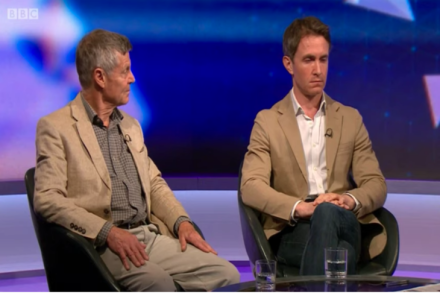
It’s a strange beast, the internet. On Monday night, I was slightly reluctantly dragged onto Newsnight to discuss Brexit. Attentive readers will know that I very rarely write or speak about the subject. There are many reasons for this, one of which is that I said most of what I had to say three years ago when I cast a vote in a referendum. Another reason – I must admit – is that I have wanted little to no part in the bile-fest of the last three years. I would like us still to have a country after this, and there seems very little chance of that if both halves of it continue to spit at each other.
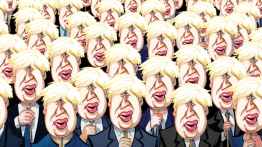
From the archives: Boris Johnson – ‘My appeal to the masses may be very limited’

From our UK edition

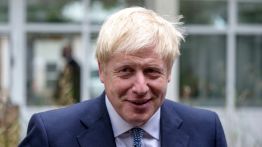
Boris Johnson's senior adviser Dominic Cummings has found himself in the news today after a video clip emerged of him suggesting most Conservative MPs 'do not care' about 'poorer people' or the NHS. Now in No. 10, Cummings appears to be on a mission to change that – with a focus on applying the Johnson ethos of boosterism to healthcare. But what of Johnson's old comments? A search of Cambridge's student newspaper archive reveals that BoJo too has made some comments which could now be deemed off-message. In a 2000 interview with Varsity, the then editor of The Spectator discussed his decision to stand as the Conservative candidate for Henley.

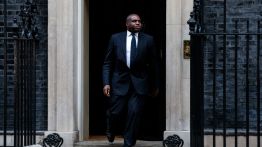
It’s time for David Lammy to join the Tories

From our UK edition

I’ve never voted Conservative and I never will. Having been raised in a working-class home, I can’t get past the fact that had the Labour party not come into being, the Tories would have kept my people serfs for as long as inhumanly possible. But I’m also an extreme Brexiteer; far from the past three years being boring (anyone who says this reveals themselves as such a monumental dullard that we should remove their right to vote), I consider that this nation spent the four decades up to 23 June 2016 sleepwalking into the shadowlands of EU dreariness — and disaster. Only a halfwit could fail to comprehend that the whole repulsive gravy-train is set to run into the buffers very soon and that it makes sense for us to pull the communication cord and hop off ASAP.

Labour must ditch Corbyn now if it wants to stop Boris

From our UK edition

If Labour were serious about stopping the most right-wing Conservative government within living memory, it would revolutionise its approach to politics. Clearly, it would have to remove Jeremy Corbyn as leader. Ideally, Corbyn would remove himself. He would not allow the struggle to force him out to waste precious time. He would look at his leadership ratings, ask himself why Labour was not 20 or 30 points ahead of a dire government, and conclude that, in the interests of the party and country, it was time to retire with dignity. With their leader duly patted on the back and sent on his way, Labour MPs would then game the system to avoid a second venomous round of faction fighting. There is not enough time for a leadership contest between now and an autumn general election.

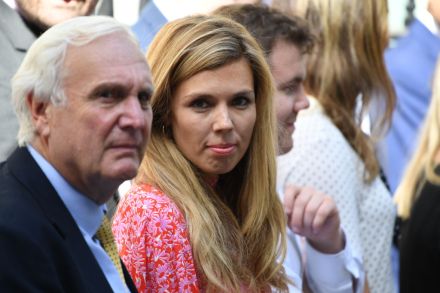
How Carrie Symonds can learn from Cherie Blair’s mistakes

From our UK edition

The PM’s partner has one of the toughest jobs in politics even though it’s not a political appointment. That’s the nub of the difficulty. The role is undefined and unpaid. And whatever the partner does can be labelled a blunder and used to attack the prime minister. I’ve just written a play, ‘Cherie – My Struggle’, about Mrs Blair’s life inside Downing Street. Carrie Symonds is bound to face many of the difficulties Cherie had to grapple with.  First, security. Cherie was shocked to learn that she couldn’t leave Number 10 without informing her close protection officers. They accompanied her everywhere, even to the chemist. She was banned from driving her own car.

Boris Johnson and the end of political spin

From our UK edition

Does the arrival of Boris Johnson in Downing Street signal the end of the politics of branding and the beginning of the politics of principle? Can we already see in the announcements and actions of the Johnson Government a new style of politics? The early signs would suggest so. Boris's first speech outside No.10 was devoid of fluff. The promises – extra police, delivering Brexit on time – were clear and precise and will provide an easy way to judge his record. Another source of optimism is the clear difference between Boris and his predecessor. Whereas May stirred up resentments with misleading gender pay gap publications and talk of burning injustices, Boris seems eager to ditch the spin and take steps to make society more even.

Labour is gearing up for the wrong fight against Boris Johnson

From our UK edition

Boris Johnson is sometimes compared to Winston Churchill, not least by the man himself. Unfortunately for Britain's new Prime Minister, most of these comparisons are fatuous. But there are some similarities. Both are politically fluid and both share an enormous sense of ambition propelling them in unexpected and contrary directions. So far, we have had two Johnsons: One Nation Boris, the expansive liberal Tory, the man who won Labour London, not once but twice. More recently, we've has Brexit Boris, whose constituency seems to have been reduced to the hard-faced men and women of Leave. It is Brexit Boris that Jeremy Corbyn’s advisers choose to see: they believe he is an enemy with whom they can do profitable business.

Why the EU isn’t taking Boris’s Brexit threat seriously yet

From our UK edition

Boris Johnson’s Downing Street is being quite clear that if the EU wants to talk then it needs to be prepared to reopen the withdrawal agreement. If the EU isn’t prepared to budge on this, the message is that there will be no deal. The EU isn’t inclined to take this threat that seriously right now. The view is that parliament will find a way to block the UK leaving without a deal or Boris Johnson will get cold feet. Even if the UK does leave without a deal, many in the EU reckon that within months the UK will be so keen to come back to the table that it’ll end up accepting the current agreement after all. So Boris Johnson needs to show that he can overcome any parliamentary effort to block no deal and that he can make it politically viable.

The curious reaction to a niqab-wearing homophobe

From our UK edition

Are we allowed to criticise the niqab yet? This question crossed my mind as I watched that viral clip of a niqab-clad woman hurling homophobic invective at a Pride marcher in Walthamstow in London. Surely now it will become acceptable to raise questions about this medieval garment (banned in several Muslim countries) and about the views and attitudes of those who wear it? On one level, the footage of the niqab-wearering lady spouting anti-gay hate wasn’t very surprising. Shocking, yes, but not surprising. It’s not as if someone who covers themselves from head to toe in archaic black cloth (which, as Qanta Ahmed has said, is not in the least suggested let alone mandated by the Koran) is going to hold enlightened views on sexuality.

Can the Brexit party survive Brexit?

From our UK edition

You have to admit that Brexit party MEPs have a fun job. Imagine turning up to work to insult your colleagues, ridicule your duties and still collect a pay cheque. As I am fortunate enough to enjoy my work, though, I don't think it is jealousy that makes me find at least some of their posturing obnoxious. “Every day MEPs get a “media briefing” from the EU,” Martin Daubney MEP informs us: No, in fact. If anything, the EU is offering evidence against bias. First, these words came not from an EU employee but British philosopher John Gray. Second, Gray does not call Brexit “far right” and specifically criticises the idea that it was an “isolated eruption of English nationalism.

Can the Gaukeward Squad overcome its inner turmoil?

From our UK edition

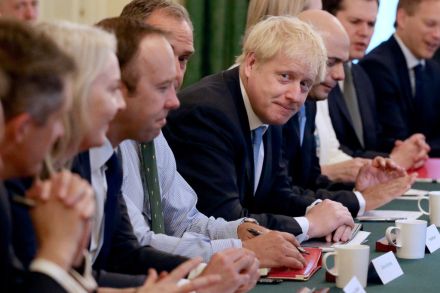
Usually after a big government reshuffle, the happiest-looking people are the ministers, whether they’ve survived the axe or are celebrating a promotion. But at the end of this week, the most cheerful MPs appear to be the ones who left government, whether of their own volition or after being sacked by Boris Johnson. They’ve been spotted at the cricket and are happily announcing their holiday plans with their family on social media in a way that most politicians shy away from, for fear of appearing to have too much fun. But who is really in the best situation: those in the government, or those now on the outside? In my column in today’s Guardian, I examine the emotional turmoil that many MPs on both sides are going through.

Inside Dominic Cummings’ first meeting with government aides

From our UK edition

When Boris Johnson was interviewed by The Spectator ahead of becoming Prime Minister, he said that on Brexit, his 'determination burns with a magnesium brightness to get it done and to deliver'. Less than a week into his premiership and that commitment is echoed by senior No. 10 staff – many of whom come from Vote Leave. With speculation mounting that an early election is now inevitable as Brussels refuse to take Johnson's Brexit demands seriously, special advisers and government officials gathered on Friday evening to hear from Johnson's senior adviser Dominic Cummings – referred to by No. 10 staff as the CEO. I understand the Friday 6pm meeting is likely to become a weekly feature (with alcoholic beverages provided for after).

Boris Johnson’s political strategy is the same as his Brexit strategy

From our UK edition

Boris Johnson is running an outside / in campaign, I say in The Sun this morning.. If he’s to get the UK out of the EU by October 31st—the defining pledge of his leadership bid—then he’s got to get the public to put pressure on parliament. The new Prime Minister needs MPs to think that they’ll pay an electoral price for standing in his way. That’s why he is in full campaign mode: firing out popular policies, touring the country and making big speeches. A sizable poll bounce would mean that MPs would be far less likely to try and throw obstacles in Boris Johnson’s way.

The leadership result that has Labour worried

From our UK edition

As the Westminster rumour mill goes into overdrive over the likelihood of an early general election, talk has turned to how the main parties would fare in an Autumn trip to the polls. Crucial to that question is how the Liberal Democrats would do. Just a year ago, the Lib Dems were the subject of pity and widespread mockery. They were scarred by their time in coalition with the Tories. They failed to make much ground during the 2017 snap election, ending up with just 12 MPs, and seemed destined for extinction. In theory, they should have hoovered up Remain voters. Instead, they hoovered up derision and obloquy. Sir Vince Cable announced his resignation as party leader with the future looking bleak.

Jacob Rees-Mogg’s style guide

From our UK edition

Jacob Rees-Mogg’s frontbench debut made it clear he won’t be a typical member of the Cabinet. Fresh from making waves in Parliament, the new leader of the house of Commons has now released his own style guide for staff. On the banned list are full stops after Miss. or Ms., commas after and, and double spaces after full stops.  Rees-Mogg also tells staff to refer to non-titled men as ‘esquire’ – and ensure that they only use imperial measurements, something which Mr S. is sure will go down well in Brussels. And as for using the words ‘very’, ‘lot’, ‘got’ or ‘speculate’? Don’t even think about if you’re a member of Rees-Mogg’s staff.

Leo Varadkar ramps up the rhetoric on Boris’s Brexit demands

From our UK edition

Since entering No. 10, Boris Johnson has made clear that any route to a Brexit deal must involve ditching the backstop that currently sits in the withdrawal agreement. If that's not possible, he intends to take the UK out of the EU without a deal. The backstop was the major stumbling block for Theresa May passing that deal – something she failed to do three times – and her government had sought to secure a time limit to make it more palatable to MPs. Brussels refused to play ball. With Johnson asking for more drastic changes, will he have any luck? So far, the signs are not particularly positive.

Boris Johnson has sent a troubling message to Scottish Tories

From our UK edition

The sacking of David Mundell as Scottish Secretary has left Ruth Davidson’s Tories reeling. The response is not tribal or even ideological; Brexiteers and Remainers alike regard his replacement Alister Jack as a good sort. What most are still struggling to fathom is the thinking behind Mundell’s punting. Of course, he is an opponent of no deal — Jack, by contrast, has taken the pledge and says he could support a crash-out Brexit — but he was seen as hard-working and effective in the Scotland Office. He knew the brief, had the experience and was well-briefed in the tactics of the SNP.

The top five moments from Boris’s Commons debut as PM

From our UK edition

Theresa May's clashes with Jeremy Corbyn were usually dull affairs. Now that Boris Johnson is Prime Minister, Mr S. is looking forward to some livelier bust-ups in Parliament. Boris didn't disappoint in his first encounter with the Labour leader. Here are five of the best bits from Boris's government debut: Corbyn's 'terrible' Brexit 'metamorphosis': Boris wasted little time in going for Corbyn over his mixed-up Brexit position, accusing him of undergoing a “terrible metamorphosis” from “long-standing Eurosceptic” into reluctant Remainer. Boris said the change of heart matched Corbyn’s “turgivisating career”: https://twitter.com/BBCPolitics/status/1154349931936641024?

The anti-Boris demo was a screech of middle-class rage

From our UK edition

Last night’s ‘F**k Boris’ demo in London really was an extraordinary spectacle. It felt almost historic. For what we had here was a gathering of radicals raging against a new Tory PM for threatening to upend the political status quo. Yes, these supposedly edgy, rebellious, pink- and blue-haired haters of Conservatism were essentially pleading with Boris not to be so revolutionary. It was bizarre. There may have been music and dancing and weed — the soulless whiff of that deadening drug was everywhere — but this was fundamentally a conservative protest. Small-c, natch. It was a plea to keep Euro-technocracy intact and not to cave in to the demands of the hoodwinked masses who voted for Brexit.

Seven of the most hysterical reactions to PM Boris Johnson

From our UK edition

Prime Minister Boris Johnson is already delighting his supporters, but not everyone is happy about Britain’s new leader. Boris’s first speech in Downing Street and the Cabinet bloodbath that followed has led to a fair bit of wailing and gnashing of teeth, not least on Twitter. From independent group MPs and David Lammy to the New York Times – and even a popular children's author – PM Boris is a prospect that is filling some with horror. Here are seven of the most hysterical reactions to Boris's big win: Mike Gapes: Alt-right is a ‘far-right, white supremacist, white separatist, anti-immigration and sometimes anti-Semitic movement’, according to Wikipedia. So Mr S.