Uk politics

We need to hear more from Tony Blair on Syria

From our UK edition

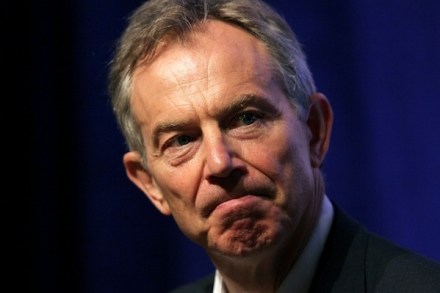
Conventional wisdom suggests that Bashar al-Assad’s Syrian regime will crumble from within if given enough time. That’s the reasoning which has, in part at least, prevented Western governments from intervening in the conflict so far. Tony Blair challenged proponents of that view yesterday. 'People say inevitably he will go. I don't think it is inevitable, actually, unless we are prepared to make clear our support and solidarity for those people who are struggling against what is a very, very brutal repression now,' he told Radio 4's Today programme. Although Blair isn’t necessarily advocating military intervention, he does think we should be exploring military options more thoroughly. This is the conundrum facing Western governments.
Grayling shows his mettle as Justice Secretary

From our UK edition

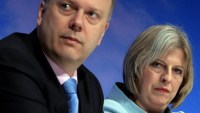
Chris Grayling's appointment as Justice Secretary in the reshuffle was the move that pleased Conservative MPs almost above anything else. Today he showed the House of Commons why his is a popular appointment. Announcing the government's intention to appeal against the European Court of Human Right's ruling that indefinite sentences breach human rights, Grayling said this: 'Of course the ECHR ruling this morning was very much about the issue of rehabilitation, something I feel very strongly about, something that needs to be clear and present within prisons as well as after prisons. 'However, I'm very disappointed by the ECHR decision this morning. I have to say it is not an area where I welcome the court seeking to make rulings.

The government will not snoop on your every move

From our UK edition

Nick Cohen (‘Nowhere to hide’, 15 September) raises some interesting points about the double-edged nature of the internet. I agree with this sentiment, although not for the same reasons. Yes, the World Wide Web has brought about massive benefits, allowing people to communicate and connect in ways never before imagined. However it also has a down side. And this is that it affords criminals and those who wish to do us harm the same new ways to communicate and connect. It is this that concerns me, rather than Mr Cohen’s claim that it will allow, through our Communications Data Bill, the government to monitor your every move. This argument is based on a fundamental misunderstanding of the Bill.

Lib Dems play whac-a-mole on welfare cuts

From our UK edition

The Liberal Democrats are playing a game of whac-a-mole on welfare at the moment: each time they think they've blocked one cut they don't like, another one pops up. Last night a mole they'd already whacked a year ago appeared again: decoupling benefits from inflation. The Newsnight scoop is that Whitehall is considering ending inflation-linked rises for many benefit payments - although the word is that this would not include payments to those with disabilities. This would be part of efforts to cut a further £10 billion from the welfare bill, which the Lib Dems oppose overall. Last winter the Lib Dems blocked a similar move from the Treasury, which had proposed uncoupling benefits from the inflation rate, which was 5.2 per cent for that September.

‘Denuded’ Work and Pensions committee sheds little light on Universal Credit

From our UK edition

The Work and Pensions Select Committee was much denuded this evening, chair Anne Begg told the guests: its membership had either been promoted in the reshuffle or had personal crises to attend to. In the end Begg was joined by Andrew Bingham, Stephen Lloyd, Teresa Pearce and Glenda Jackson to interrogate Iain Duncan Smith and Lord Freud about the implementation of universal credit. Their questions seemed rather denuded, too: not of detail, for these MPs do truly know their stuff when it comes to welfare reform, but of a sense of the bigger picture. During the hearing, which lasted nearly three hours, the Work and Pensions Secretary and his Welfare Reform Minister explained how they planned to encourage claimants to manage their claims online.

The English Baccalaureate Certificate is coming regardless of what happens in 2015

From our UK edition

There’s much speculation today that Labour’s decision to oppose the coalition’s GCSE replacement the EBC means that the new exams will never happen. The argument goes that if the Tories aren’t in government, Labour — or a Labour-led coalition — would simply keep GCSEs going. (This depends on Labour continuing to oppose the new exams which they may not if they prove to be as popular as some pollsters expect them to be). But keeping GCSEs going is nowhere near as simple as it sounds. The exam boards will now turn nearly all of their attention to winning the one available English Baccalaureate Certificate contract for each subject.

Keeping it simple: getting the Universal Credit back on track

From our UK edition

Universal Credit, a giant effort to weave together all the fraying strands of welfare policy, is now unravelling fast. It all seemed so simple and intuitive when the idea was floated. Pay people more when in work than when on benefits, roll the myriad of benefits and tax credits into a single benefit, reduce the colossal claims process for individuals; and unearth some administrative efficiencies to boot. So intuitive, in fact, that the Opposition supported the underlying principles of the Universal Credit. Recent debate suggests that achieving this simplicity is proving ferociously complex.

Justine Greening is a reluctant contestant on Mitchell’s Millions

From our UK edition

The reshuffle allowed David Cameron to place what many ministers (and sacked ministers in particular) are calling 'Osborne's spies' in each government department to help the Chancellor rein in spending. Justine Greening wasn't a typical spy when she arrived at the International Development department in a huff after being forced out of the Transport department, but as an ex-accountant, she was certainly appealing. Shortly after her appointment, Fraser speculated as to whether she would be quite so enthusiastic about playing 'Mitchell's Millions', the game of spending £30 million a day on aid, regardless of how well-targeted that money is. Greening is clearly keen to show that she's not as eager a contestant as her predecessor Andrew Mitchell.

Will Labour accept Gove-levels?

From our UK edition

Nick Clegg and Michael Gove will announce their joint plans to reform GCSEs today, a day earlier than they had originally intended. The Deputy Prime Minister appeared alongside the Education Secretary this morning on a school visit, while Gove will make a statement in the Commons this afternoon to announce the changes, which Liberal Democrats are claiming as a victory after the initial row over a possible return to a two-tier system. Clegg told reporters this morning: 'I think you can raise standards, increase rigour and confidence in our exam system, but still do so in a way which is a single-tier, which covers the vast majority of children in this country. And those are the principles upon which this whole reform will be based.

Clegg mulls airport expansion

From our UK edition

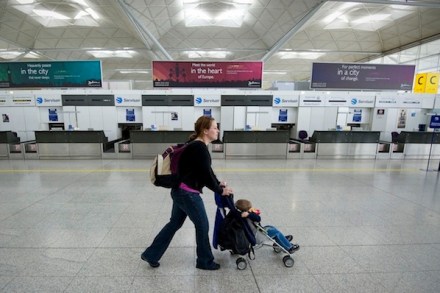
This country’s willingness to fritter away London’s hub airport status is an act of economic self-harm as the Conservative side of the government finally seems to have realised. But there’ll be no progress this side of the election as long as the Liberal Democrats remain wedded to their opposition to any new runways in the south east. So, the news in today’s Times that the Liberal Democrats are considering backing a new hub airport in exchange for the closure of other runways is to be welcomed. I understand that things may be even further on than the conference motion suggests. I’m informed that Nick Clegg has seen a Cabinet Office paper making the case for a four-runway airport at Stansted and has not dismissed the idea out of hand.

Ed Miliband defines socialism and capitalism

From our UK edition

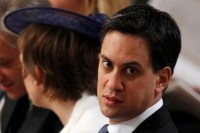
Ed Miliband has long made responsible capitalism a primary concern of his leadership, and in today's Telegraph, the Labour leader has a stab at explaining a little more of what he wants it to look like. He has lately taken to pointing out that his speech to his party's conference last autumn which so confused people with its talk of predators has come good following scandals such as Libor. MPs in his party hope that he will point this out once again when he gives his conference speech in just a few weeks' time. But enlarging on this theme now, he tells Charles Moore this: 'But I believe capitalism is the least worst system we’ve got. I believe in the creativity of Blackberry [picking up his], or whatever. But I want it to be more decent, more humane, more fraternal.

Alex Salmond booed by crowd in Glasgow

From our UK edition

Roman emperors famously used to have a slave to ride behind them in their chariots during victory parades to remind them, by whispering in their ear, that they were only mortal. Alex Salmond must have experienced something of the same down-to-earth experience yesterday evening when he was booed by a crowd in Glasgow that had come to celebrate Britain’s Olympic success. The First Minister can’t have liked it very much. It can’t be a pleasant experience for anybody to get booed by a crowd but for Mr Salmond, it must have been galling. This was a Scottish crowd in Scotland’s biggest city, a country Mr Salmond regards as his fiefdom, where he commands a handsome majority and where he believes – until yesterday that is – that is really very popular.

What the BAE merger says about UK relations with the US and Europe

From our UK edition

The merger of British BAE Systems with French giant EADS finds the government at a tricky crossroads for the future of the UK's defence industry. Although merging with EADS threatens to rip the heart out of Britain's largest defence firm, BAE has little choice. The firm has suffered from spending cuts on both sides of the Atlantic — 98 per cent of BAE's business originates from the defence market and orders are in decline. Therefore a merger appears to be the obvious solution, allowing BAE to diversify and secure its future. But as the world's third largest defence contractor, any kind of dilution of BAE has security and strategic implications.

The quiet country lane hosting a schooling revolution

From our UK edition

The location hardly suggests revolution. A few miles down a Somerset country lane, a new school opened this week. It will do so on the site of a tiny old primary school, buttressed by a couple of swiftly-erected buildings, before moving to its permanent site, currently occupied by the NHS, within two years. But the opening of the Steiner Academy Frome could one day be regarded as a seismic moment in British educational history. Steiner Academy Frome is the first state school for generations that could be said to have brought about the closure of a private school. The Meadow School shut just after the end of the 2011/12 academic year; a number of teachers, as well as over 20 pupils, have since moved to the Steiner Academy Frome.

Andrew Lansley: the Tories chose not to win

From our UK edition

I’m at a YouGov conference in Cambridge where we’re just had a speech from Andrew Lansley, the new Leader of the House. He was speaking about the coalition, and gave a brief history of its inception. 'None of us had, in truth, understood the nature of what a coalition government might be...I’m not even sure the Lib Dems had thought about what a coalition would look like. In normal circumstances, with that election result, there would not have been a coalition. We’d have formed a minority government, put forward a programme, challenged the House to support it or not and after a decent interview - probably a few months - we would have had a general election and would have almost certainly won a majority...

MP calls for state funeral for Richard III

From our UK edition

Chris Skidmore, the Tory MP and Tudor historian, has tabled an early day motion calling for a full state funeral for Richard III, if the skeleton found in Leicester does turn out to be him. The motion reads: 'That this House notes the discovery of a skeleton beneath a car park in Leicester believed to be that of Richard III; praises the work of the archaeologists and historians responsible for the find; hopes that DNA evidence will prove the remains to be those of the last king of the Plantagenet dynasty; and calls upon the government to arrange a full state funeral for the deceased monarch, and for his remains to be interred appropriately.

The Age of Ed Miliband

From our UK edition

What more does Ed Miliband need to do to be taken seriously as the next Prime Minister of Britain? He has been ahead in the polls since the start of last year, and the bookies favourite for longer. A geek? Maybe, but one who has a personal approval rating higher than David Cameron. A leftie? Certainly, and that’s why the orphaned Lib Dem voters feel so at home with him. But his real secret is that no one has the faintest idea what Labour, if elected, would do. We may well be entering the Age of Ed and the terrifying thing is that no one, not even the party leader himself, seems to know what it will mean. I look at this in my Telegraph column today. Here are my main points. 1. Plenty of Tory MPs are preparing for the age of Ed.