Uk politics

Alok Sharma’s big challenge: wooing ethnic minority voters

From our UK edition

Alok Sharma has been appointed Tory vice chairman and charged with improving the party's standing among ethnic minority voters. He certainly has a big task ahead of him. According to the Ethnic Minority British Election Study, the Conservatives received just 16 per cent of the ethnic minority vote in 2010, to Labour's 68 per cent. The Tory vote share among Black voters was actually in the single figures: Lord Ashcroft has suggested that this weakness prevented the Tories from picking up the extra seats they needed for a majority, noting that: 'The average non-white population of the constituencies the Tories gained from Labour in 2010 was 6 per cent.
No re-mark of GCSE English

From our UK edition

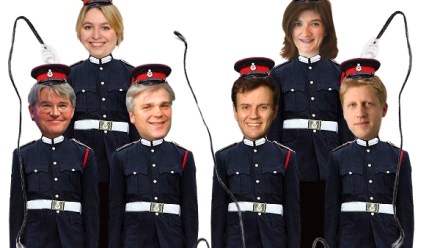
Any hope that Labour might hold that the latest revelations about Ofqual might prompt a re-mark of the GCSE English papers is almost certain to be disappointed. Even though Welsh exam papers are being re-graded, I understand that the same is not going to happen in England. A source close to education secretary Michael Gove says: 'A small number getting lucky in January isn't a reason to give everyone else an inflated mark now. GCSE exams and marking systems are discredited. We said this years ago and the education establishment complained. We got rid of modularisation, introduced by Labour, and said we need to replace a broken system - and Labour and the unions complained that we were moving too fast.

Briefing: Universal Credit

From our UK edition

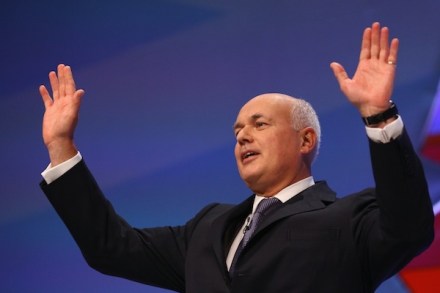
MPs are due to debate the government's plans for universal credit in the House of Commons this afternoon. The Opposition Day motion questions whether ministers have 'failed to properly account for numerous basic details of how the scheme will work', and calls for them to address 'deep flaws' in the project. So where is the project at the moment, and what are those deep problems? The background Work and Pensions Secretary Iain Duncan Smith unveiled the universal credit at the Conservative party conference in 2010. It was based on the work that his think tank, the Centre for Social Justice had carried out when Duncan Smith was in opposition, and led to the publication of a white paper called 'Universal Credit: welfare that works' in November 2010.

Independent Scotland: socialist paradise or neo-liberal nirvana? – Spectator Blogs

From our UK edition

Well, probably neither actually. But there's every reason to suppose that just as some Unionists are fooling themselves when they discount the possibility of dear old Scotia thriving as an independent entity so some backers of independence may be deluding themselves if they think independence is a one-way ticket to a socialist paradise. That's the premise of this week's Think Scotland column, written in the aftermath of Jim McColl's decision to be out for independence. McColl, Heid Neep at Clyde Blowers and reckoned worth a billion pounds or so, is Alex Salmond's latest boardroom success. Admittedly McColl's support is less than whole-hearted. It's predicated upon Unionist reluctance to move much beyond the recent Scotland Bill. Independence is McColl's preferred second prize.

Vince Cable calls time on ‘laissez-faire’

From our UK edition

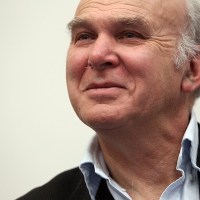
Vince Cable's speech on the government's industrial strategy today is expected to signal the end of a 'laissez-faire' approach to business. But the Business Secretary appeared un peu trop détendu himself when describing plans for a state-backed business bank on the Today programme. 'This is, as I say, something we're discussing within government at the moment. There is a scope for example for rationalising our activities as well as new lending. But the scale and scope is something that I'm discussing with the Chancellor at the moment.' There wasn't much detail on offer, other than that this bank 'may well' involve state lending. But as Sam Coates points out this morning, a real bank would take years to set up.

Ofqual pressured exam board on English GCSE

From our UK edition

If any members of the education select committee were wondering if they would have enough questions for their witnesses today, last night's scoop from the Times Educational Supplement might give them a few pointers. Leaked letters seen by the newspaper show exams regulator Ofqual pressured the Edexcel exam board to raise the grade boundaries on its English GCSE just two weeks before the summer results were published. A letter from Ofqual's director of standards Dennis Opposs to Edexcel on 7 August 2012 says: 'This may require you to move grade boundary marks further than might normally be required.' Though Edexcel disagreed, saying its proposed grades were 'fair', Opposs pushed the board again, arguing it was obliged to ensure its results were consistent with other boards.

Iain Duncan Smith denies threat to universal credit

From our UK edition

Allowing Iain Duncan Smith to dig his heels in at the Work and Pensions department in last week's reshuffle sent out two messages. The first was that the Prime Minister is not as authoritative as he should be: telling someone that you'd rather they moved to one department, but that it's ok for them to remain where they are isn't exactly 'butch', to borrow the PM's own favourite word. The second is that the Prime Minister was worried about the future of the DWP's reforms, and was keen to put someone else in charge of implementing the behemoth computer system for the universal credit, even though events meant he was unable to do so. Liam Byrne prodded Duncan Smith on this today at Work and Pensions questions.

Where Brendan Barber has a point

From our UK edition

Brendan Barber's last speech as General Secretary to the annual TUC Congress in Brighton made a salient point about what politicians can learn about the private sector from the G4S debacle. Ministers may well dismiss the majority of Barber's comments about cuts and labour market reform without poring through the transcript, but there was one attack that he made that will ring true for those on the right as well as the trade union officials sitting in the conference hall. Using the Olympics as his grand theme, Barber said: 'Private is always better than public, they argue. Not true, as we saw all too clearly when it came to Olympic security.' He added: 'Congress, it's right to celebrate the Olympics, but it's even more important to learn from them.

The answer lies to the east of Heathrow

From our UK edition

A retired civil servant of my acquaintance usually provides a telling perspective on the administrative affairs of the day. We discussed the Heathrow row recently. He said that it was ‘right’ to delay any decision until 2015 so that proper investigations could be made and considered. If he thought that the Tories would not dare break their no-runway manifesto pledge in this parliament, then he did not mention it. For him, it was a question of process and nothing else. The policy not to have a policy on Heathrow until 2015 certainly exudes a bureaucratic air, compounding the sense that this government has fallen captive to a conservative civil service.

Boris muscles in on Davies’ airport inquiry

From our UK edition

Boris Johnson has already denied that the work he is carrying out on airport capacity in London is a rival commission to the one set up by the Government and led by Sir Howard Davies. 'I was a bit flummoxed by that,' he told LBC this morning. 'What we're doing is we are going ahead with our contribution to the Howard Davies commission.' It doesn't actually matter whether the Mayor is holding an inquiry called the Johnson Inquiry Into Airports, with its own logo and press launch, or whether he's actually just calling experts together to develop a detailed submission to the Davies Commission as he suggests he is. The point is that in nine months' time, two years before the government's commission reports, Boris will announce his own solutions to the demand for greater aviation capacity.

‘Nobody likes being in coalition’

From our UK edition

The coalition's leaders like to stick to the line that the partnership is professional and business-like when they describe how policy is made. Newly-appointed business minister Michael Fallon struck a slightly different note this morning, though, when he appeared on the Today programme. He said: 'I think everybody has been frustrated: nobody likes being in coalition and everybody's impatient for growth.' He chose his words carefully when describing the 'different perspectives' that he and his new boss Vince Cable take on the labour market and deregulation: 'We're in different parties, we come from different perspectives and sometimes you'll see we use different language.

Justine Greening may be tighter on international aid

From our UK edition

Sending an ex-accountant to run the International Development department was always a bit of a risk, given that its remit - to spend as much as it can - inverts most notions of cost control. Today, the Daily Mail quotes friends of Justine Greening saying that she’ll be taking a long, hard look at just why we send a billion quid in aid to India when it can afford its own space programme, nuclear programme and overseas aid budget. She wants to do more with less, we're told, just like her colleagues across Cabinet. And this will just be the start. If Greening applies dispassionate logical analysis to DfID she would likely conclude that its budget needs frozen. No10 have said this won't happen, but the deficit reduction plan is now so off course that it may have to rethink.

Anna Soubry’s NHS clean-up operation

From our UK edition

Anna Soubry has given a wonderfully colourful interview to The Times today about her new job as Health Minister. The Conservative MP jumps through the usual hoops of having to talk about how she loves wearing high heels but doesn't enjoy baking cupcakes, but she also makes a number of striking comments about health policy. The most-widely-picked-up have been her comments on euthanasia. She told the newspaper: 'The rules that we have about who we don't prosecute allow things to happen but there's a good argument that we should be a bit more honest about it.' Norman Lamb appeared on Sky News this morning to say he also felt there was good reason to look at reform of assisted suicide laws.

How Cabinets have evolved over time

From our UK edition

Why are cabinets growing in size? The average number is 24 and since John Major’s first cabinet in 1990, there have been none with fewer seats around the table. David Cameron’s cabinet has 23 full members, but a total of 32 ministers able to visit. Prime Ministers have had to adapt their cabinets to meet the demands of changing government. For example, after Tony Blair’s government had the devolution bill passed, positions were created in cabinet for representation for each of the devolved countries. When globalisation become more important, a secretary of state for International Development was created. It’s not clear, though, whether a larger cabinet leads to a more effective government.

How Europe rebels could be in line for promotion

From our UK edition

We haven’t yet seen precisely who has been appointed as a PPS following the reshuffle. But I understand that Downing Street has decided that those who defied the whip on the EU referendum motion will be considered for the jobs. However, no one who rebelled on the House of Lords will receive preferment. I suspect that there are three reasons for this. First, the talent pool is simply too small if you rule out anyone from either group of rebels. Second, this is meant to show the Lords rebels that there is a way back for people who rebel on one big issue.

How the Cameron project caught up with economic reality

From our UK edition

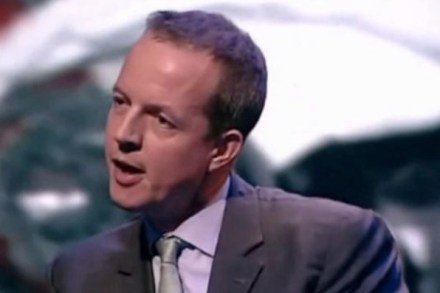
The modernising, Cameron agenda was conceived in times of plenty. It was underpinned by a belief that there would be healthy growth, the proceeds of which could be shared. Since the crash, the Cameroons have—with varying degrees of success—tried to come to terms with the new world around them, and what it means for their political project. Few have grappled harder with this problem than the new planning minister, Nick Boles. Boles was present at the creation of the Cameron project. As one of the founders of Policy Exchange, he is an original moderniser. But since the crash, he has turned his focus to the economy. His Macmillan lecture and his Resolution Foundation speech laid out some of the choices that will need to be made to make Britain globally competitive.

Coffee House interview: Roger Bootle

From our UK edition

Roger Bootle is managing director of Capital Economics, and winner of the Wolfson Economics Prize. As the government launches another attempt at boosting UK growth, the economist, who describes himself as a 'rare right-wing Keynesian' shares his thoughts on ministers' economic prowess with Coffee House readers. Do you think the government will be able to fight the next general election on the issue of the economy? 'I think it's too early to tell, but if the economy is completely flatlining and the deficit does not go down - which seems to me to be perfectly possible, there are strong signs things are going to look bad for them.

David Cameron’s oddballs

From our UK edition

I’m coming to the conclusion that the character of the Cameron government is the inversion of the Brown government. During the dying days of New Labour there was a snarling, socially dysfunctional Prime Minister whom most of the electorate found deeply unappealing. But around Gordon Brown was a group of Cabinet ministers who were really pretty impressive and, well, normal. Alistair Darling, Jacqui Smith, James Purnell, Andy Burnham, Ruth Kelly (remember her?), Alan Johnson, Yvette Cooper: these are all people who it was possible to imagine having  a chat or a drink with in the local pub (or perhaps wine bar).  I could go on. The inverse is true with this government. David Cameron is socially adept and genuinely charming. Whether it is an act or not, he does good normal.