Uk politics

John Swinney misses a trick – Spectator Blogs

From our UK edition

There are days when Scottish independence seems a more than decent idea. Budget day at Holyrood is always one of them. I say budget day but it's really faux-budget day because, at least until now, it's always been only half a budget. A parliament that may spend but cannot tax is only half a parliament. So, if not independence then proper fiscal autonomy at least. That would make Holyrood a better, bigger, more responsible place. It might also provide incentives for better public policy. Might being the operative word, obviously. Nevertheless the reaction to the so-called budget John Swinney delivered yesterday has been encouraging. That is, the public sector unions are unhappy. This is often a useful indicator and this reaction is no exception to that telling general rule.

Can UKIP become a serious political party?

From our UK edition

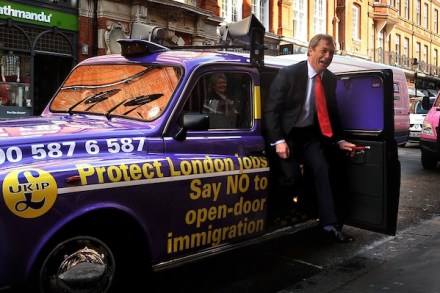
UKIP members are gathering for their annual conference in Birmingham today and frustratingly for the party, it remains a niche political event. Unlike the media explosion for the other three political gatherings, UKIP's two day rally will have no wall-to-wall TV coverage and little in-depth analysis of the speeches. But since Nigel Farage gathered his flock last year, Britain’s other party has seen its profile raised substantially. Martin Kettle admitted in the Guardian this week that UKIP are now a ‘force to be reckoned with’ who could become kingmakers that will ‘shape the 2015 election and the politics of Britain and Europe for a generation’. Polling suggests they are indeed a significant political force.

A blast of common sense on social media censorship

From our UK edition

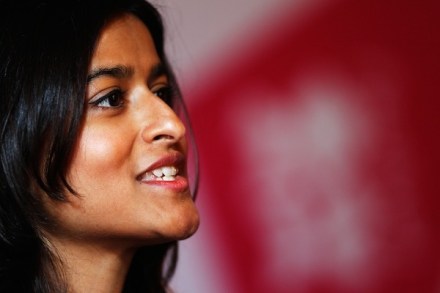
Munira Mirza, Boris Johnson’s deputy mayor for education and culture, provides a much needed blast of common sense in today’s Evening Standard. She says that the police, and society, need to calm down about people making idiotic and offensive comments on Twitter and other social media sites. As she points out, ‘Do the police have nothing better to do than patrol Twitter, hunting out people who send tasteless tweets?’ But there’s another reason to worry about this policing beyond the fact that it is a waste of resources: the more we race around arresting people for saying stupid things or things that go against the current orthodoxy, the less free we become as a society. We need to be able to argue out our differences.

The pupil premium and profit-making schools could be a winning combination

From our UK edition

Ask any Liberal Democrat what their party has achieved in government, and the answer will involve the words 'pupil premium'. It was a key manifesto pledge in 2010, and is one of the policies that the party is proudest of from its time in government so far. It'll be sure to come up time and time again in speeches in Brighton, too. Which is why it's rather awkward that with two days to go to the Liberal Democrat autumn conference, Ofsted has revealed 'disturbing findings' about the way schools are actually administering the premium. Chief Sir Michael Wilshaw said the extra £600 per pupil from a disadvantaged background was largely plugging gaps in school budgets rather than helping those pupils who brought the money in.

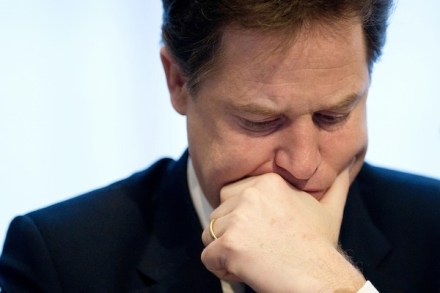
Nick Clegg’s viral apology video

From our UK edition

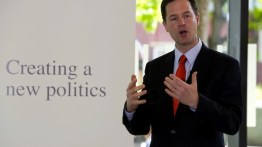
The free publicity which comes with party political broadcasts is more powerful than the broadcast itself: nowadays, our MPs hope their messages will go viral. Nick Clegg's apology has: and how. The below video has his voice being digitally altered (like Cher's in Believe) but the result is far catchier. It demands to be watched: The video-maker has done Clegg a favour. Only the most cold-hearted cynic would feel a tinge of sympathy for him  here, which may be been the idea behind the video. What Tony Blair called the 'masochism strategy' where you apologise and get visibly beaten up, ideally by a pensioner, until voters start to pity you.  The funniest thing, to me, is that Clegg isn't apologising for breaking his promise - he's apologising for making it in the first place.

The View from 22 — Nick Clegg’s martyrdom, the personal statement scam and being sacked by David Cameron

From our UK edition

Will Nick Clegg’s political career come to a crashing end in tandem with the end of the coalition? In this week’s magazine, James Forsyth examines how the Lib Dem leader has put the coalition cause ahead of both his party and own political career. On the latest View from 22 podcast, James examines the Lib Dem’s strategy shift back to making the coalition work: ‘I think this will be the last Lib Dem conference in which Nick Clegg receives a relatively warm reception. I think even the critics in his party know it’s far too early to change leader. Nick Clegg has decided to double down on coalition.

Clegg’s attempt to repair tuition fee damage

From our UK edition

Going into the last election, many of Nick Clegg’s closest allies and, I suspect, the Lib Dem leader himself found the tuition fees pledge embarrassing. It was precisely the kind of opportunistic policy that they had tried to wean the party off. But when it came to the election and it was still, despite their best efforts, party policy they decided to run with it. As soon as the election results came in, it was clear that Clegg’s exploitation of the subject was going to cause him problems seeing as both Tories and Labour were committed to the Browne review which was almost certain to come out for higher fees.

Nick Clegg apologises for tuition fees pledge

From our UK edition

In a video message released this evening, Liberal Democrat leader Nick Clegg apologised for his party's pre-election pledge to vote against any rise in tuition fees. Clegg said: 'We made a promise before the election that we would vote against any rise in fees under any circumstances. But that was a mistake. It was a pledge made with the best of intentions - but we shouldn't have made a promise we weren't absolutely sure we could deliver. 'I shouldn't have committed to a policy that was so expensive when there was no money around. Not least when the most likely way we'd end up in Government was in coalition with Labour or the Conservatives, who were both committed to put fees up. 'I know that we fought to get the best policy we could in those circumstances.

Lib Dems committing to radical future for the coalition

From our UK edition

Nick Clegg, Danny Alexander, David Laws and a couple of Lib Dem advisers spent Monday at Chequers. They were there to discuss the final details of the coalition’s mid-term review with David Cameron and George Osborne. I understand that this document will now contain new coalition commitments on the economy, education, welfare, childcare and social mobility. As I say in tomorrow’s Spectator, I suspect that this meeting tells us more about the state of the government than what Clegg will say in Brighton or Cameron in Birmingham. It is further evidence that after a period of coalition paralysis, the two leaderships have decided that their best hope is to go back to being radical.

Sacked minister spills the reshuffle beans

From our UK edition

In tomorrow's Spectator, an anonymous former minister recounts their experiences of David Cameron's reshuffle. They describe the walk in to see the Prime Minister - through the back entrance where the cameras cannot see ministers arrive - and the way the Prime Minister tries to placate them by explaining that there are '303 someone elses' that he needs to keep happy. You can read the full copy below, or in the magazine from tomorrow: Divorce is something I have yet to experience personally but Dave’s reshuffle has set me up nicely for any future threat to my own nuptial bliss. Out of the blue comes the call. It’s Dave’s office. ‘We need to talk — can you come over?

James Brokenshire’s assurances on the snooping bill only raise further concerns

From our UK edition

What do you do if a regulator has failed? Leave them unreformed and instead give them greater powers? That is the line Home Office Minister James Brokenshire is arguing. The regulator in question is the Interception of Communications Commissioner and the powers relate to online monitoring. For the Draft Communications Data Bill would not only give the government far more scope to monitor what we do online, but Brokenshire also argues we should be reassured that a large part of these new powers would be monitored by that Commissioner. However, take a look at the record and what you see is a failed regulator.

Re-arranging the desk chairs on the Titanic

From our UK edition

New Tory Chairman Grant Shapps has taken the dramatic step of reinstalling the general election countdown clock in CCHQ to remind staffers that there are only 959 days until voters deliver their verdict on the Conservatives' time in government. Shapps has also got something else planned, which is to rearrange the desks. I understand that he told the 1922 committee last week that he wants to make Tory party press officers sit next to the researchers who cover each specific policy area so that they can feed one another information effectively. Currently they sit on different banks of desks. One CCHQ veteran points out to me that Shapps' exciting desk move plan isn't exactly new.

Boris continues to push Heathrow campaign

From our UK edition

As much as conference planners would wish it otherwise, one of the biggest stories from the Tory conference will be Boris Johnson's speech and fringe appearance. It would be a surprise if he didn't take at least one opportunity while in Birmingham to flag up his ongoing campaign against a government U-turn on Heathrow expansion, even if it were an apparently spontaneous answer to a question from a member of the fringe audience. As I reported last week, he has been looking for a Conservative MP to lead that campaign, and the Standard's Peter Dominiczak then revealed that the Mayor has also approached MPs from other parties.

The Myth of the European Court of Human Rights’ “War on Britain” – Spectator Blogs

From our UK edition

You rarely hear people defending the European Court of Human Rights. It is, according to British mythology, a meddlesome beast populated by dimwit judges of dubious foreign provenance whose rulings are invariably ninnyish, ignorant and intolerable in equal measure. I prefer to think of the court as the last protector of individual rights often threatened by hostile governments. Sometimes that hostile government is our own. The court - and really this cannot be stressed often enough - offers protection from the state. Restraining government's worst instincts is a noble calling and if our judges cannot or will not do it then praise be that the european justices are not so feeble-minded. As for the charge the European court is unelected and unaccountable.

The coalition’s tax trade-off

From our UK edition

James Kirkup has an intriguing story today about how the Liberal Democrats are prepared to see inheritance tax scrapped, or the threshold raised, in exchange for the introduction of higher council tax bands. This suggests a way in which the Liberal Democrats could claim to have got a ‘mansion tax’ while the Tories could say they had made progress on their commitment to raise the inheritance tax threshold to a million pounds. In the run up to the Budget, the Chancellor was prepared to accept higher council tax bands in exchange for scrapping the 50p rate. However, the Prime Minister and the local government secretary Eric Pickles were both opposed to the idea. I understand that the DCLG remains highly sceptical of any changes to council tax.

A bad bargain: we should give up nationwide pay bargaining

From our UK edition

Imagine what would happen to the Greek economy if a European trade union managed to secure the same salaries for Greece’s public employees as for their German counterparts. If that sounds like a bad idea to you, then consider the fact that in Britain we already have this arrangement across our country's regions. Nationwide pay bargaining imposes a limited salary range for all public sector jobs of a given type across our country, so that local pay cannot vary to reflect local conditions. Think about the North East. This is our Greece, a region where house prices and private-sector wages are lower than elsewhere. The national bargain means that in the North East public employees will be relatively overpaid. In contrast, the South East is our Germany.

Gove develops interim GCSE plan

From our UK edition

One of the biggest gripes about Michael Gove's GCSE reforms from those on board with the changes is that they won't come into effect until after the 2015 election. Supporters wonder why there is such a lag between ministers reaching agreement about scrapping an exam that they currently believe is not fit for purpose, and pupils sitting down to take the new qualification. The answer is that it was part of the deal that was reached with Nick Clegg, who was initially upset about the direction of the changes. The Independent reports today that Gove does have an interim plan, though. To underline the fact that he has little faith in existing GCSEs, he is encouraging state schools to put their pupils through IGCSEs instead.

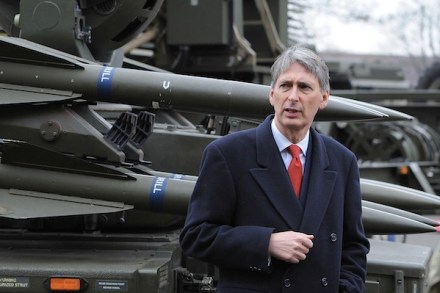
Philip Hammond’s tarnished relations with military top brass fly into the open

From our UK edition

Talking to diplomatic sources this evening, there’s a depressed recognition that the Taliban and its allies have scored a major victory in forcing Nato to scale back joint patrols with Afghan forces. Here, the government has mishandled the news. Number 10 is trying to deny the strategic importance of this shift, while the normally sure-footed Philip Hammond made a series of clumsy answers to questions in parliament. Part of the problem is that Hammond was sent to the Ministry of Defence not for his interest in military matters but for his commitment to balancing the books. In private, he says that he hopes his legacy will be a genuinely, balanced MoD budget—and he does appear to be making impressive progress towards that goal.

Danny Alexander fires shot in fairer taxes battle

From our UK edition

Danny Alexander is clearly super-keen to remind everyone of what the Lib Dem slogan is for their party conference, which begins on Saturday. 'We need fairer taxes in these tough times,' he told the Evening Standard today as he revealed that he will use his speech at the 'fairer tax in tough times' conference to call for the income tax threshold to rise to £10,000. The rise that George Osborne announced in this year's Budget was largely claimed by the Lib Dems as their own policy, and was a diamond in the rough of a deeply unpopular budget.