Uk politics

David Laws to announce increase in pupil premium

From our UK edition

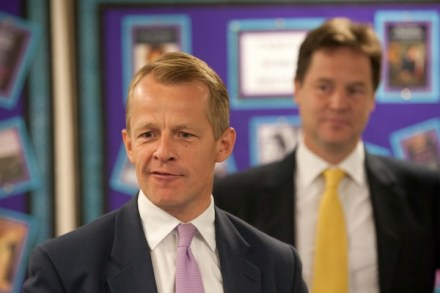
The first minister up on the stage at the Liberal Democrat conference this afternoon is new education minister David Laws. He has an announcement which will please those in the audience: the party's flagship pupil premium will increase from £600 to £900 per child. This is what he is expected to say: 'I can announce today that next year the Pupil Premium will increase again. It will rise from £600 to £900 per child. Last year it paid for over 1.8 million pupils. Just think what we have done with that policy. A secondary school with 1,000 pupils, a third on the Pupil Premium, will be receiving around an extra £300,000 next year due to this Liberal Democrat pledge being delivered.
Andrew Mitchell’s Gate-gate: haven’t we all been there?

From our UK edition

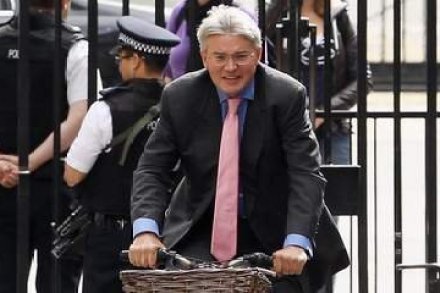
All right, he’s eaten dirt. Andrew Mitchell, Chief Whip, has now apologised to the Prime Minister and apologised profusely to the policeman he may or may not have called a pleb. In a statement today – prudently, he declined offers of radio interviews – Mitchell admitted that he 'did not treat the police with the respect they deserve' when on Wednesday evening one of them refused to allow him to ride his bicycle out of the Downing Street gate and directed him instead to the pedestrian one. In the outburst that followed, he is said to have told the man that he didn’t run the government. Well, that makes two of them; neither does the Chief Whip.

Alex Salmond’s wind farm delusion

From our UK edition

Last year, in an interview with the Today programme, the chief executive of National Grid told the show’s no doubt stunned listeners that they would have to get used to not having electricity as and when they wanted it. That here in the developed world we should be wondering whether the lights will be going out in a few years time, whether our children will go to bed in the cold or whether we will spend our evenings shivering around log fires is rather amazing. That our political leaders have achieved this — if achieved is the right word — in the face of the shale gas revolution with its promise of cheap and abundant energy for centuries to come is truly extraordinary. How have we come to this?

Borrowing figures are good and bad news for the government

From our UK edition

Today's public finance statistics are another case of good news/bad news for the government. First, the good news: the ONS revised down its estimate for government borrowing in the last fiscal year (2011/12) from £125 billion to £119.3 billion. That's £6.7 billion below the OBR's estimate in March this year, and means that the coalition succeeded in cutting the deficit by 25 per cent in its first two years (29 per cent in real terms). But the bad news comes when you look at the current fiscal year. The ONS estimates government borrowing for August at £14.41 billion — roughly the same as August 2011 (£14.37 billion). These estimates do tend to end up being revised heavily — by an average of £1.

Nigel Farage’s real strategy

From our UK edition

Nigel Farage’s very public willingness to explore a UKIP-Tory electoral pact in exchange for a pledge from David Cameron to hold a referendum on EU membership is, I suspect, designed to achieve two things. First, it is meant to flush out Cameron. If Cameron declines the offer, Farage will be able to claim that only UKIP are the only party to vote for if you want an In/Out choice on the UK’s EU membership. It’ll undercut the Tory offer of a renegotiation referendum. Second, by floating the offer he makes it more likely that individual Tory MPs and candidates might sign up to the offer themselves, pledging to back an In Out referendum in exchange for no UKIP challenge.

Thrasher Mitchell’s toxic tirade

From our UK edition

Andrew Mitchell spent two years detoxifying his image at the International Development department, wearing charity wristbands and talking about polio vaccines. But however much success he enjoyed in creating a persona of a reasonable, mild-mannered man concerned with poverty (and our leading article this week disputes whether the programmes he led were anywhere near as successful as that), the man known as 'Thrasher' trashed that reputation this week. The Sun reports that he raged 'You're f***ing plebs' at policemen who had the temerity to stop him from cycling out of the Downing Street gates.

Telling tales: some infamous conference moments

From our UK edition

What could possibly go wrong when you lock 10,000 political hacks and flacks in a hotel for 96 hours and let lobbyists pick up the tab? Well that's party conference for you, and there have been some excellent tales of drunken debauchery over the last few years. The most riotous parties are the ones upstairs in the private suites of the main conference hotel. Representing the Tory side, Lord Strathclyde fills his bathtub with ice and champagne and opens his doors every year. Rumour has it that he always deserves a magnum for later. Last year, one Tory MP went so far as to punch a colleague. Other MPs had to drag one of them away. It was  all denials the next day, but multiple witnesses reported that a woman was involved...

Farage’s floundering highlights Cameron’s EU challenge

From our UK edition

By the end of his 8.10 interview on the Today programme, Nigel Farage was struggling a little. Once John Humphrys had taken him away from his hobby horse of a European Union Referendum, the UKIP leader started to wobble. Humphrys: Let's have a look at your policies. A bit puzzling, in a way, and it's not the first time a political leader has done this. You seem to want to cut back taxes, you want to roll back the state, and yet, you want to spend loads of money on loads of things. Farage: Well, we want to spend more money on defence, that is absolutely true, and we think, and we think… Humphrys: Student grants, you want to restore student grants, free eye tests, free dental care... Farage: Well, we think that what's happened to our defences is absolutely shameful.

Burstow goes rogue to attack Treasury

From our UK edition

Hell hath no fury like a government minister sacked (as proven by our anonymous 'Dumped by Dave' piece this week). Another former minister, Paul Burstow, lost his job because Nick Clegg was miffed at the way the Lib Dem had failed to flag up the dangers in the Health and Social Care Bill. He'd already formed a habit of briefing against his own department when he was in office, so it's no great shock that Burstow has decided to dish the dirt on the Treasury in the Telegraph today, claiming it is responsible for blocking reform of the social care system. He writes: 'Of course, if fixing this was easy the last Labour Government would have done it in those halcyon days when Chancellor Brown told us he had ended boom and bust. So, why did Labour fail?

Coffee House Interview: Chris Skidmore on Britannia Unchained, ‘lazy’ Brits, and how the government should be unpopular

From our UK edition

Before it had even appeared in reviewers' postbags, the book that Chris Skidmore co-authored with four other Conservative MPs had created quite a stir in Westminster. 'Brits so lazy', said the Sun, about a chapter in Britannia Unchained which describes the British as being 'among the worst idlers in the world'. That claim provoked rage from left-wingers, with Labour's Chuka Umunna calling on David Cameron to 'distance himself' from the comments, which he said were 'deeply insulting'. But Skidmore seems entirely unperturbed by the outcry. In fact, when we meet in his Westminster office, he seems quite taken with the idea that politicians should take a great deal of unpopularity on the chin.

John Swinney misses a trick – Spectator Blogs

From our UK edition

There are days when Scottish independence seems a more than decent idea. Budget day at Holyrood is always one of them. I say budget day but it's really faux-budget day because, at least until now, it's always been only half a budget. A parliament that may spend but cannot tax is only half a parliament. So, if not independence then proper fiscal autonomy at least. That would make Holyrood a better, bigger, more responsible place. It might also provide incentives for better public policy. Might being the operative word, obviously. Nevertheless the reaction to the so-called budget John Swinney delivered yesterday has been encouraging. That is, the public sector unions are unhappy. This is often a useful indicator and this reaction is no exception to that telling general rule.

Can UKIP become a serious political party?

From our UK edition

UKIP members are gathering for their annual conference in Birmingham today and frustratingly for the party, it remains a niche political event. Unlike the media explosion for the other three political gatherings, UKIP's two day rally will have no wall-to-wall TV coverage and little in-depth analysis of the speeches. But since Nigel Farage gathered his flock last year, Britain’s other party has seen its profile raised substantially. Martin Kettle admitted in the Guardian this week that UKIP are now a ‘force to be reckoned with’ who could become kingmakers that will ‘shape the 2015 election and the politics of Britain and Europe for a generation’. Polling suggests they are indeed a significant political force.

A blast of common sense on social media censorship

From our UK edition

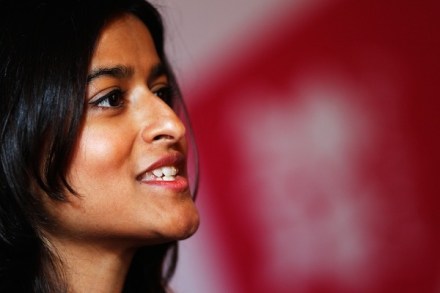
Munira Mirza, Boris Johnson’s deputy mayor for education and culture, provides a much needed blast of common sense in today’s Evening Standard. She says that the police, and society, need to calm down about people making idiotic and offensive comments on Twitter and other social media sites. As she points out, ‘Do the police have nothing better to do than patrol Twitter, hunting out people who send tasteless tweets?’ But there’s another reason to worry about this policing beyond the fact that it is a waste of resources: the more we race around arresting people for saying stupid things or things that go against the current orthodoxy, the less free we become as a society. We need to be able to argue out our differences.

The pupil premium and profit-making schools could be a winning combination

From our UK edition

Ask any Liberal Democrat what their party has achieved in government, and the answer will involve the words 'pupil premium'. It was a key manifesto pledge in 2010, and is one of the policies that the party is proudest of from its time in government so far. It'll be sure to come up time and time again in speeches in Brighton, too. Which is why it's rather awkward that with two days to go to the Liberal Democrat autumn conference, Ofsted has revealed 'disturbing findings' about the way schools are actually administering the premium. Chief Sir Michael Wilshaw said the extra £600 per pupil from a disadvantaged background was largely plugging gaps in school budgets rather than helping those pupils who brought the money in.

Nick Clegg’s viral apology video

From our UK edition

The free publicity which comes with party political broadcasts is more powerful than the broadcast itself: nowadays, our MPs hope their messages will go viral. Nick Clegg's apology has: and how. The below video has his voice being digitally altered (like Cher's in Believe) but the result is far catchier. It demands to be watched: The video-maker has done Clegg a favour. Only the most cold-hearted cynic would feel a tinge of sympathy for him  here, which may be been the idea behind the video. What Tony Blair called the 'masochism strategy' where you apologise and get visibly beaten up, ideally by a pensioner, until voters start to pity you.  The funniest thing, to me, is that Clegg isn't apologising for breaking his promise - he's apologising for making it in the first place.

The View from 22 — Nick Clegg’s martyrdom, the personal statement scam and being sacked by David Cameron

From our UK edition

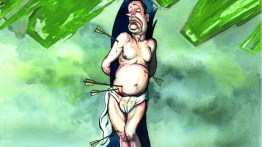
Will Nick Clegg’s political career come to a crashing end in tandem with the end of the coalition? In this week’s magazine, James Forsyth examines how the Lib Dem leader has put the coalition cause ahead of both his party and own political career. On the latest View from 22 podcast, James examines the Lib Dem’s strategy shift back to making the coalition work: ‘I think this will be the last Lib Dem conference in which Nick Clegg receives a relatively warm reception. I think even the critics in his party know it’s far too early to change leader. Nick Clegg has decided to double down on coalition.

Clegg’s attempt to repair tuition fee damage

From our UK edition

Going into the last election, many of Nick Clegg’s closest allies and, I suspect, the Lib Dem leader himself found the tuition fees pledge embarrassing. It was precisely the kind of opportunistic policy that they had tried to wean the party off. But when it came to the election and it was still, despite their best efforts, party policy they decided to run with it. As soon as the election results came in, it was clear that Clegg’s exploitation of the subject was going to cause him problems seeing as both Tories and Labour were committed to the Browne review which was almost certain to come out for higher fees.

Nick Clegg apologises for tuition fees pledge

From our UK edition

In a video message released this evening, Liberal Democrat leader Nick Clegg apologised for his party's pre-election pledge to vote against any rise in tuition fees. Clegg said: 'We made a promise before the election that we would vote against any rise in fees under any circumstances. But that was a mistake. It was a pledge made with the best of intentions - but we shouldn't have made a promise we weren't absolutely sure we could deliver. 'I shouldn't have committed to a policy that was so expensive when there was no money around. Not least when the most likely way we'd end up in Government was in coalition with Labour or the Conservatives, who were both committed to put fees up. 'I know that we fought to get the best policy we could in those circumstances.

Lib Dems committing to radical future for the coalition

From our UK edition

Nick Clegg, Danny Alexander, David Laws and a couple of Lib Dem advisers spent Monday at Chequers. They were there to discuss the final details of the coalition’s mid-term review with David Cameron and George Osborne. I understand that this document will now contain new coalition commitments on the economy, education, welfare, childcare and social mobility. As I say in tomorrow’s Spectator, I suspect that this meeting tells us more about the state of the government than what Clegg will say in Brighton or Cameron in Birmingham. It is further evidence that after a period of coalition paralysis, the two leaderships have decided that their best hope is to go back to being radical.