Uk politics

The ‘Thatcher should quit’ splash that never was

When Prime Minister, Mrs Thatcher did not have a great deal to do with The Spectator. She was not hostile, but slightly suspicious and perplexed. ‘This is Charles Moore,’ I remember her saying edgily as she introduced me to the Turkish prime minister at a reception. ‘He supports us some of the time.’ After the sinking of theBelgrano in May 1982, Ferdinand Mount, then the political editor, wrote a column deploring the incident and calling for a ceasefire. The then editor Alexander Chancellor, who had incited the piece when Ferdy had really wanted to fall silent altogether, put it all over the cover. Ferdy’s was an act of near-suicidal courage, as he was just

Blair’s warning to Miliband about the policy abattoir

Nothing like a former PM poking their nose into your business, eh? John Major experienced what Daniel Finkelstein this week delicately described as ‘sub-optimal’ behaviour from Margaret Thatcher when he was in office, and today Ed Miliband has his own helpful little missive from his own former leader, telling him that if only he were just like Tony Blair, then everything would be OK. Blair’s piece in the New Statesman isn’t surprising in many ways as it articulates the former Prime Minister’s firm belief that his party must engage with the centre of politics as it is at the moment, rather than trying to move that centre in the direction

Nimbyism? That’s not even the half of it.

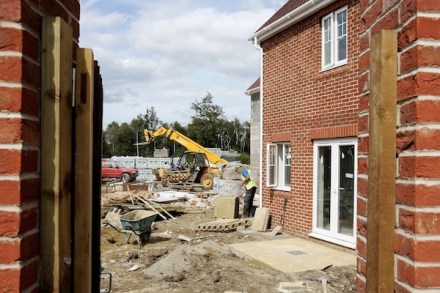
Pity the poor Nimbys. Not only has the government’s horrible new planning regime come into force, but last week we heard the pro-HS2 lobbyists describing them as ‘posh people standing in the way of working-class people getting jobs’. Even Isabel blames them for wanting to preserve the idyllic views from their breakfast room window. Being a nimby is so last century. Alas, calling the naysayers nimbys simply glosses over one of the biggest problems facing our society, namely how government deals with the built environment. This has little to do with preserving greenfields, areas of outstanding natural beauty, Jerusalem – or indeed nimbyism. It is simply that building houses in

‘We insisted on making it easier for her’: How the Left helped Thatcher succeed

The eulogies and condemnation following Baroness Thatcher’s death are coalescing into two clear truths. The first is that her legacy will always be contested: the nationwide reaction to Margaret Thatcher’s death – if viewed honestly – is one of embittered polarisation. The second is that the British Left must always recognise the pivotal role it played in enabling Thatcher to succeed and prosecute a political programme that damaged so many of the people that progressive politics exists to serve. The lessons of Labour’s failures during the dominant Thatcher period are as relevant today as they were during her time in office. The British Left fostered, enabled and created Thatcher’s premiership.

Olli Rehn bosses George Osborne around

Olli Rehn, the European Commissioner who is in charge of economic affairs, called in the Brussels press corps this afternoon to announce the conclusion of his ‘in-depth review of the macroeconomic imbalances in 13 member states.’ I sat through the launch, and the questions and answers, noting that at no time did Rehn or any of the reporters approach the fundamental question: what exactly is a macroeconomic imbalance and why do we think that Rehn – whose full title includes European Commissioner for the Euro – is the man anyone would trust with analysis of anything macroeconomic? And before you ask, the reason I didn’t ask is that I ration

‘If only people could see the real Margaret Thatcher’: Lords pay tribute

Today’s debates in Parliament about Baroness Thatcher were supposed to be a tribute to the first female Prime Minister. If you were looking for the most faithful rendition of this, you should have been sitting in the House of Lords, not the Commons this afternoon. In the Other Place, the debate is always rather more civilised and measured, though it has grown rather rowdier in recent years. But today the speeches painted a fascinating picture of Margaret Thatcher, not least because many of them came from those who worked with or in opposition to her when she was in power. Some were notable by their silence: Lord Howe arrived with

‘She was Steve Jobs, Richard Branson, Lady Gaga; all rolled into one’ – Steve Hilton on Margaret Thatcher

Tomorrow’s Spectator includes a three-page symposium on Margaret Thatcher from a selection of her friends colleagues, admirers and sparring partners. Here’s the full version of what Steve Hilton – No.10’s strategy officer from 2010-2012 – has to say about our first female Prime Minister. I was lucky enough to meet Mrs Thatcher (as I will always think of her) on a few occasions, and one in particular stood out. We talked about Communism, and my family’s experience in Hungary. I was feeling incensed at the time because of the way in which the ruling elite dabbled in capitalism for their own personal enrichment, but denied the opportunities of enterprise to

Margaret Thatcher in six graphs

With the debate swirling about Margaret Thatcher’s legacy and her government’s record, it’s worth taking a look at what the cold, hard economic data has to say about her time in office. Of course, growth rates and unemployment figures can’t tell us everything about a period, but they can at least provide a bit of substance to mix with the well-worn rhetoric. 1. Average growth. Under Thatcher, GDP rose by 29.4 per cent — an average of 0.6 per cent growth per quarter. (That’s the same as the average growth rate from 1955 to 2013.)   2. Manufacturing jobs lost, but more service jobs created. A net of 1.6 million

Margaret Thatcher: An Accidental Libertarian Heroine

It is 34 years since Margaret Thatcher became Prime Minister. Coincidentally, she entered Downing Street 34 years after Clement Attlee won the 1945 general election.  The whole history of post-war Britain is cleaved, neatly, in two. If the first half of that story was dominated by a left-led consensus, the second has been a triumph for liberalism. We have lived in an era of liberal emancipation and are much the better for it. Mrs Thatcher, of course, was a great economic liberal. Her approach to economics, guided by Smith, Hayek and Friedman, stressed the importance of individual endeavour. Remove the dead hand of state control and Britain could flourish again.

Introducing our first ebook: Margaret Thatcher in The Spectator 1975-1990

No publication understood the Thatcher project better than The Spectator. We backed her for the leadership in 1975 when no other national publication would. We understood her opportunities, foibles and genius when many of our rivals were baffled by this coarse-sounding lady and her popular appeal. We have put together 21 essays from the period into our first-ever ebook: Margaret Thatcher in The Spectator 1975 – 1990. It’s available today on the Kindle, for just 99p. It begins with Patrick Cosgrave advocating Thatcher as Tory leader, then gives a six-month and one-year progress report. Ferdinand Mount describes the uneasiness that followed the 1979 triumph. Then, as now, The Spectator was

MPs line up to pay respects to – and criticise – Margaret Thatcher

This afternoon’s tribute debate in the House of Commons will continue until 10pm, with many MPs wanting to pay their respects to Margaret Thatcher. There will be many speeches about how the former Prime Minister inspired and shaped the politics of those speaking. But there will also inevitably be those who want to talk about the negative aspects of her legacy. Ed Miliband, who gave a measured tribute on Monday, faces the challenge of giving a speech that isn’t insincere but that remains respectful too. Some of his MPs, such as John Healey, who has written a forceful piece for PoliticsHome, are boycotting the event. Others, such as David Winnick,

Sir James Crosby gives up knighthood and vindicates the Banking Commission

Well, that was inevitable. Sir James Crosby’s announcement that he wants to give his knighthood back and forego a slice of his pension is surprising only in that it came a little sooner after the Parliamentary Commission on Banking Standards’ report than everyone expected. He could have waited for a real public outcry to build, as it did with Fred Goodwin, but instead he’s managed to walk off with a pension that’s still £406,000 and perhaps a little dignity. Fraser argued last week that politicians are the ones who should be squirming over the banking crisis, but what Crosby’s decision today shows is that the Banking Commission is wielding an

Paris Brown quits: but it’s too early to judge PCCs

One of the criticisms of November’s elections for the new Police and Crime Commissioners was the lack of publicity garnered by the Government and the low turnout that inevitably greeted a vote held on a dark November day. Well, we’ve all certainly heard of one of the newly-elected PCCs now. The past few days has seen Kent’s PCC inadvertently pushing the maxim ‘any publicity is good publicity’ to the limit. Last Thursday, Ann Barnes was busy touring TV stations with her newly-appointed, seventeen year old ‘Youth Commissioner’. For about 48 hours, it seemed like great PR – with Paris Brown talking eloquently about her desire to reconnect the police with

Maggie Won’t Jump

  A remarkable clip from an interview with Swedish television. No-one asks Margaret Thatcher to “jump” and gets away with it. One does rather think that some of her successors would have been happy to make fools of themselves in this fashion.    

Conviction politics: ‘What Would Thatcher Do?’ grips the Tory party

Conor Burns, a close friend of Margaret Thatcher, gave a fascinating interview with Radio 4’s The World at One today about his memories of the Iron Lady. Like so many accounts, it focused on Thatcher’s disregard for opinion polls and focus groups. Burns said: ‘I think it’s a failure of politics that looks too much at focus groups and too much at public opinion polls. Again, I remember last November showing her a poll in one of the Sunday papers and it showed that we were nine points behind, and she asked when the next election was, and I said it wasn’t for another two and a half years and

Lady Thatcher on the ‘The Iron Lady’

Conor Burns, a close confident of the late Baroness Thatcher, has lifted the lid on the former Prime Minister’s reaction to the biographical Meryl Streep film I mentioned yesterday. The Tory backbencher recounts: “I went from Leicester Square to watch the Iron Lady to Chester Square to have a gin and tonic with Lady T, and I told her ‘I’ve just been to see a film about you.’ She said ‘what do you mean a film about me?’. “I said: ‘Well they’ve made a film about your life and career as Prime Minister, and it’s an hour and half long’ and straight away, she said: ‘I couldn’t imagine anything worse’.”

VERY FRAIL OLD LADY DIES

–       Full story pages 1-96. You turn if you want to …………………… handbag …………….. polarising …………. didn’t like the IRA …………………….. was sad that her husband died …………….. not keen on miners ……………………. polarising influence ………………. resolute ………………not a huge laugh, all things considered ………… won back those islands ………….. Tory wets stupid ……….. looked a bit like Meryl Streep ………………………….. batsqueak of desire …………… had her hair done by marketing people ………….. milk ……….. Loadsamoney ……… Edward Heath not terribly keen ……………….. something about Grantham ……….. bit hard on foreigners …………………. won cold war …………….. formidable …………… treachery ………… greatest women ever seen/divisive old cow …………… never see like