Uk politics

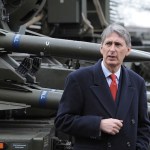
Philip Hammond becomes 2nd Cabinet minister to say he would vote to leave EU today

If the Tory leadership had hoped that a few weeks of reconciliation between David Cameron and his backbenchers would lead to a new, serene phase in party management, they couldn't be more wrong. Things seem to be getting worse on Europe: today two Cabinet ministers have felt emboldened by the Queen's Speech vote this week to say that on the current terms of Britain's membership of the EU, they would leave. James covered Michael Gove's comments this morning, and this evening Defence Secretary Philip Hammond joined in, telling John Pienaar that Britain needed a better settlement in order to stay in the EU.

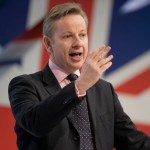
Gove: I’d vote to leave the EU if referendum held today

In a firecracker of an interview on the Andrew Marr Show, Michael Gove confirmed that if an EU referendum was held today he would vote out. But he followed this by saying to James Landale that he backed the Prime Minister’s plans to renegotiate and hoped that a satisfactory form of membership could be agreed. Significantly, Gove indicated that David Cameron would set out the Conservative ‘negotiating platform’ before the next election. This has been a key demand of Euro-sceptic Conservatives but one that Cameron has resisted. He is reluctant to provide anything akin to a renegotiation scorecard. Gove’s intervention changes the terms of debate.

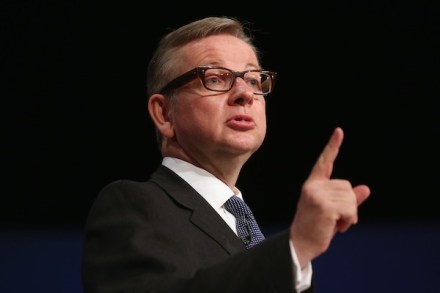
Michael Gove’s love of a good scrap sometimes leads him up blind alleys

Michael Gove is right about almost everything, but like most know-it-alls, he has a habit of putting people's backs up when telling them he's right. That's the theme of a piece I've written for the Telegraph today about the Education Secretary's desire to meddle not just with what goes on in the classroom but also in what children get up to when they're at home. You can read his full speech on this which is, as always, very interesting and lively, at the bottom of this post. The opening section, in which he asked parents whether they'd rather see their children reading Twilight or Middlemarch, playing Angry Birds, or coding when they're at home, displays his know-it-all tendency. But the problem with a know-it-all is that at the bottom of all the bluster, they're generally right.

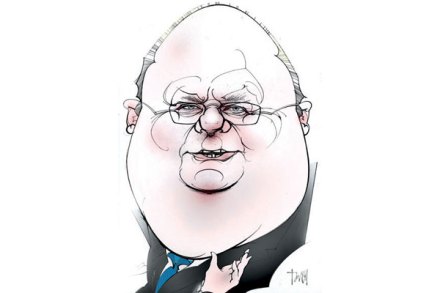
If Eric Pickles is cutting the town hall rich list, here are the Tories to talk to

Eric Pickles is a driven man on a mission to slash spending and waste in local government. As the latest round of budget cuts just enacted highlights, Pickles has managed to keep the local government spending bill under control, but how successful has he been in curbing the often-controversial top executive pay in the public sector? In their detailed annual Town Hall Rich List, the Taxpayers’ Alliance reports that despite finding the first drop in the number of town hall staff earning more than £100,000 since 2007, 2,525 staffers are still earning more than £100,000 a year. 103 councils managed to hire more staff in this pay bracket last year and Birmingham City Council even doubled their quota.

Is nice but dim such a bad thing for Labour?

Labour's lead in the polls has been pretty steady at around 10 points for a little over a year now. So why does today's Guardian carry an article with the headline 'Outright election victory in 2015 looks a distant prospect, pollster tells Labour'? It's based on two YouGov polls — commissioned by Progress and actually conducted two months ago, but released today. The first asked voters to put each of the parties into one of four categories: 'nice and smart', 'nice but dim', 'mean but smart' and 'mean and dim'. Labour seems to come out best, in that it has the highest proportion choosing 'nice and smart' and the lowest choosing 'mean and dim'. But only 24 per cent say the party is 'smart', compared to 33 per cent for the Tories.

If a policeman stops you, accuse him of raping you and force him to arrest himself.

Now that virtually any well-known male entertainer of a certain age is arrested for alleged sexual offences, it is becoming clear that this is more a culture war than a set of proper criminal investigations. This does not necessarily mean that all the allegations are false — look at Stuart Hall — but it does suggest that a new way has been found of ruining people’s reputations before anyone has established their guilt. The undeniable fact that so many of the men accused wore deplorable clothes in public all through the 1970s is not, in itself, proof of iniquity. Enraged by Leveson, the press argue that naming people being investigated for sex crimes is a brilliant way of smoking them out.

Sarah Wollaston, the next ticking Tory timebomb

MPs are having a party next week to celebrate the return of Nadine Dorries to the Tory fold. But as they pop champagne corks for the Prodigal Daughter, they might be wondering whether a similar drama could unfold with another of their number. Dr Sarah Wollaston appears to be growing increasingly angry with her party's leadership, and isn't afraid to say it in the press. She may be a very different Conservative to Dorries, but there's a risk that she moves into the same open stand-off territory that led to her colleague flying to the jungle. Many observers wrongly assume that the trouble began when Dorries told Giles Dilnot that David Cameron were 'two arrogant posh boys who show no remorse, no contrition and no passion to understand the lives of others and that's the crime'.

Game-changing

In the days when we had bottles of milk delivered, some tits discovered how to peck through the foil tops and consume the cream beneath. Suddenly all the tits were at it. This illustrated what the alternative scientist Rupert Sheldrake called morphic resonance. Something similar has happened over the past days with the phrase game-changing. Trevor Kavanagh, in the Sun, commented: ‘The local elections delivered a ground-breaking, game-changing, seismic political moment.’ In the Independent, Donald Macintyre compared ‘Ukip’s position to that of the game-changing SDP’. Except, in the days of the Gang of Four, the obligatory epithet was not game-changing but breaking the mould. That metaphor was used erroneously almost from the outset.

If Cameron is going to win in 2015, he is going to need a lot of help from Boris

One consequence of the local elections is that no Tory now denies that they need to win over UKIP voters to win the next election. How to do that, though, remains a subject of intense debate — last night’s 1922 Committee meeting with Grant Shapps discussed this point and ran massively over as a result. A large part of Nigel Farage’s appeal is stylistic. He is a technicolour character compared to the monochrome politicians of Westminster. He paints in primary colours rather than shades of grey. Now, Cameron can’t, and shouldn’t, ape this. He is not that kind of politician and would look inauthentic if he tried to be. But he needs someone to try and reach the voters that this approach appeals to. There is one obvious candidate for the job.

EU referendum amendment is just first step in long battle

As expected, the backbench Tory campaign for an EU referendum bill started as soon as the Queen's Speech proved not to contain one. The first battle is over an amendment expressing regret which John Baron, who is leading the charge on this, has tabled. The amendment, to the motion welcoming the Queen's Speech, simply reads: 'Respectfully regrets that an EU referendum bill was not included in the gracious speech.' This means that all Tory MPs who want a referendum, but in a different form, such as the mandate referendum that Bernard Jenkin and others have pushed for, can still sign the amendment. Baron tells me that he hasn't decided whether to push the amendment to a vote next week, but it seems there are plenty of Tory backbenchers who are expecting him to do so.

The Tories failed to make the case for relaxing childcare ratios: no wonder the policy bombed

Two ministers appeared in the Commons today to explain two different reforms. One is at the very start of its legislative life, appearing in yesterday's Queen's Speech, while the other one appears to be doddering about on its last legs after months of fanfare. Liz Truss found herself summoned to the despatch box to explain her plans to relax childcare ratios in order to drive costs down after it emerged Nick Clegg wanted to block them. This isn't a great surprise: the reform has excited strong opposition from the sector and parents. But what is strange is that the government never really made a great deal of effort to be aggressive about the idea in the first place.

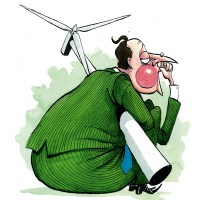
Britain can’t afford to surrender to the greens on shale gas

The scandal of official reluctance to develop Britain’s shale gas potential is at last beginning to surface. It may prove to be the dress rehearsal for the ultimate drama — the inexorable collapse of our whole energy strategy. Most of us have by now heard about the US shale gas revolution. In little more than six years, shale gas has reduced America’s gas prices to a third of what they are in Europe, increased huge tax revenues, rebalanced the economy, created tens of thousands of jobs, brought industry and manufacturing back to the country’s heartlands, and given rise to a real prospect of American energy self-sufficiency by 2030. Britain may well have comparable shale resources.

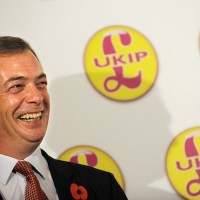
Why the Tories need their own Nigel Farage

There are two talking points in Westminster this week. One is about who is up and who is down following the local council elections. This finds the Cameroons privately pleased that the Tory party has largely kept its head despite the Ukip surge, the Labour side worried about whether they are doing well enough for mid-term and the Liberal Democrats relieved that their vote is holding up in their parliamentary seats if nowhere else. The other conversation is more profound. It is about why close to one in four of those who bothered to do their democratic duty last week voted Ukip. The rise of any new party is a statement of dissatisfaction with the existing establishment. But what is striking about Ukip is the diversity of its appeal.

The Hitler guide to rigging a referendum

In 1964 Harold Wilson was so afraid that a scheduled election-night broadcast of Steptoe & Son would cost him at least a dozen marginal seats that he successfully pressured the director-general of the BBC to postpone it. There are plenty of ways to manipulate an election, short of stuffing a ballot box. Another example is here, from 1938: This ballot paper crudely follows the advice of Dr Josef Goebbels, that ‘the most effective form of persuasion is when you are not aware you are being persuaded’. Translated, it reads: ‘Do you approve of the reunification of Austria with the German Reich that was enacted on 13 March 1938 and do you vote for the party of our leader, Adolf Hitler? Yes. No.

MPs gear up for 2015 slugfest in Queen’s Speech debate

The Queen’s Speech debate is always a mix of MPs patting each other on the back and political combat. This year, in a sign that the next election is looming ever larger in the minds of the party leaders, there was far more of the latter than the former. Ed Miliband in his speech majored on what he considers to be Cameron’s weaknesses. He claimed that the PM had lost control of his party, was trying to ape Ukip and went on about the ‘millionaires’ tax cut’ and the poshness of the government. Miliband brushed off a string of pointed Tory interventions and had one particularly good joke, ‘they used to call Ukip clowns, now they want to join the circus.

Exclusive: Nadine Dorries reinstated as a Tory MP

Nadine Dorries has been given the Conservative whip back by Sir George Young, Coffee House can exclusively reveal. Sources in the Tory party tell me that the MP, who was suspended in November for appearing on the reality TV show I'm a Celebrity, Get Me Out of Here!, has just been told she can now return from exile. This is a huge relief for many Conservative MPs, who have been growing increasingly worried that the continuing absence of the Tory whip was beginning to look vindictive and sexist, and risked pushing the Mid-Bedfordshire MP into the arms of UKIP. As David Davis argued this weekend, Nadine Dorries is a working class woman who grew up in council housing and has been treated badly by the Tory leadership, while Jesse Norman is an Old Etonian rebel who received a promotion.

The bluffer’s guide to the Queen’s Speech

Want to know (or at least pretend you know) what the Queen was talking about when she addressed the House of Lords this morning? Here are the bills that the government will bring into Parliament over the next 12 months, and what they'll do: National Insurance Contributions Bill - The £2,000 employment allowance for every business and charity announced in this year's Budget. - Measures to combat tax avoidance, including an extension of the General Anti-Abuse Rule, which targets aggressive tax avoidance schemes, to National Insurance Contributions. - Further attempts to stop companies avoiding paying NICs using offshore employment payroll companies.

George Osborne braces himself for economic Ofsted inspection

It is probably unfair to say that the Queen's Speech will have nothing to do with the economy: we are, after all, expecting a deregulation bill among others, which the Treasury hopes will speed things up for small businesses. But if George Osborne looks a little distracted today, it's probably because his mind is on events outside Parliament. The International Monetary Fund's team arrives in London today for the start of a fortnight's inspection of the UK economy. The Chancellor must feel sympathy with teachers who fear the approach of their school's Ofsted inspection. Like teachers who suspect their Ofsted visit won't go their way, Osborne's allies have recently started to question the wisdom of the IMF, an organisation he has previously set great store by.