Uk politics

Ed Miliband’s immigration nightmare

[audioplayer src="http://traffic.libsyn.com/spectator/TheViewFrom22_9_January_2014_v4.mp3" title="David Goodhart and Tim Finch on Labour's immigration woes"] Listen [/audioplayer]Victor Spirescu came to Britain last week looking for work washing cars, but seems to have landed himself with a career in broadcasting. The Romanian, who arrived on the first flight into London after restrictions on workers from Bulgaria and Romania ended on 1 January, has now spent the days since touring studios and newspaper offices, obliging those who wish to talk to him about his new life. Those who bump into him as he weaves his way across television studios have the impression that he wishes he’d caught a slightly later flight.

What will 2015’s broken promises be?

Ed Balls' softer language about Nick Clegg might be an inevitable repositioning of the Labour party in the run-up to another hung parliament in 2015, or it might be the shadow chancellor trying to get ahead of the game after the end to his 2013 was rather bruising. But it is worth mulling the sorts of things that, aside from personalities, the two parties could struggle with. One is the language that those at the top have used about Labour wrecking the recovery. At the 2013 Lib Dem autumn conference, Nick Clegg said: 'Labour would wreck the recovery. The Conservatives would give us the wrong kind of recovery.' Some Labour figures such as Lord Adonis felt this was unfair on Labour: wrecking the recovery is far worse than swerving off balance, surely?

The question on immigration that Labour must answer before 2015

We don't quite know what Ed Miliband would really do about a lot of things just yet: this is the year when he plans (and desperately needs) to set that out so Labour isn't just an Opposition that complains about things being expensive but a party that voters can imagine governing. But it's significant that one of the policy areas where Miliband has felt it is important to get a lot of detail out pretty early is immigration. He, and everyone around him, is acutely aware that though their personal instincts might be to argue for the benefits of mass immigration to this country, the voters, rightly or wrongly, aren't quite so keen. I look at the party's new tough stance on immigration for the politics column in this week's Spectator.

George Osborne: Minimum wage rise must not cost jobs

Amid continuing confusion on what on earth the Tories do think about raising the minimum wage, George Osborne has had a go at clarifying things. He has just told Sky News: 'Well look, I think everyone wants to see an increase in the minimum wage. I'd like to see an increase in the minimum wage, but it has to be done in a way that doesn't cost people their jobs, because that would be self-defeating and we have the Low Pay Commission as a body that exists to make exactly that judgement, and what we've got to do as a country is get that balance right between supporting business, growing our economy and making sure it's a recovery for all and that is what our long term plan is all about delivering.

The SNP school Labour in politics. Again.

Alex Salmond might not wish to be compared to Gordon Brown but there is one sense in which the two dominant Scottish political personalities of the age are more alike than either would care to acknowledge: they each love a good dividing line. In Edinburgh yesterday Salmond announced that all pupils in their first three years of primary school would henceforth be entitled to a free school lunch. This, he claimed, would save parents £330 a year per child. A useful benefit for those parents whose offspring do not currently qualify for free meals; a means of ending, the First Minister suggested, the stigma presently endured by those children who do rely on free meals. Labour voted against the proposal. Cue much celebration in Natland. Another dividing line has been established.

Boris Johnson sides with George Osborne over more cuts…or does he?

George Osborne's speech on the need for £25 billion more cuts has opened up some strange dividing lines in Westminster. Labour has done exactly what the Chancellor wanted and questioned the need for the cuts. Nick Clegg has also fallen into place as Osborne hoped and moaned about them being unfair. But Clegg has found an unlikely ally in Iain Duncan Smith, who has let it be known that he does not much like the idea that Osborne could cut a further £1 billion from the welfare bill. So who did Boris Johnson cosy up to this morning when he had his say?

Coalition starts 2014 with exhausting round of bickering

If George Osborne and David Cameron did fire the starting gun for the 2015 election campaign over the weekend and yesterday, then what will that campaign look like? Labour wants to say it will be a nasty campaign because this means they can talk about heir favourite bogeyman Lynton Crosby and Ed Miliband's own emphasis on personal decency. And privately Tories in the know accept that it is going to be a rough and dirty campaign on all sides. But in the past two days we've also seen a glimpse of what it is going to be like between the two coalition parties, and frankly, it all looks rather exhausting. George Osborne pledges to cut welfare further. An hour later Nick Clegg describes it as unbalanced. This morning we've got Vince Cable muttering about the Tories' net migration target.

Osborne sets clear welfare challenge to Labour – and his coalition partners

We already knew that the Chancellor would focus on welfare as a field ripe for further cuts in his speech in Birmingham today. When he delivered that speech, George Osborne announced that the Treasury's current forecasts suggest that £12 billion of further welfare cuts are needed in the first two years of the next Parliament, and framed this as a challenge to all parties not to let voters down by refusing to cut benefits. He said: 'So when you see people on the telly who say that welfare can't be cut anymore - or, even worse, promising they will reverse the changes we've already made and increase housing benefit - ask yourself this: way public services would they cut instead? What taxes they would put up in their place?

The criminal bar is revolting

Something peculiar is happening at criminal courts across England and Wales this morning. Barristers from are staging an unprecedented walk out in protest at Justice Secretary Chris Grayling’s plan to trim a further £220 million from the Legal Aid budget. Barristers in wigs and gowns are protesting at at Westminster Magistrates’ Court and at Crown Courts including the Old Bailey. Since 2010 the Ministry of Justice’s budget has been cut by £1.3 billion, with a further £148 million to be cut over the rest of the parliament. The government asserts that the Legal Aid bill is too high. Since the coalition took power, the bill has reduced by £264 million – about 20 per cent of the total. It’s fallen by almost a third over the past 10 years.

2014: the year of ‘hard truths’ that are easy for George Osborne to say

George Osborne has a funny way of saying 'happy new year'. In his speech in Birmingham this morning, the Chancellor will describe 2014 as the year of 'hard truths' about how much more spending needs to be cut in order to close the deficit. So why is the Chancellor kicking off what most commentators are billing as an extremely long general election campaign with a bleak message about more cuts to come? In 2010, the three main parties did everything they could do avoid talking about the detail of the challenge on public spending.

David Cameron dodges questions on pensioner benefits

One of the most significant things about David Cameron's Sunday Times interview today was something he didn't say. The Prime Minister made maintaining the triple lock for pensions for the next Parliament 'the first plank of the next general election manifesto', but he didn't make any 'read-my-lips' promises about anything else related to those of pensionable age. Why not? Did this mean the Conservatives are going to drop their support for universal pensioner benefits such as the winter fuel payment and free bus passes? His interview on Marr suggested that this could well happen.

What the NHS really needs

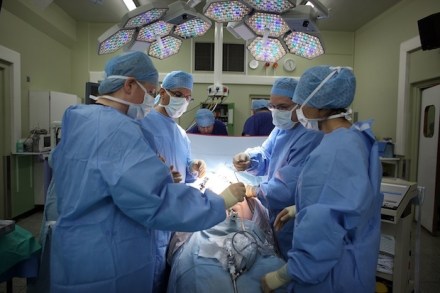
I blamed the pheasant casserole, but I did it an injustice. Its only contribution to the drama behind my disappearance in mid-December was a residue of lead shot in the small intestine that briefly confused the radiologist. The real villain revealed by the scan was my appendix, which had taken on the raging, bull-necked, bug-eyed appearance of Ed Balls faced with a set of improving growth figures. And so it was that I spent a week in the Friarage at Northallerton, a small ‘district general hospital’ that has survived every NHS restructuring to date and is cherished by the citizenry of rural North Yorkshire.

What François Hollande’s latest crisis means for Westminster politics

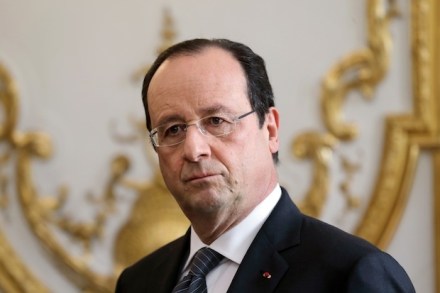
Beyond the slew of amusing 'No man's hand' photos of the beleaguered François Hollande trying and failing to find support from other European leaders, there are a number of implications for the British political scene of the beleaguered French leader's latest crisis, in which he has been forced to admit that taxes have been too heavy while watching his country's manufacturing sector fall behind that of Greece and borrowing costs rise. The first is that David Cameron has a perfect case study of what happens when you stick your fingers in your ears and repeatedly say there is an alternative.

The North of England needs its own Boris Johnson

Could the north of England do with its own Boris Johnson? In a new report out today, the IPPR think tank argues that a ‘northern voice’ is needed to lobby the government on the region’s priorities. The Mayor of London has shown himself proficient at making the case for London’s transport and budgeting needs. Although the IPPR may be right, that there’s plenty of work needed to rebalance the economy, better national representation for the North isn’t a new problem. In fact, the North has previously said no to several possible solutions. A decade ago, John Prescott's plan for regional assemblies was overwhelmingly rejected by a northern referendum.

Struggling with your New Year’s Resolution already? It’s all David Cameron’s fault.

Ed Miliband did vow to 'relentlessly' focus on the cost of living crisis facing hardworking families up and down the country (hopefully someone will develop a shorthand outline for this rather lengthy saying to save the pens of journalists who have to write it down repeatedly at launch events over the next 12 months) in 2014. So we should have expected this relentless focus to see Miliband's shadow ministers pointing angrily at every expensive thing that they can find, regardless of whether it's particularly heart-rending. Today we heard Luciana Berger thundering that David Cameron is so evil that he's putting people off their new year's resolutions.

Ten ways the Tories have helped small businesses

New year is the time when we reflect on the year gone by and look forward to the year ahead. For small businesses, it is no different. 2013 was the year when small business really started motoring again, after Labour’s Great Recession. But there is more to do. Because although our recovery is real, it is still fragile. As a Government we have to go on making life easier for small business. Conservatives value small business because of the ethos they embody of hard work and reward for effort. They matter because of the jobs and prosperity they create, and the opportunity they create for people to rise and achieve their dreams. Small businesses allow people to get on in life and have a better, more secure future. And of course they are crucial to our country's future too.

Romanian and Bulgarian migration – What next?

So there was no great rush of arrivals from Romania and Bulgaria on day one – nor was there ever likely to be. The numbers will build steadily as they did from Poland in 2004. How many is another question. The key difference with Poland is that other countries, notably Germany, France, The Netherlands and Austria will be opening their labour markets at the same time; other members have already done so. The other major difference is that about a million, mainly Romanians, have already gone to Spain and a similar number to Italy. In Spain unemployment is now about 25% and youth unemployment is just over 50%; the same figures for Italy are 12% and 33%.

Coffee Shots: Keith Vaz personally welcomes Bulgarian and Romanian migrants to the UK

Ministers have spent the past 12 months in an almighty flap about how to stem a feared flood of Bulgarian and Romanian migrants once transitional controls on their freedom of movement lift. They've announced and re-announced measures on benefit tourism, housing and access to public services. But while they've been tinkering with these measures which may or may not make any difference to the number of people who do pitch up, they've managed to forget one very effective measure indeed. If only David Cameron had exclusively revealed to the worried press months ago that the best way of deterring an influx would be to deploy Home Affairs Committee chair Keith Vaz to personally patrol the UK border.

Video: David Cameron’s New Year message for 2014

David Cameron's New Year message (and his accompanying Times op-ed) is an upbeat call to stick with the Tories to get the job done. He writes of his desire to 'turn Britain into the flagship post-Great Recession success story. A country that is on the rise'. And in his video message he focuses on the signs that the country is already rising. Downing Street is keen to stress that this message is no Blair/Brown-style relaunch of the government with a shiny new logo and a plan. It is the Prime Minister trying to encourage optimism about Britain's best days lying ahead of it, but that 'recovery is real, but it’s also fragile'.

Don’t blame climate change for flood damage, blame David Cameron

I’m sure the families clearing up after the Christmas and New Year floods have neither the time nor inclination to wonder if the floods were caused by climate change or not. Nevertheless the question has come up, as it inevitably seems to every time there is an extreme weather event nowadays. So, let’s look at the facts. Met Office data shows that four out of the five wettest years on record have been since year 2000. Official reports have repeatedly warned that the risk of flooding is becoming worse because of global warming. The Department for the Environment Food and Rural Affairs (Defra) Climate Change Risk Assessment warns 'floods and coastal erosion are already serious risks in the UK, and they are projected to increase as a result of climate change'.