Uk politics

Cameroons fume about May’s grammar school plans

From our UK edition

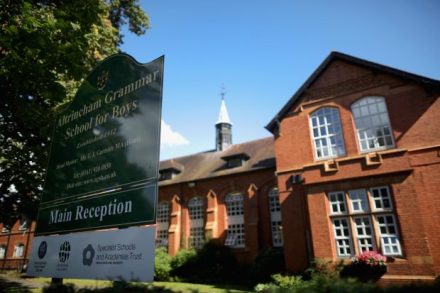
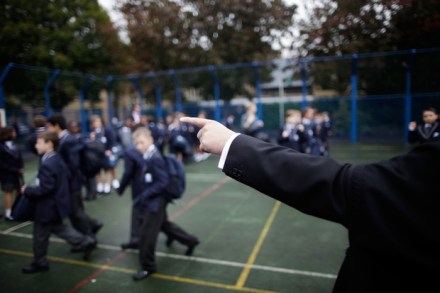
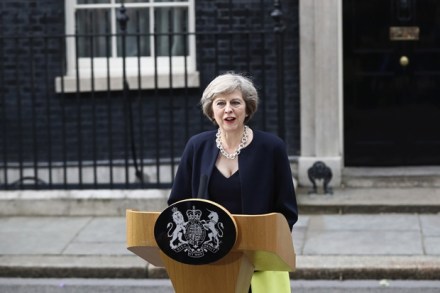
Theresa May has picked the first defining fight of her leadership—and it is the same one that David Cameron chose. But, as I say in The Sun today, she has picked the opposite side from him: in favour of, not against, more grammar schools. Cameron’s opposition to more grammar schools infuriated many Tories, particularly those who were grammar school educated. They objected to a privileged public school boy telling them that they couldn’t be more of the schools that had done so much for them. May, by backing grammars, is sending out a very different message. She is showing these Tories that she’s one of them, a grammar school girl. As one Number 10 source puts it, ‘It is a bit of red—or blue—meat for the party’.

Theresa May: We have selection in state schools already, selection by house price

From our UK edition

Theresa May received the traditional desk banging reception when she addressed the 1922 Committee of Tory backbenchers. May pleased Tory MPs by emphasising that they  would have more opportunity to feed into policy making process now through George Freeman and the policy board and the green papers that will---once again—precede white papers. But what most excited Tory MPs was what May said about opportunity and grammar schools. May said that she would give a speech on a 21st century education system soon, explaining how selective schools--in other words, grammars--fit into the mix. Strikingly, she defended an ‘element of selection’ arguing that there is selection already in the system, and it is selection by house price.

Are the boundary reforms really good for democracy?

From our UK edition

One of the big political rows of the autumn will be over the proposed changes to constituency boundaries. Labour is unhappy about this (and everything else) because the proposed changes could lose the party around 30 seats which it could ill afford at the best of times. And this is the worst of times. But though the recalculation will help the Tories, there are nerves about whether every Conservative MP who wants to stay in Parliament will be guaranteed a seat. There are also grumblings that this change is not being proposed alongside a reduction in the number of ministers, which will make the executive loom even more powerful in Parliament, thereby weakening the legislature’s ability to scrutinise and hold ministers to account.

Theresa May’s stilted second PMQs performance

From our UK edition

If the purpose of the first few Prime Minister’s Questions sessions that a new leader faces is to assert their authority, both over the Opposition and their new party, then Theresa May managed that today. She didn’t do it with a great deal of panache, though: the Prime Minister was much less fluent and confident today than she was in her all-conquering first stint at the Dispatch Box before the summer. Her scripted jokes sounded a little less comfortable and natural, too.

Theresa May clearly wants to pick a fight on grammars

From our UK edition

The most interesting thing about the accidentally-revealed grammar schools briefing document is not so much that the government is planning to press ahead with the change to the schools system, but that it is considering passing a new law in order to do it. A brave move for a government with such a small majority. This means Justine Greening and her junior ministers in the Education dept are in for a rocky few months, something the memo itself acknowledged. It said: ‘I simply don’t know what the PM thinks of this, but it sounds reasonable to me, and I simply can’t see any way of persuading the Lords to vote for selection on any other basis.

Labour MPs back call for Shadow Cabinet elections

From our UK edition

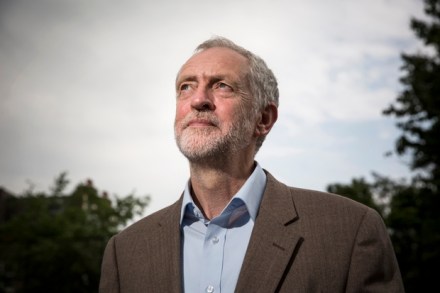
Labour MPs have just voted 168 to 34 in favour of bringing back Shadow Cabinet elections. This doesn’t mean there will be elections for the Labour top team straight away: the measure, proposed by Clive Betts, now goes to the party’s ruling National Executive Committee, which is now dominated by Corbynites. If the NEC so chooses, it can propose the rule change at the party’s conference. This is, however, another example of the PLP, which had been fading as a parliamentary force compared to the Tory backbench 1922 Committee, asserting itself against Jeremy Corbyn.

Democracy is hanging by a thread in this country

From our UK edition

Democracy is hanging by a thread in this country. At the start of this year, if someone had told you that in eight months’ time there would be open calls for the thwarting of the people’s will, and marches demanding the crushing of public opinion, you’d probably have scoffed. ‘This isn’t some anti-democratic backwater, it’s Britain!’, you’d have said. Yet now, these things are happening, all the time. Angry Brexit-bashers, those politicos and experts and activists furious at the masses for having the temerity to reject the EU, have helped make anti-democracy fashionable again, for the first time in decades. It’s a fashion we cannot let stand.

May and Davis split on single market comments

From our UK edition

Theresa May didn’t choose a quiet life when she appointed David Davis as the Brexit Secretary, Liam Fox as the International Trade Secretary and Boris Johnson as the Foreign Secretary. Mostly, the men have bickered amongst themselves up to this point. But today the Prime Minister’s official spokeswoman put some distance between May and her minister charged with Brexit negotiations. Yesterday Davis had told the Commons that he thought it unlikely that Britain would be able to retain single market access while also controlling EU migration. He said: ‘This government is looking at every option but the simple truth is that if a requirement of membership is giving up control of our borders, I think that makes it very improbable.

Some clues as to what David Davis means by Brexit

From our UK edition

David Davis has just finished his first statement to the Commons on the process for the UK exiting the European Union. Davis’s initial statement stuck closely to what the government has said already; the coordinated Labour backbench heckle of ‘waffle, waffle’ had some truth to it. But it was striking that Davis said he hoped the UK’s security relationship with the EU would be as close or closer post-Brexit; in Whitehall, Britain’s intelligence and military capabilities are regarded as one of our key assets in the negotiation. But in answer to the questions that followed, Davis--a naturally frank politician—gave a clearer sense of what he means by Brexit.

Are you ready for the 2017 Labour leadership contest?

From our UK edition

Running through the summer like the writing in a stick of rock was the continually disappointing and dismal performance of Owen Smith in the Labour leadership contest, and Jeremy Corbyn’s spectacular ability to make party members love him more by confecting his own rows about trains and women going out for drinks. The post-match analysis in the Labour moderate camp has already begun, with few bothering to make any greater defence of the Smith campaign than ‘it might be a bit closer than the polls suggest’.

Vaz not going down without a fight

From our UK edition

Keith Vaz has just asked a second question in the House of Commons, despite it being unclear whether he can continue as chair of the Home Affairs Committee for the long term following allegations about his private life in the Sunday newspapers. The Leicester East MP, who has a meeting with his committee tomorrow afternoon, is clearly not going down without a fight: he wouldn’t be standing up in the Commons, otherwise. When a scandal-hit MP stands up in the Commons in the days after lurid newspaper headlines, they are normally either mocked and heckled by jubilant colleagues on the other side of the house, or welcomed with supportive noises from MPs who think the coverage unfair and intrusive.

May says general election will be in 2020

From our UK edition

Theresa May is on her way to her first G20 summit. But she has still sat down for the traditional start of term interview with Andrew Marr. Reading the transcript of it, it looks like a classic Theresa May interview: with very little given away. She avoided answering Marr’s questions on whether she would like to see more grammar schools and refused to say whether she shared her chief of staff Nick Timothy’s view that Chinese involvement in the Hinkley point nuclear project would be security risk. On Brexit, May said little new about the deal she would like to strike--confirming the sense that, as one Minister told me, the government is ‘a way away from forming a definitive position’.

The Cabinet’s Brexit talk

From our UK edition

So, where are we at on Brexit? Well, we know that Theresa May wants immigration control as part of the deal which essentially rules out a Swiss or Norwegian style deal. But, as I report in The Sun, beyond that little is settled. As one Cabinet Minister said to me after the away day at Chequers this week, ‘The truth is that, at the moment, we’re still in the preparatory stage’. Cabinet Ministers were struck by how open the discussion was at Chequers. Unlike in the Cameron era, there was no early indication as to what the Prime Minister wanted the meeting to conclude. According to those present, one of the most forceful speakers was the Chancellor Philip Hammond. He emphasised that growth would be lower next year.

Why negative interest rates are mad, bad – and dangerous

From our UK edition

What should we think about negative interest rates? What kind of Alice in Wonderland world are we living in when companies and households are paid to borrow and charged if they save? Seemingly crazy, negative interest rates are spreading nonetheless. Implemented by central banks in Europe, Japan and elsewhere, they now apply in countries accounting for a quarter of the global economy. Should we be worried? Could we see negative rates in Britain? Earlier this month, the Bank of England cut interest rates for the first time in seven years, from 0.5 per cent to a new record low of 0.25 per cent.

Did the Brexit refuseniks propose overturning the Scottish referendum result?

From our UK edition

The parliamentary move against democracy is gathering strength. The notion that parliament might vote down the results of the referendum is being backed by some serious, intelligent politicians (and Labour’s Chris Bryant). My old boss Patience Wheatcroft is leading the attempt in the Lords, hoping to stall it until such times as another referendum could be called. Even David Lammy, who I also admire, is leading similar attempts in the Commons involving a petition (Rod Liddle, in response, has started a petition to have Lammy removed as MP. It now has 6,300 signatures). Bryant explains (in a tweet) that he’s out to defend parliamentary sovereignty. 'Our membership was by act of parliament and it needs an act of parliament to undo it.

Labour finds a security firm for its ‘excellent’ conference

From our UK edition

Today, in a highly unprecedented move, the Labour party actually managed to achieve something. It has just signed a deal with a security firm, OCS, for its autumn conference in Liverpool. This is a huge relief to those in the party with a sense of professionalism, like its General Secretary Iain McNicol, who had feared that the whole conference might have to be cancelled, which would be yet another illustration of the terrible, potentially terminal, mess that the party is in. But McNicol was able to say this afternoon that ‘We look forward to working together on what will be an excellent event’.

The Boris-bashers should be ashamed

From our UK edition

Throughout this fractious summer, one thing has united all the warring pundits and politicians. Left, right; Leave, Remain, everyone at least agrees that it was crazy to leave the country in Boris’s hands. He’s not serious, they say, looking, as they make this pronouncement, jolly pleased with their own relative gravitas. They should instead be ashamed. The endless jeering at Boris isn’t justified — he was a decent mayor of London — and it is not in good faith. What purports to be considered criticism is almost always just sour grapes. Why the bitterness? More often than not, Boris-bashers — in Parliament or press — are his contemporaries. A lot of them went to Oxford with him and they measure their success against his. It makes them cross.

Where has all the money gone, Nicola Sturgeon?

From our UK edition

Just three years ago, the Scottish government enjoyed claiming that an independent Scotland would be one of the wealthiest countries in the world. Perhaps even the sixth wealthiest, as measured by GDP per capita. Sometimes the claims made were a little more modest. Scotland might be only the 14th richest country on earth. But, however the figures were calculated and wherever Scotland was presumed to rank, one thing remained consistent: Scotland would be richer than the United Kingdom it would be leaving behind. Well, you can't make that case any longer. In truth, it wasn't a case sensible people bought in the first place. It was too good to be true, too dependent upon time-sensitive statistical chicanery, to be entirely convincing.

The SNP has played Scotland’s Catholic Church for a fool

From our UK edition

In England and other places there can still be surprise when discussion of football in Scotland segues too smoothly into the discussion of religion. And vice versa. It can also get entangled with toxic politics too. The sectarian divide between Celtic and Rangers doesn't need to be rehearsed, but the tribal hinterlands behind this ancient sporting rivalry point to the sad opposition between Loyalist and Republican, Royalist and Nationalist, Britain and Ireland, Catholic and Protestant. Some say it's fading away, some say it isn't, but there was a manifestation last week that it may be evolving – into something worse. Celtic played the Israeli team Hapoel Beer Sheva in Glasgow on Wednesday in a pulsating European qualifier which the home team won 5-2.

How useful is Sadiq Khan’s endorsement of Owen Smith?

From our UK edition

Sadiq Khan’s endorsement of Owen Smith is rather handy for the ailing Labour leadership contender, given Khan is one of the few Labour politicians who has actually won something: that something being the largest personal mandate of any politician. This enormous mandate is rather handy when Jeremy Corbyn starts waving his own huge mandate about, but it may not be attractive enough for Labour members, who largely seem besotted by the idea of Corbyn as leader.