Uk politics

Decision time approaches for Theresa May

From our UK edition

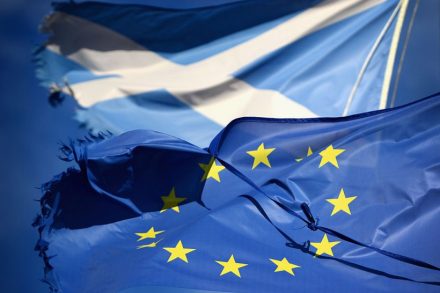
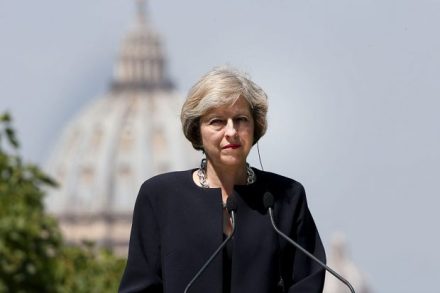
Parliament is off for the summer, and the exodus to the beaches has begun. But Theresa May isn’t heading off there. She has serious work to do this summer, she has to work out what she wants out of the UK’s EU exit deal. As I say in The Sun this morning, May is just being honest when she says that she has an ‘open mind’ on what the deal should look like. But she doesn’t have long to decide what she does want. Indeed, I understand, that the Mays have already scrubbed one planned summer break to allow her to work on this. May is right to want the deal that’s best for Britain, rather than simply trying to replicate someone else’s deal with the EU. But a bespoke deal will, inevitably, take time to negotiate.

Scotland doesn’t deserve another referendum

From our UK edition

If the SNP ever succeeds, it will be because of the failure of the English to understand its game. English people with no goodwill towards Scottish nationalism keep saying that ‘Scotland voted to remain in the EU’. It is not true. The Scots, like all other voters, answered the question which was put to them, which was whether theUnited Kingdom should leave or remain in the EU. They were not asked about what Scotland should do, any more than London, Liverpool or Bristol — three cities which voted Remain — were asked whether they sought secessionist EU membership. To say that Scotland must have another referendum on anything because a majority there voted Remain is to say, in effect, that it has acquired independence already.

In defence of EU migrants: a plea to Theresa May

From our UK edition

During the Brexit debate, there was a wide mainstream consensus that EU nationals living in Britain should not be affected. As even Ukip said, it would be unthinkable that someone here legally could later be declared illegal. Labour, the CBI, SNP, Vote Leave, pretty much everyone ruled out the disgusting idea of repatriating a single one of the three million EU nationals living in Britain. Or even putting them under the threat of repatriation. As Sajid Javid put it, they’re here because we need them – to work for the NHS, our other shops and businesses, to make our society stronger. During the referendum campaign this was not an issue because every single mainstream political party stood inside this consensus.

Nicola Sturgeon’s Brexit test is designed to fail

From our UK edition

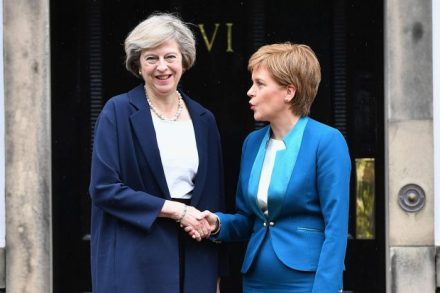
Nicola Sturgeon still believes in Scottish independence. I know, who knew? That's the point of the SNP, a party Ms Sturgeon joined as a teenager back when she felt, or so she has said, that Neil Kinnock was busy leading Labour into the wilderness. That, remember, is when she says it all started going wrong for Labour. This is something worth recalling the next time you see or hear some SNP elected representative concern-trolling the Labour party. The weaker, the more unelectable, Labour is the better that suits the SNP. Anyway, the First Minister gave a speech yesterday in which she spoke about Scotland's five ‘key’ EU interests that ‘must be protected’ if she's to remain a cheerful soul.

Brexit is the most punk thing to have happened in years

From our UK edition

It turns out rock didn’t die when Elvis joined the Army in 1958, or when the Beatles accepted their OBEs in the 1960s, or when Vivienne Westwood went from making filthy t-shirts for punks to being dressmaker-in-chief to the filthy-rich bourgeoisie. No, it died last Thursday, outside Liverpool St, when an NME distributor shoved the latest issue of the once rebellious mag into my hands and I glanced at its cover and realised it is a special issue on how to cope with life outside the EU. For real. In the words of NME editor Mike Williams, this latest issue is chock-a-block with ‘sage advice’ on how to cope with the post-Brexit ‘madness that’s engulfed the UK’. It’s one of the saddest things I’ve ever seen.

Why Prime Minister May has been a surprise

From our UK edition

As we come to the end of Theresa May’s first full week as Prime Minister, she hasn’t quite been the Prime Minister Westminster was expecting. As I say in The Sun today, even her supporters thought that she would be solid, dependable but a bit dull—as befits someone whose sporting hero is Geoffrey Boycott. But May has shown quite a bit of flair in the last few days. She swept Jeremy Corbyn for six at PMQs on Wednesday; demonstrating a comic timing that we hadn’t seen from her before. On her European tour this week, she confidently showed off her language skills. So, what’s going on? Well, those who have worked with her for a long time says that becoming PM has given her confidence and brought her out of her shell.

Len McCluskey warns that the security services might be trying to sabotage Jeremy Corbyn

From our UK edition

The Labour leadership election has become even more bizarre today. Len McCluskey, the leader of Unite the Union and a key Corbyn backer, has given a Guardian interview in which he suggest that the ugly behaviour of Corbyn supporters online is actually the work of the security services. He tells Decca Aitkenhead: “Do people believe for one second that the security forces are not involved in dark practices? Decca, I have been around long enough … the type of stuff that we ultimately find out about, under the 30-year rule.” When Aitkenhead challenges him on this, McCluskey continues: “Well, I tell you what, anybody who thinks that that isn’t happening doesn’t live in the same world that I live in.

Theresa May gets a warmer than expected reception in Paris, and a pledge on the border

From our UK edition

Paris was meant to be the more difficult leg of Theresa May’s first European tour as Prime Minister. But May’s press conference with Francois Hollande was far more cordial than expected. The French President was at pains to stress all the forms of cooperation that would continue between the two countries after the UK  left the EU. He continued to back the Le Touquet agreement which keeps the UK border at Calais.  However, he still wants Article 50 served quickly; ‘the sooner, the better’ was how he put it. There was, though, a tiny bit of softening on the question of talking about things before then. May, for her part, turned in a crisp performance.

What matters in Labour’s leadership contest is what works

From our UK edition

Jeremy Corbyn’s attempt to strike a contrast between his beliefs and those of his Labour leadership rival Owen Smith would have rather big implications or medical research in this country. The Labour leader told the launch of his campaign to hold on to his job that pharmaceutical companies like Pfizer shouldn’t take on medical research: ‘I hope Owen will fully agree with me that our NHS should be free at the point of use, should be run by publicly employed workers working for the NHS not for private contractors, and medical research shouldn’t be farmed out to big pharmaceutical companies like Pfizer and others but should be funded through the Medical Research Council.

Liz Truss attracts far more vitriol than her male non-lawyer predecessors. Why could that be?

From our UK edition

A politician with no legal training and limited experience of the legal world becomes Justice Secretary and Lord Chancellor. The legal world is offended and fellow politicians speak out against this unwise appointment. Some resign in protest, or refuse to work under the new minister. ‘I fear this could be damaging to the justice system,’ warns one peer, as he walks away from his ministerial portfolio. Three politicians who fit that description of no legal training or experience in the legal world have been appointed Justice Secretary and Lord Chancellor in the past four years. Chris Grayling was the first, taking on the job in 2012, followed by Michael Gove who took over in 2015. Gove was then sacked from the government and succeeded by Liz Truss.

Don’t knock ‘secret deals’. We’ll need one soon

From our UK edition

As a founder member of the Guild of Blair-Bashers, someone who reacted strongly against him from our first encounter at dinner when he was only an opposition spokesman, as a commentator who railed against the invasion of Iraq the moment the idea was mooted and right through to the end, and as a journalist who throughout Tony Blair’s time at No. 10 beat my tiny fists against the imposter I always thought him to be, perhaps I may deserve your attention now, after Chilcot, that I have something to say in Mr Blair’s defence? I don’t believe that in any important way the former Prime Minister lied. And I don’t agree there would have been anything wrong with his giving secret undertakings to the President of the United States.

Farage hails ‘perfect storm’ of Brexit, Trump and worldwide populism

From our UK edition

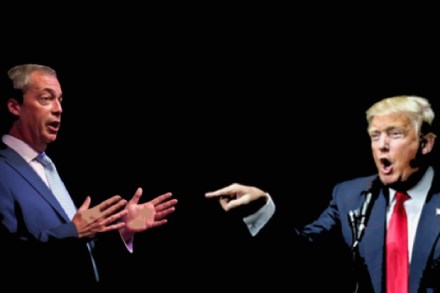
Nigel Farage is here in Cleveland at the Republican Convention. He’s enjoying himself, and why not? Britain has voted for Brexit, and he doesn't have a party to run. He can bask. Today he had lunch and a Q&A session with some fellow-minded conservatives on the Old River Road. They were all pleased as punch about Brexit, the Donald Trump thing, and the rise of anti-elite populism everywhere. 'It looks like the perfect storm,' Farage said, just before he sat down to eat. He was speaking to Steven King, a Republican congressman who recently got into hot water after he questioned the contribution non-white people had made to American history. The two men discussed the beauty of the imperial measurement system over the dull metric.

The net migration reckoning draws nearer

From our UK edition

Is the new government under Theresa May going to ditch the target to drive net migration into the tens of thousands? Amber Rudd and Boris Johnson signalled a change of policy from the back-of-a-fag-packet plan yesterday by saying the aim was to ‘bring migration down to sustainable levels’, though Downing Street insisted that this was not an end to the target, saying ‘the Prime Minister does see sustainable levels as down to the tens of thousands’. It would be odd, given May’s personal commitment to the net migration target, and her personal frustration (and that of her aide Nick Timothy) that it wasn’t met as a result - in her view at least - of special pleading from other ministers, especially George Osborne and ministers in the Business department.

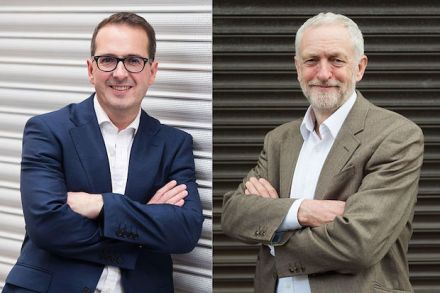
If smarmy Owen Smith is the answer, Labour’s asking the wrong question

From our UK edition

Jesus H Christ. Is this what it comes down to? A smarmy post-Tribunite nonentity swathed in unrealistic ambition, versus Chauncey Gardener? It is close to pointless wondering who to support between these political titans, Owen Smith or Jeremy Corbyn. If Smith wins, which I doubt very, very, much, he is no more adept to change the nature of the party than is Corbyn. He has not the nous, balls or means to challenge the activist base and thus recapture those Labour votes which, since 2005, have been winnowing away to Ukip, or the Tories, or to nowhere. Nor even that much support within the PLP. There are two big issues upon which Labour has lost its votes: immigration and welfare.

Angela Eagle pulls out of Labour leadership contest

From our UK edition

In the past few minutes, Angela Eagle has pulled out of the Labour leadership contest, citing insufficient nominations in the race with Owen Smith. ‘I’m withdrawing from this race and supporting Owen with all of my enthusiasm and might,’ she told reporters in Parliament’s Central Lobby. This means that Labour now has its unity candidate to fight Jeremy Corbyn, and even those MPs who feel rather politically distant from Owen Smith will have to pull behind him in the name of dislodging Jeremy Corbyn.

Theresa May’s first Cabinet meeting gives us a glimpse of her leadership style

From our UK edition

Theresa May’s first Cabinet meeting wasn’t accompanied by the kind of eye-catching announcement you would have expected from Tony Blair or David Cameron. Instead, the big news is that the new Prime Minister will chair three Cabinet committees on the economy and industrial strategy, exiting the European Union, international trade and social reform. This does rather underline her reputation for being someone who doesn’t like delegating, as well as her interest in the serious machinery of government, rather than media gimmicks. She then underlined her serious reputation further by welcoming colleagues to the coffin-shaped table in Downing Street by saying the following: ‘When I launched my leadership campaign, I said that politics is not a game.

Why Labour deserves to die

From our UK edition

Who might save the Labour Party? That’s the question dividing dinner parties across London, causing spats at media soirees, getting socially conscious celebs scratching their heads. I have a different question. Why save the Labour Party? Save it to do what? To be what? To think what? The middle-class tussle over the future of Labour has become so obsessed with the stickler of which individual might make Labour electable again — safe, bland bet Owen Smith or ‘working-class northern girl’ Angela Eagle? — that its various factions have forgotten the purpose of a political party: to represent something, to say something, to embody popular opinion.

The political theatre of the Trident debate

From our UK edition

The Trident debate might be about national security, but all the parties have political points they want to make. Indeed, the reason the debate is happening now is that the Tories wanted something to bring them together, and divide, Labour post-referendum. Angus Robertson, the SNP’s Westminster leader, began with a few kind words for the new Prime Minister. But then, he was straight on to repeatedly—and theatrically—asking the government front bench to set out what the full life time cost of the Trident replacement would be. https://www.youtube.com/watch?

Corbyn savaged by his own MPs as he refuses to read out Labour policy on Trident

From our UK edition

If you wanted evidence to support the repeated assertion from Labour MPs that Jeremy Corbyn cannot continue as Labour leader, today’s Trident debate offered it in cartloads. The vote, which had been promised in 2007 by a Labour defence secretary, is supposed to be about the renewal of the submarines that carry the nuclear warheads. But today’s debate was more about the deep split within the Labour party over the matter, and the contempt with which so many Labour backbenchers view their leadership. In most parliamentary debates led by the leaders of the two main parties, what normally happens is that backbenchers intervene on their respective leaders to offer supportive statements that, as much as anything else, allow them to catch their breath and refine their argument.