Uk politics

David Cameron can’t blame Theresa May for his awful deal with the EU

From our UK edition

Tim Shipman’s book about the EU referendum campaign, All Out War, is serialised today in the Sunday Times. The newspaper today leads on the remarkable disclosure that David Cameron blames Theresa May for the paucity of the deal he negotiated in those 30 sleepless hours with Brussels. Here’s the extract:- Before the speech, conscious that immigration was likely to be an explosive issue in the referendum campaign, Cameron had floated with Merkel the idea of an annual cap on the number of national insurance numbers handed to EU migrants or an emergency brake on numbers. But the German leader said she would not agree to changes to free movement for EU citizens.

Labour women attack Theresa May as ‘no sister’. How very un-feminist.

From our UK edition

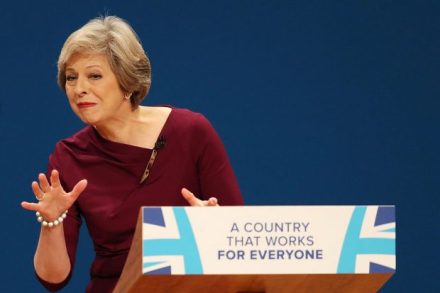
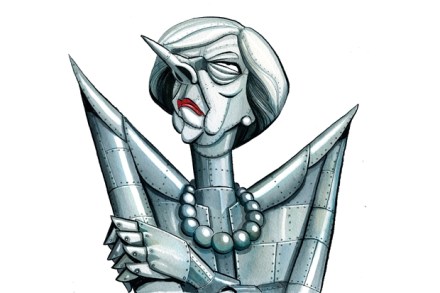
The Labour Party is in a sour mood at present, that much we already know. Usually, most of the sourness expressed by MPs is directed at their own party comrades. But this afternoon, at the Labour Women’s Conference, speaker after speaker decided to turn fire on Theresa May. Angela Rayner congratulated her on being the second female Prime Minister of this country, but said ‘I cannot celebrate her arrival’. Kezia Dugdale attacked both May and Nicola Sturgeon for not being real feminists, saying: ‘Look at Theresa May - she has the audacity to wear a ‘this is what a feminist looks like’ T-shirt.

This Labour leadership contest has represented an intellectual surrender to Corbynism

From our UK edition

The Labour leadership result isn’t announced until 11.45am today. But whatever the result—and no one seems in much doubt what it will be, this contest has represented an intellectual surrender to Jeremy Corbyn and the ideology he represents. Isabel Hardman and Marcus Roberts discuss Corbyn's victory on Coffee House shots I argue in The Sun this morning, that his opponents surrendered right at the start of the contest. Owen Smith was offered up as a more competent and media savvy leader rather than as the antidote to Corbynism. Smith himself emphasised that the party owed Corbyn ‘a debt of gratitude for helping Labour rediscover its radical roots’. He stressed, ‘I am just as radical as Jeremy Corbyn’.

Who is to blame for Brexit?

From our UK edition

With Italy facing a referendum that could unseat its president, the EU’s member states in furious conflict over immigration, and Hillary Clinton looking like an increasingly shaky last line of defence, our very own Brexit is being held up as the model of a new, disruptive politics. But its meaning has been debated. For some, Brexit was democracy delivering justice: the West’s 'first big fightback', as Nigel Farage said on Sunday, against 'a metropolitan elite, backed by big business, who’ve just been increasingly getting out of touch with the ordinary voters.' The counter-narrative is that Brexit was a fake revolution: a coup by fellow-members of the elite who 'lied to please the mob'.

The V&A’s director is an accidental Bremoaner hero

From our UK edition

When I read that Martin Roth, the director of the V&A, was resigning from his job because of Brexit, I sensed it was not quite true. I did not doubt the sincerity of Dr Roth’s views: he has his German generation’s horror of anything which could be presented as ‘nationalism’. It was rather that it did not make sense as a motive for leaving his post. Brexit won’t actually happen until roughly the time when Dr Roth would have left anyway, so it could not have impeded his work. Besides, the collections of the V&A are not at the slightest risk of attack for being ‘decadent’ art under the May regime. My hunch seems to be right.

The Corbyn détente is coming

From our UK edition

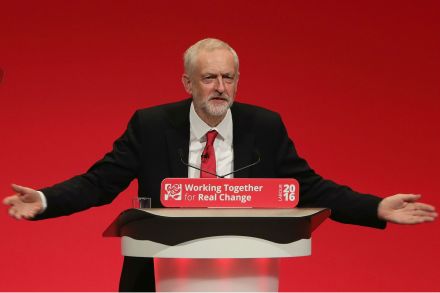
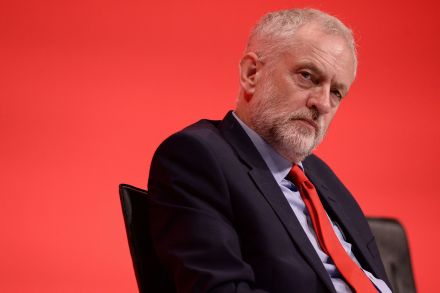
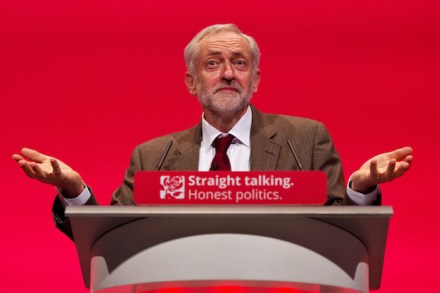
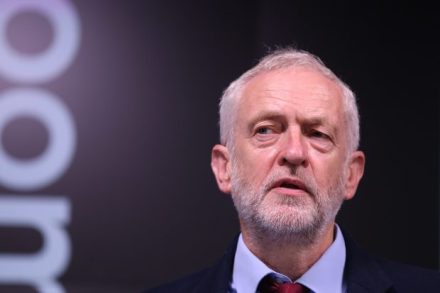
By the time Labour party conference begins on Sunday in Liverpool, the party will have announced its new leader. And it is likely to be its old leader, Jeremy Corbyn. For those who have nailed their colours to Owen Smith’s mast, it is quickly becoming clear that Corbyn is about to consolidate power. As a result, there will need to be a mass rethinking of the anti-Corbyn strategy. Most analysis of Theresa May’s decision to fight for grammar schools has focused on the internal politics of the Conservative party, but the debate has also inadvertently played into Jeremy Corbyn’s hands. Finally, after more than a year in the job, Corbyn has a domestic policy that he actually cares about.

Selective education can tackle inequality. Here’s how

From our UK edition

You know the figures: seven per cent of children in the UK attend fee-paying schools but they win 42 per cent of Oxbridge places and 70 per cent of jobs in private equity banking; they also make up 30 per cent of places in the cabinet. This is a significant decrease from previous cabinets - 50 per cent of David Cameron’s, 70 per cent of Sir John Major’s and 90 per cent of Margaret Thatcher’s were privately educated - but it is still worryingly high. Grammar schools are suggested by some as a solution, but they have a poor record of improving social mobility. Children with educated, comparatively wealthy parents are better placed to get over the hurdles of 11+ tests and catchment areas. This means clever children from poor homes are all too often frozen out.

New Ukip leader says Putin is one of her heroes

From our UK edition

Diane James, Ukip’s new leader, did her first major TV interview as Ukip leader this morning. And very revealing it was too. When Andrew Neil asked her who her political heroes were other than Vladimir Putin, she did not deny that the Russian leader was one of her heroes. She said that neither Clinton nor Trump were a hero of hers. When Andrew then pushed her on who were her heroes were, she named Margaret Thatcher and Winston Churchill. Andrew then summed up by saying, your heroes are Putin, Churchill and Thatcher. James said that yes, they were. Here's the clip.  So, the leader of the UK’s third political party does not deny that Putin, who has authoritarian tendencies and is no respecter of international laws, is one of her heroes.

Scottish independence has become a zombie policy

From our UK edition

Sunday is the second anniversary of the Scottish independence referendum, the second 'Here's what you could have won' day of thanksgiving. Or, if you prefer, atonement. The referendum is only over in the purest, most technical, sense. The campaign continues and it is clear to everyone that, at some point, on some day, Scotland will have to be tested again. The SNP demand a mulligan and will not cease until such time as they're given a second chance. They haven't gone away, you know. And, in one sense, that is reasonable. The SNP didn't spend eighty years losing elections to give up now they're can see the winning post at last. One more defeat, even a large and significant one, doesn't sting so much when placed in that historical context. There is always next season.

Nigel Farage says farewell: ‘We brought down a prime minister’

From our UK edition

Nigel Farage has just delivered his speech at Ukip conference, in which he declared that he had put 'absolutely all of me' into Britain leaving the EU. 'I literally couldn't have worked any harder, or couldn't have been more determined - it's been my life's work to get to this point. I want my country back, but now folks I want my life back,' he said. He went onto claim that Ukip had 'changed the course of British history' and suggested that the party had 'brought down a prime minister' and had 'got rid of a chancellor'. On Theresa May's premiership, he suggested there was a 'great political battle ahead', before raising concerns that she might go for a 'soft Brexit'. Farage then couldn't resist taking a swipe at Douglas Carswell, his party's only MP.

Leaked Corbyn abuse list shows the unbridgeable gulf in Labour

From our UK edition

The leaking - accidental or otherwise - of a list of Labour MPs allegedly guilty of abusive behaviour towards Jeremy Corbyn is yet another illustration of quite how divided the party is, and quite how messy things are going to be when Corbyn tries to reassert his authority following what looks certain to be his re-election to the top job. We now have MPs such as Neil Coyle consulting legal opinion on whether to sue their party leader. If you wanted the antonym of ‘happy ship’, the Labour Party is a pretty good option. The Labour leader and John McDonnell today took questions on the matter after a speech on the economy and public services (awkwardly trailed as ‘pubic services’ in a press release), and both insisted they were trying to heal the party.

Will David Cameron only be remembered for Brexit?

From our UK edition

At the moment, the consensus is that Brexit will be Cameron’s legacy, that the thing people will remember about his premiership is that he called a referendum on the EU and lost it. But I don’t think this will necessarily be the case. As I argue in the magazine this week, if Brexit -- to use a phrase -- turns out to be a ‘success’, then that will allow attention to turn to other parts of Cameron’s career. It will allow people to reflect on how, after three successive general-election defeats, he turned the Tories back into the natural party of government. On how he made them more comfortable with modern Britain and more representative of it. The irony of all this is that Cameron’s legacy depends on him being proved wrong on the dangers of Brexit.

The education Green Paper is surprisingly bold

From our UK edition

Yesterday afternoon the government released a new Green Paper which focussed on its initial proposals for expanding the number of high-quality school places throughout both the primary and secondary sectors. This task is particularly urgent given the existence of a demographic bulge currently passing through the primary year groups. The proposed reforms are united by an overarching theme, which is a desire to provide a higher-quality education for the children of those parents who are 'just about managing' (a phrase the document frequently returns to), and whose earnings are just above the free school meals cut-off (around £16,190).

Another poll shows that Brexit hasn’t changed Scottish appetite for independence

From our UK edition

Throughout the EU referendum campaign, we heard that Brexit would not only sink the UK economy but destroy the Union because Scots were likely to vote Remain. In the event there was a difference at the polls—38 per cent of Scots voted for Brexit, vs 52 per cent in the UK as a whole—but was it enough to destroy, or even threaten, the Union? Polls in the immediate aftermath showed an uptick for support for Scottish separation which has since ebbed away. Kantar TNS has today published a poll showing that 53 per cent of Scots are against independence, which confirms the YouGov poll taken at the end of August showing 54 per cent of Scots against. So this is pretty much where things were before the Brexit vote.

Theresa May has done a poor job of stealing Labour’s clothes

From our UK edition

‘I don’t think we are a charity.  We are a successful, multi-national educational institution,’ explained the public school head to me. And he was right. As it happens, he was a highly progressive head committed to using the wealth and resource he enjoyed to collaborate with an under-performing local academy.  For the first time, their partner school now had maths graduates teaching physics and a new range of language options.  But he had no doubt that he should not be in receipt of charitable status and tax relief.  Which is why one of the few components of Theresa May’s school reforms I can support is the Prime Minister’s determination to introduce ‘stronger, more demanding public benefit tests for independent schools.

Cameron resigns, again. Breaks his word, again. Trashes his reputation, again

From our UK edition

Is David Cameron trying to trash his own reputation? First came the worst resignation honours list for decades, which seemed designed to confirm everyone’s worst fears about his chumocracy. And today, he has handed a gift to those who denounced him as a career politician, someone with no sense of public service, whose interest in politics ran out when he thought it could no longer be useful to him. "Brits don't quit," he told us a few months ago: now he has quit, twice. After telling us several times that he'd stay, to fulfil a duty to parliament and his constituents. Even Gordon Brown fought another election after leaving No10 but Cameron has bolted, saying he has now decided that he'd be a “distraction”.

Greening takes dovish tone on government’s schools plan

From our UK edition

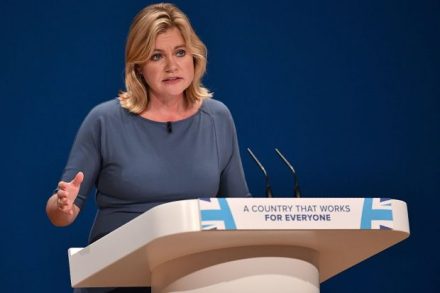
Is Theresa May planning an epic battle with some of her own MPs to introduce new grammar schools in England? When Justine Greening gave her statement in the Commons this afternoon, she repeated many of the Prime Minister’s own lines about selection already existing through house prices and so on. But her language was much more conciliatory, with the Education Secretary telling MPs that ‘this is the beginning of a consultation that sets out a debate that we need to have’.

Liam Fox confirms that Britain now has a nationalist government

From our UK edition

Unlike the boss, I thought Liam Fox's comments on fat and lazy British businesses that could be exporting more but aren't because, well, an afternoon on the golf course is more comfortable than striving for Britain were deplorable. But they were also telling. Because they were a further confirmation that the United Kingdom now has a nationalist government. The liberal Toryism of the Cameron era is gone, sunk with a whimper in record time. In its place is a Conservative nationalism that envisages SS Britannia buccaneering its way across the world's oceans. This, after all, was the animating spirit of what we might call the Brexit campaign's more cheerful wing.

George Galloway is terrific in this meticulous demolition of Tony Blair

From our UK edition

I had been wondering where Gorgeous George Galloway might pop up next. Defenestrated from his seat in Bradford West, humiliated in the London mayoral elections — where he received 1.4 per cent of the vote — and no longer apparently an attractive proposition to the reality TV producers, his public life seemed sadly to be drawing to a close. But nope, here he is with a film about the person all left-wing people hate more than any other, Tony Blair. It’s a good film, too, in the main. The Killing$ of Tony Blair was partly crowdfunded and it may well be that the only people who watch it will be those who forked out to have it made.

Liam Fox is right: we need to talk about Britain’s trade problem

From our UK edition

When Theresa May appointed three of the most outspoken and free-minded Brexiteers to her Cabinet, her fellow Remainers were delighted. Surely the only question is what they’d do first: implode or disembowel each other? Ever since, the speeches they’ve made have been seen through this narrative. First, David Davis was seen to have gaffed for pointing out that it's "improbable" that the UK stays in the European single market. And today, we have Liam Fox’s remarks to Conservative Way Forward about Britain's trade problem. A friend of mine was at the event, and took a video. Here's the transcript: CoffeeHousers can judge for themselves if his remarks are really so outrageous. "This country is not the free trading nation that it once was.