Uk politics

Revealed: the bureaucrat who advised Theresa May to use EU nationals as bargaining chips

From our UK edition

The biggest puzzle of Theresa May’s premiership so far is why someone who pioneered laws against modern slavery and was so tough on stop-and-search should take such an extreme and heartless position on EU migrants. Her declaration – that she’d use them as bargaining chips in Brexit talks – struck many who would otherwise support her as bizarre and repugnant. The Times reveals today that this idea was dummed up, as you’d expect, by the Whitehall machine. Sir Ivan Rogers, Britain’s ambassador to the EU, advised all candidates for the Tory leadership to use Britain’s three million EU nationals as bargaining chips in Brexit talks because he thought it would be the only bargaining chip Britain had.

The 17.4 Million Committee must be launched, urgently

From our UK edition

When it was reported that Liam Fox and Boris Johnson are already squabbling about who should be in charge of what in relation to Brexit, this was taken by some to be a feather in Theresa May’s cap. Isn’t she clever to have set Leavers against one another, was the thought. Downing Street sources were quoted as saying that she took a dim view of these silly games. But if it is true that Cabinet ministers are already at loggerheads about their roles, might that not suggest that the Prime Minister who invented these roles — and entire new government departments — has not properly defined them?

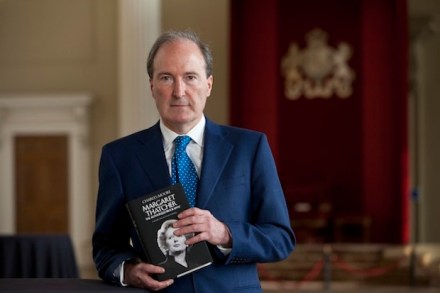
Charles Moore ‘voted’ twice as a public service. Why send the police after him?

From our UK edition

Shortly before the referendum, Charles Moore emailed me with an idea: he’d always thought how worryingly easy it would be for someone like him, registered in two addresses, to vote twice. So he proposed to do so, and then write it up in the magazine - to flag up weaknesses in our system. As he writes in this week's magazine: In Sussex, I went to the polling station early. I took my polling card, which is not compulsory, and asked the clerk what the significance of the barcode on it was. He had no idea, so presumably it has no security function (or the clerks are poorly trained). I voted to leave the European Union. Then I caught a train to London, where I went to my local polling station. There I presented my London polling card, unchallenged.

Now the SNP are in power their skin seems to have thinned

From our UK edition

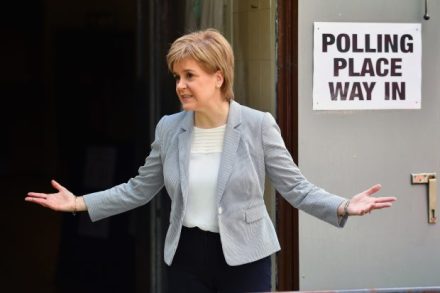
Scotland is a small place. This has many advantages. There is an intimacy to Scottish public life that can, on occasion, be charming. It is a place where everyone knows everyone else and this helps foster a climate of relaxed informality. Politicians, even more than elsewhere, are known by their first names. So it's Nicola vs Ruth vs Kezia and this isn't just because they are all women and all, in their different ways and to different degrees, quietly impressive figures. But a small place, like a family, can be suffocating too. Intimacy is the other side of cosy. If that reflects itself in tight connections between politicians and those who cover them, it also manifests itself in the pressure politicians place on newspapers and, especially, broadcasters.

What performing stand-up in Ukip country taught me about racism

From our UK edition

Most people would say UKIP lends itself to comedy better than Denis Healey’s eyebrows lent themselves to tweezers – but not the people of Walton-on-the-Naze, as they live in the party’s only constituency. I’m a stand-up comic, and I was booked to play the town’s first comedy night this month. I don’t know if the lovely promoter realised I was Asian when he booked me; for my part, I didn’t realise Douglas Carswell was Walton’s MP, and only discovered while Googling the town on the way to the gig, when it was too late to turn back.

How Breitbart hijacks right-wing populism

From our UK edition

The news that Donald Trump's new campaign manager is Steve Bannon, head of the right-wing media site Breitbart, has shocked a few commentators. It shouldn’t. For almost a year now, it’s been obvious to anybody who can be bothered to look that the Trump campaign and Breitbart fit together like hand in glove, though who is the hand and who is the glove is harder to fathom. Bitter ex-Breitbart employees now call the site ‘Trump’s Pravda'. The name seems to have been coined by Ben Shapiro, one of Breitbart's more successful journalists, who finally had enough and resigned over what he saw as a lack of editorial integrity in the age of the Donald.

Why was I able to ‘vote’ twice in the EU referendum?

From our UK edition

When you vote in Britain, there is a relaxed feeling in the polling stations. This is a long-established part of our culture, the atmosphere seems to say, and you are trusted to follow its rules. But, as Sir Eric Pickles’s review of electoral fraud suggests, the ballot is not nearly as secure as it should be. If that trend continues, the results will be called in doubt, and then democracy really is in trouble. For a long time, I have suspected the process and so, in the recent EU referendum, I tried a couple of experiments, helped by the fact that I am legally registered to vote in London as well as Sussex (though of course one may cast only one vote in a national election or referendum). In Sussex, I went to the polling station early.

Owen Smith: We should get Isis round the table for peace talks

From our UK edition

Victoria Derbyshire seemed very anxious as Labour’s two-hour-long hustings between Owen Smith and Jeremy Corbyn wore on this morning to move the debate away from the many internal messes that the party is in (Jewish members not feeling safe any more, online abuse, the chasm between the PLP and the membership: you name it, they covered it) and onto policy. At first, it wasn’t entirely clear why the programme’s producers had been so worried about covering policy: there is barely a cigarette paper between Corbyn and Smith, and that’s exactly how the challenging candidate wants it. The only big points of disagreement are on Trident renewal and the odd £0.5bn of spending pledges for building this and that.

What more does Boris Johnson need to do to be taken seriously?

From our UK edition

Boris Johnson has spent his adult life being underestimated and sneered at. But today's attack by Tim Farron, the leader of what remains of the Liberal Democrats, rather takes the biscuit. Today it emerged that, with Theresa May in Switzerland and Philip Hammond out of the country, Boris is running the British government. So Farron pipes up to say: Putting Boris Johnson in charge of the country is like putting the Chuckle Brothers in charge of Newsnight. Still, at least if he’s here, he’s not in Rio offending everyone he meets – and there’s always Larry the cat to stop him doing anything silly. But Boris Johnson is arguably more qualified than anyone in any front bench to run the government.

Betraying Brexit: the revolt of the elites against the people

From our UK edition

Why is everyone so chilled out about the threats to Brexit? Why isn't there more public fury over the plotting of lords and academics and experts to stymie Brexit and thwart the will of 17.4m people? In all the years I’ve been writing about politics, I cannot remember a time when democracy has been treated with as much disgust, with as much naked, Victorian-era elitism, as it is being today. And yet we’re all bizarrely mellow. We’re going about our business as if everything is normal, as if the elites aren’t right now, this very minute, in revolt against the people. We need to wake up. Every day brings fresh news of the revolt of the elite, of the march of the neo-reactionaries against the mandate of the masses.

Court of Appeal rules in favour of Labour party in latest leadership contest twist

From our UK edition

In the past few minutes, the Court of Appeal has ruled in favour of the Labour Party’s block on anyone who joined after 12 January 2016 from voting in the party’s leadership election. This means - until there is an appeal to the Supreme Court - that around 130,000 members, most of whom are believed to be sympathetic to Jeremy Corbyn, will not be able to vote. As I explained earlier this week when the High Court ruled in this matter, the impact of this may merely be the size of the victory that Jeremy Corbyn wins against Owen Smith. But it does also make the Labour party more divided and the contest still more bitter.

Will Theresa May end the era of easy money and call time on QE?

From our UK edition

When Theresa May was gearing up for a summer-long leadership campaign, she identified a worthy target: George Osborne’s addiction to easy money and the whole notion of quantitative easing. Rock-bottom interest rates and QE, she said, boost asset prices – and, in so doing, transfer wealth to the richest. When she became Prime Minister, the Bank of England decided to do another £70 billion of QE. We can guess that the effects will be the same as they were last time: more inflation and a surge of asset prices, making the richest even richer. As I say in my Daily Telegraph column today, QE is a magic wand of inequality. The problem is that no one understands QE, so it never gets the scrutiny it deserves.

Why does no-one think of the Lib Dems?

From our UK edition

Talking to Labour MP these days is a pretty miserable business, to the extent that many journalists are starting to wonder if they should charge by the hour for counselling. Among their many moans is that there no longer seems to be a centre-left, pro-European force in British politics any more. But when I try to cheer them up by pointing out that the Lib Dems surely fulfil that description, those miserable MPs shrug their shoulders. None are considering defecting to Tim Farron’s party. While many moderate Labour MPs are asked the whole time why they don’t ‘f*** off and join the Tories’, no-one makes the same suggestion about their suitability for joining the Lib Dems. Why is this?

The other Remainers who deserve the Légion d’Honneur

From our UK edition

Congratulations to Lionel Barber, editor of the Financial Times, who accidentally revealed that he is to be awarded the French Légion d’Honneur for his ‘positive role in the European debate’. One’s only slight sadness is that Mr Barber has had to look abroad for such recognition. In his resignation list, David Cameron has showered honours on similarly ‘positive’ Remainers in his entourage, but ungratefully omitted the media.  So more Légions d’Honneur, please, for Katharine Viner, the editor of the Guardian, Zanny Minton Beddoes, the editor of the Economist, and the entire staff of the BBC. This is an extract from Charles Moore's Notes. The full article can be found here.

Labour’s moderates are stuck until they can solve their membership problem

From our UK edition

We are still not entirely sure when the Labour leadership contest will end, but in these dusty days of recess, it is certainly keeping everyone nicely busy. Today Owen Smith received a boost from trade union GMB, which decided to endorse his bid to take over from Jeremy Corbyn. Its members voted 60-40 to endorse Smith, and General Secretary Tim Roache said ‘GMB members cannot afford for Labour to be talking to itself in a bubble for the next five years while the Tories run riot through out rights at work, our public services and our communities’. This drew yet another combative - and slightly curious - response from Team Corbyn after yesterday’s conspiracy theories fun.

Why would Theresa May want to clamp down on special advisers?

From our UK edition

Theresa May’s plans to limit both the number of special advisers and the way in which they are appointed are rather curious, given how influential and essential her own advisers were when she ran the Home Office. As I explained in the magazine recently, Nick Timothy and Fiona Hill held a great deal of power in that department, and not just when it came to briefing the media. They were an essential part of the running of the Home Office and its many arms-length bodies such as the Border Force.

Labour members win court case on leadership contest

From our UK edition

Isabel Hardman and Lara Prendergast discuss what's next for Labour: Could Labour hold its autumn conference without a confirmed leader? The party’s QC is to appeal this morning’s High Court decision that it cannot have a six month freeze date for members voting in the leadership contest, and this could delay the contest between Jeremy Corbyn and Owen Smith. Five new Labour members won their case against the party’s application of a six month freeze on eligibility to vote. If the election is delayed, and Labour has no leader in the autumn, which is when political parties and leaders traditionally fire up their grassroots and show how strong their authority is, then the party will appear weaker than ever.

Brexit gives Theresa May the perfect excuse to stay in Britain

From our UK edition

Just now, Theresa May understandably feels the need to fly to a great many European countries to introduce herself to their leaders. But one of the eventual benefits of leaving the European Union ought to be that prime ministers can mostly stay at home. The number of leaders’ meetings that ‘Europe’ generates is terrifying. It takes heads of government out of their own country virtually every working week. Being a Type 1 diabetic, Mrs May is particularly vulnerable to funny hours, exhausting journeys and enormous banquets. With Britain out of the EU, she could flourish by staying here and — as good prime ministers used very successfully to do — dominating the House of Commons. This is an extract from Charles Moore's Notes. The full article can be found here.

Why an early election would be bad for the Tories

From our UK edition

Ten points ahead in the polls, Theresa May regarded as the best Prime Minister by a majority of voters and both Labour and Ukip in disarray. It is little wonder, as I say in The Sun today, that some Tories are beginning to get excited about an early election. But going for an early election would be a massive mistake for the Tories. First, what the public seem to like about Theresa May is that she is a no nonsense politician who gets on with the job in front of her. Voters appear to like her refrain that politics isn’t a game. But calling an early election would destroy all this for it would be game playing on an epic scale, a move designed to take advantage of Labour weakness. Next, you can’t know how long a honeymoon is going to last.

Don’t rage at Cameron’s honours, but at the bureaucrats who blocked them

From our UK edition

The Daily Telegraph revealed on Tuesday that Michael Spencer, the chief executive of Icap, has been blocked for a peerage by the House of Lords Appointments Commission (Holac). All the indignation just now is against David Cameron’s resignation honours list, packed with his ‘cronies’, who allegedly include Mr Spencer. It is misdirected. The real anger should go against the pharisaical bureaucracy which has been imposed upon patronage. No one is allowed to know why Mr Spencer has been blocked, yet the world knows that he has been because, supposedly, he has ‘the wrong sniff’ about him.