Uk politics

PMQs: Corbyn accuses May of ‘dancing round’ on Brexit

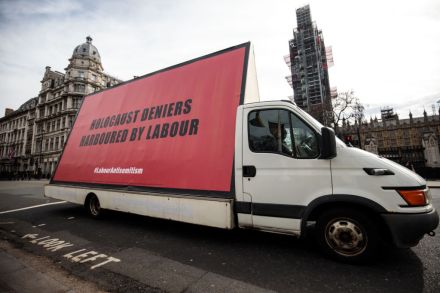
It's a measure of quite how badly split the government is on Brexit that Jeremy Corbyn, who would previously avoid the matter because of problems in his own party, looked comfortable as he devoted all six of his questions at Prime Minister's Questions today to the subject. Theresa May came prepared, not so much with answers on who in her government is telling the truth about the Chequers agreement and the chances and consequences of a no deal, but with attacks on Corbyn's handling of Labour's anti-semitism row. This preparation gave the Prime Minister some decent pay-offs, including her final answer, when she closed the exchanges by saying 'he should be ashamed of himself'.
The return of flip-flop Andy Burnham

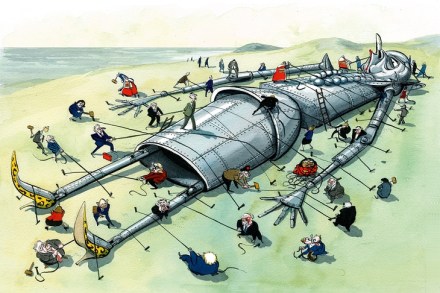
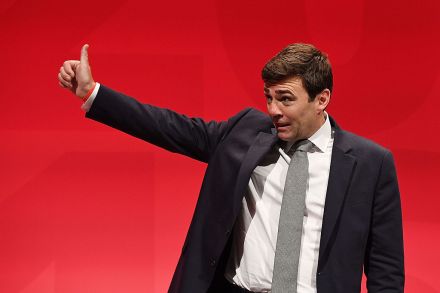
During Andy Burnham's time in Westminster, the then Labour MP quickly built a reputation for flip-flopping. Never sure which way the wind would blow, Burnham would go from taking one Strong Stance to switching to a completely different Strong Stance when it seemed the mood was turning. These topics ranged from immigration and the NHS to Jeremy Corbyn and Tony Blair. Happily, it turns out one can still flip-flop up in Greater Manchester where Burnham is regional mayor.

How the EU is fighting back against populism

There aren't many EU politicians with a high profile, but Federica Mogherini, the former Italian foreign minister and, since 2014, the EU’s high representative for foreign affairs, is one of the exceptions.  Mogherini’s five-year term is up next year. Where she will go after her time expires – back to a fractious and circus-like Italian political scene, or somewhere else in the EU structure – is anyone’s guess. But if her address at yesterday's EU Ambassador’s Conference is anything to go on, she intends to use the twilight of her tenure as Europe’s top foreign policy official to drill home a central point: multilateralism is not a dead or dying concept worth discarding.

Can Jeremy Hunt really keep playing it safe on Brexit?

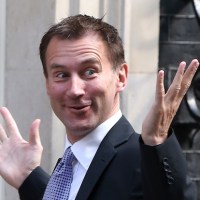
Funnily enough, MPs across the Commons were today very keen to welcome Jeremy Hunt to his position as Foreign Secretary and suggest that he might garner more praise from them than his predecessor. At his first departmental questions in the new role, Hunt also had to address one of the messes left by Boris Johnson - and explain what his priorities were for the aspect of the portfolio that Johnson resigned over: the EU. The priorities of a Secretary of State can often be divined from which questions he or she chooses to answer at these sessions, and which ones are farmed out to his junior ministers. Hunt answered questions on the mass killing of Rohingya Muslims in Burma, the detention of Nazanin Zaghari-Ratcliffe in Iran and Brexit.

How Boris Johnson will rain on Theresa May’s parade

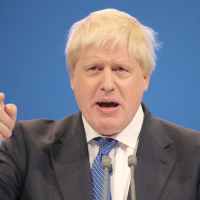
Ever since Boris Johnson resigned, Tories have wondered what he’ll do at conference. We now have an answer: he’ll address a thousand-person rally on the Tuesday, inside the secure zone. The event will be hosted by Conservative Home, the influential Tory website. This is a headache for Tory conference planners. Boris Johnson’s appearance on Tuesday, where he will reiterate his call to ‘chuck Chequers’, will overshadow everything else that is on that day. Given that Johnson’s Telegraph column comes out on Monday, there’s a good chance that he’ll be the big story of the conference for two days out of the four. This is, to put it mildly, not ideal for Theresa May as she tries to reassure Tory members about what her Chequers proposals mean.

Why did Corbyn visit Palestine when it was mourning the co-founder of Hamas?

Jeremy Corbyn is a man of peace with an unfortunate tendency to find himself in the wrong place at the wrong time with the wrong wreath – when it comes to anti-Semitism. Just last week it emerged that the Labour leader once claimed that Israel’s Prime Minister and other leading politicians compete to see 'who can kill the most' people in Palestine. Only Corbyn seems to be more relaxed about leaders who talk up killing Israelis and Americans. In the spring of 2004, the Labour leader – then a lowly backbencher – visited Palestine. It was a rather curious time for a visit given that after a series of assassinations of Hamas leaders, the mood was particularly febrile and Western visitors were thin on the ground. https://youtu.be/4vtV2yuqWTg?

Ken: Corbyn is the man to tackle Britain’s anti-Semitism problem

Labour has been embroiled in a summer long row about anti-Semitism, with no sign that the issue will be resolved any time soon. Yet according to Ken Livingstone, there is only one man for the job of tackling anti-Semitism across Britain: Jeremy Corbyn. In an interview on Sky News – in which Ken, once again, talked about Hitler – the former mayor of London had this to say: ‘I’d be prepared to bet you now 100 quid that once we get a Jeremy Corbyn government, by the end of that government, anti-Semitism, racism, homophobia will all have declined quite significantly.’ If Corbyn's attempts to resolve the anti-Semitism debate in his own party is anything to go on, Mr S isn't convinced...

Has David Davis triumphed in the battle for Brexit?

David Davis may have won. What do I mean? Well I am hearing from multiple sources that the only trade deal the EU’s lead negotiator Michel Barnier will countenance is Davis’s cherished Free Trade Agreement, what he called Canada Plus, rather than any version of May’s Chequers plan. Here for example is the debrief of an MP on the Brexit select committee chaired by Hilary Benn, who met Barnier yesterday in Brussels: “Remarkable how dismissive Barnier was of the two central pillars of Chequers - customs and common rule book for goods. It’s not a matter of how it will fare in Parliament. It won’t be agreed by the EU. We are back to Canada-style FTA”. The Brexiters on the select committee are ecstatic; the Remainers are in abject despair.

Labour NEC results: when will Corbyn’s opponents accept it’s over?

It is quite clear what today's NEC results mean for the Corbynites in the Labour Party: they've consolidated their control over the party structures. All the candidates who won were backed by Momentum, apart from Peter Willsman, who had seen the Corbynite grassroots organisation drop its support after a recording emerged of him making anti-Semitic comments. Willsman pushed moderate candidate Eddie Izzard out and will remain on the party's ruling body. Izzard and 'independent left-winger Ann Black' came 10th and 13th respectively. Less clear is the implication for that rather nebulous group of anti-Corbynites generally known as 'the moderates'.

In the cult of Corbyn, dissent will not be tolerated

The far left is preparing the ground for its coming purge of the Labour party by burning down every rational objection that stands in its way. To take the most rational objection to its plans, consider the case of a Labour MP who breaks with Jeremy Corbyn on Brexit or racism. He or she is doing nothing more than following the example of Jeremy Corbyn, who broke with the Labour whip 428 times during his decades as a backbencher. A left that reserves a special place in its demonology for ‘McCarthyism’ – the persecution of individuals for their political beliefs – should have no difficulty with Corbyn’s opponents following their consciences too. What’s sauce for the old goose.

How ordinary people are priced out of Parliament by the most expensive job interview on earth

Could you afford to go into politics? Chances are that the answer is no, unless you’ve got a spare £10,000 knocking around. In a survey that is being published later this week, I’ve found that candidates in general elections are having to stump up tens of thousands of pounds of their own money just to stand. This is not the money spent on campaigning, which is funded by the parties and donors to individual campaigns. It’s the personal expenditure that comes with having to take up to two years off work to campaign, moving to the constituency if you are not local, travelling around the constituency, attending events and so on.

Theresa May hits back at Boris

Boris Johnson's criticism of Theresa May's Brexit plan has been somewhat one-sided, with the PM largely staying quiet on what she makes of the former foreign secretary's interjections. Until now, that is. After Boris used his Daily Telegraph column this morning to say the Chequers blueprint will leave Britain with 'diddly squat', May has hit back at Boris. This morning, Downing Street said this about Boris: “There’s no new ideas in his article to respond to. What we need now is serious leadership and a serious plan.” Mr S isn't convinced this will help to calm matters in the run-up to Tory party conference...

Boris Johnson adds to Theresa May’s post-holiday blues: ‘Chequers means disaster’

There had been a vague hope in No 10 that the long summer recess would give tired and grumpy Conservative MPs some time to relax, rejuvenate and heal old wounds. Alas the break only led to more feuding and when Parliament returns on Tuesday, Theresa May comes back to a party even more divided over Brexit than it was when she set off on her walking holiday. May's old foe Boris Johnson makes the front of the Daily Telegraph with an assault on the Chequers plan.

Anti-Semitism and the far left: a brief history

Why does Jeremy Corbyn show such disdain for the mainstream Jewish community? Why does he prefer to associate with terrorist “friends” in Hamas and Hezbollah? And why does the Corbyn clique now in charge of Labour insist on diluting the internationally accepted definition of anti-Semitism? The fact is that – despite its own boasts about “anti-racism” – the far-left has had a longstanding problem with Jews, and not just with “Zionists.” This problem pre-dates 1844, when Karl Marx published On The Jewish Question; but Marx’s essay is a good place to start. In On the Jewish Question, Marx tied up Jews with capitalism: “What is the worldly religion of the Jew? Huckstering. What is his worldly God? Money....

Watch: Ken Livingstone revisits his favourite topic

In this world nothing can be said to be certain except for death, taxes, and Ken Livingstone banging on about Hitler. The former London Mayor rang up Talk radio this morning to discuss anti-Semitism in Labour, but couldn’t help bring up the German dictator at the first opportunity. He told a visibly exasperated Julia Hartley-Brewer: ‘I still get people come up to me on the street and say, ‘I’m Jewish why did you say Hitler was a Zionist?’ and I point out, of course I never said that, that’s all just this fake news’ https://twitter.com/talkradio/status/1035449775938781184?

Conservatism and the radical centre

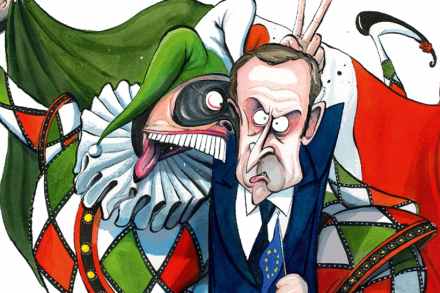
Every so often, usually on Twitter, you hear calls for a new centrist party. The Tories have gone Brexit bonkers, runs the argument, and Labour hard-left – surely most people are in the middle? And look at Emmanuel Macron: by sheer self-belief he won the presidency and leads a majority parliamentary party that did not exist three years ago. So don’t we need a new centrist force in Britain? I’m not sure that we do, and I explain why in my Daily Telegraph column today. Let’s look at Macron, and what he’s trying to do. Reject high taxes for the rich, on the pragmatic grounds that they don’t raise revenue.

Chris Williamson: Labour MPs are the intolerant ones

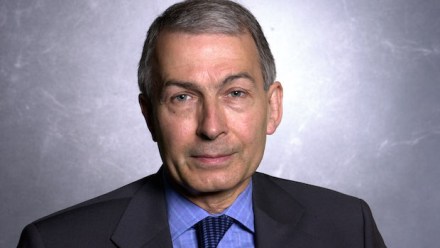
Tom Watson said that Frank Field's resignation from the Labour whip was a 'major wake up call' for the party over anti-Semitism. But it seems some Labour MPs aren't seeing things quite that way. On Newsnight last night, Chris Williamson said that there is 'intolerance' within the party – but only among his fellow MPs: 'The only intolerance that I have seen in the Labour party has been in the parliamentary party that have not been prepared to honour the democratic decisions of Labour party members.' https://twitter.com/BBCNewsnight/status/1035287277105233922?ref_src=twsrc%5Etfw Mr S is sure that message is going to go down well among Williamson's colleagues on the Labour backbenches...