Travel

Loving Las Vegas

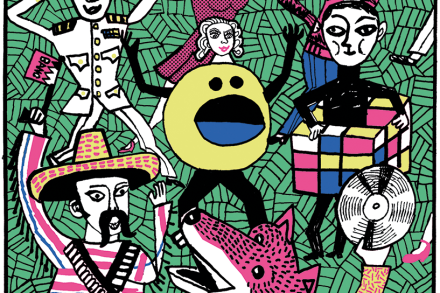
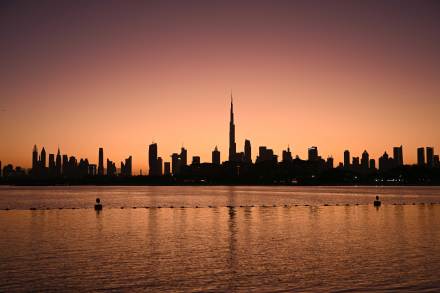
After ten hours of flying and too much bad airplane coffee, the beef carpaccio from 8 East at the Circa casino was ecstasy. Topped with potato chips, served with drops of citrus-infused wasabi crème, it would have been fabulous anytime. But nursing a cold Sapporo, stoned on exhaustion and discombobulation, I shivered in delight with every bite. Just a single piece would have been worth the flight. It was my first time in Las Vegas — my first time in the States — and I was hoping to write a meaningful story about a too-much written about place.

Vegas
Galápagos

The Galápagos evolution even Darwin didn’t foresee

Lonesome George, a Pinta Island giant tortoise, spent the latter half of his hundred years munching on cacti and roaming around the Charles Darwin Research Station on the Galápagos island of Santa Cruz. He borrowed his name from the 1950s American comedian and actor George Gobel and one of the three B-52 Stratofortresses that completed the first non-stop jet circumnavigation of the world in 1957. But the name was ultimately more fitting for the tortoise who was the last of a million-year-old species. In 1959, fishermen introduced three goats to Lonesome George’s home of Pinta Island, one of the smallest islands of the Galápagos archipelago. Just ten years later, they had multiplied to around 40,000.

Staten

Dispatch from an unloved borough

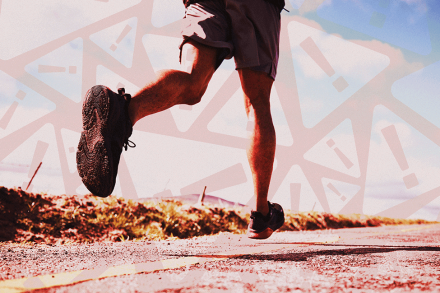
Once a year, Nick, a surgeon who lives on the Upper West Side of Manhattan, visits Staten Island. Almost as soon as he arrives, he literally runs back to where he just came from. Nick is a marathon runner — he’s done New York seven times — and like millions of similarly masochistic athletes and wannabes, he’s lined up at the mouth of the Verrazzano Bridge, the eastern edge of New York City’s least exalted borough, with the sole aim of getting back to more familiar territory as briskly as his legs can carry him. “Of course I don’t have anything against Staten Island,” he explains. “There’s just not that much of a reason to go there.” Many others, it turns out, feel the same. I moved to Manhattan just over four years ago.

Swapping aprés ski for aprés spa 

“Welcome to your thirties,” my friend Rich roared, throwing open the balcony door leading onto our hotel room’s private loggia. The sound of gushing water filled the room as I flopped, exhausted, onto the bed. The Ziller River rushed through the valley below, fast. Verdant hills stretched upwards to create a preposterously bucolic scene, practically begging for your best Julie Andrews impression, arms outstretched. I laid there, and took it in through the window. I pretended I didn’t mind that I was missing the party, Snowbombing Festival raging on in Mayrhofen town. The “Snolympics?” Didn’t sound like much fun. Pond skimming on skis, surely soggy and impractical.

Instead of stomping on the bar in our ski boots, we’d zipped home in a taxi to ZillergrundRock Luxury Mountain Resort, with high hopes

Don’t let climate activists stop you from traveling

A decade ago, when I first started contributing to the New York Times’s annual “52 Places to Go” list, the top user comments were about the destinations: Why was Calcutta chosen but not Chattanooga? This year, in a sign of the times, the most popular comments suggest that we should all just stay home to save the planet. The climate-obsessed among us are falling out of love with travel, particularly with the idea of exploring far-off places where your carbon footprint is greater. If their movement gains steam they won’t save the world, but they might well wreck the global economy and deprive themselves and others of much-needed perspectives and experiences that make the world a better place.

travel
Montréal

Montréal serves up a surprising array of off-season delights

There’s cold, then there’s winter-in-Canada cold. The kind where I’m jamming hand-warmers into my ski gloves — yet still somehow my fingers go numb — and snowflakes keep their intricate patterns as they scatter over my clothes (back home in comparatively balmy England, they’d melt instantly). But what did I expect? I’d made it my New Year’s resolution to travel off-season. Think Rajasthan in the summer monsoon, Sicily’s midwinter citrus harvest, Portugal’s Atlantic Coast when the record-breaking waves roll in come November. I’m not the only one with this idea.

goose

My first family goose hunt

It's a slow Sunday in Paducah, Kentucky, the day before our snow goose hunt. Morning Mass down the road, where the priest quizzingly asked where we were from. Brunch with my husband’s family at a cozy café. Chocolate cake with that crackly boiled icing and fresh coffee in the late afternoon at his aunt and uncle’s house. It isn’t until close to dinnertime that we pack up our bags and hit the road for the bootheel of Missouri, where we will hope to catch a few hours of sleep at our hotel before we meet our local hunting guide. About halfway through our drive, the phone rings with bad news. Our guide, Scooter, spent the day scouting and could find no signs of geese at his usual spots.

Megève’s enduring magic

Kitted out in black Givenchy, huge sunglasses blocking out the snow glare, Audrey Hepburn is lunching al fresco in the French Alps when a meet-cute with Cary Grant ensues. It’s the opening scene of Charade, filmed just over sixty years ago in Megève — the chichi winter resort for both Hollywood royalty and true bluebloods during the 1960s. Back then, Brigitte Bardot, Yves Montand and Jean Cocteau were often seen swooping down its pistes. Imagine a snow-dusted Saint-Tropez and you’re on the right track. This medieval market town was hardly destined to become a darling of the beau monde. Megève was something of a backwater (the name even translates to “village in the middle of the waters”) until 1920, when Baroness Noémie de Rothschild spotted its potential.

Megève
Finland

Mökki life and Moomin minutiae in Finland

Moomins are synonymous with Finnish life, like saunas, porridge and mökki (summer cottages) culture. The large-snouted white fairytale creatures feature in the Moomin books, which are published in nearly sixty languages. Moomin World, a theme park 100 miles from Helsinki, crawls with tourists come summer — some feat, in a country with roughly twenty-one inhabitants per square kilometer. Moomin merch is ubiquitous too; fans are cult-like in their collection of rare mugs and first editions. Every day, Tove Jansson’s iconography is inked into skin. And it’d got under mine, in a way. In my twenties, a boyfriend’s collection of paraphernalia from a Finnish former partner quelled any curiosity about Jansson’s imaginary oafs (and Finland).

Opening a bottle with… Angela Hartnett

Quizzed on how to assimilate to new cultures, travel writer and celebrity chef Anthony Bourdain once said: “Drink heavily with locals whenever possible.” The “Opening a bottle with…” series is about getting pickled with people far cooler than I am, in new places. To me, booking a ski trip at the start of the year is the ultimate luxury. With my birthday falling on the first of January, when the ball drops, I feel a sense of melancholy. As hangovers descend and diets begin, I want to carry on celebrating.  In European ski resorts, they keep the festivities going well into March. Christmas lights and religious displays stay twinkling. Fresh snow combats the winter blues. Everyone’s happy to share a bottle of good wine.

angela hartnett

The vagabond spirit of Mirleft, Morocco’s surf nook

At first, the sleepy little town of Mirleft looks like all the others on the 600-mile trek through the sands of the Sahara: half-gravel, half-concrete sidewalks, faded paint, brightly painted schools and the minaret of a new mosque jutting up toward the sky. But a mile past Mirleft’s dusty high street lie cliffs of California proportions — with swells to match. The cliffs arch down at a near forty-five-degree angle and into meaty waves rolling toward a point break. It’s here that a group of ten French and German surfers have joined up with Issam Surf School, heading down to Plage Sauvage, the beach below, in a 4x4.

mirleft
sharks

Swimming with sharks is nothing to be scared of

The small South African coastal town of Umkomaas hosts many scuba diving operations and resorts; its local reef system, the Aliwal Shoal, is one of the top fifty dive sites in the world. It contains the usual attractions like schools of tropical fish, turtles, rays and a few shipwrecks. The real attraction though — the reason people come from all over the world to this sleepy town — is to dive with sharks. Without a cage. For up to sixty minutes at a time. The Blue Ocean Dive Resort, where I stayed for a week, specializes in these dives, employing several experts to maximize the shark sightings. During my time there, I must have seen over fifty different sharks, including oceanic blacktips, bull sharks and tiger sharks.

Hogmanay in Edinburgh is a marvelous experience

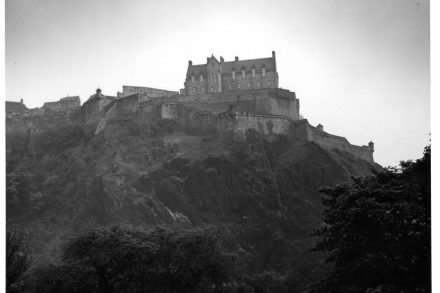
The city of Edinburgh, Scotland’s capital, really comes into its own twice a year. Firstly is August, when its streets are thronged with revelers and amateur PR types (“four stars in the Scotsman!”) promoting their wares at the world-famous performing arts festival. And then the second comes at the end of the year, during the New Year’s Eve period of Hogmanay, which sees anyone claiming long-distant Scots ancestry taking part in the revels for a day or two, just as it seems anyone in Boston on St. Patrick’s Day suddenly remembers their long-lost Uncle Padraig or Great-Aunt Shelagh. In any case, Hogmanay in Edinburgh is a marvelous experience, freezing cold aside, and best experienced from the surroundings of somewhere comfortable.

hogmanay edinburgh

How to celebrate Christmas in London

You just can’t beat London at Christmas. Unless you’re lining up to get into the Tube station (never mind onto a train) at Oxford Circus, in the pissing rain. Then you’re better off in one of those glass igloos in Finland.  When I’m in town for the holidays, I find myself returning to a few old faithfuls, with a few old faithfuls. The Zetter Marylebone Keep this gem up your sleeve for when the crowds become a little too much. A warren of sumptuous suites and a lavish, candlelit parlor awaits at dinky Zetter Marylebone hotel, just a couple of streets back from shopping mecca Selfridges. Divide and conquer last-minute shopping with Mom, then meet here at lunchtime for a swift recovery.

christmas london

War tourism is alive and well

In 2004, the BBC sent me to the Iraqi city of Karbala to report on the gathering of Shia pilgrims for the religious holiday of Ashura. American troops knew to stay well away. They were already fighting a Sunni insurgency and didn’t want trouble with Iraq’s Shiites as well. The insurgency’s leader, Abu Musab al-Zarqawi — the butcher of Iraq — had just threatened to attack “the sects of apostasy,” as he called the Shia, and as we entered Karbala, militiamen searched us for weapons. The air hummed with tension. But at breakfast in the hotel, we ran into a gaggle of backpackers: Brits and Americans. Seeing the look on my face, a blonde woman in the group told me not to worry. “Things are much calmer now in Iraq, aren’t they?

tourism
retreat

The wellness retreat reborn

Rebecca Illing’s résumé doesn’t read like your typical hotelier’s: circus school graduate, free diver, marine conservation advocate and certified death doula. So when the thirty-seven-year-old Londoner inherited a rundown guest house in Portugal’s northerly Minho region, the property was destined to be reimagined as something more than a straightforward B&B. Illing had spent childhood summers at Paço da Glória, roaming its cork oak woodlands and swimming in the nearby Lima River. But the circumstances of her return in 2020 were less idyllic. Europe was entering lockdown, and she was grieving the sudden death of her brother.

Kihnu, Estonia’s imaginary isle of women

Who could resist the opportunity to visit a women’s island? Four years ago, I read an article in the New York Times travel section about an Estonian island called Kihnu, which the Times dubbed an “Isle of Women.” Its subhead asked “What would life be like without men?” and I wanted to find out, making a mental note to visit this peculiar island — “run by women” — someday, and my opportunity came last summer as part of a trip with my wife, Jen, and our teenage sons to Finland and the Baltic countries. But Kihnu, we discovered, isn’t a women’s island, or anything close to it. Before our trip, I reread the Times piece plus similar ones before combing YouTube for Kihnu videos.

kihnu

Exploring the forgotten towns of Green Bay

In Pilley’s Island, Canada, a tiny fishing town of barely 290 people along the northeast Newfoundland Great Whale Tour route, there’s a memorial to the area’s dead. It sits on a hillside, with a view of the rocky and wooded bay on the left, and a direct line of sight to the historic church on the right. These aren’t any generic old dead people honored at the memorial, though. Nor is it a memorial for local war casualties (that’s up a small trail nearby) or to fallen firefighters (that’s in the next town over). No — this is a memorial to the people who have died in other terrible ways. The top of the memorial says only “TRAGIC DEATHS,” with small plaques naming each person with possibly a date and a single letter in parentheses to denote the manner of death.

Green Bay

Tuning in and dropping out at Gilpin Hotel

It is 7:30 a.m. and already seventy degrees in Bowness-on-Windermere. A rare, early summer heatwave. My friend Ebele and I lower ourselves into a sunken outdoor hot tub in groggy disbelief. We appear to have woken up in Utopia. Llamas and alpacas frolic yards away as we sip coffees in silence. A butterfly lands on the decking. There’s no noise but for the bubbles, until a perfect breeze ruffles the fronds of the tree that’s dappling the sunlight. The grass could not be greener, skies cerulean. This is the definition of “bucolic,” I think. William Blake’s England, plus massage jets. His pastoral poems that plagued me in university start to make more sense (plenty of lambs here, too; the local “Herdies”).

Gilpin

A culinary tour of southern France and northern Spain

If I’d known what a whole monkfish looks like, I would never have ordered it. It was only weeks later that I saw a picture of the horrid creature: small, wicked eyes, prehistoric head, skin like rusty medieval armor and a gaping mouth overflowing with jagged teeth. Truly the stuff of nightmares. We’d popped over the border from France into San Sebastián, Spain, for a bite of dinner, selecting a spot a stone’s throw from the Baroque exuberance of Santa Maria del Coro. The daily special was monkfish, and for some reason — perhaps an excess of sun that day — the image that came to mind was, inaccurately, that of the innocent red mullet. The daily special in a fishing town is bound to be fresh, so it seemed fair to give it a try.

france