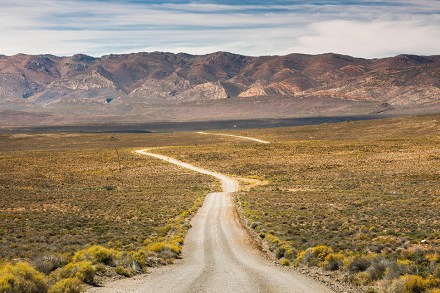
The Karoo has seen so much, but changed so little
It’s an incongruous name for a wilderness, “the Karoo.” The nursery-like sound belies the harshness of a vast, arid hinterland separating South Africa’s littoral from its grassland interior. For South Africans, the name is synonymous with bone-dry air, scented heathers, great rock formations, vast skies and even vaster sunsets. The scrubland here is so inhospitable that for centuries it insulated the southern tip of Africa from the rest of the continent. A single people — the Khoi bushmen — were adapted to its desicated conditions: Karoo is their word for “waterless land” that has come down to us as its modern name. In the nineteenth century, the pressures of the outside world began to weigh on this hardy time capsule.