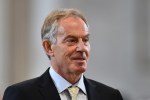
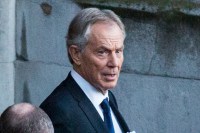
Tony blair

Jeremy Corbyn has decided to campaign like New Labour

From our UK edition

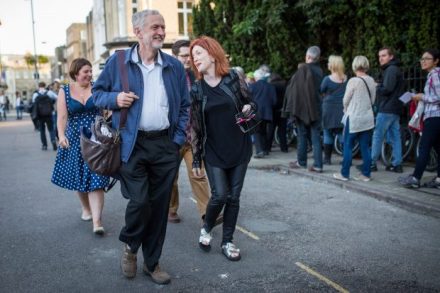
Jeremy Corbyn has today announced the launch of the Labour Organising Academy, a new body designed to look at methods of turning the party’s newly engorged membership into an effective campaigning body. In the pamphlet he produced, Corbyn observes that ‘Labour is now Europe’s biggest political party’ and that the ‘party’s membership will transform how Labour campaigns’. The launch of this might feel somewhat hasty. After all, the leadership campaign won’t be concluded until the announcement at party conference in Liverpool on 24 September – but it represents a big change for Corbyn.
George Galloway is terrific in this meticulous demolition of Tony Blair

From our UK edition

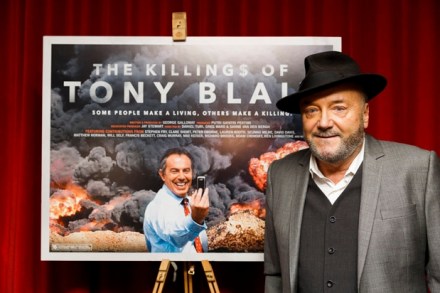
I had been wondering where Gorgeous George Galloway might pop up next. Defenestrated from his seat in Bradford West, humiliated in the London mayoral elections — where he received 1.4 per cent of the vote — and no longer apparently an attractive proposition to the reality TV producers, his public life seemed sadly to be drawing to a close. But nope, here he is with a film about the person all left-wing people hate more than any other, Tony Blair. It’s a good film, too, in the main. The Killing$ of Tony Blair was partly crowdfunded and it may well be that the only people who watch it will be those who forked out to have it made.

Blair witch project

From our UK edition

I had been wondering where Gorgeous George Galloway might pop up next. Defenestrated from his seat in Bradford West, humiliated in the London mayoral elections — where he received 1.4 per cent of the vote — and no longer apparently an attractive proposition to the reality TV producers, his public life seemed sadly to be drawing to a close. But nope, here he is with a film about the person all left-wing people hate more than any other, Tony Blair. It’s a good film, too, in the main. The Killing$ of Tony Blair was partly crowdfunded and it may well be that the only people who watch it will be those who forked out to have it made.

Diamond geezers

From our UK edition

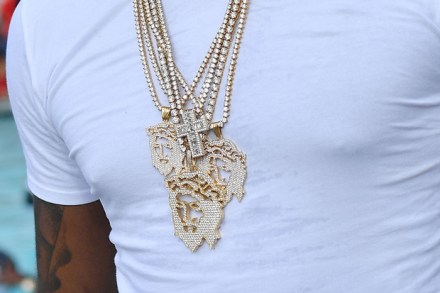
Ring a ding-ding — here comes the he-bling. Tony Blair started it. The war, that is. On good taste. This summer he was photographed on holiday relaxing in shark-print trunks and gangsta sunglasses under a blue Mediterranean sky. The former prime minister was on a yacht off the coast of Sicily but — uh oh! — what in the name of sunken treasure was that monstrosity moored between his moobs? Closer inspection revealed it to be a giant gold cross, gleaming like a gilded anchor submerged in greying seaweed. Look at the size of that thing! Perhaps it comes in useful for skewering sardines off the grill at a beach barbecue? Whatever its function, it succeeded in making him look a bit shifty, like a half-baked mafioso, a Tony Mezzo-Soprano.

The Spectator podcast: The memory gap. Is technology taking over our minds?

From our UK edition

Smartphone ownership is predicted to hit 2.5 billion by 2019 and 60 per cent of internet traffic now comes through our mobile devices. But does the world becoming more reliant on handheld gadgets to guide us in day-to-day life come at a price? In her cover piece this week, Lara Prendergast claims that we are outsourcing our brains to the internet and that technology is taking over our minds. On this week's Spectator podcast, Lara is joined by Isabel Hardman, Charlotte Jee, Editor of Techworld, and Professor Martin Conway, head of psychology at City University.

Lloyds boss fails to practise what he preaches

From our UK edition

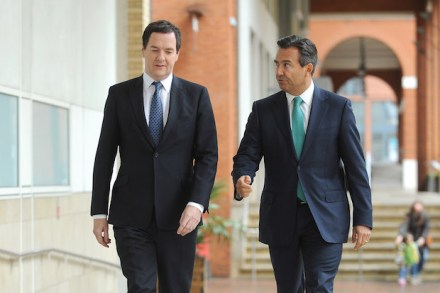
Today the Sun have splashed on the revelation that Antonio Horta-Osorio, the married boss of Lloyds Bank, managed to combine business and pleasure on a recent trip a banking conference in Singapore. Horta-Osorio is alleged to have met his mistress Dr Wendy Piatt -- a former special adviser to Tony Blair -- at the five-star Mandarin Oriental hotel, reportedly even using his state-owned Lloyds Bank address for the booking. While it is currently unclear whether the £4000 hotel bill was paid from his own money or expenses from the bank -- which is nine per cent owned by British taxpayers -- Mr S suspects he is on a sticky wicket either way.

Who can lead Labour?

From our UK edition

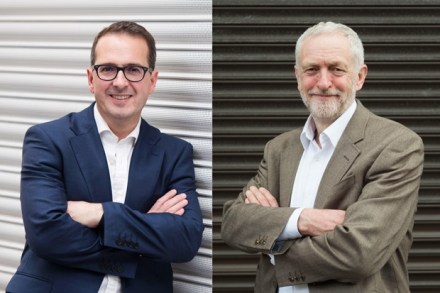
Westminster prefers to concentrate on one drama at a time. That is why the old rule of thumb was that only one party leader could be under pressure at any given moment. Recent events have upended that convention. The Brexit vote precipitated leadership crises for more than one party. But the spectacle of the Tory leadership election has rather overshadowed the fact that Labour is having its own leadership contest. The contest between Jeremy Corbyn and Owen Smith, the party’s former work and pensions spokesman, will run all summer. In Labour circles, Corbyn is regarded as the clear favourite. Once again, the hard left appears to have succeeded in getting far more people to sign up to Labour’s registered supporter scheme than the so-called moderates have.

Don’t knock ‘secret deals’. We’ll need one soon

From our UK edition

As a founder member of the Guild of Blair-Bashers, someone who reacted strongly against him from our first encounter at dinner when he was only an opposition spokesman, as a commentator who railed against the invasion of Iraq the moment the idea was mooted and right through to the end, and as a journalist who throughout Tony Blair’s time at No. 10 beat my tiny fists against the imposter I always thought him to be, perhaps I may deserve your attention now, after Chilcot, that I have something to say in Mr Blair’s defence? I don’t believe that in any important way the former Prime Minister lied. And I don’t agree there would have been anything wrong with his giving secret undertakings to the President of the United States.

Themistocles vs Tony Blair

From our UK edition

Tony Blair has excused himself for the Iraq war by saying that he did what he believed was right. But no one was suggesting that he had done what he believed was wrong. The charge was a matter of integrity: that he deceived Parliament and turned a blind eye to the evidence on weapons of mass destruction. The Athenians knew a sharpster when they saw one. The historian Diodorus described how in 477 BC Themistocles, a man admired by the Athenians but known to be something of a con man, conceived of a plan to turn Piraeus, at that time a rocky outcrop, into a full-blown commercial and military harbour.

Long life | 14 July 2016

From our UK edition

When you are recovering from a stroke, you spend much of the time asleep. But when you are not sleeping, you are told that the most important thing you have to do is avoid stress. All doctors agree that stress is the main impediment to recovery. But how can you possibly protect yourself against it? The causes of stress can creep up on you from anywhere without warning, and there is nothing you can do about it; and lately I have been bombarded by shocks. I was one of the ignorant for whom the victory of Brexit in the referendum was itself a shock, but this also set in train a whole bunch of further assaults on the nervous system.

‘She doesn’t do likes’

From our UK edition

As Tory MPs gathered at St Stephen’s entrance in Parliament to await their new leader on Monday afternoon, a choir in Westminster Hall began to sing. The hosannas spoke to the sense of relief among Tory MPs: they had been spared a long and divisive nine-week leadership contest. A period of political blood-letting brutal even by Tory standards was coming to an end. The United Kingdom would have a new Prime Minister. More than relief, there was hope for the bulk of MPs who had previously not been marked out for advancement. Theresa May’s accession shows that the narrow rules which were thought to govern modern British politics are not hard and fast. May is not one of the shiny people. She isn’t a member of a gilded political set.

The scapegoating of Blair is excessive

From our UK edition

Blair’s great mistake was his desire to believe the best of America. It must know what it’s doing in invading Iraq, he thought. And in 2002, for once, this mighty superpower was hurt, needy – he felt needed by the leader of the free world. Which must be an intoxicating experience. Many of the rest of us shared in this basic mistake, this assumption that this generally benign superpower should be trusted. It’s an assumption bolstered by hundreds of films in which American power saves the day. And it’s an assumption largely backed up by history: Western Europe has been made safe by American power, for many decades. Yes, he was at fault, for presenting flawed, biased intelligence to parliament, for failing to demand assurances about the post-invasion plan.

The shame of Iraq

From our UK edition

‘If it falls apart, everything falls apart in the region’ — Note from Tony Blair to George W. Bush, 2 June 2003.   Instead of asking why we fought the war, we should ask why we lost The extraordinary length of time that we have had to wait for Sir John Chilcot’s report into the 2003 invasion of Iraq has not made the end result any more satisfying. For some, nothing less than the indictment of Tony Blair on war crime charges would have sufficed. As for Blair himself, and many of those who surrounded him when the decision was made to remove Saddam Hussein from power, they will go on believing until their dying day that not only was the war just, but there was nothing much wrong with the way in which it was sold to the public and to Parliament.

MPs and DTs

From our UK edition

In 1964, a newly elected Labour MP was put in charge of the House of Commons kitchen committee. (An unpromising start to a review, I appreciate, but bear with me.) His idea of selling off the House’s rather splendid wine cellar duly appalled some MPs, but was accepted as a useful money-making scheme. Only later did it emerge that he’d bought/ripped off a collection of the best bottles for himself at a bargain price, and that this was not untypical behaviour — because the Labour MP was Robert Maxwell. Order, Order! is packed with memorable tales like this.

Tony Blair’s rumination over his own ‘good faith’

From our UK edition

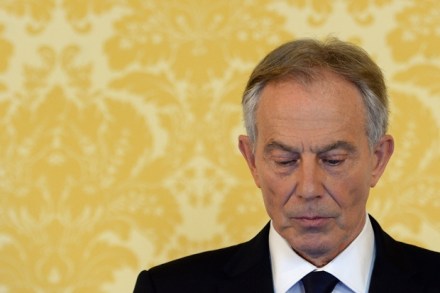
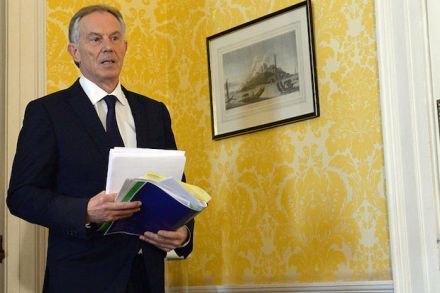
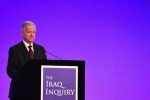
Tony Blair appeared emotional, sounded hoarse, and constantly fixated upon his belief that he acted in ‘good faith’ over Iraq when he responded to the Chilcot report this afternoon. The former Prime Minister spoke or took questions for two hours, and started by saying that he accepted ‘full responsibility, without exception and without excuse’. But he also made clear that he disagreed with Chilcot’s findings that the decision to invade Iraq could have been delayed. The key feature of the long press conference, though, was Blair ruminating constantly on whether he had acted in good faith when taking the decision to go to war.

Blair isn’t a liar, he’s a genuine believer – which made him so dangerous

From our UK edition

After a seven year wait, the Chilcot Report has come back with some quite damning conclusions about the build-up to the 2003 invasion, and the lack of planning for post-war Iraq. I think we've certainly learned our lesson about not changing a country's entire political set up without a credible alternative in place - that will never happen again, thank God. I'm particularly interested by one note Tony Blair sent to George Bush on March 26th, 2003, a week before the invasion, in which he said the 'fundamental goal' of the war should be to create a new 'world order'. 'This is the moment when you can define international priorities for the next generation – the true post-Cold War world order.

Was ‘the deadly Mail’ right after all on Iraq, Michael Gove?

From our UK edition

Last week the Daily Mail endorsed Theresa May as the next Tory leader. The declaration took many by surprise as not only was it very early in the campaign to come out for a candidate, it had been thought that the paper might opt for Michael Gove -- after his wife Sarah Vine suggested Paul Dacre favoured him in a leaked email. So, why did Dacre snub Gove just a day after he announced his leadership ambitions? While some have taken it to be a sign that the Daily Mail editor was unimpressed by the manner in which the Justice Secretary had turned on Boris Johnson, could any ill-feeling run deeper than that? In 2004 when Gove was Saturday editor of the Times, he penned an article for The Spectator about Dacre and the Daily Mail.

The Chilcot report has exposed Blair’s real crime: failure to prepare

From our UK edition

'If it falls apart, everything falls apart in the region' Note from Tony Blair to George W Bush, 2 June 2003. The extraordinary length of time that we have had to wait for Sir John Chilcot’s report into the 2003 invasion of Iraq has not made the end result any more satisfying. For some, nothing less than the indictment of Tony Blair on charges of war crimes would have sufficed. As for Blair himself, and many of those who surrounded him when the decision was made to remove Saddam from power, they will go on believing until their dying day that not only was the war just, but there was nothing much wrong with the way in which it was sold to the public and to Parliament.

‘I will be with you, whatever’: What Chilcot tells us about Tony Blair

From our UK edition

The Iraq Inquiry report is utterly scathing about Tony Blair. It paints a critical picture of his sofa government, in particular the way in which that government approached planning and preparation for Iraq without Saddam Hussein, and his ‘certainty that was not justified’ in presenting the severity of the threat posed by Iraq’s weapons of mass destruction to Parliament. The Prime Minister also appeared more concerned about the politics of the military action than its detail, and failed repeatedly to ensure that the relevant ministerial oversight and Whitehall resources were directed to the conflict. And he seemed unable to challenge or disagree with the US when necessary.