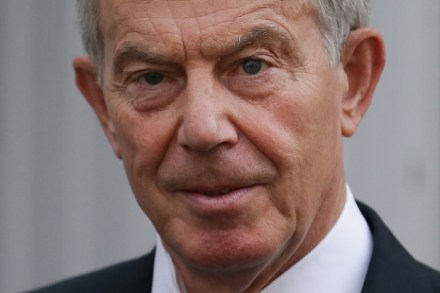
Tony blair

How the UK messed up Iraq: what the Chilcot Inquiry says about post-conflict planning

From our UK edition

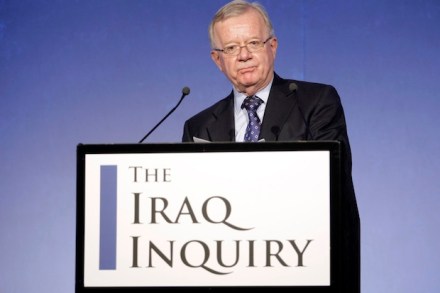
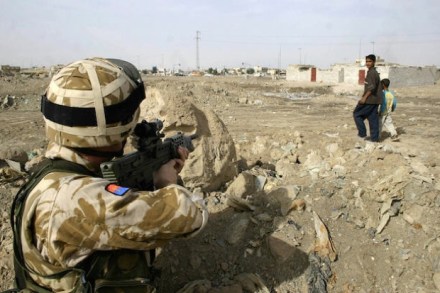
The Iraq Inquiry dismisses claims that the aftermath of the invasion could not have been foreseen. It describes the planning and preparations for the country after the fall of Saddam Hussein were ‘wholly inadequate’. In his statement, Sir John said that ‘despite explicit warnings, the consequences of the invasion were underestimated’. The report details both an awareness of the inadequacy of plans and a marked lack of effort from Whitehall. It says: ‘The scale of the UK effort in post-conflict Iraq never matched the scale of the challenge. Whitehall departments an their ministers failed to put collective weight behind the task.
Chilcot slimmed down: what you need to know

From our UK edition

The long-awaited Chilcot report has finally been published today. It comes during a very tumultuous time in British politics - and while its publication was always going to be fractious, it remains to be seen how the Tories - and more interestingly, Labour, use it to their advantage. The 12-volume report, which is 2.6 million words long and can be found here, will be dissected over the coming days, but here's a quick summary of some of the key statements from it: Key points The report concludes that the UK chose to join the invasion of Iraq before the peaceful options for disarmament had been exhausted. Military action at that time was not a last resort.

So much for education, education, education

From our UK edition

‘Your old man’s barking!’ I remember hissing indignantly at my then best friend Toby Young way back in the 1980s after his father, Michael, had spent the evening patiently explaining his famous 1958 essay, The Rise of the Meritocracy, over ‘supper’ at the somewhat grand family home in, of course, Islington. I’d obviously been thinking about something more pressing all those times we’d discussed the classic text in GCSE Sociology — probably about which order I’d ‘do’ Pan’s People in, should the opportunity arrive in suburban 1970s Bristol — but of course I’d presumed that ‘Lord’ Young (dead giveaway) would have favoured the rise of a meritocracy, being a man of humble origin himself.

The Spectator podcast: Brexit, and the return of political lying | 28 May 2016

From our UK edition

To subscribe to The Spectator’s weekly podcast, for free, visit the iTunes store or click here for our RSS feed. Alternatively, you can follow us on SoundCloud. Are David Cameron and George Osborne using the same techniques of deceit deployed by New Labour in the run-up to the Iraq war? In his cover piece this week, Peter Oborne argues that's just what is happening. He says that in their EU campaign, the Chancellor and Prime Minister have put dirty tricks back at the heart of government. But Matthew Parris in his column says that in politics there’s no point complaining about being lied to. That’s the cry of the bad loser. Both Peter and Matthew join Fraser Nelson on the podcast.

The Spectator podcast: Brexit, and the return of political lying

From our UK edition

To subscribe to The Spectator’s weekly podcast, for free, visit the iTunes store or click here for our RSS feed. Alternatively, you can follow us on SoundCloud. Are David Cameron and George Osborne using the same techniques of deceit deployed by New Labour in the run-up to the Iraq war? In his cover piece this week, Peter Oborne argues that's just what is happening. He says that in their EU campaign, the Chancellor and Prime Minister have put dirty tricks back at the heart of government. But Matthew Parris in his column says that in politics there’s no point complaining about being lied to. That’s the cry of the bad loser. Both Peter and Matthew join Fraser Nelson on the podcast.

Brexit, and the return of political lying

From our UK edition

Sir John Chilcot’s report into the Iraq invasion, due to be published on 6 July, is expected to highlight the novel structure of government created by New Labour following its landslide victory of 1997. As Tony Blair started to make the case for war, he began to distort the shape and nature of British government in several ways — the most notable being the deliberate debasement of the traditional idea of a neutral, disinterested civil service. Under Blair, civil servants were told to concern themselves less with the substance than the presentation of policy. They were informed that their loyalty lay more with the government of the day, less with the British state. This had dramatic effects.

The power of song

From our UK edition

You might not think that the Eurovision Song Contest (screened live from Stockholm tonight) could have any connection with how we might choose to vote in the coming referendum. Surely it’s just a string of naff pop songs stuck together with fake glitter and a lot of false jollity? The songs are uniformly terrible, the show so overproduced it’s impossible not to mock its grandiosity, the idea that it conjures up the meaning of Europe laughably misplaced. But in a programme for the World Service that caught my attention because it sounded so counterintuitive, Nicola Clase, head of mission at the Swedish embassy in London, tried to persuade us otherwise.

At last! The Chilcot Report into the Iraq war will be published

From our UK edition

At last. We now know that the long-awaited Chilcot Inquiry report into the Iraq war will be published on July 6th. Writing to the Prime Minister, Sir John Chilcot said today: ‘National security checking of the Inquiry’s report has now been completed, without the need for any redactions to appear in the text. I am grateful for the speed with which it was accomplished.’ Given how long the report has taken, it’s probably the first time we’ve heard the word ‘speed’ associated with the Chilcot Inquiry. The wait for its findings has been tremendous: more than seven years or some 2,579 days since Gordon Brown set it up in June 2009. It’s also cost more than £10.

The Jezza effect

From our UK edition

Corbyn the Musical feels like it comes from the heart. Did the writers live through the 1970s when the hard-left was full of hope and confidence? Socialists then genuinely believed they could see off capitalism (which seemed in its death throes anyway) and replace it with a happier and more equal world. The show takes that objective seriously and attacks it with style, wit and affection. Young Jezza is portrayed as a sweet-natured bumbler entranced by an ideology he barely understands. He expresses his political dreams in terms of manhole covers and allotment vegetables. With his racy girlfriend, Diane Abbott, he sets off on a motorbike tour of East Germany, which they both regard as a communist paradise.

The politician’s daughter

From our UK edition

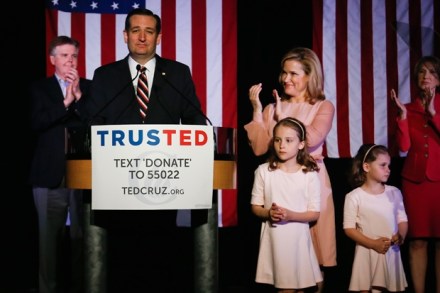
Like millions of non-Americans hooked on the US election, I’m backing someone even though I don’t have a vote. I love Cruz and I’m not ashamed to say it. I’m not talking about the oleaginous Ted, but Caroline, his seven-year-old daughter. Caroline is that rare thing in politics — an actual human being. Her eyes glaze over in campaign videos as she’s forced to deliver a succession of facile lines. She ruins coordinated photocalls by making bunny ears behind her dad’s head and refusing to hug him for the cameras. She slumps, listening to endless mind-numbing speeches at never-ending rallies, very obviously bored out of her mind. She is the antithesis of Chelsea Clinton — so primped, every bit as ruthless as her mother.

Could a yoghurt defeat David Cameron?

From our UK edition

I do not know if it has officially been measured, but my guess is that Christine Shawcroft, a member of Labour’s National Executive Committee, has an IQ of somewhere in the region of six. This would put her, in the global hierarchy of intelligence, directly between one of those Activia yoghurts women eat to relieve constipation and some moss. I’m sure Christine would argue, perhaps forcibly, that intelligence is an overrated, elitist concept and that no store should be put by it. Judging people by whether they are too thick to breathe in and out fairly regularly is discriminatory.

Labour’s former election star distances himself from Jeremy Corbyn

From our UK edition

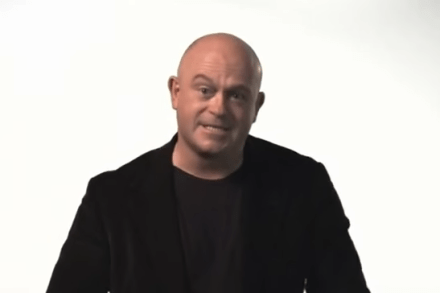
In 2010, Ross Kemp appeared in a party political broadcast urging the public to vote for Labour in the General Election. In this, the EastEnders actor, who plays Grant Mitchell in the BBC soap opera, warned the nation against voting for David Cameron: 'It only takes around 60 seconds to cast your vote. 60 seconds to protect the economy, 60 seconds to protect your jobs, 60 seconds to protect the services your family relies on. And a lot is at stake during those 60 seconds, David Cameron and George Osborne would cut child credits and tax funds. They would put police numbers and schools at risk. With George Osborne at the helm, we would risk driving us straight back into recession by taking billions out of the economy at the wrong time.

Alastair Campbell is confronted by his namesake: ‘have you got any idea what my life has been like?’

From our UK edition

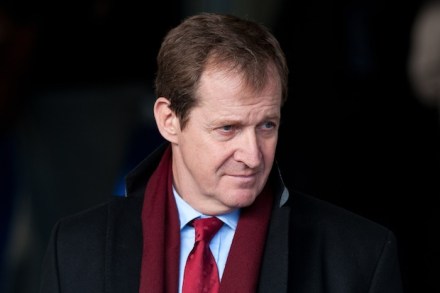
Although Alastair Campbell no longer works in politics, he remains a divisive figure in Westminster thanks to the reputation he earned as Tony Blair's spin doctor. During this time, Campbell is said to have been instrumental in using spin to win parliamentary approval for Blair's call to invade Iraq. Still, Campbell appears to think that it's about time people got over any ill-feelings towards him as a result of this. Speaking at Portland's Rising Stars party, Campbell gave a speech to the spin doctors of tomorrow.

Chris Bryant brings Blair into the Brexit debate. What will Corbyn say?

From our UK edition

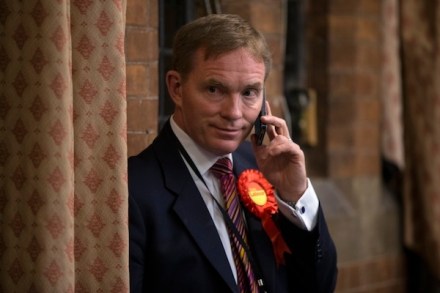
Under Jeremy Corbyn, the Labour party has been rather quiet when it comes to fighting for Britain to remain in the EU. Happily, Chris Bryant got the chance to put the pro-EU argument forward at last night's Great Brexit debate, organised by the University of London Brexit Society. Sitting on a panel alongside SNP MP Stephen Gethins, Bryant did his best to convince the pro-Brexit speakers -- who included Jacob Rees Mogg and Peter Lilley -- and audience members why they ought to reconsider their position. To highlight the 'confusion' surrounding the referendum, Bryant kicked things off with an anecdote about a former Labour leader who has gone out of fashion of late.

Whatever next?

From our UK edition

‘Ah, Jeremy,’ remarked Tony Blair at a smart dinner party in Islington not long before he became prime minister, ‘he hasn’t made the journey.’ As it turned out, this was something of an understatement. And yet here we are, 20 years on, and the Right Honourable Jeremy Corbyn is leader of Her Majesty’s Opposition. It is as if New Labour never happened. You couldn’t make it up. How do we explain the miraculous rise of a man who, before he emerged blinking into daylight from the political shadows, had made not the merest ripple on the national consciousness? Who, despite more than 30 years in parliament, had rarely featured in the public prints or seen the inside of a television studio?

PMQs sketch: Kamikaze Creasy

From our UK edition

The referendum is slowly (very slowly) breaking up Cameron’s cabinet. It’s put him in a weird mood. Yesterday he was striding about in shirt-sleeves like a bogus realtor selling flats on the moon. At PMQs today he was calmer and prepared for some rough weather. It failed to materialise. Jez We Can (Do a U-turn on Europe) didn’t want to discuss the In-Out decision in case viewers spotted that his love of Brussels is a mere summer crush dating from his election as Labour boss. Previously he was a committed Europe-nobbler. With his mentor, Tony Benn, he used to trudge along to every anti-EU meeting available. Alas, no one noticed. And no one cared.

Jeremy Hutchinson discusses his ‘short fling’ with Margaret Thatcher

From our UK edition

As the oldest living peer in the Lords at the grand age of 100, Baron Hutchinson of Lullington has a name that commands respect. While the QC stood as the Labour candidate in the constituency of Westminster Abbey in 1945 during which he canvassed 10 Downing Street, Jeremy Hutchinson is known for his illustrious career as a criminal barrister during which he defended the likes of Lady Chatterley and Christine Keeler. However, reminiscing about his life at the Oldie of the Year lunch where he was awarded the top gong, Hutchinson suggested that he may not be as honest and noble as people like to think.

Keith Allen: Corbyn is drawing Blairite disease out of the Labour party

From our UK edition

Although Jeremy Corbyn is facing calls from Michael Dugher to step down in 99 days unless he proves himself, the Labour leader can take heart that not everyone is against him. In fact in a Sunday Times interview, Keith Allen professed his love for the man of the moment. The comedian says Corbyn is 'drawing Blairite disease out of the Labour party': 'Jeremy Corbyn… love him. Right person, right time. He’s like a poultice, drawing Blairite disease out of the Labour party. Like those f------ who just resigned. Where are this generation’s Dennis Skinners and Tony Benns?' What's more, contrary to popular opinion -- and poll ratings, Allen says Corbyn is making 'the Tories look stupid': 'I’ve been watching Corbyn and he knows what he’s doing.

Is George Osborne destined to be a lame tribute act for proper Labour politicians?

From our UK edition

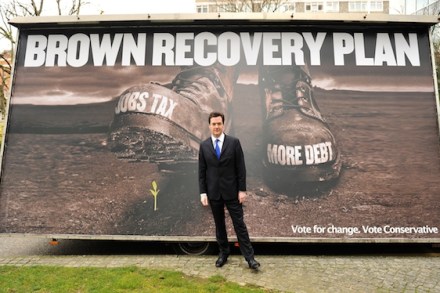
Claiming credit for things that are nothing to do with you is where trouble starts in politics. You can claim that you have abolished ‘boom and bust’, even when occasionally qualified as ‘Tory boom and bust’, but the economy will disprove you – as Gordon Brown spectacularly found out during the Global Financial Crisis. George Osborne has, of course, mimicked Brown from the outset. He has promised deficit reduction he has never yet delivered, and a rebalancing of the economy that has proved to be just so much hot air. Both of these are unnecessary, self-inflicted injuries reminiscent of Brown. On Monday, Osborne and Bill Gates announced a fund of billions to eradicate malaria.

Our leaders’ suicidal urge to sex it up

From our UK edition

It has been over a month since Parliament voted to bomb Isis in Syria, yet in that time there have been fewer raids than there are Lib Dem MPs. A flurry of three attacks took place immediately following the vote on 1 December, but since then there has been only one — by an unmanned Reaper drone on Christmas Day. And even that only ‘probably’ killed some Isis guards at a checkpoint. The three earlier manned missions had focused on an oil field that a US military spokesman later described as having previously suffered ‘long-term incapacitation’ at the hands of the US air force.