Theresa may

The race to secure the Olympics

G4S’ security arrangements for the Olympic games are turning into the story that keeps on giving, which is a good thing for journalists only, given the opening ceremony is just weeks away. The headlines this morning aren’t just about the ‘Olympic chaos’ that Theresa May tried to address when she made a statement to the Commons yesterday, but contain more revelations: staff failing to notice dummy explosives during test exercises, 18 and 19-year-old ‘yobs‘ being recruited to fill the spaces, and the firm not being penalised for failing to recruit enough staff. That last revelation is awkward for May, as she implied yesterday that there was a chance G4S could

Winsor — the outsider

In nominating the lawyer and former rail regulator Tom Winsor as her choice to be the next chief inspector of constabulary, the home secretary has stoked more discontent among the ranks of the Police Federation. Not only is he the first non-police officer ever to be nominated to the role, but he is also the author of a bold review of pay and conditions that made long-overdue recommendations to modernise the police workforce. For this reason alone, the Police Federation is dismayed by the nomination, and MPs on the Home Affairs Select Committee (meeting today) may yet try to block him. But the appointment is likely to be approved, and

Theresa May and the right to family life

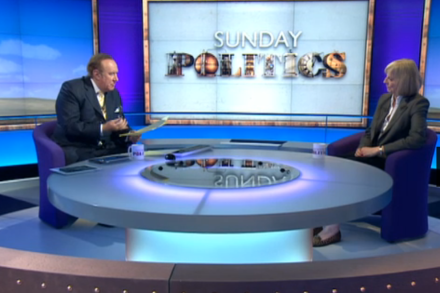
Theresa May has been in the news recently, as she introduces plans to stop spouses coming to Britain unless they have savings of £18,000 and an additional £2,400 for each foreign born child they bring with them. The Home Secretary told Andrew Marr earlier this morning:  ‘It is important that we say you should be able to support yourselves and not be reliant on the state.’     She also reiterated her intention to stop foreign prisoners, whose family live in Britain, from using article 8 of the European Convention on Human Rights, which includes the right to ‘private and family life’, to resist deportation. She is going call a

Post-Jubilee, it’s back to a new European reality

As the Jubilee celebrations draw to a close, attention once more returns to events in Europe. There’s a distinct sense among politicians, and especially coalition ministers, that what is happening there will change British politics in a huge way. As one senior MP said to me over the weekend, if a country leaves the Euro then the economic crisis that follows will reset the rules of the politics.   Measures that would have been deemed impossible six months ago will suddenly be on the cards. We’ve already seen a flash of this with Theresa May’s suggestion that the freedom of movement across the European Union could be suspended in the

A shift in the government’s thinking about the Eurocrisis

Theresa May’s suggestion that Britain could suspend the free movement of people in the event of a Eurozone break up is a reminder of just how transformative an event the falling apart of the single currency would be. The Home Secretary is a cautious politician who picks her word carefully, so when she says that the government ‘will be doing contingency planning’ about the immigration implications of a Eurozone break-up you know it is serious. One of the things that makes this such an intriguing development is that it suggests a shift in government thinking on the severity of the crisis that could be coming. A few months ago, a

May backs gay marriage

So Theresa May has voiced her support for same-sex marriage, joining Lynne Featherstone, Yvette Cooper and the PM’s Parliamentary Private Secretary Desmond Swayne in recording an Out4Marriage video. Of course, we shouldn’t be too surprised. It’s May’s own department that’s put forward the proposals for same-sex marriage, with a foreword signed by both the Home Secretary and Featherstone saying: ‘We do not think that the ban on same-sex couples getting married should continue. Put simply, it’s not right that a couple who love each other and want to formalise a commitment to each other should be denied the right to marry.’ With Cameron strongly in favour, and the government committed

ASBOs weren’t much cop, but what about their replacement?

Brace yourselves for a new crime wave sweeping across the country — the government is doing away with ASBOs. Or, rather, don’t. The truth about ASBOs is that they were rather less significant than Labour would have you believe. As reports such as this one from Policy Exchange suggest, they’ve probably cropped up more frequently in newspaper articles than they have in real life. Only 20,335 ASBOs have been issued to date, covering less than one per cent of all incidences of anti-social behaviour. What’s more, there’s little evidence to suggest that those ASBOs that were issued made much difference. As the graph below shows, 57 per cent of all

The case for ignoring Strasbourg

If Theresa May loses her job over this kerfuffle over Abu Qatada’s appeals deadline, would anyone in the Cabinet be safe? If you were to rank the blunders this government has made, it wouldn’t even make the top 20. The Home Office is notoriously dysfunctional, and the real surprise is that May has made it thus far with only two or three major skirmishes. It’s fun for her enemies to claim she made a basic mistake, but it’s not clear-cut. In the weird world of European law, the number of days in a three month period can vary depending on things like the estimated postal time between London and Luxembourg.

ECHR reform won’t happen

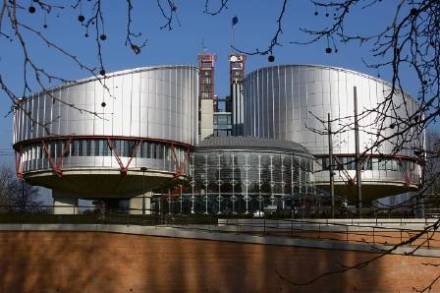
In Westminster, the debate about the European Convention on Human Rights and the European Court of Human Rights is all being seen through the prism of the Abu Qatada case. Undoubtedly, the whole debate over how many days had elapsed is something Theresa May and the Home Office would have liked to avoid. It has also come at a particularly unfortunate time for the government when people are prepared to believe it has been incompetent even when it hasn’t been. But what, I expect, is more significant in the long term than Abu Qatada is the fact that the Brighton conference on the ECHR is not going to deliver the

After Abu Qatada

It has been a mixed news day so far as Britain’s relationship with the ECHR is concerned. There’s been the good stuff: Abu Qatada has been arrested and is set to be deported, with the government now confident that he can be shipped to Jordan without provoking the ire of Europe’s legal class. And then there has been the less than good stuff: according to the Times, which has a leaked document in its possession, Britain’s official proposals for reforming the ECHR have been diluted ahead of the Council of Europe meeting in Brighton this week. This outcome, as I suggested back in February, is hardly surprising — but it

What today’s Abu Hamza ruling means

The European Court of Human Rights has ruled that five terror suspects, including notorious Islamist cleric Abu Hamza, can be deported to the United States — a decision welcomed by both David Cameron and Theresa May. Last year, Hamza and three of the other men appealed to the ECtHR against extradition to the US on a whole host of grounds — including that they might face the death penalty and that their trials would be prejudiced. The Court found almost of all their grounds inadmissible, but allowed the appeal to proceed on two grounds: that they would be held in the ADX Florence ‘super-max’ prison and would face extremely long

What is being done in the name of ‘national security’?

The liberty versus security debate has returned to Westminster, and it’s just like old times. David Davis is having great fun beating up the government, except this time it’s a Tory-led one. And as so often, Davis has a point. Much rot is spoken in the name of ‘national security,’ which can be used by the right as ‘health and safety’ is used by the left: a verbal trump card, to win any debate and justify any policy. So it has proved with this bun fight over the snooping powers about to go through parliament. It has split the coalition, and even the Tory party. In my Telegraph column today,

Web surveillance plan divides the coalition

The government’s under fire from members of both coalition parties over its plans to extend the state’s investigatory powers to cover new means of communication. Currently, under section 22 of the Regulation of Investigatory Powers Act 2000 (RIPA), public bodies can obtain communications data without the need of a warrant or any external authorisation. This gives them access to a wide array of information including the location, time, date and duration of a phone call or the IP address from which an email was sent. Over 100 public bodies — from the Home Office and local councils to the Food Standards Agency and the Charity Commission — can make use

May’s quiet revolution

Do you remember the great parliamentary battle over privatisation of police services? Me neither, which is why Theresa May, the Home Secretary, is proving a better minister than Andrew Lansley, the Health Secretary. The drive for savings in the police budget is leading two constabularies, West Midlands and Surrey, to outsource certain services. The Guardian has got hold of the tender documents and splashed with the story today. Yvette Cooper is angry — but, crucially, there’s nothing she can do. Theresa May doesn’t need legislation to enact this reform; it’s not even being done under orders of the Home Office. This is two police forces who would rather save money

The implications of today’s border security report

Today brought closure of a kind to last year’s border fiasco (which I covered for Coffee House here and here), with the publication of the report by the Chief Inspector of the UK Border Agency, John Vine. On first reading, there is no ‘smoking gun’ which would trigger a ministerial resignation. The report does find that, in early 2011, the immigration minister Damian Green had authorised the relaxation of one of the checks at the centre of the controversy: ‘Secure ID’, which verifies the fingerprints of foreign travellers with visas. But the report also finds that Green’s authorisation should have been superseded by later instructions from the Home Secretary Theresa

Cameron’s ECHR problems won’t end with a Qatada deal

The news that Theresa May will fly to Jordan to continue talks about Abu Qatada shows how close the government thinks it is to a deal with the Jordanians that might satisfy the European Court of Human Rights and allow his deportation. One government source explained to me earlier that the problem is the Jordanians are offended by being asked to provide these guarantees about a fair trial and no evidence being obtained by torture. For this reason, there needs to be a fair amount of diplomatic stroking. A deal with Jordan on Abu Qatada is becoming increasingly necessary if Cameron is get out of this bind on the ECHR,

Trigger happy policy

There have been signs recently that ministers are slipping back into the policy-by-headline mindset that defined the last Labour government. We’re seeing the sorts of policies that lack evidence, are launched without any detail on timetables or implementation, and are usually geared around an initiative — if possible, a pilot or a local trial that is short-lived and guaranteed not to alter very much. Today the Home Office brought us a classic of the kind: the ‘community trigger’ to address anti-social behaviour. The Home Secretary’s motivation is sincere, but the method — devised by her officials — is deeply flawed. With what detail we have, we know that it will be piloted

The Home Office still hasn’t cleared up its border issues

Remember Theresa May’s border skirmish against Brodie Clark back in November? This morning the Home Affairs Select Committee published their report into the whole affair. Ideally it would have cleared up some of the confusions over who was responsible for waiving various security checks at our borders last summer, and whether they were right to do so — but it doesn’t really manage it. This is not really the fault of the committee: some of the crucial questions they put to the Home Office remain unanswered, and key documents have not been released to them. For example, Mr Clark claims he raised the issue of the ‘health and safety’ waivers

The Tories may have left it too late for that realistic debate about border security

Another day of bad headlines about border security is, in the end, a bad day for the Home Secretary, whoever ends up getting the blame. Yesterday morning brought further revelations in the newspapers; and then at lunchtime, Brodie Clark, the senior official who was first suspended and then resigned over the affair, made his much anticipated appearance before the Home Affairs Select Committee. Meanwhile, over in the House of Commons, the immigration minister Damian Green had been summoned to answer an urgent question about further alleged border lapses. By the evening, the story was once again leading the national news. Nevertheless, as the dust settles, Theresa May is still there

Clark versus May, round 2

The simmering feud between Brodie Clark and Theresa May has boiled over today. Speaking to the home affairs select committee earlier, the former border official didn’t just repeat the substance of his resignation statement from last week, but ramped it up into a rhetorical assault on the home secretary. ‘I never went rogue and I never extended the trial without the Home Secretary’s advice,’ he said of the recent easing of border controls. ‘I’m just very conscious that over 40 years I’ve built up a reputation and over two days that reputation has been destroyed and I believe that has been largely due to the contributions of the Home Secretary,’