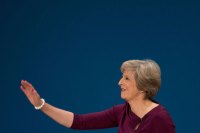
Theresa may

Order, order! It’s up to May to stop this ministerial bickering

From our UK edition

Even by the accelerated standards of modern politics, this is fast. Three months after the Chancellor was appointed, the Treasury has had to deny that he has threatened to resign. No. 10, for its part, has had to declare that the Prime Minister has ‘full confidence’ in Philip Hammond. It is telling that neither felt that they could just laugh off the reports. So what is going on? The most innocent explanation is that Westminster is still adjusting to the return of normal relations between Downing Street and the Treasury. David Cameron and George Osborne did everything but actually merge the two. Indeed, until the coalition came along, they planned to work out of the same office in No. 10.

Hope, fights and grammar schools

From our UK edition

A typical Kentish town, with its grammar school at one end and its secondary school at the other, is a throwback to the Bad Old Days, or the Good Old Days, depending on what your views are on academically selective state education. If Theresa May’s plans go ahead, the whole country might look something like this. In my childhood home town of Sandwich, Kent, the two schools, Sir Roger Manwood’s grammar school and the Sandwich Technology School, have staggered going-home times to avoid the fights on the station platform that used to happen every afternoon. Their uniforms are tellingly different: the Manwood’s students wear smart blazers and ties, the Tech ones wear casual black polo shirts and black jerseys. There’s a slight shiftiness in the afternoon atmosphere.

The Nissan test: can we really negotiate Brexit sector by sector?

From our UK edition

I wrote last month that a key test of Brexit success will be whether Nissan is still making cars here in ten years’ time. A few days later, Nissan chief Carlos Ghosn issued a warning that ‘If I need to make an investment in the next few months and I can’t wait until the end of Brexit, then I have to make a deal with the UK government.’ The investment decision he referred to — expected by Christmas, which means before Brexit talks even begin — is whether to build the next Qashqai model at Sunderland or in France, to avoid tariffs on exports when we leave the single market. And the deal he was fishing for was a promise of compensation if tariffs are imposed. What’s at stake is huge: the wider UK automotive sector supports 800,000 jobs.

PMQs Sketch: Theresa May torpedoes Jeremy Corbyn in six syllables

From our UK edition

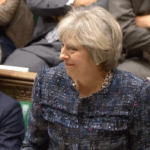
Today we saw government without opposition. At least without opposition in the hands of the Opposition leader. Rambling, disorganised Jeremy Corbyn spent his six questions getting nowhere over the health service. Familiar catcalls were heard on both sides. ‘You wasted billions.’ ‘No we invested billions.’ Mrs May attempted to break the record-book by insisted that ‘half a trillion’ will be spent on health during this parliament. Corbyn’s backbenchers took up the cause. The Labour party is teeming with broken princes and queens-across-the-water who spend their time brooding, and muttering, and plotting their route back to power. Any chance to expose Corbyn as a waffling nuisance is happily seized.

Lisa Nandy provides the real opposition at PMQs

From our UK edition

Today's PMQs marked a return to old form for Jeremy Corbyn. After two reasonably successful bouts against the Prime Minister, the Labour leader appeared to struggle as he failed to land any knockout blows. Corbyn focussed on the NHS, beginning with mental health. While he claimed the NHS has gone into its worse crisis in its history, May managed to bat off his concerns fairly easily -- even if he did expose some vulnerability in the government's record. On funding, she simply pointed out that the Conservatives were giving the NHS more than it had originally asked for -- something Ed Miliband had refused to guarantee at the general election. On cuts, the Prime Minister explained that the only party cutting NHS spending was Labour in Wales.

Watch: Theresa May’s risqué PMQs joke about Mrs Bone

From our UK edition

Theresa May’s track record of telling jokes in the Commons isn’t good. Last month at Prime Minister’s Questions, her wise cracks went down badly and she was criticised by a Labour MP for telling ‘silly jokes when asked serious questions’. At today’s PMQs, she was at it again - and Mr S is pleased to report she had much more luck in making her fellow MPs laugh. Backbencher Peter Bone has long been a thorn in the side of Tory leaders. But ever since the Brexit vote, he's been somewhat more upbeat about life. And on his birthday today, he had an extra reason to be happy. Yet despite his good mood, he probably wouldn’t have been bracing himself for Theresa May’s risqué reply to his question about prisons.

Home Office’s dirty laundry aired at select committee on child sexual abuse inquiry

From our UK edition

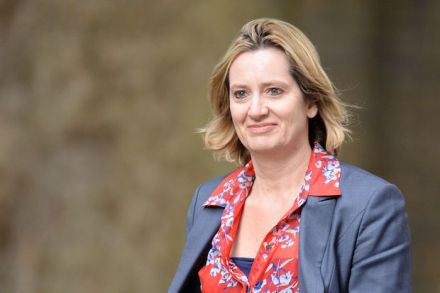
On Monday, Amber Rudd found herself in a difficult position in the Commons over the Home Office's blunder-ridden child sexual abuse inquiry. In response to an urgent question from Lisa Nandy, she was forced to confess that despite her previous statements, she had known that Dame Lowell Goddard quit as chair amid allegations of racism rather than loneliness. Now onto its fourth chair, Alexis Jay, MPs are fast losing patience with the inquiry. While Rudd has the undesirable task of taking the heat over an inquiry set up by her boss Theresa May, today it was the turn of Home Office staff and inquiry members to offer their version of events to the Home Affairs Select Committee.

Theresa May lays the groundwork for Heathrow expansion

From our UK edition

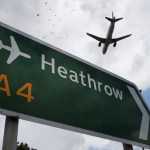
After years of delays, point-scoring and heel-dragging, the government will next week announce which airport -- or airports -- will get the green light for expansion. While it's a decision that eluded Cameron during his premiership, Theresa May's spokesman confirmed today that the outcome is now imminent. However before anyone gets their hopes up that the airport saga will soon be over, it's worth pointing out that the final vote will not take place for at least another year. The government decision will be made by a cabinet sub-committee, with no London MPs among its members. Those on the committee include May, Philip Hammond, Greg Clark, Chris Grayling and Sajid Javid.

Don’t listen to the doom-mongers: A rise in inflation isn’t some kind of crisis

From our UK edition

It takes quite a determined Cassandra to see the rise in Consumer Prices Index (CPI) from 0.6 per cent in August to one per cent in September as some kind of crisis, not that that will stop the holdouts of the Remain campaign from trying to do so. When CPI fell below one per cent at the end of 2014, you might remember, there were dark warnings about the threat of deflation – with the horrors that would imply for borrowers, who would see the real value of their debts increase. Now, some are trying to present a rise to one per cent as bad news, with former Monetary Policy Committee member Andrew Sentance, for example, calling it the ‘tip of an inflationary iceberg’. Steady on. Sure, inflation is likely to increase over the next few months.

Will Brexit butcher the banks? | 16 October 2016

From our UK edition

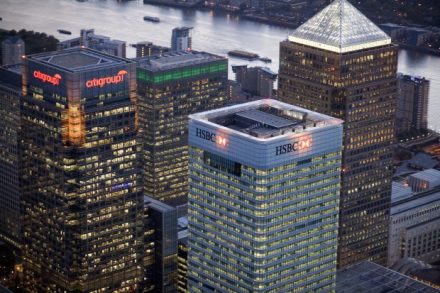
The financial crisis defines our age. It helps explain everything from the presidential nomination of Donald Trump to Jeremy Corbyn’s leadership of the Labour party after 30 years on the political fringe. Certainly, the Brexit vote wouldn’t have happened without it. The crash of 2008 created a sense of unfairness that is still roiling our politics, as well as calling into question the competence of the West’s ruling class. The soi disant ‘experts’ were easily dismissed during the EU referendum campaign because nearly all of them had got the economic crisis so wrong. The Brexiteers asked: why should the public listen to the arguments of organisations and businesses that had made such disastrous misjudgments?

Britain shouldn’t stay in the customs union after Brexit

From our UK edition

A Brexit deal that would end free movement and see UK goods able to access the EU market without tariffs or the need to jump through any additional hoops sounds, superficially, attractive. These arrangements could also be in place by the 2020 general election, as I say in my Sun column. But this idea of leaving the EU single market, but staying in the customs union is a bad one—however keen some in the Treasury and Whitehall are on it. For if Britain remains in the customs union, then it can’t do proper trade deals with non-EU countries. Instead, it will have to continue to apply the EU’s Common External Tariff. This is designed to protect the EU’s most politically sensitive industries: imposing a 10 percent tariff on cars, an 11.

Theresa May is Blue Labour at heart

From our UK edition

I never really agreed with the central-thesis of The Hitchhiker’s Guide to the Galaxy — that ‘42’ is the answer to life, the universe and everything. I have no great animus against the number — it does its job, filling that yawning gap between 41 and 43. But I had never thought it actually-special until the beginning of this week. That’s when I read that the Conservative Party was 17 points ahead in the latest opinion polls, on 42 per cent. A remarkable figure. I suppose you can argue that it says more about the current state of the Labour party than it does about Theresa May’s stewardship of the country.

Nicola Sturgeon is caught in an independence referendum fix

From our UK edition

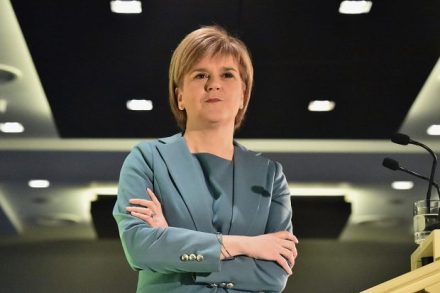
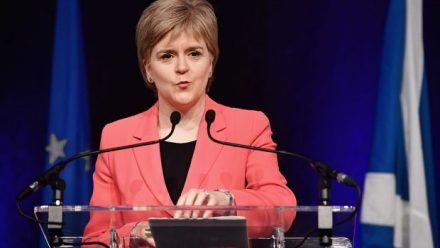
Nicola Sturgeon is in a bit of a fix. After saying that the Scottish independence referendum was a once-in-a-generation event she is calling for a second one just two years after the first. But polls show Scots have no appetite for this vote. Unlike the SNP activist base, which is itching for another fight – and there have even been signs of a Momentum-style infiltration of the SNP, raising the prospect of a split in a party whose strength has (hitherto) been in its discipline. So what’s the First Minister to do? Her answer, in the SNP conference, is to assuage the activists and publish a new referendum bill. Her peg is the Brexit vote, and her shtick is simple.

Diogenes vs Theresa May

From our UK edition

‘If you are a citizen of the world, you are a citizen of nowhere,’ proclaimed Theresa May in a speech to the Conservative party conference. Oh dear! And her a vicar’s daughter too! ‘Cosmopolitan’ derives from the ancient Greek kosmos ‘world’ plus politês, ‘enfranchised member of a polis, citizen’. It was a word used by the 4th century BC philosopher Diogenes to describe himself when he was asked where he came from. Famous for living ‘like a dog’ (kunikos, whence ‘cynic’) and rejecting all conventional values, it seems that he was claiming to be an example of a man wholly in tune with nature and existing on a higher plane of virtue that should embrace the whole world.

The Spectator podcast: Lights, camera, politics

From our UK edition

A decade ago, Donald Trump was best known for his gleeful firing of aspirant entrepreneurs. Now, however, the reality TV star is tackling an even bigger stage. The USA is not alone in this merging of showbiz and politics: two of the three Apprentice presenters in the UK have been elevated to the House of Lords. So, are we living a golden age of televised debate? Or should we be more concerned about the trash politics infecting our most serious issues? These are the questions Douglas Murray tackles in this week’s cover piece and he is joined on the podcast by Xenia Wickett, Director of the US Project at Chatham House.

Jolly good show

From our UK edition

It’s tempting for a Brit to look over the Atlantic and smugly conclude that, after 240 years, the American experiment of self government has failed — that this ingenious country could not even find two decent people to run for the White House, and has instead laid on a political freak show that’s best watched from behind the sofa. British politics has its faults, we say, but we’re nowhere near as bad as that. But who would be bold enough to say that had Andrea Leadsom not dropped out of the race, Tory members would not have voted her in? And looking at the House of Commons, can we really say that it’s functional? We have no opposition to speak of, thanks to the crisis in the Labour party.

May’s head on the block

From our UK edition

Understand what this government is trying to get away with, and think about how it is trying to get away with it, and you will see it is reconstituting the oldest and dirtiest alliance in Tory-history: the alliance between snobs and mobs. I accept it takes a while to see our new rulers for what they are. Theresa May represents the dormitory town of Maidenhead. Although Eton College is just a few miles down the Thames valley, she could not be further socially and intellectually from David Cameron’s public school chumocracy. As for inciting mobs, what more ridiculous charge could I level against her? May seems to have no need to incite anyone. The far left has destroyed the opposition so thoroughly it will take Labour a generation to recover.

Tory Theresa is Blue Labour at heart

From our UK edition

I never really agreed with the central-thesis of The Hitchhiker’s Guide to the Galaxy — that ‘42’ is the answer to life, the universe and everything. I have no great animus against the number — it does its job, filling that yawning gap between 41 and 43. But I had never thought it actually-special until the beginning of this week. That’s when I read that the Conservative Party was 17 points ahead in the latest opinion polls, on 42 per cent. A remarkable figure. I suppose you can argue that it says more about the current state of the Labour party than it does about Theresa May’s stewardship of the country.

Jeremy Corbyn changes tactics at PMQs – but he still lacks any killer instinct

From our UK edition

Corbs is back. And he’s getting his act together. He showed up at PMQs looking estate-agent smart. White shirt, natty blue suit, a red tie mounting, nearly, to its correct position at the throat. His second landslide victory has suffused him with calmness and authority. As he boasted to Mrs May, his position as leader was confirmed by 300,000 members of his party. ‘More than her,’ he needled. The Labour leader is changing his tactics. He’s ditched his habit of using PMQs to pass on gripes from a mysterious Customer Complaints Desk at Labour HQ. This politically suspicious and psychologically whiney ploy was never likely to prosper. It painted Corbyn in negative colours: as weak, gullible, short of ideas and happy to be led by his own followers.