Theresa may

Nissan’s boost for Brexit Britain

From our UK edition

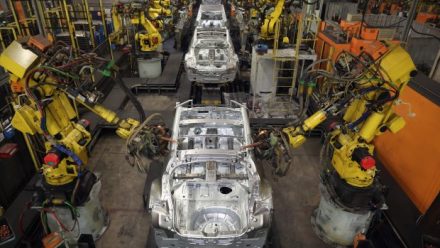
Nissan’s announcement that it will build the new Qashqai in Sunderland is a boost to Brexit Britain. If the decision had gone the other way, critics would have been quick to claim this was proof that Brexit was going to total the British car industry and that the people of Sunderland had self-harmed when they voted to leave. But Nissan has decided to not only build the new Qashqai in Sunderland—as we reported it would on Saturday—but also the X-Trail SUV. Theresa May has been straight out of the traps to hail the decision as a ‘vote of confidence’ that ‘shows Britain is an outward looking, world leading nation’.

What the papers say: May’s Brexit plan and EU leaders’ ‘rudeness’ towards Britain

From our UK edition

Theresa May was widely praised in yesterday’s papers after the Government backed a third runway at Heathrow. And there are more plaudits for the Prime Minister in today’s editorials. The Sun says that yesterday’s figures showing the wages of the poorest rose faster than for any other section of society made it clear that it wasn’t true the Tories only care about the rich. It says the Government’s plan to reduced the balance of inequality contrasts strongly with the ‘fevered minds of Jeremy Corbyn and his deluded followers’, who try and paint Britain as ‘an unfair society plagued by gross inequality’: a picture which it says isn’t true.

The absent opposition

From our UK edition

Oppositions don’t win elections — governments lose them. This has long been the Westminster wisdom. But the truth is that oppositions can lose elections, too: they must pass a basic competency test to be considered for office. Today, however, no party resembles a credible opposition to the Tories, let alone a government in waiting. What makes this absence so striking is that the government is in such a perilous position. It must somehow implement Brexit. Leaving the EU will crowd out Theresa May’s domestic priorities and reveal all the divisions in the Tory party over what kind of relationship with the EU the UK should seek. As one Tory with good links to No.

Identity crisis | 27 October 2016

From our UK edition

You may not listen to them every year. Or even to every lecture in the current series. But the survival of the annual Reith Lectures on Radio 4 from the old days of the Home Service and Radio 3 (they were established in 1948 to honour what Reith had done for the corporation) is crucial to the existence of the BBC.

PMQs Sketch: Why Jeremy Corbyn is a lousy politician

From our UK edition

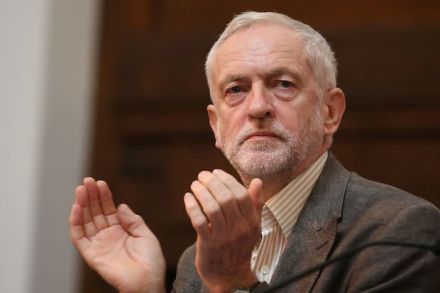
Today it became clear why Corbyn is a lousy politician. He’s too interesting. The variety of life is simply too fascinating for him to prosper on the public stage. In a word, he’s not dull enough to be a statesman. A key attribute of leadership is the readiness to bore oneself, and everyone else, by repeating the same phrase over and over again. Successful politicians are happy to recite their favourite soundbites day in day out knowing that only at the thousandth repetition will the vital syllables grind their way into the public consciousness. Mr Corbyn has a great soundbite -- shambolic Tory Brexit -- which he needs to reiterate all the time. His advisers have no doubt nagged him about this. He should say it when he wakes up and when he falls asleep.

Jeremy Corbyn lets Theresa May off the hook again at PMQs

From our UK edition

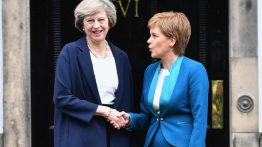
Today’s PMQs could have been a tricky affair for Theresa May. Her decision on Heathrow has seen one Tory MP resign his seat and the Guardian’s story about a private speech she gave to Goldman Sachs during the EU referendum campaign clashes with her conference speech rhetoric about being the scourge of unaccountable global elites. But May got through the session fine, Heathrow wasn’t raised until well after 12.30 and no one mentioned her behind closed doors, Goldman's address. Corbyn’s delivery at PMQs has improved. But he still can’t go through the gears. He started off using the frustration of the devolved First Minister following their meeting with May on Monday to attack her lack of a Brexit plan.

Is the Guardian’s leaked tape of Theresa May really so shocking?

From our UK edition

The Guardian’s splash today looks like bad news for the PM. ‘Leaked recording shows Theresa May is ‘ignoring her own warnings’ on Brexit’, the paper says on its front page. The story centres around a recording of May giving a speech at Goldman Sachs in the run-up to the referendum. In the tape, which was recorded in May, the future PM tells bankers that:  ‘I think the economic arguments (of staying in the EU) are clear. I think being part of a 500 million population trading bloc is significant for us. I think one of the issues is that a lot of people will invest here in the UK because it is the UK in Europe.

The Heathrow saga: What the papers are saying

From our UK edition

Heathrow’s third runway has won the backing of the Government but the long-running saga over the airport’s expansion rumbles on. Zac Goldsmith has quit in protest and Boris Johnson said the plans are ‘undeliverable’. So will the scheme ever see the light of day? Hopefully not, says The Times in its editorial, which suggests Boris’s view about the likelihood of planes taking off from a third runway is ‘probably right’. The paper says the need for airport expansion in the south east is clear and that ‘a decision of sorts is better than none at all’. But it says that Heathrow isn’t the place for it. The Times says expanding Heathrow ‘is the wrong decision, and history will not thank (the PM) for it’.

Let the gruesome legal battle over Heathrow commence

From our UK edition

When the history comes to be written of Britain’s descent from a democracy to a krytocracy, the story of Heathrow’s third runway will mark an important point. Is there anyone who really believes that either today’s decision by the government to make Heathrow its preferred option, or the parliamentary vote in perhaps a year’s time, will really be the last word on the matter? It is already 67 years since extra runways to the north of the Bath Road were first proposed for London Airport. It might well be another 67 years before the legal challenges have concluded. Never have quite so many interests been lined up to challenge in the courts a decision which, until fairly recent times, would have been accepted as a political decision.

Sooner or later, the Calais ‘Jungle’ will be back – and the British left can’t wait

From our UK edition

The massive operation by 1,200 French riot police and gendarmes to bus the migrants in the 'Jungle' at Calais to reception centres elsewhere in France and to raze the illegal camp to the ground has begun. Allelujah. You might think that the destruction of this crime-ridden and rat-infested shantytown, where up to 10,000 mainly African and Afghani migrants live in shacks and tents without running water or mains electricity, was good news. At last, those poor migrants will have a decent roof over their heads while they finally get round to applying to the French government for asylum, as nearly all are required to do by the law. But no. Instead, the British left and the French right, joined in unholy alliance, are outraged: How dare François Hollande do such a thing!

Heathrow or Gatwick: What are Theresa May’s options?

From our UK edition

Today, after years of delay, we’ll finally learn what the Government’s answer is to the airport question. Both supporters and opponents of it expect the Transport Secretary Chris Grayling to announce that the Government is backing a third runway at Heathrow. However, it is also likely that the Government will make encouraging noises about further expansion at Britain’s regional airports. A Heathrow third runway isn’t the only option on the table though. Here’s the Spectator’s guide to Theresa May’s choices: Heathrow: A third runway? The Airport Commission threw its weight behind the option of building a new runway at Heathrow last year.

Heathrow’s third runway gets the go-ahead from the Government

From our UK edition

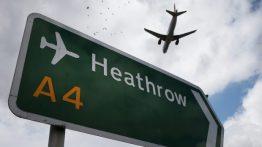
As was widely expected, the Government has backed plans to expand Heathrow. Transport Secretary Chris Grayling said the decision to approve a third runway is 'truly momentous'. In a statement released moments ago, he said: 'I am proud that after years of discussion and delay this government is taking decisive action to secure the UK’s place in the global aviation market – securing jobs and business opportunities for the next decade and beyond.' This morning's news isn't much of a surprise, with the Prime Minister signalling last week that she favoured choosing Heathrow over Gatwick, in a decision that matches the Airport Commission's recommendation. So what happens now?

Theresa May’s Brexit plan slowly trickles out

From our UK edition

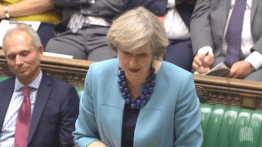
A pattern is emerging in the Government’s statements on Brexit to the House of Commons. The initial statement, today by Theresa May on the European Council, says little. But then, in answer to questions, some information slips out. Today’s most interesting nugget was May’s response that staying in the customs union is not a yes or no question. This will add to the sense in Westminster that the Government is looking to stay in the customs union in certain sectors, for instance-car manufacturing, while leaving it in most areas. It is also worth noting when Gisela Stuart, the Labour co-chair of Vote Leave, asked about a 2020 deadline for being out of free movement and the like, the Prime Minister refused to endorse it.

Theresa May should ignore the privately-educated elite and press on with her grammar school plans

From our UK edition

It has become customary in the great grammar school debate to declare where you went to school. I attended the boys’ grammar school in Canterbury, which was mentioned by Ysenda Maxtone Graham in her piece in this week’s magazine. Ysenda chose not to make such a declaration herself, so I will do it for her: she attended the King’s School, the poshest of the three public schools in Canterbury, which inhabits the precincts of the cathedral. I wouldn’t normally make an issue of someone’s schooling, but it is rather relevant in this case because Ysenda appears to be disturbed by what she sees as the social apartheid between Kent’s grammar school children and those who attend other state schools.

The EU would be mad to start a trade war with Britain. Here’s why

From our UK edition

So far, the debate over what happens to UK-EU trade after Brexit has been conducted around a rather odd premise: that the EU will be out to punish Britain by cutting us off unless we sign up for continued membership of the single market, with free movement of people and contributions to the EU budget. Certainly, this is the impression which many EU leaders have been keen to create, and one which the 'Remain' lobby is more than happy to promulgate. Yet it sits rather uneasily with reality. As the Leave campaign consistently pointed out before the referendum, the EU would be mad to start a trade war because the rest of the EU sells more to us than we sell to the rest of the EU.

Sturgeon’s secessionist fantasy has been rejected by Europe. So why does she ask Theresa May?

From our UK edition

'Downing Street says the PM is set to rebuff calls for a flexible Brexit, which would allow parts of the UK to have their own arrangement,' said the BBC radio news this morning. Not quite. This notion has been rejected in Europe, where the idea of doing some kind of separate deal with Scotland or any constituent part of the UK was never a deal. The 'options' that the SNP talk about do not exist as far as the EU is concerned: it is a giant bluff. It's far from clear why she is asking Theresa May for something that the EU has already rejected.

Theresa May’s Ukip opportunity

From our UK edition

Since Nigel Farage’s latest resignation as Ukip leader, it has become clear that he is the only person who can hold the party together. Without him, Ukip has become a seemingly endless brawl between various hostile factions. Still, this leaderless mess has more supporters than the Liberal Democrats. That’s because Ukip, for all its flaws, has given a voice to those ignored in an overly centrist political debate — first Eurosceptic Tories, then working-class Labour voters. With decent leadership, Ukip could still do to the Labour party in the north of England what the SNP has done to it in Scotland. Steven Woolfe might have been able to supply that leadership, had he not been hospitalised by a fellow MEP. He has now quit, saying that Ukip is over.

It’s time for Mark Carney to go

From our UK edition

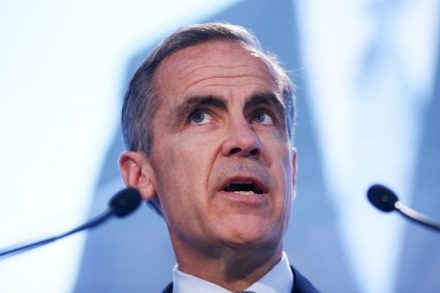
Oh dear. Mark Carney is irritated. His proud independence has been challenged. The Prime Minister had the temerity to admit that she was not altogether thrilled with his ‘super-low’ interest rates and quantitative easing. These policies meant that people with assets got richer, she pointed out. ‘People without them suffered… People with savings have found themselves poorer.’ Mr Carney found this intolerable and haughtily rebuffed her, saying, ‘The policies are done by technocrats. We are not going to take instruction on our policies from the political side.’ Back in your box, Mrs May. Carney’s in charge!

We should be flattered not threatened by France’s bid to take on the City

From our UK edition

The French are trying to seduce the British to come and work in Paris. A video hymns the delights of La Defense, the Gallic Canary Wharf. It is a healthy Brexit effect that the French now feel that they can no longer fight the City of London solely by trying to regulate it, and must try persuasion instead. The prospect of British departure reawakens the spirit of competition in a continent which had largely replaced it with bureaucracy. By leaving, Britain ought to win first-mover advantage in this contest, but even if we don’t, we will have done a service to our neighbours which we could never have managed if we had voted to stay.

What did we learn from the Witney by-election?

From our UK edition

It's no surprise that the Tories held their seat overnight in the Witney by-election. Yet what seems remarkable (at least on the face of it) is the extent of the swing back towards the Lib Dems. The party saw its share of the vote jump from seven per cent two years ago to nearly a third of the vote this time around. That pushed the party's candidate, Liz Leffman, into second place and has got Tim Farron excited. The Lib Dem leader went as far as saying the result shows the ‘Liberal Democrats are back in the political big time’. That's not quite the case yet. After all, this is a party which started the night with eight MPs and wakes up this morning with the same number. But while the Lib Dems looked dead and buried two years ago, there is now, at least, the sign of life.