Theresa may

Spectator live blog: The Supreme Court’s Brexit hearing, day two

From our UK edition

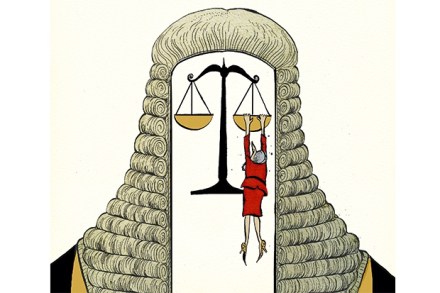
The second day of the Supreme Court hearing has seen the Government continue to put forward its case for why it should be allowed to pull the Article 50 trigger without the say so of Parliament. And Lord Pannick has been arguing why Parliament must give approval for the start of the process of Brexit. Here's how the day unfolded on our Spectator live blog: 4.30pm: Pannick’s main pitch is about the power of Parliament. He tells the Supreme Court that ‘Parliament is sovereign and only Parliament can remove that which it has incorporated into domestic law’ - meaning that Brexit cannot be started by the Government without the agreement of Parliament.

Will Theresa May take her mansplaining mission to Bahrain?

From our UK edition

Last month, word began to spread around Whitehall that the Prime Minister would not take kindly to any 'mansplaining' -- after No 10 took umbrage at male politicians, officials, diplomats and journalists talking over, patronising or failing to listen to May. As the Times revealed, the row was triggered after Sir Mark Lyall Grant, the national security adviser, managed to do at least one of the above during a visit to Downing Street. So, Mr S can't help but wonder how exactly May is going to get on on her upcoming visit to the Gulf region. On her two-day trip to Bahrain, May will become the first female politician to attend the six-nation Gulf Co-operation Council.

What the papers say: The Supreme Court’s Brexit case

From our UK edition

Today's Supreme Court hearing on Brexit is undoubtedly the most controversial in the court's seven year history, says the Times. The case will examine the Government's appeal against the earlier High Court ruling that Article 50 cannot be triggered without the say-so of Parliament. But what's most remarkable about today's hearing is the fact Theresa May allowed it to get to this position in the first place, the paper says. The Times suggests that 'at any point since Theresa May entered Downing Street in July she could have called and easily won a parliamentary vote mandating her to deliver Brexit' - but in choosing not to it shows 'an early and inauspicious mark' against her Downing Street record.

Westminster fashion police turn on Theresa May

From our UK edition

Claws out in Westminster. Since Theresa May was appointed Prime Minister, several of her one-time cabinet colleagues have taken issue with her government's Brexit stance. After May sacked Nicky Morgan as education secretary, Morgan has become a key member of the post-Brexit awkward squad -- regularly voicing criticism of the PM. Over the weekend, the pair's relationship took another turn for the worse. In an interview with the Times, Morgan made a dig at May over a £1,000 pair of leather trousers the Prime Minister had worn in a photoshoot for the paper the week before.

Brexit strategy

From our UK edition

For months, now, a hunt has been on for the government’s Brexit strategy. Theresa May has quite rightly refused to disclose it. She knows that the European Union needs to be seen to make Britain suffer. She will have to ask for for a lot, only to back down so the EU can have its pound of British flesh. The hope is that she can then emerge with what she wanted all along. So a game of bluff is under way. This has created a rather unsatisfactory situation where Parliament wants to know where she will draw the line, and she refuses to say. Her every word is scoured for clues. None have been forthcoming.

Portrait of the week | 1 December 2016

From our UK edition

Home Paul Nuttall, aged 39, was elected leader of the UK Independence Party. He said: ‘I want to replace the Labour party and make Ukip the patriotic voice of working people.’ Theresa May, the Prime Minister, was rebuffed by Angela Merkel, the Chancellor of Germany, and by Donald Tusk, the President of the European Commission, when she proposed settling the status of British and EU expatriates even before Article 50 was invoked. She made another attempt in talks with Beata Szydlo, the Prime Minister of Poland. There was some interest in a note photographed on papers being carried after a meeting in Downing Street by Julia Dockerill, an aide to Mark Field, a Conservative MP, that said: ‘What’s the model? Have your cake and eat it.

PMQs gets interesting as Tory Eurosceptics coordinate their activities

From our UK edition

A rare event at PMQs as Jeremy Corbyn went on the economy. The Labour leader had some well-crafted questions but rather spoiled things by confusing the IMF and the IFS, enabling Theresa May to declare that it is a good job she stands at the government despatch box and he sits on the opposition front bench. May gave little away, as is her wont, but Corbyn again went on social care -- which is, obviously, an area where Labour think they can make political advances. A couple of Tory Eurosceptics asked May about reciprocal rights for UK and EU citizens respectively and the refusal of the EU to engage on this point. May wouldn’t take the bait on this. But she did indicate that she still hopes that this issue can be dealt with soon after Article 50 is invoked.

Theresa May’s boardroom crackdown asks more questions than it answers

From our UK edition

In recent weeks, Theresa May has attempted to perform a balancing act between looking after the interests of 'just about managing' families and keeping big business on side. On becoming Prime Minister, she gave several speeches suggesting the need for a radical overhaul of the way businesses — and capitalism — work in order to help those left behind by globalisation. Yet May has had to soften her language to appease business leaders — backtracking, in a speech to the CBI, on a pledge to put workers on company boards. Today Greg Clark tried to set out what May's crackdown on corporate greed will actually entail.

Why wait for Merkel? Theresa May should guarantee the status of EU nationals now

From our UK edition

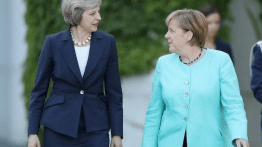
The news that Theresa May offered to do a deal on expats – only to be rebuffed by Angela Merkel – is unsurprising. The Prime Minister has ended up in a pretty bad, unbecoming position on EU nationals using them as bargaining chips in a way that has appalled her critics (and even some of her supporters). So it’s not surprising that she wanted to get this awful business over with in her recent meeting with Merkel. She suggested: let’s just agree an EU-wide deal whereby everyone’s expats can stay where there are. But, again unsurprisingly, Merkel rebuffed her. Before their meeting, Merkel said publicly that they would not and could not talk about Brexit, due to the strict rule on not negotiating in any way until the invocation of Article 50.

Nicholas Soames brings Mark Field down a peg or two

From our UK edition

Although Theresa May is reluctant to say that Brexit means anything other than... Brexit, on Monday we were given a glimpse of what else it could stand for. Mark Field's Chief of Staff, Julia Dockerill, was snapped carrying some intriguing notes on the topic following a reported meeting with David Davis: https://twitter.com/PoliticalPics/status/803257289302044673 No.10 have since insisted that the notes -- which included an admission that the UK is unlikely to be offered single market membership -- do not represent any government line. However, it's another issue that's rattled Nicholas Soames. Forget the Brexit slip-up, the Tory grandee is in shock that Mark Field, the MP for the Cities of London and Westminster, has a Chief of Staff to begin with.

Theresa May’s religious faith should bring her more joy

From our UK edition

I like the fact that Theresa May is an Anglican, a good, solid, unashamed, unflashy Anglican, whose allegiance has not wavered since childhood. It reassures me. For the CofE is a place of pragmatic idealism, public service, profound humanism, good humour, self-criticism. Also, it’s just about the only place where class and racial divisions are routinely overcome. But when she actually says anything about her faith, she doesn’t come across very well. She sounds nervous of saying the wrong thing, which is fair enough, as horrid bloggers are waiting to pick and sneer at her words. And (pick, sneer) she sounds a bit pinched and negative about her experience as a vicar’s daughter.

What the papers say: Castro, Carney and Brexit

From our UK edition

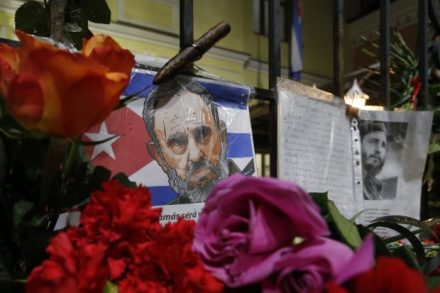
The Daily Mail calls those who ‘heaped adulation’ on Fidel Castro over the weekend - including the likes of Jeremy Corbyn and John McDonnell - ‘useful idiots’. The paper says after Castro’s death on Saturday, the Cuban leader's supporters are ignoring the 'poverty he inflicted on his people' as well as his torturing of political opponents and the fact that he ‘failed his people abysmally’. So why, the Mail asks, do those like the Labour leader have such a different view of the former Cuban leader? The paper suggests in its editorial that there is a simple answer: ‘Messrs Corbyn, McDonnell and Co have never grown up since their student days’. Meanwhile, the Mail also takes a pop at Mark Carney.

Boris is fed up with being the butt of the government’s jokes

From our UK edition

In the autumn statement, Philip Hammond chose to mock Boris’ failed leadership bid. This wasn’t the first time that one of the Foreign Secretary Cabinet’s colleagues had had a laugh at his expense. At our parliamentarian of the year awards, Theresa May joked that Boris would be put down when he was no longer useful. But Boris and his circle are getting rather fed up with him being the butt of the joke, as I say in The Sun today. Those close to Boris feel that these gibes undercut him on the world stage. 'If they want the UK to be taken seriously, they need to back him not mock him’ one close ally of his tells me.

The trouble with ‘independent’ inquiries

From our UK edition

‘Independent’ is becoming an excuse-word in government. The inquiry into historical child abuse is called the Independent Inquiry into Child Sexual Abuse (IICSA). This lets the government wash its hands of it. Although Theresa May set it up, with its hopeless remit, she keeps it at a distance now. So does her Home Office successor, Amber Rudd. In the Commons debate on the IICSA’s latest travails this week, the government fielded only a very junior minister, Sarah Newton. She, too, hid behind the point that the inquiry is independent. Of course the government should not be running it. But if no chairman — the fourth one is now being undermined — and no senior lawyers can stay the course, don’t its inventors have to try something else?

May and Hammond’s promises to business are just window-dressing

From our UK edition

Theresa May likes to give a kitten-heeled kicking to conference audiences, even when they are police officers or her own party delegates. But at the CBI gathering at Grosvenor House in London on Monday, she was out to make friends with soothing (if essentially hollow) remarks about Brexit, and promises of the lowest corporate tax rates in the G20 and an extra £2 billion a year for research and development to help the UK stay close to the forefront of technology and bioscience. Assembled fat cats may still have been irritated by her commitment to binding annual shareholder votes on executive pay, but at least she backed away from putting workers’ representatives on boards, a threat that contributed to the anti-business tone of her Tory leadership campaign in July.

The Spectator’s Notes | 24 November 2016

From our UK edition

It is not self-evidently ridiculous that Nigel Farage should be the next British ambassador to the United States. The wishes of the president-elect should not automatically be discounted. John F. Kennedy’s wish that his friend David Ormsby-Gore (Lord Harlech) should be ambassador was granted. It is also not true that the post must be filled by a professional, or that the Prime Minister should not appoint a political rival to the post. Churchill gave the job to his main rival, Lord Halifax, from 1940. Certainly Mr Farage is not the conventional idea of a diplomat, but then Mr Trump is not the conventional idea of a president. Although its own leadership emerged from the same global convulsions, our government is slow to grab the advantages offered by this new world.

The Spectator podcast: May’s winning hand

From our UK edition

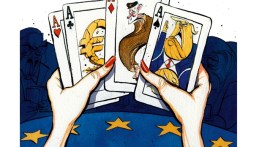
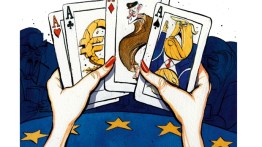
On this week's podcast we discuss the royal flush that Theresa May has been dealt, debate Sadiq Khan’s progress, half a year into his tenure as London Mayor, and pose the seasonal question of whether advent is better than Christmas. First, James Forsyth's cover story this week charts the remarkable fortune of Theresa May, as the weaknesses of Labour and the Eurozone (not to mention her Trump card) give her a strong hand heading into the Brexit negotiations. Speaking to the podcast, James says that: "I think you could say that, look, the EU27 are being remarkably united at the moment. They clearly do not want to suggest that you can leave the EU and have all the benefits of membership without any of the so-called costs.

Britain’s winning hand

From our UK edition

On the morning after the European Union referendum, Britain looked like a country in crisis. The Prime Minister had resigned, Scotland’s first minister was talking about a second independence referendum and the FTSE was in free fall. In several EU capitals, there was an assumption that, when the Brexit talks began, Britain would be the new Greece: a country that could ill afford to reject any deal offered by the EU, no matter how humiliating. In the days following the vote, Mark Rutte, the Dutch prime minister, declared that Britain had just ‘collapsed — politically, economically, monetarily and constitutionally’. Five months on, Britain is in a stronger position than Rutte and co. would have believed possible.

Soothing mood music from Hammond and May disguises challenges ahead

From our UK edition

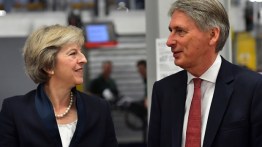
Theresa May likes to give a kitten-heeled kicking to conference audiences, even when they are police officers or her own party delegates. But at the CBI gathering at Grosvenor House in London on Monday, she was out to make friends with soothing (if essentially hollow) remarks about Brexit, and promises of the lowest corporate tax rates in the G20 and an extra £2 billion a year for research and development to help the UK stay close to the forefront of technology and bioscience. Assembled fat cats may still have been irritated by her commitment to binding annual shareholder votes on executive pay, but at least she backed away from putting workers’ representatives on boards, a threat that contributed to the anti-business tone of her Tory leadership campaign in July.