Theresa may

Podcast: Will Tories or Ukip profit from abandoned Labour voters?

From our UK edition

The Copeland by-election will be a fascinating test of whether Brexit can open up more votes for the Tories in the north – the topic of my Daily Telegraph column today. Labour is slowly abandoning its working class voters, with their unfashionable views on human rights and immigration. This was happening under Ed Miliband, and the forces wresting traditional Labour voters away from the Labour Party were laid out in detail by a strikingly prescient report by the Fabian Society entitled 'Revolt on the Left'. It identified the various groups of voters moving away from Labour: typically the low-waged and less prosperous pensioners. Those in work tended to resent those who were not. They resented Labour for losing control of immigration and the abuse of welfare.

Nicola Sturgeon’s Baldrick moment

From our UK edition

Yesterday, the Scottish government published its ‘plan’ for life after Brexit. It was, at 60 or so pages, more detailed than anything we have yet seen from Theresa May’s ministry. But then it would be, given that Nicola Sturgeon will not be leading the UK’s negotiations as and when they begin. Still, plenty of nationalists crowed that, whatever else might be said of the Scottish government’s document, at least Sturgeon has a plan. But so did Baldrick.  That a plan exists does not make it a good plan. Or even an achievable one. And since we are still in the early stages of the Brexit waiting game the Scottish government’s proposals have the advantage of novelty but freshness is not enough either.

What the papers say: Thin-skinned Theresa May and the merits of Sturgeon’s Brexit plan

From our UK edition

If any one still doubts the merits of Britain controlling its own borders, look to Germany, says the Daily Telegraph. While it’s true that we still don't know who was responsible for this week’s devastating attack on a Berlin Christmas market, ‘Germany has already suffered fatal terrorism facilitated by the EU’s failure to control its borders,’ the paper says. The Telegraph goes on to say that, after Brexit, Britain will be able to renew its commitment to the ‘first duty of a state’ - ensuring ‘people’s security’. And all the signs of Theresa May’s leadership so far suggests the country is in good hands.

Donald Trump has more time for me than for Theresa May

From our UK edition

When I spoke to Trump after he won (I got 15 minutes, five more than Theresa May; not that I’m suggesting for a moment I’m more important than the Prime Minister. Obviously) it was clear that he, too, is highly amused by the sheer scale of the unctuously sycophantic U-turns he’s had to endure since landing the White House. ‘Everybody suddenly loves Trump again!’ he chuckled. Perhaps my most delicious schadenfreude arising from Trump’s ascendancy is the abject humiliation it’s imposed upon that other billionaire Apprentice host, Lord Sugar. The pair of them had a very bitter Twitter exchange a few years ago, during which Sugar informed Trump: ‘Success is measured with what you have in business.

Theresa May answers her own questions as MPs try to grill her on Brexit

From our UK edition

‘So… was that a yes or a no?’ A number of MPs on the Liaison Committee asked the Prime Minister that question during her evidence question today. They weren’t doing it to make a point: Theresa May spent most of the hour and a half stubbornly answering a set of questions that she had clearly decided in advance with lines also decided in advance, regardless of whether those questions were very close at all to the ones being asked in the Committee room. She was most opaque on the question of whether Parliament will get a vote on Brexit, circling around the issue by listing the opportunities for MPs to discuss Brexit.

Nicola Sturgeon’s Brexit plan is flawed

From our UK edition

There is a smart, hi-tech media room in the Scottish government building which overlooks Holyrood – but it has been all but abandoned since Nicola Sturgeon took over. That’s because Scotland’s First Minister prefers Bute House, her official residence in Charlotte Square, for announcements that have a chance of attracting a decent TV audience. She knows the Georgian grandeur makes her look authoritative - even presidential - and there she was again this morning when she unveiled her plans for a separate Scottish Brexit deal. It was no surprise that she was flanked – yet again - by just the Scottish saltire and the European flag. The Union flag was nowhere to be seen. It makes her look powerful, commanding and very un-British.

Scotland has nothing to gain from staying in the single market

From our UK edition

The Scottish economy will be left in ruins. Tens of thousands of people will be thrown out of their jobs. The tax base will shrivel. To listen to the latest round of complaints from the Scottish National Party, membership of the single market is absolutely vital to the country’s economy. Indeed, it is so important that it now wants to maintain it, even if England and the rest of the UK leaves. That might be clever politics, if it can be turned into a platform for a second referendum and if you choose to believe that the constitutional lawyers in Brussels can come up with a way of keeping one part of a country inside the single market with the rest outside. But it is terrible economics. Why? Because Scotland gets even less from it than the UK does.

What the papers say: ‘Power-mad’ unions, strike ‘dinosaurs’ and ‘misguided’ aid spending

From our UK edition

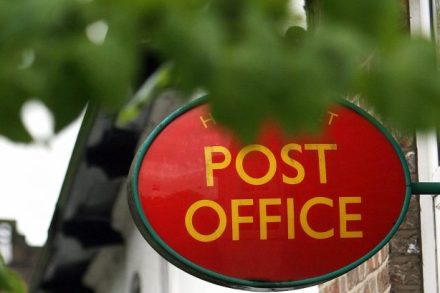
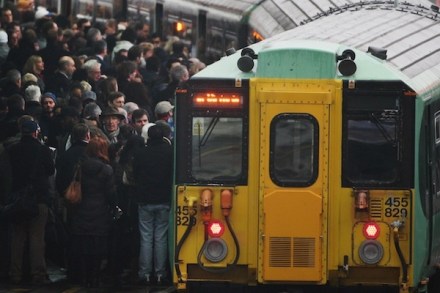
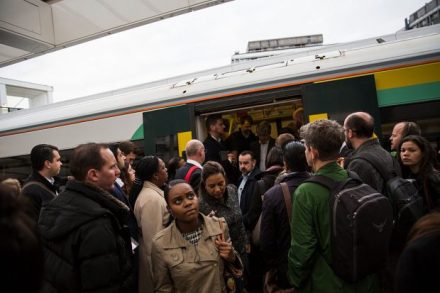
Thousands of workers are walking out this week in a series of strikes affecting post offices, railways and airports - but who is to blame for this wave of industrial action? The answer is obvious, says the Daily Mail: ‘union dinosaurs’. The paper says the RMT president Sean Hoyle’s remarks that he wanted to bring down the Tory government finally revealed the ‘key aim’ of the strikes, and in doing so pushed away the ‘pretence that the vicious campaign of action which has crippled Southern rail has anything to do with safety’.

Strikes shouldn’t be able to shut down key railway lines

From our UK edition

300,000 people were hit by Aslef and the RMT’s strike on Southern Rail yesterday. The bad news for commuters is that things will get worse in the New Year. The unions have a six day strike planned for January, that means a whole working week of commuters not being able to get to their jobs, specialist medical appointments being missed and families being put under pressure. I argue in The Sun today that the government needs to act to help commuters. What it should do is ask parliament to pass a law that would impose minimum service requirements on the rail unions and the train operators. Never again should a whole line be able to be taken out by strike action. I understand from those MPs pushing for this, that Chris Grayling is supportive.

Number 10 shows an odd lack of control at EU summit

From our UK edition

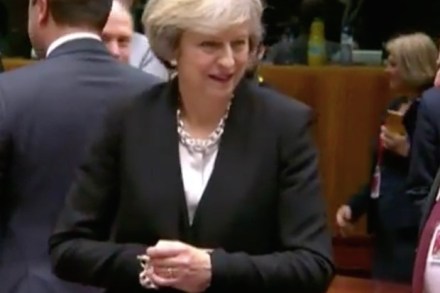
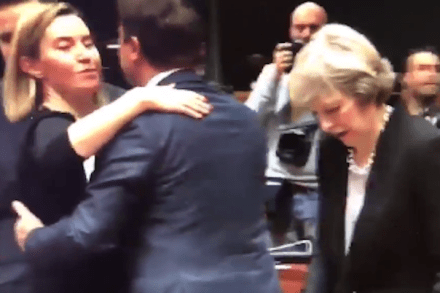
Theresa May looking embarrassed and awkward as European leaders appear to make a point of ignoring her at last night’s EU summit is such a good symbol of Britain’s place in the world that Number 10 is going to struggle to shake it. The footage, of course, was rather selective, with other clips showing the Prime Minister deep in conversation with European colleagues. But the picture plays in to anxieties about Britain’s standing after Brexit, and also anxieties about whether May will really be able to sweet talk EU leaders into giving her the deal that she wants. The Prime Minister told leaders that she wanted an early deal on the status of Britons who live in Europe and EU citizens who live in the UK.

Theresa May left in the cold at EU summit

From our UK edition

Theresa May is already not invited to the European Council summit dinner, and now it seems she's not that welcome at the day activities either. Yes, the Prime Minister appears to have been given the cold shoulder this morning at the event -- which sees the 28 leaders gather in Brussels to talk migrants, Turkey, Russia and Donald Trump. May was left looking as if she had no mates as she was blanked on the floor: https://twitter.com/EmilyPurser/status/809369281142157313 Let's hope tonight's solo dinner -- when the 27 remaining leaders depart to talk Brexit without May -- is more cheering than a ready meal for one.

PMQs sketch: Confident Corbyn tries to cook up a Christmas crisis

From our UK edition

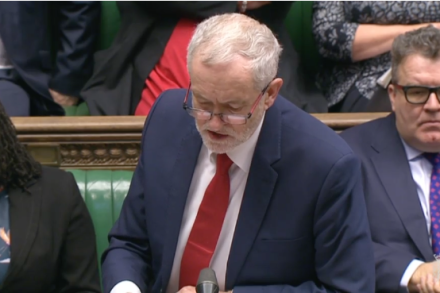
Corbyn’s improvement continues. He thumped away at a single issue today – social care – in a determined attempt to corner Teresa May and stick the word ‘crisis’ on her jacket, like a brooch. A crisis for the elderly, he said. A crisis for families. A crisis for the NHS. ‘A crisis made in Downing Street.’ His delivery still havers and wavers a lot but the drum-machine technique, banging out identical noises in a hypnotic rhythm, was effective. She met his assault with verbal trinkets composed by back-room smart Alecs in Westminster: the future Osbornes and Camerons. Rejecting the word ‘crisis’ she called it 'short-term pressure'. She also mentioned ‘sustainability’, ‘integration’ and ‘reassurance’.

PMQs: Festive silliness before Corbyn gives his best performance yet

From our UK edition

PMQs began with the Labour MP Peter Dowd asking Theresa May if she didn’t wish that she had told Boris Johnson to FO rather than sending him to the FO. To which, May replied that he was a fine Foreign Secretary -- an FFS. At this point, it seemed that the session, the last PMQs before Christmas, might descend into festive silliness. But that didn’t happen. Jeremy Corbyn urged people to buy the Jo Cox charity single, a call May echoed, before moving onto social care. Over the next five questions, Corbyn turned in his best PMQs performance -- admittedly not a particularly high a bar to clear. Corbyn kept pressing May to abandon the corporation tax cut and spend the money on social care instead.

Tom Watson makes a play for the JAMs at Christmas drinks

From our UK edition

In the old days, Tom Watson used to attend Jeremy Corbyn's Christmas drinks for hacks -- and even offer a speech of his own. However, in a sign that relations between the Labour leader and his deputy may not be so tickety-boo, the pair held separate bashes this year. As Watson thanked hacks for their work this year -- praising the Times's trouser-gate headlines and heralding ever closer relations with the Mail on Sunday -- he couldn't resist taking a few swipes at his boss in the speech: 'I do know that many of you were at Jeremy's event last night and I hear that it was genuinely a sumptuous affair, so -- as you can see -- out of the loyalty to the twice-elected leader of the Labour party, we've made a point in ensuring tonight isn't anywhere near as good.

What the papers say: Southern strikes, pig-headed militants and what Brexit means for Ireland

From our UK edition

Social care was notable by its absence from the Chancellor’s Autumn Statement. But the care system is now firmly back on the agenda following reports yesterday that Theresa May was set to allow councils to raise bills to plug the social care funding gap. The Daily Mail agrees that this is an issue that needs to be fixed urgently, saying that the UK is in ’severe danger of failing to meet’ the moral test of how well a society looks after the elderly. And for all the problems we’re seeing today, ‘things are about to get much worse’, the paper warns, with the introduction of the living wage, for one, likely to send care home fees soaring. So is the Government right to suggest upping council tax bills to stave off this crisis?

Britain must lead the global fight against modern slavery

From our UK edition

It has been 200 years since Britain abolished the slave trade and sent the Royal Navy out to enforce the ban across the world. Times have changed. Yet slavery at home and abroad is booming like nothing else. Theresa May knows this. It’s no wonder that alongside the chaos of Brexit negotiations she has made it her mission to fight what she calls 'the great human rights issue of our time'. As the longest-serving home secretary for decades, she understands the nature of this barbaric business. Last week, the Prime Minister made her latest move to combat modern slavery.

What the papers say: Theresa May’s wrong trousers and why Boris is ‘bang on the money’

From our UK edition

It would be ‘wrong’ to dwell on the subject of Theresa May’s £1,000 leather trousers, says the Times in its editorial this morning. But equally it’s a mistake to pretend those trousers don’t exist when Tory backbenchers think the cost of them brings the PM’s judgement into question, the paper argues. The Times criticises Theresa May’s adviser, Fiona Hill, for the manner in which she hit out at the PM’s trouser critic, Nicky Morgan. The Mail on Sunday revealed yesterday that Hill sent a text to Morgan's colleague, Alistair Burt, saying: ‘Don’t bring that woman to Downing Street again’, after the former education secretary criticised May's sartorial choice. So what does this all tell us?

Handbags at dawn in Downing Street

From our UK edition

It's handbags at dawn over in Downing Street. Last week, Nicky Morgan used an interview with the Times to criticise Theresa May for wearing trousers costing nearly £1,000 while claiming to be in touch with the 'JAMs'. The former education secretary said that she herself had never spent that much on anything 'apart from my wedding dress’. Now Morgan has found herself the persona non grata -- once again -- with No. 10. The former education secretary has been banned from entering 10 Downing Street, with May's Chief of Staff Fiona Hill breaking the news in a text referring to Morgan as 'that woman'. However, it looks as though there is a second reason Morgan is on shaky ground.

Here’s how Theresa May can grant assurances to all Britain’s EU nationals

From our UK edition

In the chaos after the Brexit vote, no one really noticed when Theresa May adopted an odd position on EU nationals*. Throughout the campaign, everyone – from Ukip to the Lib Dems, Boris Johnson to Andy Burnham – had been clear that the Brexit debate was not about deporting anyone. Those EU nationals who were in Britain should stay here. In a fractious debate, it was a note of rare consensus: no one's status was in question. But days after the referendum, the then Home Secretary sat down on Robert Peston’s sofa and suggested that EU nationals might not be safe after all, and that she might use them as bargaining chips in her negotiation. (A plan which would later backfire badly.) It was baffling, bizarre and – to many - appalling.