Theresa may

What the papers say: Theresa May’s pitch-perfect start to Brexit

From our UK edition

We’re off! The two year countdown until Brexit has begun. Theresa May’s triggering of Article 50 has been met with unanimous praise in the press, with the newspaper editorials saying the PM hit all the right notes in her letter. But there was controversy too. Some are saying the inclusion of a message suggesting Britain’s co-operation on security matters is at stake is an unhelpful threat to Brussels. Here's what the papers are saying about a historic day for Britain: Theresa May’s Article 50 letter was ‘pitch-perfect’, says the Sun, which argues that the Prime Minister succeeded in balancing generosity with a ‘flash of steel’. The onus now, the paper says, is for the EU to follow in May’s footsteps.

Jeremy Corbyn looks lost at the despatch box

From our UK edition

Tactics! At long last. Jeremy Corbyn actually used tactics at today’s PMQs. For the first time ever he divided his six questions into two three-ball overs. He spent the initial trio on last week’s terror attacks. Then, after an unsettling delay, he used three more on Mrs May’s fibs about school budgets. She says they’ve been ‘protected’. He says they’ve been ‘cut’. Protected. Cut. Cut. Protected. On it went. Mr Corbyn had a superb ally in the Public Accounts Committee which seems to support his view. The exchange might have been tricky for Mrs May but Mr Corbyn still can’t ram home a simple advantage. Rather than forcing her to repudiate the committee and its grandees he brought in a new, and far weaker, witness.

Theresa May interview: ‘no guarantee immigration will be significantly lower after Brexit’

From our UK edition

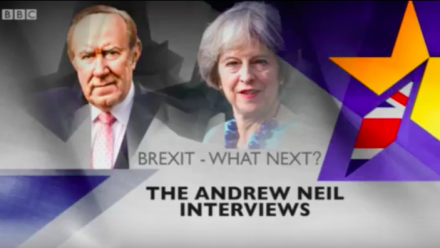
Theresa May’s interview with Andrew Neil revealed several significant things about the government’s approach to Brexit. Tellingly, May wouldn’t rule out free movement and the jurisdiction of the European Court of Justice continuing during any Brexit ‘implementation period’. This eases the way for a transitional deal, as the EU is likely to insist on both of these things applying—at least, in some form—during any transition period. Though, it does raise the prospect of the government having to go into the next general election with free movement ongoing There was another olive branch to EU capitals in May’s refusal to rule out preferential treatment for  EU migrants post-Brexit.

Theresa May’s Article 50 letter strikes the right tone

From our UK edition

Theresa May is trying to play the role of the great conciliator today. She has avoided any hint of triumphalism or saying anything that the European Union would instantly reject. Instead, she has emphasised her desire for a ‘deep and special partnership’ with the European Union and that the UK wants to be the ‘best friend and neighbour’ to the EU. She has not repeated her Lancaster House message that she thinks ‘no deal is better than a bad deal’ or threatened to change the UK economic model if no free trade agreement with the EU can be struck. The Article 50 letter that May has sent to Tusk also strikes a conciliatory note.

Theresa May’s full Article 50 speech: ‘A day of celebration for some and disappointment for others’

From our UK edition

Mr Speaker, Today the Government acts on the democratic will of the British People. And it acts, too, on the clear and convincing position of this House. A few minutes ago in Brussels, the United Kingdom’s Permanent Representative to the EU handed a letter to the President of the European Council on my behalf, confirming the Government’s decision to invoke Article 50 of the Treaty on European Union.   The Article 50 process is now underway. And in accordance with the wishes of the British People, the United Kingdom is leaving the European Union. This is an historic moment from which there can be no turning back. Britain is leaving the European Union. We are going to make our own decisions and our own laws.

Article 50 letter: full text

From our UK edition

On 23 June last year, the people of the United Kingdom voted to leave the European Union.  As I have said before, that decision was no rejection of the values we share as fellow Europeans.  Nor was it an attempt to do harm to the European Union or any of the remaining member states.  On the contrary, the United Kingdom wants the European Union to succeed and prosper.  Instead, the referendum was a vote to restore, as we see it, our national self-determination. We are leaving the European Union, but we are not leaving Europe – and we want to remain committed partners and allies to our friends across the continent.

What the papers say: Theresa May pulls the Article 50 trigger

From our UK edition

Theresa May has put pen to paper on the Article 50 letter that will kick-start the process of Brexit. March 29th, 2017, will join June 23rd, 2016, as a key date in Britain's modern history. The papers are unanimous in seeing today as a momentous moment. But they are also clear in their view that the challenges ahead will be big. On the day Theresa May formally pulls the Brexit trigger, here’s what the newspaper editorials have to say: ‘It's finally here,’ says the Sun. The paper hails today as ‘the most momentous day in Britain’s modern history’ - and marks the occasion by beaming the words ‘Dover and Out’ on the white cliffs of Dover. So, what can we expect?

The golden rule for Daily Mail hysteria

From our UK edition

Here’s a cast-iron law of the media in 21st-century Britain: the hysteria about a Daily Mail article will always be worse than the Daily Mail article itself. It will be more silly, shrill, over-the-top, reactionary and potentially harmful to public life than the polemic or editorial or sidebar shot of a half-dressed celeb it is raging and spluttering against. You can hold me to this. Go through the archives of Twitterstorms about the Daily Mail — they number in the gazillions — and you will see it’s the same every time: every bad thing the Mail has said or done has paled into insignificance in comparison with the hot, mad 24-hour fury of the Twits it has generated. Consider ‘Legs-it’.

Who has the better mandate: Theresa May or Nicola Sturgeon?

From our UK edition

For the last week, the Unionist opposition at the Scottish parliament has enjoyed observing that the Scottish government is happy to ignore non-binding votes at Holyrood when it suits them to do so but now expects the UK government to be bound by today's vote authorising the Scottish government to seek a Section 30 order that would begin the process by which a lawful second referendum on independence can be held. It is a neat line but an insufficient one, not least since this vote - unlike some of those on which the SNP government has been defeated - actually recommends a particular course of action that the government should follow.

How Britain and the EU can both benefit from Article 50

From our UK edition

Theresa May doesn’t do drama. She regards order as both a political and personal virtue. And this goes a long way towards explaining why she is Prime Minister. After the Brexit vote last June and David Cameron’s resignation, the Tories had had enough excitement. They turned to the leadership contender who was best able to project a reassuring sense of calm. It is in keeping with May’s approach that she has drained the drama from the triggering of Article 50, the start of the two-year process for leaving the EU. Other prime ministers might have been tempted to do it with a flourish — to feel the hand of history on their shoulder. But May has removed any sense of surprise by having her spokesman blandly declare that she’ll be sending the letter tomorrow.

The Daily Mail is pulling your leg

From our UK edition

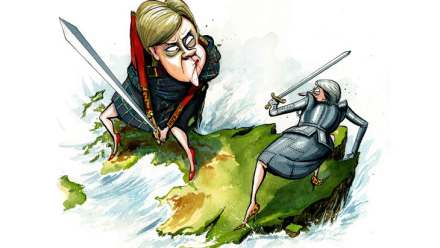
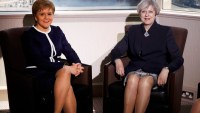
The top half of the front cover of the Daily Mail today is of course trivial: the big story of the meeting between Theresa May and Nicola Sturgeon is, obviously, the plummeting relations between Westminster and Holyrood and whether we will still have a United Kingdom in five years’ time. The big story is not the quality of two middle-aged women's legs. But it is also really rather brilliant in how it has worked as a bait for the Left – which by reacting in an absurdly overblown way has merely revealed its own obsession with trivia.

Theresa May’s Brexit speech in Scotland, full transcript

From our UK edition

It is very good to be with you here with you today, and particularly to be able to thank you all for the work you do on behalf of the Government and on behalf of the British people. Vital work that helps millions around the world and speaks strongly to the values that we share as a country. And it is vital work. Not just because the things you do here have a material impact on the lives of some of the poorest and most vulnerable people around the world. But also because the work you do here – in conjunction with your colleagues at the Department for International Development in London – says something important about Britain. It says that we are a kind and generous country.

Saving the children

From our UK edition

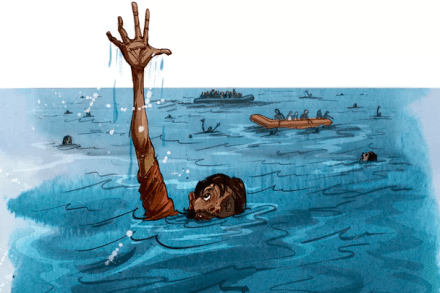
When a humanitarian tragedy disappears from our newspapers, there are two possibilities: that the crisis is over and life for survivors is gradually returning to normal — or that the human toll has become so routine as to no longer be considered newsworthy. Sadly, the deaths of migrants from North Africa and the Middle East as they attempt to cross the Mediterranean to seek a new life in Europe fall into the latter category. Eighteen months after the photographs of little Alan Kurdi’s body on a Turkish beach generated a huge swell of public emotion, entire families are still dying on a regular basis. In the first ten weeks of this year, some 525 people were lost crossing the Mediterranean. Europe is still no closer to ending this outrage.

The scale of Islamist extremism is a problem for MI5

From our UK edition

In her statement to the House of Commons, Theresa May said that the man responsible for yesterday’s attack was British-born and had previously been investigated by MI5 ‘in relation to concerns about violent extremism’. However, May stressed that, ‘The case is historic—he was not part of the current intelligence picture.'  Now, the fact that the attacker was known to the security services will lead to questions about why a closer watch wasn’t being kept on him. But there is, frankly, a volume problem here. The number of radicalised individuals is now so large -- there are several thousand Islamist extremists being monitored by MI5 -- that the security services have to be selective about who they keep the closest tabs on.

A way for both sides to claim Brexit victory

From our UK edition

Theresa May doesn’t do drama. She regards order as both a political and personal virtue. And this goes a long way towards explaining why she is Prime Minister. After the Brexit vote last June and David Cameron’s resignation, the Tories had had enough excitement. They turned to the leadership contender who was best able to project a reassuring sense of calm. It is in keeping with May’s approach that she has drained the drama from the triggering of Article 50, the start of the two-year process for leaving the EU. Other prime ministers might have been tempted to do it with a flourish — to feel the hand of history on their shoulder. But May has removed any sense of surprise by having her spokesman blandly declare that she’ll be sending the letter on Wednesday.

Theresa May tells the country to go about its business normally tomorrow

From our UK edition

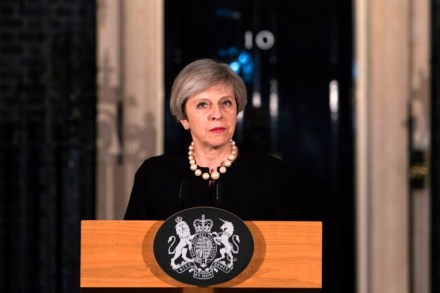
Speaking in Downing Street this evening, Theresa May has urged people to go about their business normally tomorrow. In a statement that struck an appropriately defiant tone, May said that the targeting of Westminster and the Houses of Parliament ‘was no accident’. But that that any attempt to defeat the values of ‘democracy, freedom, human rights, the rule of law’ through ‘violence and terror is doomed to fail’. Talking of the police officer who died in the attack, and the others who have been injured, she praised the ‘exceptional bravery of our police and security services who risk their lives to keep us safe’. This is the first terrorist attack that Theresa May has had to deal with as Prime Minister.

Westminster terror attack: Theresa May’s speech

From our UK edition

I have just chaired a meeting of the Government’s emergency committee, COBRA, following the sick and depraved terrorist attack on the streets of our Capital this afternoon. The full details of exactly what happened are still emerging. But, having been updated by police and security officials, I can confirm that this appalling incident began when a single attacker drove his vehicle into pedestrians walking across Westminster Bridge, killing two people and injuring many more, including three police officers. This attacker, who was armed with a knife, then ran towards Parliament where he was confronted by the police officers who keep us – and our democratic institutions – safe. Tragically, one officer was killed. The terrorist was also shot dead.

Jeremy Corbyn finally reads the Tory manifesto

From our UK edition

PMQs this week was a rather more even affair than usual. Since the Budget, the Labour leader’s team have clearly spent some time reading the Tory manifesto. Jeremy Corbyn came to the chamber armed with some decent questions about how proposed changes to the national funding formula broke the Tory manifesto pledge to protect the money that followed your child to school. This was a clever subject to go on as the Tory backbenches are not happy about this proposed new national funding formula.  In response, May kept pointing out that the issue of school funding was one that has been ducked for years by government despite a general acknowledgement that the current model is flawed.