Theresa may

The real significance of Theresa May’s meeting with Donald Tusk

From our UK edition

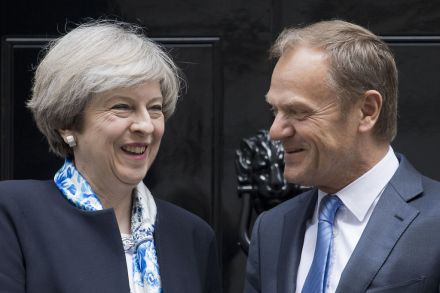
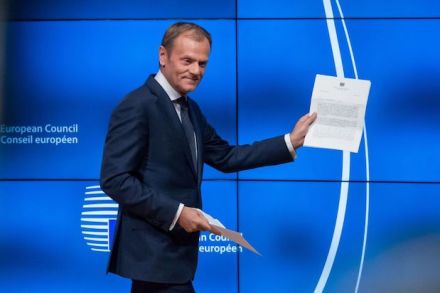
Donald Tusk, the President of the European Council, has been in Downing Street this afternoon meeting with Theresa May. The official readout of their talk is much as you would expect. Warm words about the hopes for a ‘deep and special partnership’, an attempt to calm things down over Gibraltar but nothing major as the EU 27 have yet to agree their negotiating position. But the real significance of this meeting is that it is meant to be one of a series between May and Tusk as the negotiations continue. This shows that the European Council—which represents the member states—wants to keep the Commission on a close rein during these talks. The May/ Tusk dialogue also creates a forum for breaking any logjams that might develop during the formal negotiations.

Let’s rein in Brexiteer triumphalism before we all go mad

From our UK edition

According to archaeologists and all the papers last week, the 11th-century villagers of Wharram Percy, North Yorkshire, used to mutilate their dead, chopping off their heads and breaking their legs to minimise the danger of zombie resurrection. ‘Imagine being afraid,’ I chortled while reading this, ‘that the undead might put you in mortal danger!’ Whereupon I flicked forward a couple of pages and came across Michael Howard’s plan to defend Gibraltar by sending a gunboat. Personally, I’m against the idea of war with Spain. Although I say that cautiously, because we Remoaners must not hold back the will of the people.

How to solve the Gibraltar problem – in the style of Donald Trump

From our UK edition

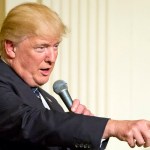
Two of the top tips in Donald Trump’s The Art of the Deal, of which I wrote last week even though he allegedly didn’t write it himself, are ‘Think Big’ and ‘Maximise the Options’, also expressed as ‘I keep a lot of balls in the air’. How should Theresa May apply that advice in response to Spain’s opportunistic bid to raise the issue of sovereignty over Gibraltar as a potential Brexit hurdle? She could, of course, offer a repeat of the 2002 referendum in which Gibraltarians voted 99 per cent ‘No’ when asked whether Britain and Spain should share the Rock’s sovereignty. But the ‘balls in the air’ gambit I have in mind for her is bolder than that.

Theresa May makes a stand against Saudi dress codes

From our UK edition

Well, Theresa May met half of the Foreign Office’s dress code for women in Saudi Arabia when she arrived there yesterday. Her coat was loose, you couldn’t take exception to her trousers, but it was the hair that was the great thing. She was bare-headed, just like Angela Merkel was when she turned up in the Kingdom. The vicar's daughter and the pastor's daughter have both made a stand, in a country where women normally have the equivalent of a bin liner to wear when it comes to fashion.  This kind of thing matters.  For a woman head of government to dress for a visit to the Kingdom pretty well just as she would have done anywhere goes right against the normal approach for important women going to Saudi.

Is Theresa May’s media honeymoon over?

From our UK edition

Is Theresa May’s media honeymoon over? The bungled Budget might have led to a raft of bad headlines for the Government, but these were mostly aimed in Philip Hammond’s direction. Today, the Sun turns its fire on the Prime Minister. The paper says May has ‘shown she understands what most Brits want’ from Brexit. But it adds a crucial caveat: ‘until now’. The Sun says that while it agrees with her plan to leave the single market behind, it is ‘deeply concerned by suggestions that free movement may apply for a further three years’ after Brexit. Most Brits who wanted out of the EU did so to tighten up Britain’s immigration policy, the paper points out.

Why has the Prime Minister waded into a fight about chocolate eggs?

From our UK edition

Cadbury has changed the name of its annual 'Easter Egg Trail' to 'Cadbury's Great British Egg Hunt', callously dropping any reference to the Christian festival celebrated by 31.5 million Brits. (Actually, the word 'Easter' appears multiple times in the marketing, but it’s out of the title, and that’s the important bit.) Theresa May has taken this as an opportunity to tell everyone yet again that she is the daughter of a vicar, calling the decision 'absolutely ridiculous' and reminding the country that Easter is 'a very important festival for the Christian faith for millions across the world'. So it is - far more so than the overhyped Christmas celebration.

Brexit is exposing the cowardice of conservatism

From our UK edition

The decision by Conservative MPs to walk away from the Commons Committee on Exiting the EU is one of the most unintentionally revealing abdications of duty I have seen. The report they refused to endorse was polite to the point of blandness. The necessity of securing cross-party approval meant that its restrained language bore little relation to the chaos in Whitehall the committee’s hearings had uncovered. In March, the committee’s chair, Hilary Benn, showed its extent when he submitted David Davis to a tough cross-examination which the Brexit Secretary was lamentably unable to withstand.

Can Anglo-Spanish relations survive Brexit?

From our UK edition

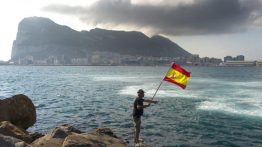
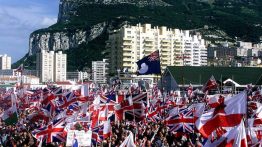
As the events of the last few days show, the increasingly toxic issue of Gibraltar means the UK's Article 50 talks with Spain might become more fraught than either party would like. It's not just that Spain wants to share sovereignty of the Rock with Britain; more dangerous is the fact that Brussels can exploit this dispute to punish the UK for Brexit. In fact, this weekend's fracas over Gibraltar's post-Brexit status shouldn't have caused the uproar it did. True, the document distributed to EU member governments on Friday by Donald Tusk highlighted Spain's ability to veto Gibraltar's inclusion in any EU-UK deal; but as part of the soon-to-be 27 member bloc, Spain already possessed that ability.

What the papers say: the Gibraltar row heats up

From our UK edition

Theresa May says the way to deal with the row over Gibraltar is ‘jaw-jaw’ rather than war. And there is plenty of chatter on the subject in today’s newspapers: Of course we don't want a war with Spain, says the Sun. But ‘nor will we sit quietly’ and let Madrid ‘launch its latest ridiculous attempt to claim the territory’. Some have said that Theresa May brought this mess upon herself, by failing to namecheck Gibraltar in her Article 50 letter to the European Union last week. This isn’t the case, says the paper, which points out that the PM is right to say the Rock’s ‘future is settled and its people aren’t a bargaining chip’.

Theresa May is heading for trouble over the Brexit ‘divorce’ bill

From our UK edition

ICM, who Vote Leave used for their own referendum polling, have some striking numbers on what elements of an EU exit deal British voters would find acceptable. 54 per cent of voters regard maintaining free movement as part of a transition deal - something that Theresa May wouldn’t rule out in her interview with Andrew Neil - as acceptable. However, there is clearly going to be a big problem with any exit payment. 64 per cent regard a £10 billion payment as unacceptable, with that figure rising to 70 per cent for a £20 billion payment—which is at the low end of what people in Brussels think Britain ought to pay. This, obviously, presents a political problem for May: how does she square the public on such a payment?

The EU’s Gibraltar mistake

From our UK edition

It was quite right for Theresa May to not mention Gibraltar in her Article 50 letter – why should the future of its people be in question in our negotiations? To do so would be to introduce a dangerous notion: that Gibraltar and its people were somehow a bargaining chip. Of course, the press will have fun with the idea that the Prime Minister forgot Gibraltar but far more plausible is Tim Shipman's story in the Sunday Times today that the idea of mentioning it in the Brexit letter was raised several times - and rejected. That the EU has brought Gibraltar up as part of the Brexit deals right now is strange and shows a worrying naivety on its part.

How good a businessman is Donald Trump?

From our UK edition

How good a businessman is Donald Trump? Maybe the answer doesn’t matter, since barring death or impeachment he’ll be the most powerful man in the world until January 2021, or even 2025, come what may. Or maybe it does matter, in the sense that the only positive spin to be put on his otherwise ridiculous presidency is that the irrepressible cunning of the real-estate tycoon will eventually win through for the good of America — and thereby, we must hope, the good of the free world — against opponents who have smaller cojones and less dealmaking prowess than the Donald does. ‘He’s the closer,’ declared White House spokesman Sean Spicer, shortly before his boss failed to close his biggest political deal so far, the American Health Care Act.

The joys of Brexit

From our UK edition

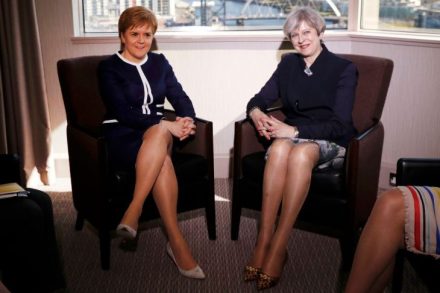
The thing that got me about the photo-graph which prompted the Daily Mail’s harmless but now infamous headline ‘Never mind Brexit — who won Legs-it!’ was what I shall call the Sturgeon Lower Limb Mystery. In the photograph, the SNP leader seemed to be possessed of two slender and very long legs indeed. Whereas we know from television news footage that her legs are only seven inches long from her toes to that bit where they join the rest of her body. Walking to Downing Street for meetings, or being interviewed on the hoof by camera crews, Nicola Sturgeon usually resembles a slightly deranged Oompa--Loompa, or, as many have commented before, Janette Krankie.

Theresa May’s Brexit negotiation has got off to a good start

From our UK edition

There’s an awfully long way to go, but the Brexit negotiations got off to a good start for Theresa May this week I say in The Sun today. Number 10’s great worry was that there would be an immediate no from the EU to what it proposed. That is why May’s Article 50 letter was written in such a conciliatory and constructive tone—it was meant to be impossible to simply say no to. This approach has had some success. In his negotiating guidelines, EU Council President Donald Tusk doesn’t suggest that the UK has to hand over the so-called divorce payment before trade talks can start—something which would have been unacceptable to the UK government.

Let’s compare Sturgeon and May’s sure-footedness – not their legs

From our UK edition

One must not make odious comparisons between Mrs May’s legs and those of Ms Sturgeon, but it is not sexist to ask which is the more sure-footed. So far, Ms Sturgeon has run much the faster, and by doing so has gained attention far in excess of the numbers she can command. Mrs May might look the more plodding. But as Ms Sturgeon charges forward yet again with a call for another referendum, I wonder if she is becoming like Bonnie Prince Charlie, who reached Derby, and then slipped.

Now is not a good time to be making enemies

From our UK edition

I always thought leaving the EU would be a cause for celebration, but the sight of Donald Tusk accepting the Article 50 letter this week just made me feel a bit sad, and that we had let down our friends and neighbours. One of the things Brexit has done is made me realise how European I feel, and I'm sure I'm not alone. I always found Vote Leave's whole Commonwealth shtick a bit disingenuous, because we have far more in common with the Dutch and the Germans than with most non-European countries, even those we did forcibly make part of our empire against their will.

Theresa May is right to be troubled about the prospect of Irish reunification

From our UK edition

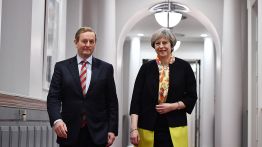
Amidst the apparent chaos in the days after the Brexit vote, one important story largely slipped under the radar. Now, the demand issued by Sinn Féin for a border poll on reunification of Ireland is resurfacing. Admittedly, back in June, it was difficult to know how much attention to pay to such a demand. Irish reunification is, after all, the entire purpose of the Irish Republican party. However, in the months since the referendum, the peripheral possibility of Irish reunification is starting to move centre stage. And the old platitude from Sinn Féin is morphing into a growing and credible movement on both sides of the Irish border. But it's not only Sinn Féin who are pushing for Irish reunification in the wake of Brexit.

What the papers say: The Great Repeal Bill is the ‘blueprint’ for taking back control

From our UK edition

The Great Repeal Bill has been unveiled - and Whitehall is already alive with the sound of copying and pasting as bureaucrats scramble to carry over EU law on to the statute book. With the Brexit clock ticking, is the Government up to the task? Make no mistake, this bill is the ‘the blueprint for restoring the supremacy of Parliament,’ says the Daily Mail. For nearly 50 years, ‘the unelected judges of the European Court’ have been in control of our legal system. But no more: ‘This Bill puts legislative power back where it belongs – in the hands of British MPs and British judges’. Of course, the process of doing so will be no mean feat.

Remainers must learn from the optimism of the Brexiteers

From our UK edition

In an age when people pride themselves on their cynicism, it's almost touching to remember that one of the most powerful forces in politics is still optimism. We may routinely dismiss politicians as self-serving vermin, but when the time comes, we generally choose the self-serving vermin who tell the best story of a brighter tomorrow. Better a smiling cockroach than a gloomy one. Optimism is one of the great fault-lines that run beneath the Brexit debate, one that helps explain why the Brexiteers are making the running and why those who still stand opposed to Brexit still have a lot to learn. Simply, the Brexiteers are setting the pace because they realise people want to hear good news, want to be told a story of improvement and success.

Moving on | 30 March 2017

From our UK edition

Most people are glad to see the end of a referendum campaign, but the losing side always wants to keep going. Nicola Sturgeon has this week demanded a second vote on independence, in defiance of public opinion. And as Brexit talks begin, the country is still divided, with many people wishing to see the negotiations break down and the referendum result be overturned. The Prime Minister will need to fight these two battles in different ways. In Scotland, she must take care not to fall into the nationalists’ traps. Ms Sturgeon ran for office promising not to call a second referendum unless it was ‘clear’ that a ‘majority of people wanted a referendum’. At the time, the SNP expected support for independence to rise.