Theresa may

The opposition-shaped hole in British politics

From our UK edition

If you want to judge the extent of the crisis that is paralysing the left, look at this morning’s Guardian. On the one hand you have an article from Abi Wilkinson, who tellingly doesn’t even mention the Labour leader’s name. Convincingly to my mind, Wilkinson argues that the May government ought to be in all kinds of trouble. May herself is an evasive and awkward politician. She is presiding over an NHS that has had more austerity than it can stand. The British Red Cross may have been guilty of hyperbole when it said the UK faced a 'humanitarian crisis' across the whole of its health service. But individual patients are finding that, as far as they and their families are concerned, a humanitarian crisis is exactly what they must endure.

Will Theresa May change her mind on an early general election?

From our UK edition

Downing Street has rejected William Hague’s call for a snap general election. The former Conservative leader argues in his Telegraph column today that this would ‘strengthen the government’s hand at home and abroad’, but Number 10 says this isn’t something Theresa May ‘plans to do or wishes to do’.  Theresa May is often compared to Gordon Brown, but one thing she will have learned from that previous Prime Minister was that to talk about an early election is a very bad idea, especially if it then turns out that it isn’t something that you wish to do either. But is she secretly keen on an early election?

Is anyone brave enough to fix social care?

From our UK edition

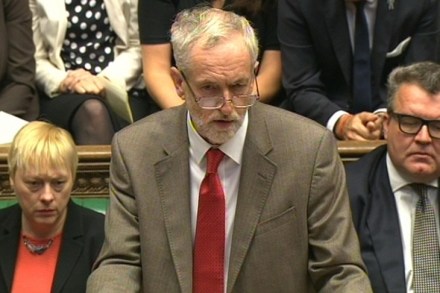
Social care is in crisis. Everyone knows that - or at least likes to say so to sound well-informed. It is Westminster’s latest trendy crisis - rich with case studies of elderly people trapped in hospital for weeks, or trapped in their beds at home with one flying fifteen minute visit a day in which a carer has to choose whether to bathe that elderly person or take them to the toilet. It is now a comfort blanket topic for Jeremy Corbyn to retreat to at Prime Minister’s Questions whenever he has run out of other things to ask Theresa May about. But is anyone doing anything about this crisis, other than talking about it? There’s a lot of talking big and very little action.

A Parliament veto on Brexit would guarantee a stinker of a deal

From our UK edition

Theresa May is warning Tory rebels that if Parliament gets a meaningful vote on Brexit, the European Union will be 'incentivised' to offer the UK a 'bad deal'. She is right. But that doesn’t mean the Prime Minister should dismiss the prospect of the House of Lords inflicting a second defeat on the government, with peers today set to back an amendment requiring Parliament to endorse the UK’s final Brexit deal. May should, in contrast, turn what looks like an inconvenience to her political and diplomatic advantage.

What the papers say: Why ‘Spreadsheet Phil’ is the Chancellor Brexit Britain needs

From our UK edition

You don't earn a nickname like 'Spreadsheet Phil' for being a showman. But is Philip Hammond's powder-dry demeanour and unwavering focus on the numbers actually his strong point? Yes, says the Sun, which suggests the chancellor’s cautious approach is exactly what Britain needs right now. The paper says that whereas Hammond's predecessors would use their Budget announcements to reach for ‘popularity-boosting giveaways’, not so the current incumbent at No.11 who takes a more sensible approach in saying ‘now is not the time for a spending spree’. ‘We couldn’t agree more,’ says the Sun, which warns of ‘greater challenges’ ahead.

A business rates rise benefits nobody

From our UK edition

I campaigned hard for a business rates review, and even tried to claim credit for it — or at least for its pro-northern bias — when details emerged last September. The smallest enterprises are exempt and the provinces will gain some benefit; but it’s clear that new rateable values from 1 April will impose undeservedly harsh rises on mid-sized businesses in London and the south-east. I’m even feeling a twinge of sympathy for Victoria Beckham, whose Dover Street boutique reportedly faces a 415 per cent hike. Philip Hammond, meanwhile, is in ‘listening mode’ — not least, we might imagine, when accosted by furious shopkeepers in his Runnymede and Weybridge constituency — and is expected to introduce extra reliefs in his Budget next week.

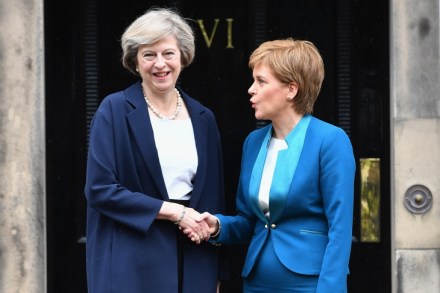
Theresa May turns the tables on Nicola Sturgeon over a second referendum

From our UK edition

Although Nicola Sturgeon has said a second independence referendum is 'highly likely', a recent poll suggests that the Scottish people are inclined to disagree. Earlier this year, a Panelbase survey found that support for a second independence referendum before the UK leaves the EU is at just 27 per cent. What's more, the majority of Scots -- including some who back independence -- are not in favour of a second referendum within the next year or two. This is why both the SNP and the Tories are currently at pains to blame the other side for any future referendum.

Carry on, Major

From our UK edition

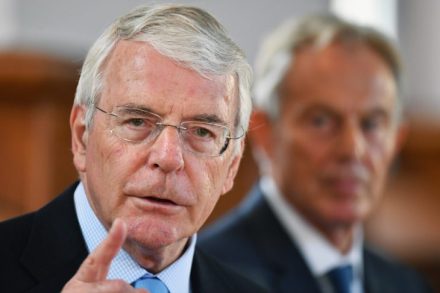
As Prime Minister, John Major was intolerant of opposition from within the Conservative party over the EU — memorably calling Maastricht rebels ‘bastards’. It was unwise, and the bad blood it created within his party has been swirling around ever since. Now that the tables have turned and Sir John now finds himself the rebellious outsider on Europe, it is tempting for those on the Conservative party’s Eurosceptic wing, who for so long were denounced as freaks, fruitcakes and swivel--eyed loons, to take the same approach. Their instinct is to denounce Sir John, Michael Heseltine, Ken Clarke and others as dinosaurs seeking to deny the will of the British people.

In defence of compulsory sex education

From our UK edition

There are two ways to protect children from the damaging and misleading depictions of sex they get from online pornography. One is to give them comprehensive age-appropriate sex education, so that they understand porn is not a guide to real life and have the information to process what they see. The other is to ban porn for everyone, adults included. David Cameron’s government tried the latter approach, with mandatory safeguards enforced by internet providers and censorship of adult websites.

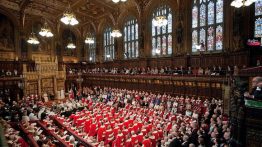
What the papers say: The Lords’ ‘insidious plot to thwart democracy’

From our UK edition

When the House of Lords voted against the Government's Brexit bill last night, peers won't have been expecting much in the way of thanks in today's newspapers. But the ferocity of the attacks on the Lords could still come as something of a surprise: it’s time for the Lords to go, says the Sun in its editorial this morning in which it accuses peers of trying to ‘hobble the PM’ in Brexit talks. The paper describes the Government’s defeat last night as ‘contemptible’ and ‘short-sighted grandstanding’, and says the session showed that Lords wanted to make it clear ‘how much they care about EU citizens’  -with no regard for British citizens living on the continent.

From now on, I’ll greet Brexiteers with a grin

From our UK edition

I’m cheering up about Brexit. The moaning has to stop. Why be downhearted and edgy when you’re confident of your argument? Leavers: you’re all wrong. I’m not totally sure — one never can be — and certainly I could be mistaken: and one day we’ll know. Meanwhile I place my confidence in the judgment of those in British politics I most admire, people like Michael Heseltine, Chris Patten, John Major, Ruth Davidson and Kenneth Clarke; and, sticking to my guns and with a merry two fingers up to the lot of you, I leave you Brexit types to the snarling din emanating from your Brexit cave. Chins up, Leaver trolls — you won — remember? It’s all going to be fabulous — remember? Why the cross faces?

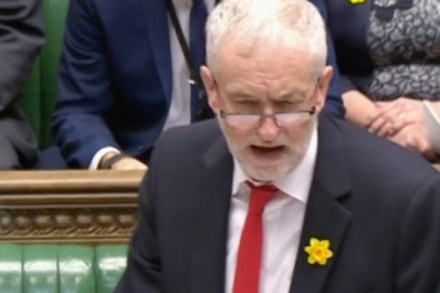
Today’s PMQs only really got started when Corbyn sat down

From our UK edition

The clash between the Leader of the Opposition and the Prime Minister used to be the main event at PMQs. But this is fast ceasing to be the case. The most interesting bit of today’s session came after Corbyn had finished asking May questions. In her exchanges with Angus Robertson, May refused to confirm that all powers in devolved areas, such as agriculture and fishing, would go to Holyrood post Brexit. Now, there is—obviously—a bit of Nationalist grievance hunting going on here and having multiple agricultural regimes within the UK would not be entirely sensible. But it would be a mistake if Brexit did not lead to a more powerful Scottish parliament. We have got used to patsy questions to Prime Ministers from their own side.

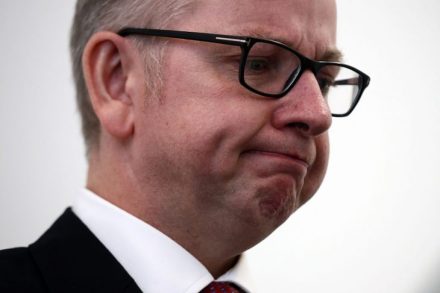
Is Michael Gove angling for a cabinet return?

From our UK edition

I never expected to be writing the following, since Michael Gove is, to me, one of the few heroic figures in modern politics. But he did write a very strange column in the Times last week, inciting the government to ‘Put VAT on school fees and soak the rich’. He seems to be outraged that what he calls ‘the education of the children of plutocrats and oligarchs’ is a charitable activity. Private schools get rate rebates, VAT exemptions and free uniforms, weapons etc for their cadet forces, he says. This is ‘egregious state support’. He also mocks the many bursaries provided by public schools, on the grounds that these have ‘left behind’ all those who do not receive them.

What the papers say: ‘Moaning’ Major’s unwelcome Brexit intervention

From our UK edition

The ghosts of Prime Ministers past aren’t making life easy for Theresa May. John Major has now followed in the haunted footsteps of Tony Blair by criticising his successor’s approach to Brexit. Major used a speech yesterday to say people are being offered an ‘unreal’ vision of Brexit by the Government. Unsurprisingly, Major’s intervention has won him few friends in the newspaper editorials this morning. The Sun says it’s good news that Theresa May - and not John Major is in charge. After all, if the former PM was involved in Brexit talks, his ‘defeatist gloom’ would inevitably mean  that things 'would end as badly as he ­predicts’.

Nicola Sturgeon’s ‘neverendum’ is hammering the Scottish economy

From our UK edition

Its economy will be destroyed by leaving the single market. Losing access to European sales will destroy swathes of industry, and without free movement, employers will be crucified by skill shortages. Nicola Sturgeon is no doubt already preparing her lines for a vote on Scottish independence once the UK leaves the EU. Right now, that looks as if it could come a lot sooner than anyone imagined. It is reported that as soon as the Prime Minister Theresa May triggers Article 50 and starts the process of leaving the European Union, Scotland’s First Minister will announce plans for a second referendum on independence – a demand that May could find impossible to resist. But hold on.

The Spectator podcast: May’s third way

From our UK edition

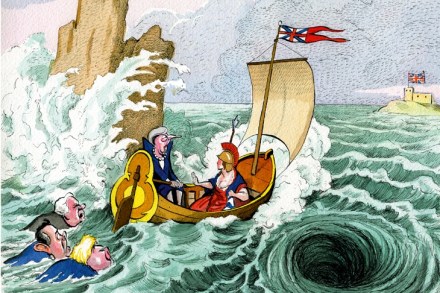
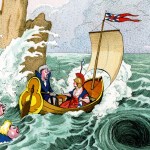
On this week's Spectator podcast, we discuss Theresa May’s Third Way, whether we could have an Uber for social care, and look at Mies van der Rohe’s unrealised plans for a Mansion House skyscraper. On the cover of this week's magazine, Theresa May plots a course through the twin perils of Scylla and Charybdis, as she creates a new centreground between nationalism and globalism. So says James Forsyth, who writes this week on the new binary that has emerged in international politics. James is joined to discuss this on the podcast by Spectator editor Fraser Nelson. On the emergent dichotomy, James writes that: "Forget left and right — the new divide in politics is between nationalists and globalists.

Brexit and the rise of the superliar

From our UK edition

For an exercise in popular sovereignty, which was meant to take decisions away from the hated 'elite', the Brexit referendum has, inevitably,  produced Britain’s greatest outbreak of political lying. Yesterday’s liars look pale and wan in comparison with the latest models. It is as if the long-awaited singularity has occurred. But rather than advances in technology creating a new species of artificial superintelligence , the advance of plebiscitary politics has created a new species of artificial superliar. The liars of the past were often furtive figures. Like the man who has staggered home at 3 a.m. and tried to explain away the beer on his breath and lipstick on his collar, you did not know whether to shout at them or laugh at them for insulting your intelligence.

The new third Way

From our UK edition

Forget left and right — the new divide in politics is between nationalists and globalists. Donald Trump’s team believe that he won because he was the America First candidate, defying the old rules of politics. His nationalist rhetoric on everything from trade to global security enabled him to flip traditionally Democratic, blue-collar states and so to defeat that personification of the post-war global order, Hillary Clinton. The presidential election in France is being fought on these lines, too. Marine Le Pen is the nationalist candidate, a hybrid of the hard right and the far left. She talks of quitting the European single currency and of bringing immigration down to 10,000 a year, while cursing international capitalism with an almost socialist fervour.

A quick trade deal with the US after Brexit is less likely than we think

From our UK edition

It is many a Brexiteer’s fantasy: In 2019, shortly after the UK formally leaves the EU, Theresa May welcomes Donald Trump to Downing Street to ink a trade pact. Out with the old, in with the new, and the ‘special relationship’ standing tall. But how likely is that scenario? A trade deal would certainly be politically meaningful for both sides. For Trump, who is facing pressure over his protectionist rhetoric, it would be an opportunity to boost his pro-trade credentials. While Theresa May could use it to show that Britain has trade options beyond the EU. The prospect of a deal with the US could also boost her hand when it comes to bargaining with Brussels over Brexit.

Cabinet wastes time with discussion on something it already agrees on

From our UK edition

If ever you wanted to understand what Theresa May’s relationship with her top ministers is like, today’s Cabinet meeting provides some insight. The ‘majority’ of the session, which lasted more than an hour, was taken up with a discussion about the importance of the Union. Not a discussion in which any of the problems raised by Brexit for the Union, such as the problems with the land border between Northern Ireland and Ireland, were addressed, but a general discussion on how everyone present supported the “most successful political union of countries that has been seen”.