Theresa may

The real victims of this snap election? The bankers’ wives

From our UK edition

The people I feel most sorry for in the wake of Theresa May’s shock announcement are not moderate Labour MPs, nor even the pollsters, who really will be in trouble if they get another election wrong. No, it’s the bankers’ wives of west London. If the EU is going to be the No.1 issue in the campaign, and the Tories are standing on a pro-Brexit platform, how will the poor dears vote? On the one hand, they were very, very angry about the outcome of the EU referendum and, even today, they’re not above buttonholing leavers at cocktail parties and giving them the hairdryer treatment. They regard David Cameron as criminally negligent —‘How could he let this happen?’ — and Theresa May as a ‘turncoat’.

Expect the unexpected in Theresa May’s pointless poll

From our UK edition

A general election is called and in a matter of hours a neutral and unbiased BBC presenter has likened our Prime Minister to Recep Tayyip Erdogan. Governments rise and governments fall, but some things stay just as they always were. It was Eddie Mair on Radio 4’s PM programme who made the comparison, while interviewing the Home Secretary, Amber Rudd. In fairness to Mair, he had been alluding to Theresa May’s apparent wish to create ‘unity’ within Westminster, a truly stupid statement within an address which sometimes made no semantic sense and sounded, to my ears, petulant and arrogant. Then along came the opinion pollsters to tell us exactly what will happen on 8 June — except they declined to be too explicit.

The Tories don’t need silly pledges to scare off Labour in this election

From our UK edition

We are coming to the end of the first week of an election campaign that few were expecting when this week began. The parties are drawing their battle lines: the Tories are warning of a happy Vladimir Putin and a 'coalition of chaos' involving the SNP, Labour and the Lib Dems, while Labour is making this an anti-establishment election (though what precisely the Establishment is up to and which naughty coffee chains it involves remains vague, even for the party's MPs promoting that message on the airwaves). The Lib Dems, meanwhile, had long worked out their pitch as the anti-Brexit party. Of course, not all Labour MPs are talking about the way the Tories are 'rigging' the system or how Jeremy Corbyn proposes to solve that.

Nigel Farage will always have more power outside Parliament

From our UK edition

It's easy to mock Nigel Farage over his decision to turn down an 'easy win' in Clacton or some other Westminster constituency in preference for the hard graft of the European Parliament and its excruciating regime of expenses and allowances. Easy, but quite likely wrong.  Whether or not he ever sets foot in Parliament, Farage can already claim to have changed British history. His role in the Brexit referendum result is debateable; his role in bringing about that referendum isn't.   Just in case the story needs retelling, Farage did it by forming a connection between two issues: Europe and immigration. Until that linkage was made, Ukip was an ignorable splinter of the Conservative Party.

Theresa May doesn’t trust enough people for a power ‘circle’. A triangle, maybe

From our UK edition

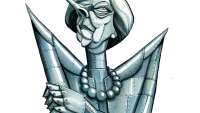
The fact that nothing leaked about Mrs May’s snap election tells you much of what you need to know about her. It shows how iron is her discipline and how close her inner circle (so close, in fact, that it is a triangle rather than a circle). It suggests that she takes neither her cabinet nor her party into her confidence. It shows that if she wins the general election, her control of her administration will be much tighter than that of Margaret Thatcher (which was surprisingly loose) and even than that of David Cameron (which was surprisingly tight). Finally, it shows that if she loses, or gets a result no better than the present parliamentary arithmetic, she will find herself friendless.

What the papers say: Jeremy Corbyn does pose a threat to the Tories

From our UK edition

Theresa May is riding high in the polls and there’s much talk of a Tory landslide - but that doesn’t mean the Government should rest on its laurels, says the Daily Telegraph. It’s vital, the paper says, that the PM does her best to ‘create a sense of urgency among the voters’; ‘They have to understand the dangers of not coming out to support her,’ the paper adds. Of course, some might laugh at the prospect of Corbyn making it to Number 10 - yet it’s just that sense of ‘impossibility’ that the Labour leader ‘hopes to exploit’.

Diary – 20 April 2017

From our UK edition

We are all drama queens, really, we political hacks; and so we were all thoroughly delighted by Theresa May’s Tuesday coup. I have long been arguing that we would have an election this year, and I had been beginning to feel lonely. But one big thing I got wrong: it had seemed to me in January that a Brexit election would shatter much party discipline, since the voters would be principally interested in where candidates stood on the Great Issue and both Tories and Labour were deeply divided about it. However, by framing the current contest in the way she has, May has deftly but brutally carved away the long and substantial tradition of Tory pro-EU politics. In this election, to be Tory is to support her uncompromising version of Brexit.

The Spectator’s notes | 20 April 2017

From our UK edition

The fact that nothing leaked about Mrs May’s snap election tells you much of what you need to know about her. It shows how iron is her discipline and how close her inner circle (so close, in fact, that it is a triangle rather than a circle). It suggests that she takes neither her cabinet nor her party into her confidence. It shows that if she wins the general election, her control of her administration will be much tighter than that of Margaret Thatcher (which was surprisingly loose) and even than that of David Cameron (which was surprisingly tight). Finally, it shows that if she loses, or gets a result no better than the present parliamentary arithmetic, she will find herself friendless.

Portrait of the week | 20 April 2017

From our UK edition

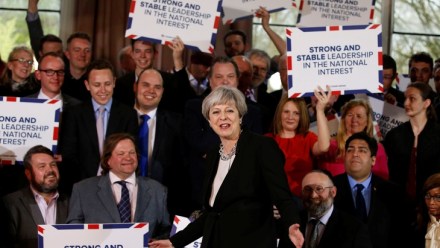
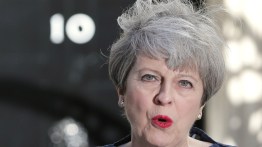
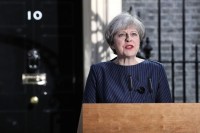
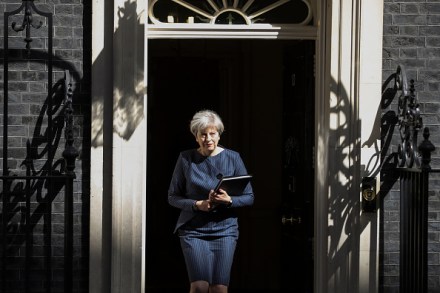
Home Theresa May, the Prime Minister, having repeatedly said that there would be no election until 2020, surprised the nation by suddenly standing at a lectern in Downing Street, while the wind ruffled her hair, and saying that she sought a general election on 8 June. ‘Britain is leaving the EU and there can be no turning back,’ she said. ‘The country is coming together but Westminster is not.’ She said later that she had taken the decision after a walking holiday in Wales, and had spoken to the Queen on Easter Monday.

The Spectator Podcast: Election special

From our UK edition

On this week's episode, we discuss the two European nations that are are heading for the polls in the next couple of months. First, we look at Theresa May's shock decision to hold a snap election, and then we cross the channel to consider the French election as they get set to whittle the field down to just two. With British news set to be dominated until June 8th by election fever (yet again), there was no place to start this week but with the fallout from the Prime Minister's stunning U-turn on an early election. It's a gamble, James Forsyth says in his cover piece this week, but with a portentially enormous pay off. James joins the podcast along with Bobby Duffy from Ipsos MORI and Richard Angell director of Progress.

What the papers say: The manifesto pledges Theresa May must make

From our UK edition

The General Election campaign is officially underway - and the newspapers have wasted no time in compiling their wish lists. Here are the policies the papers want to see put into practise: Theresa May’s plan for Brexit - leaving the single market and being ‘free from EU courts’ - gets the wholehearted backing from the Sun. But this election is not only about Brexit, argues the paper. For one, the PM must give ‘proper help — not just lip service — for the 'just about managings'’. Tax cuts would be a big boost, suggests the paper, which says these could be paid for by taking away ‘state-funded perks for richer OAPs’.

There is something grubby about Theresa May’s snap election

From our UK edition

Since I suggested last July that Theresa May, newly anointed as leader of the Conservative and Unionist party and Prime Minister of the United Kingdom of Great Britain and Northern Ireland, should call an election to both establish her own legitimacy and allow the country an argument over the kind of Brexit it preferred, it would be unseemly to now deplore her belated decision to go to the country.  Happily, there remain many other things that may be deplored. Far from the least of these is the manner in which the Prime Minister has made her case for an election. It’s not her fault, you see, that she has (correctly, in my view) gone back on her word. She remains a pretty straight kinda gal, you know.

The exodus of Labour MPs is underway

From our UK edition

Who'd be a Labour MP? Despite the best efforts of the Parliamentary Labour Party, Corbyn is going nowhere and, if the polls are to be believed, he's leading Labour to electoral oblivion. A general election landslide is on the cards for the Tories, with some estimates suggesting the Government could boost its majority by more than 100 seats come June 8th. Much of this surge will it seems, inevitably, come at the expense of Labour MPs. And for some, the prospect of a snap election has led to them calling time on their Parliamentary careers. Here is the full list of the Labour MPs doing just that: Gisela Stuart, who represents Labour in Birmingham Edgbaston, said she was ending her 20 year spell in the Commons ahead of the snap election.

What can May say to the Tory Remainers?

From our UK edition

I don’t see it. I do not see the anatomy of how it all pans out. Theresa May will be the next Prime Minister because, jeez, who else is going to be? What I cannot see, though, is what she says, and to whom, along the way. Most of all, I cannot see what she says to Remainers. ‘Who cares?’ you may be thinking, and ‘get over it’ and ‘you lost’ and so on. Yet these arguments, while powerful, only get us so far. The fact is, quite a lot of people who formerly voted Conservative also voted Remain. In Mrs May’s own constituency, indeed, she may have a majority of a smidge over 29,000, but she also faces an electorate who, by a margin of almost 8 per cent, voted against leaving the European Union.

What I expect from this pointless election

From our UK edition

A general election is called and in a matter of hours a neutral and unbiased BBC presenter has likened our Prime Minister to Recep Tayyip Erdogan. Governments rise and governments fall, but some things stay just as they always were. It was Eddie Mair on Radio 4’s PM programme who made the comparison, while interviewing the Home Secretary, Amber Rudd. In fairness to Mair, he had been alluding to Theresa May’s apparent wish to create ‘unity’ within Westminster, a truly stupid statement within an address which sometimes made no semantic sense and sounded, to my ears, petulant and arrogant. Then along came the opinion pollsters to tell us exactly what will happen on 8 June — except they declined to be too explicit.

Jeremy Corbyn is already anticipating his political extinction

From our UK edition

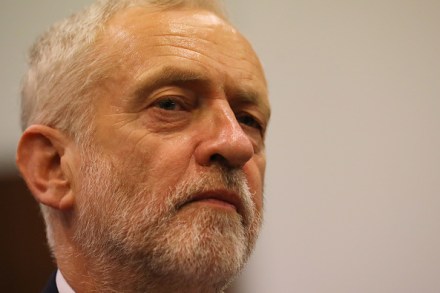
Just seven weeks till Jezza-geddon. The Labour leader seemed to anticipate his political extinction with a dead-sheep performance at PMQs. Poor Corbo. He’s never shaken off the air of Speakers’ Corner. He belongs outdoors, with a step-ladder and a bull-horn, ranting away at tourists and pigeons. Today he was faced with a carefully drilled Tory militia eager to demonstrate their unity. It was impressive but dispiriting as well. Every preferment-seeker and red-box wannabe on the backbenches had been ordered to lace their query to the PM with extravagant praise of Tory economic genius. Up they popped, in wearying succession, the pliable Pippas, the malleable Marys, the robotic Richards, the pushover Pauls. It wasn’t a debate. It was a flash-mob of Duracell Bunnies.

Theresa May is right to say no to a TV debate

From our UK edition

I worked on the first TV debate of the Scottish referendum. I was involved in countless more. I was to be found on the production team for televised clashes during the 2015 general election and the 2016 vote for Holyrood. So I speak with some experience when I say TV debates are a terrible idea. Theresa May's refusal to participate in any is the first good news to come out of the general election. When the format debuted in 2010, I was optimistic. Here was an opportunity to extract a good deal more honesty and accountability from the overspun and media-managed Gordon Brown and David Cameron. Cleggmania (remember that? Come to think of it, remember him?

The Tory party should not forget George Osborne’s role in its revival

From our UK edition

George Osborne’s decision to stand down as an MP is a sign of how impregnable Theresa May’s position is perceived to be. Osborne is the most politically formidable of the Tory sceptics of May’s Brexit plan, and his decision to quit the Commons suggests that he doesn’t think she’ll come unstuck in the next parliament. Of course, Osborne has others things to occupy himself with: the editorship of the Evening Standard and his lucrative work for Black Rock. But one suspects that he’d have been prepared to brazen out the criticism over his multiple jobs if he thought there would be a political sea change in his wing of the party’s favour in the next parliament. Osborne’s departure from the Commons will further denude it of experience.