Theresa may

Theresa May’s exhaustion makes more blunders inevitable

From our UK edition

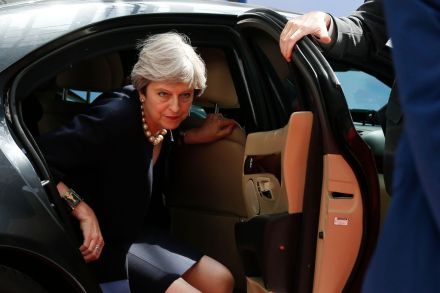
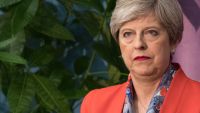
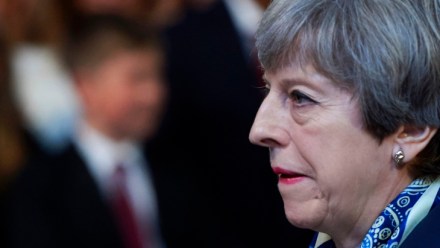
Theresa May’s body language on leaving the European Council summit last night shows quite how much of a toll the past few weeks have taken on the Prime Minister. She looks exhausted. Now, you don’t have to feel sorry for May: she did, after all, decide to call the snap election that has proved to be her undoing - even though so many people thought she would be mad not to call it with the Labour party appearing to be so weak. But it is worth noting that the most important people in government - and the most important people involved in the attempts to keep the government together - are all totally exhausted and that this exhaustion inevitably has an impact on the way government works.

A threadbare Queen’s Speech isn’t such a bad thing

From our UK edition

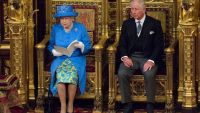
Can you remember what was in this week’s Queen’s Speech? Boris Johnson couldn’t on the day it was unveiled, making a total mess of trying to sell it on Radio 4’s PM programme. But as the week draws to an end, the main question about the Speech is whether it will pass unamended, not whether the legislation it includes will make much of a difference.  But is a ‘threadbare speech’ really such a bad thing? Governments of all hues suffer from a compulsive disorder that leads them to legislate merely for the sake of it.

Corbyn overtakes May on question of who would make the best PM

From our UK edition

Would Jeremy Corbyn or Theresa May make a better Prime Minister? In April, when Theresa May called the election, that question was barely worth asking: 54 per cent backed May compared to just 15 per cent who opted for Corbyn. Now that’s all changed. For the first time, Jeremy Corbyn has overtaken Theresa May on the question of who would do the best job running the country. A YouGov poll in the Times today puts Corbyn on 35 per cent; just 34 per cent picked the PM. We don’t necessarily need a YouGov survey to tell us but this demonstrates the utter collapse in Theresa May’s popularity. More troublingly for the Tory party, it also shows exactly why the party should be so worried about the prospect of a fresh general election.

What are the Conservatives for?

From our UK edition

Should it be Boris? He was twice elected mayor of a Labour city and if the Tory mission is to stop Jeremy Corybn, surely you need someone charismatic to see off a populist. Then again, David Davis is a dependable caretaker, a bruiser who can hold the line on Brexit. Or why not skip a generation? There’s the articulate Priti Patel and the accomplished Dominic Raab. And to make this party go with a bang, why not ask Michael Gove to be someone’s campaign manager? He’ll change his mind on the day and then: pow! They’ll all form a circular firing squad, like last time, and whoever’s left standing wins. To their credit, the Conservatives recognise their capacity for self-destruction.

Letters | 22 June 2017

From our UK edition

May’s convictions Sir: Nick Timothy seeks sympathy by revealing that his ‘loved ones’ are upset by the personal attacks to which he is now subject (Diary, 17 June). They could have been spared distress if he had not invited retaliation by swearing at senior ministers and civil servants who crossed him. How could a prim vicar’s daughter have allowed endless profanities from this ill-mannered man and his ill-tempered associate Fiona Hill? Perhaps Timothy’s most extraordinary claim is that ‘a return to traditional campaigning methods’ was planned but Lynton Crosby vetoed it. Traditionally the Tories did not contract out their campaign to consultants charging vast fees. The leader and party chairman took charge. The manifesto was carefully costed.

The Spectator’s Notes | 22 June 2017

From our UK edition

How much longer can it go on? Deaths caused by terrorism are always followed now by candlelit vigils, a minute’s silence, victims’ families/ government ministers/emergency services/clergy/imams all clustered together, walls of messages and flowers, flags at half-mast. Instinctively, I feel uneasy because the meaning of it all gradually suffers attrition, and also, perhaps, because it asserts a solidarity which isn’t quite there. Yet the fundamental cause of mourning is true and deep enough — it is first for the dead, then for a civilisation which may be dying. In these pages, on 4 February, Matthew Parris wrote that Brexiteers seemed very anxious, despite having won.

Labour and the Lib Dems are as much to blame as the Tories for Grenfell Tower

From our UK edition

I haven’t been in Camden this afternoon, so I can’t vouch for there being no marches of activists holding banners with the words ‘Labour Out’ and ‘Corbyn Must Go’, but somehow I doubt there are – and I certainly haven’t seen them on the news. But why not? Last week we saw no end of left-wing activists out on the streets trying to exploit the Grenfell Tower tragedy for their own party political purposes – trying to present it as a case of callous Tories treating the lives of the poor as worthless as they slash their way through budgets with abandon.   Yes, Kensington and Chelsea is a Conservative-controlled borough but it turns out that is was far from alone in cladding its tower blocks with flammable cladding.

How many other blocks like Grenfell Tower are there in Britain?

From our UK edition

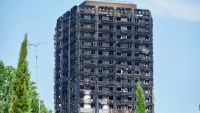
Theresa May was rightly criticised for her response to the Grenfell Tower blaze. The Prime Minister’s decision not to initially meet survivors or relatives of those killed looked dreadful, and in the days after the fire there was a real risk that what happened was being pinned squarely on the Tories. While it was right to criticise May for her initial failings though, it also seems fair to say that the Prime Minister’s statement this morning was faultless - at least in terms of helping those on the ground in Kensington. Yet her remarks now raise troubling questions about how many other blocks like Grenfell Tower there are across Britain. For those affected by the Grenfell Tower fire, it is clear the Government is determined to make up for lost time.

What the papers say: The Tories are in office but not in power

From our UK edition

This was a Queen’s Speech to fit the ‘sombre mood of the nation’, says the FT. ‘British politics is in a state of paralysis,’ and the government’s plan ‘was notable for what it lacked’, the paper says - pointing to the key manifesto pledges cast aside. It’s good news that some of these policies - such as a free vote on the hunting ban - are gone. But there's further good news, too, in the form of Theresa May’s ‘belated recognition of the complexity of the Brexit process’, the FT says. Indeed, ‘Mrs May’s monopoly over the terms of Brexit has also been broken’ - with Philip Hammond among those now speaking their mind more freely about Britain’s departure from the EU.

If Jeremy Corbyn can rise from the depths, why can’t Theresa May?

From our UK edition

When John Curtice speaks, listen. That's one thing we learned in the general election. This week we hosted John at the Social Market Foundation, where he explained just what actually happened on June 8. Among his many observations was that Jeremy Corbyn really had done something unprecedented: he changed the way voters saw him, for the better. In John’s view, no one has ever done this before. Public opinion of Corbyn was settled: he was useless. And voters, once they've decided you're useless, don't change their minds.  But they did. They still don't think Corbyn is brilliant, but they don't dismiss him the way they used to. The great Curtice brain holds no other example of such a change. Truly, we live in an age of miracles.

Corbyn regains his confidence – but his Brexit troubles aren’t far away

From our UK edition

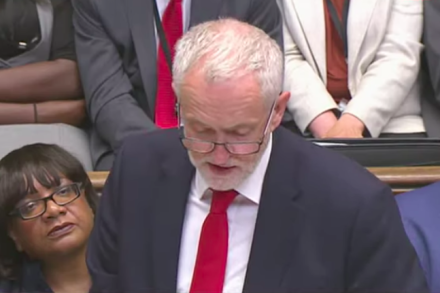
Today’s exchanges between Theresa May and Jeremy Corbyn in the Commons following the Queen’s Speech showed how much difference confidence makes to a leader’s performance. While Corbyn will never be a scintillating orator - speaking for far too long and ending with a sentence that seemed to be aimed more at entering the Guinness Book of Records than at making any sense - he made the most of the opportunity that such a threadbare speech presented him with. The election result may not have delivered him into government, but it has made him look like far more of a winner than the woman who called the poll.

The Queen’s Speech was diluted – but Theresa May’s strategy hasn’t changed

From our UK edition

Brexit will dominate political and parliamentary life for years to come. The weight of EU exit legislation announced in the Queen’s Speech could, as someone once said, stun a team of oxen in its tracks.  Not too long ago, a cabinet minister involved in these things told me that the 'Great Repeal Bill' alone could consume most of a standard parliamentary session. There are now seven more bills, covering such trifles as Britain’s immigration system, trade policy, customs arrangements, farms and fisheries. Parliamentarians will be wading through Brexit legislation for years to come, and every line of every bill could have real impact on British companies and people. Remember that when you hear analysts saying this was a thin or lightweight speech.

Queen’s Speech: the full guide to what’s been scrapped

From our UK edition

Today's Queen Speech was supposed to be a moment of crowning glory for Theresa May. Instead, it's a muted affair, with the Tories' plans for Government left in tatters as a result of their blown majority. 'Strong and stable' is out; in comes 'humility' and 'resolve' - and the party's manifesto has been largely binned. Here's what didn't make the cut: Donald Trump's state visit: The Queen's Speech made no mention of Donald Trump's state visit to the UK. Downing Street was insisting recently that there was no change to the schedule following Theresa May's invitation which she offered to the President back in January. It's clear this isn't the case and the visit has now either been postponed or downgraded from a state visit.

Queen’s Speech: Theresa May bins her manifesto

From our UK edition

Today's Queen's Speech is notable not for what's in it, but for what's been left out. With no Tory majority and no agreement with the DUP, Theresa May has had to gut her 2017 Conservative Manifesto. The fact that the legislation 'trailed' on the eve of the speech included plans to tackle nuisance whiplash compensation claims and a ban on letting fees that was first announced last year, just demonstrates how sparse it is on new legislation. In terms of what has been put in the dustbin, the list is lengthy. The plan to cut free school lunches has been scrapped, along with May's plans for more grammar schools. There is no mention of winter fuel allowance being means tested or the energy price cap proposal. Social care is mentioned but there is no mention of the so-called 'dementia tax'.

What the papers say: The Queen’s Speech is the Tories’ last chance

From our UK edition

Today’s Queen Speech will be a muted affair, with Her Majesty dressing down for the opening of a Parliament which will stretch the Conservative Government to the limit. Theresa May heads into the new session with no majority, precious little political clout and the huge task of Brexit looming. Can the Tories somehow make it work? It’s now been nearly two weeks since the general election - yet the ‘cloud of uncertainty’ still hangs in the air, says the Daily Telegraph. There’s no reason why this should be so, argues the paper, which says the Government messed up by claiming last week that a deal with the DUP was imminent. This premature announcement has turned talks into ‘a high-stakes act of political brinkmanship’.

The Euro’s badly-needed reform could finally be on the cards

From our UK edition

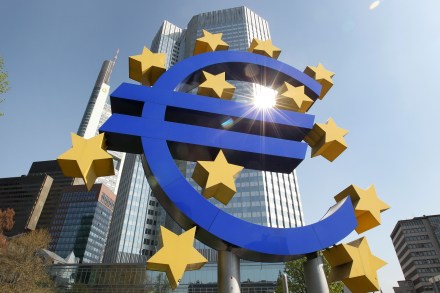
Has Germany finally started to shift its position on the future of the Eurozone? Speaking today, at a conference for the German equivalent of the CBI, Chancellor Angela Merkel appeared to open the door to a new form of governance for the 19-country bloc. Since the financial crisis, the common currency zone has bounced from crisis to crisis, surviving by kicking the can down the road at each critical moment. It has long been obvious that major institutional changes were required to ensure the currency’s long-term viability.

DUP pushes a hard bargain as talks with Tories stall

From our UK edition

Tomorrow Theresa May will present a Queen’s Speech that doesn’t have the formal support of a majority of the House of Commons. Her negotiations with the DUP still haven’t concluded, with party sources this afternoon warning the Conservatives that they won’t be ‘taken for granted’ and criticising the way May and her team have conducted the negotiations. It’s almost as though the DUP know a thing or two about how to negotiate: certainly a thing or two more than Theresa May and her team. Party sources even dropped hints about the implications of these negotiations for May’s success in Brussels, hitting one of the most sensitive spots for the Tory leader.

Labour is now the party of the middle class

From our UK edition

I'm not sure I've ever been so pessimistic about this country's future, and I'm not usually a barrel of laughs to start with. Aside from the terrorism, and the recent tragedy in North Kensington, there are real black clouds in the distance. Investors are being put off Britain, a problem that pre-dates Brexit but is surely aggravated by it. There seems little hope that the Tories will follow Philip Hammond in pursuing a more moderate line in Europe. (Would the catchphrase 'Stop, Hammondtime', galvanise the public, I wonder? Kids still like MC Hammer right?). Meanwhile the opposition - even moderate members - are now calling for people's private property to be 'requisitioned', using heightened anger and emotion in order to trample over the most fundamental of rights.