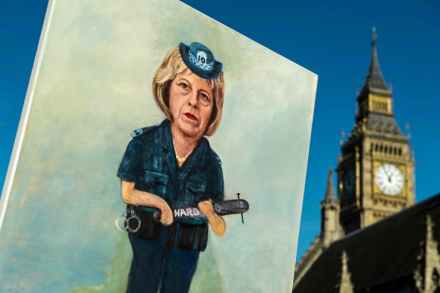
Theresa may

Why Theresa May isn’t ‘dead in the water’ just yet

From our UK edition

It's two weeks until the summer recess and judging by today's papers, that's two weeks too late. Despite Theresa May's positive trip to the G20 summit, the Sundays are filled with tales of leadership plotting and planned Conservative rebellions. Although Philip Hammond was heralded as a caretaker PM a few weeks ago, it's now David Davis who is being talked up to take the reins from May. The Mail on Sunday reports that Davis's ally Andrew Mitchell denounced the PM as 'dead in the water' at a Tory dinner (though bear in mind his comment is two weeks old – a long, long time in politics – and the Sunday Times quotes him as telling plotting MPs to 'go and lie down in a darkened room and then take a holiday').

What Theresa May should say on her anniversary

From our UK edition

Thursday marks the first anniversary of Theresa May becoming Prime Minister. As I say in The Sun this morning, several of her closest allies regard this as an opportunity to start trying to win back voters’ trust and respect. May has, by necessity, got rather good at apologising post-election. Her it's my mess and I'll get us out of it line to the 1922 Committee staved off an immediate leadership challenge. While her humility at the Tory donors ball at the Hurlingham Club went down well with the party’s money men. But what May hasn’t had is a moment of contrition with the public.

The Grenfell inquiry outcome must not be predetermined

From our UK edition

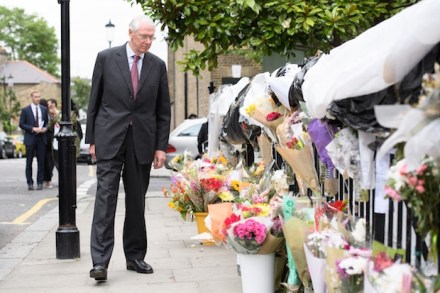
Having worked flat-out to defend judges over the Article 50 case in the Supreme Court, the BBC has gone the other way, in relation to the judiciary, over Grenfell Tower. Its news coverage is working hard to displace the retired judge Sir Martin Moore-Bick from his appointment to chair the inquiry into the fire. Groups purporting to speak for the Grenfell victims are given airtime to denounce him. The idea is that they and their activist lawyers are entitled to a veto on who runs any inquiry, thus attaining effective control of what it decides. Something similar led to the hopeless, expensive collapse of chairman after chairman in Theresa May’s misguided independent inquiry into child sexual abuse. This is not in the public interest.

Caption contest: why doesn’t he hold my hand anymore?

From our UK edition

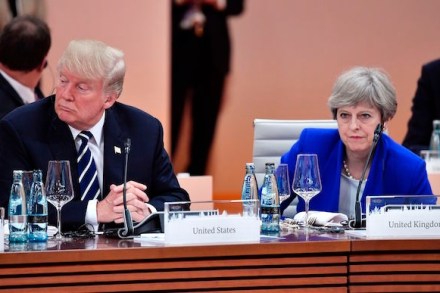
Theresa May is spending the day flying the flag for Cool Britannia at the G20 summit in Hamburg. The Prime Minister promised to use the trip to show that Britain remains a global player. But with May also planning to bring up the Paris climate change agreement with President Trump, how will the special relationship cope under the strain? [caption id="attachment_9896842" align="aligncentre" width="520"] Trump and May, back at the Nato summit[/caption] Captions in the comments. Update: ...

The government can’t do its job properly with Theresa May in charge

From our UK edition

Time was when Theresa May ran such a tight ship as Prime Minister that even so much as talking off the record to journalists was seen as a bit of a risk for a Cabinet minister to take. But post-election, the Prime Minister has so little authority that a number of things that previously seemed impossible are now quite safe. The first is that it’s pretty much fine for a Cabinet minister to take a different stance to his or her colleagues. The main risk is not to the minister themselves but to the Prime Minister as her government appears to have five different stances on every important matter, with public sector pay being the most notable example.

Age need not weary them

From our UK edition

Prime Minister May is aged 60, the Labour cult-personality Jeremy Corbyn 68, and putative Lib-Dem leader Sir Vince Cable 74. All too old? The biographer and philosopher Plutarch (2nd century ad) wrote an essay entitled ‘Whether the Older Man Should Serve in Government’, and came to the view that he should — on certain conditions. First, he said, there was no greater honour (and therefore, to an ancient Greek, no greater reward) than serving both the community and the state in a legal and democratic government. If one had been doing that all one’s life, it was disgraceful to abandon it, allowing one’s hard-earned standing to wither away in favour of household affairs, money-making and self-indulgence.

The turf | 6 July 2017

From our UK edition

Having spent three quarters of my life covering politics and the other quarter following racing, I am often asked what the two have in common. One answer is that politicians are often gamblers. David Cameron tried to solve his party’s divisions over Europe by launching the Brexit referendum and failed spectacularly when an irritated electorate overturned the odds. Despite having a workable majority, Theresa May bet the Tory farm on a snap election seeking to increase it and she, too, lost on an apparent certainty. Playing party political games with the nation’s future, neither deserved any better. Certainly, I find few in racing who believe that Brexit, especially May’s beloved ‘hard Brexit’, is going to help them.

The beginning is nigh

From our UK edition

Just a few weeks ago, the Conservatives triumphed in the local government elections and Theresa May was hailed as an all-conquering Brexit Boudicca who could do no wrong. Now, after her general election humiliation, an opposite view has taken hold: that the government is a disaster, the country is in an irredeemable mess, Brexit has been derailed and nothing can go right. This is a sign that parliamentary recess is overdue; a great many people are -exhausted and a little emotional. But the facts, for those with an eye to see them, do not give grounds for such pessimism. The Tories have lost their majority and deserved to do so after an awful campaign.

Theresa May is slowly steadying the Tory ship

From our UK edition

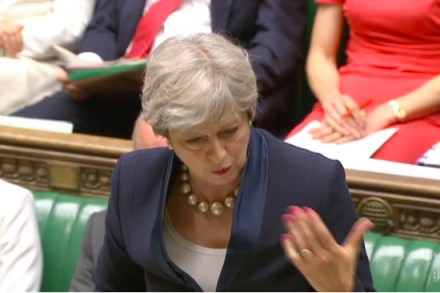
It was better from Theresa May today. She was combative, prickly and forceful at PMQs. The ship is moving on a steadier course. And two toxic enemies have returned to the fold. In the days following the election, both Anna Soubry and Nicky Morgan were ‘helpfully’ suggesting a possible timetable for Mrs May’s departure. Today they both asked supportive questions. And Mrs May read out the answers, tight-lipped. Only those within a yard of her could hear her molars grinding. The Labour leader got a rather glum cheer from his party. He suggested that the PM should fund a pay-rise for nurses because ‘she seems to have found a billion pounds to save her own job.’ As usual, he had a missive of woe to delight us with.

Watch: Theresa May fails to master her Scots at PMQs

From our UK edition

Oh dear. Although Theresa May managed to get through today's PMQs with a solid performance, she did fall short when it came to Scottish matters. The newly-elected Conservative MP for West Aberdeenshire and Kincardine used a question to thank the Prime Minister for 'taking time during the General Election to come up to Banchory and campaign in my constituency, where I think we did rather well'. May did her best to repay the favour: 'Can I first of all welcome my honourable friend to his place in this House. I very much enjoyed my visit to Banchory.' https://www.youtube.com/watch?v=FoN1it3PbaU However, despite her best efforts to suggest otherwise, the visit doesn't appear to have been so memorable to May.

May turns back the clock to the Cameron and Osborne era at PMQs

From our UK edition

During the general election campaign, Theresa May was strikingly reluctant to defend the Tories’ economic record. But today at PMQs, Theresa May sounded like the man she sacked as Chancellor as soon as she became PM. She defended the Tories economic record with vigour, pointing out how much progress the party had made in reducing the deficit it inherited from Labour and even chucking in a reference to Greece for good measure. It was like going back to 2014. The Tory benches lapped up this return to the old religion. May was also helped by the fact that Jeremy Corbyn didn’t make as much of the money that the Tories have found for the DUP deal as he should have done.

Tory members don’t rate May any more – so who do they like?

From our UK edition

While the Cabinet bicker among themselves – in meetings, media briefings and the FT letters' page – about policy, behind the scenes chatter remains over who will be the next Tory leader. Handily, Conservative Home has today released its Cabinet League Table which shows where the various ministers lie when it comes to the party membership. Re-confirming the consensus in the party that Theresa May will never lead the party into an election, the Prime Minister has endured a record fall among members – from top to second bottom. While Patrick McLoughlin is the least popular, Philip Hammond doesn't fare much better, the chancellor has gone into the negative, he is third last on -11.5.

Brexit is a retreat – not a liberation

From our UK edition

It is a mark of Britain’s estrangement from the European Union - and, at least for now, the country’s diminished standing on the international stage - that although Theresa May attended a memorial service to Helmut Kohl at the weekend, she was not invited to speak. Of course there are hierarchies of closeness on such occasions, but there is something piercing about the manner in which what this country, and its leaders, have to say now has so little resonance.  Kohl’s death should have occasioned more commentary in this country than it has. By any reasonable estimation, he was a titan of modern European history.

The brave new world of Brexit Britain

From our UK edition

Although attributed to Milton Friedman, the assertion that 'there ain’t no such thing as a free lunch' had been around long before he took it for the title of an economics book in 1975. It has been used since by many who have never given monetarism a second’s thought. Physicists say the universe is a closed system. No magic source can give it free energy or indeed calories. Mathematicians and computer technicians are as adamant that something cannot come from nothing. Everyone agrees the lunch bill must be paid. Everyone, that is, except British politicians and the voters who endorse them in their millions.

Boris Johnson calls for an end to the public sector pay cap

From our UK edition

One of the consequences of Theresa May’s disastrous election campaign is that the balance of power has swung firmly away from the PM towards her Cabinet. This change of fortunes means that ministers can now speak their minds freely in a way that would have been foolhardy just a few weeks ago. Boris Johnson is the latest to make the most of this new found freedom, saying it is time to end the cap on public sector pay. The Foreign Secretary is said to support a pay rise for such workers, and thinks this could be done in a ‘a responsible way’ without raising taxes.

What the papers say: It’s time for the Tories to stop panicking

From our UK edition

‘The unexpected appeal of Jeremy Corbyn’s manifesto has thrown the Tories into panic’, says the Sun. With Damian Green suggesting a ‘debate’ may be needed over tuition fees and other ministers ‘piling in every day with demands for more spending’, the Conservative party seems to be making the assumption that the best way to tackle the threat of Corbyn is to copy him. This is ‘suicidal’, says the Sun, which argues that not only would it be wrong to try and take on the ‘hard left’ on their own terms, it would also be dangerous for the economy.

To save the Tories and boost her own legacy, Theresa May must stay

From our UK edition

Sometimes crises end simply because all of the participants are exhausted. Essentially, this is what has happened with the post-election Tory leadership crisis. No one has the energy for a fight, so Theresa May carries on as Prime Minister. Conservative MPs say it is now almost certain that she will make it to the summer break and will still be in place at party conference. If the coronation of a new leader could be arranged, things would be very different. But it can’t be. From the great offices of state down, the Tories are simply too split – over both policy and personnel – for the succession to be resolved without a contest.

The whips mustn’t crush every Tory who thinks about the future

From our UK edition

The next Tory leadership race promises to be a crowded affair. As I say in The Sun this morning, the whips are now worried about Rory Stewart’s ambitions. In a meeting with the government’s parliamentary private secretaries, the deputy Chief Whip Julian Smith demanded that anyone who had been to dinner at Stewart’s house the night before raise their hand. He said that he was determined to put all those with leadership ambitions ‘back in their box’. But this is the wrong approach. Leave aside, that those at dinner claim that it was a farewell to Stewart’s PPS Amanda Solloway, who lost her seat at the election, not a plotting supper. For even if Stewart is planning a leadership bid, he is no threat to Theresa May.

The government’s fragility is good news for Parliament

From our UK edition

This first week back in Parliament has proved quite how fragile the government’s power is. It may be able to govern in a technical sense - announcing bills, occupying Downing Street, and so on - but it cannot guarantee that it will get what it wants in the Commons. Having to accept the Stella Creasy amendment on free abortions for women from Northern Ireland shows that, but this is just the start of a legislative free-for-all in which MPs from all parties are able to propose changes to any bill ministers put forward, and know that they stand an unusual chance of success. It just takes a handful of Tory MPs to sympathise with these changes, and then the government must either accept the amendment or face humiliation and defeat in a successful rebellion.

Why Theresa May is about to start drinking in Parliament’s bars

From our UK edition

Yesterday, the Queen's Speech cleared Parliament with every amendment defeated. This shows that Theresa May's £1bn deal with the DUP is working when it comes to votes on key legislation. However, as Isabel notes, while it can govern in a technical sense, it cannot guarantee that it will get what it wants in the Commons. In order to prevent a Tory rebellion on Stella Creasy's abortion amendment, the Chancellor had to grant a concession for free abortions for women from Northern Ireland. So, how do the whips intend to stave off future rebellions in the House? The DUP agreement means that the Conservatives have a working majority of 13 when it comes to votes on key legislation.